Magazine

Buying Guide
10
Importing a car from the USA: costs, process and example

Importing a car from the USA: costs, process and example

Updated 7 August 2026. Whether a US vehicle import is good value cannot be judged from the purchase price alone. A reliable calculation follows the complete chain from the seller to German registration and separates assumptions, current quotations and open items.

Calculate a specific vehicle  |  Pre-check VIN manufacturing information  |  Understand a possible duty advantage

Import calculator: how to find a vehicle estimate

The calculator is part of the vehicle detail page. For an initial estimate, use the Calculate a specific vehicle link above to open the vehicle list.

  1. Select an offer with a price in the vehicle list and open its detail page.
  2. Go to Your price with import and open Adjust services.
  3. The Import calculator shows the cost breakdown and displayed service scope. Check which items are included and which are still missing.

The result is a non-binding sample estimate, not a binding quotation. Do not treat unresolved or unselected services as free. For an individual cost review, use the contact option further down this article.

The complete US car import cost chain

PhaseTypical costsMain drivers
1. Vehicle purchasePurchase price, auction, brokerage, paymentVehicle, seller, payment route and contract
2. US transportCollection, inland transport, interim storageLocation, distance, size, running condition and timing
3. Export and ocean freightExport handling, port, freight and insuranceDeparture port, RoRo or container, route, season and value
4. Import chargesCustoms duty and import VATClassification, customs value, origin, transport evidence and current law
5. EU port and onward transportHandling, customs representation, storage and deliveryPort, dwell time, documents and destination
6. Technical work and registrationConversion, data, inspection and registrationModel, year, specification, condition and available evidence

The calculation in four steps

  1. Convert the purchase price: translate the price actually paid or payable into euros using the rate documented for the scenario.
  2. Determine customs value: add costs included under the applicable valuation rules up to the relevant EU location, such as certain freight and insurance amounts.
  3. Calculate customs duty: multiply customs value by the rate applicable to classification and origin. A 0% rate may apply to qualifying US-origin goods from 1 July 2026, subject to evidence.
  4. Add import VAT and ancillary costs: in Germany, generally calculate 19% on the relevant import-VAT amount, then add port, onward transport, conversion, inspection and registration.

Short formula: total cost = euro purchase price + US costs + freight/insurance + customs duty + import VAT + EU port/onward transport + conversion/inspection/registration + reserve for open items.

Illustrative 2026 example

This example explains the method only. It is not a quotation and uses deliberately rounded assumptions:

  • vehicle price after documented conversion: EUR 30,000
  • assumed US inland transport, export, freight and insurance to the relevant EU location: EUR 3,000
  • simplified customs value: EUR 33,000
  • assumed duty rate after a positive individual review: 0%; example duty: EUR 0
  • assumed additional costs included in the import-VAT amount: EUR 500
  • simplified import-VAT amount: EUR 33,500; 19% equals EUR 6,365

Illustrative subtotal: EUR 39,365. Variable EU port charges, customs representation, onward transport, conversion, technical inspection, registration and a risk reserve are not yet included. If a rate other than 0% applies, customs duty will generally also increase the import-VAT amount. The possible duty advantage should therefore be included only after origin and transport have been reviewed.

What changed for customs in July 2026

The EU eliminated duties on US industrial goods. For an individual vehicle, tariff classification, non-preferential US origin and evidence of direct transport or non-alteration under customs supervision remain decisive. A VIN is only part of the technical pre-check. See the separate duty guide; the duty-free check is the transactional pre-check.

Our guide to car shipping from North America explains the transport services to include in your calculation. See our guide to conversion and German technical approval for the subsequent technical steps.

Why flat price lists become outdated

Exchange rates, US inland transport, freight, insurance values, port charges and conversion work change. Vehicle type and condition can also affect classification or technical work. A reliable calculation therefore records the date, source and status of every amount: confirmed, current quotation, assumption or open.

Documents needed for a reliable estimate

  • specific listing or purchase contract with price and currency
  • complete VIN and vehicle data
  • US location and requested destination
  • running condition, state and dimensions
  • available manufacturing, ownership and transport documents
  • information about modifications, damage or missing paperwork

Request an individual cost review

Paperwork and damage status also belong in the pre-purchase review. Our US title guide explains Clean, Salvage and Rebuilt.

Frequently asked questions about US car import costs

Which costs belong in a US car import calculation?

A complete calculation should include at least the purchase price, payment or brokerage costs, US inland transport, export and port charges, ocean freight and insurance, import charges, EU port clearance, onward transport, possible conversion and technical inspection, registration and other ancillary costs.

How is the customs value of a vehicle determined?

The starting point is generally the price actually paid or payable. Transport and insurance costs that must be included up to the relevant EU location are then added under the customs-valuation rules. The exact calculation depends on the purchase and transport arrangement.

Does import VAT disappear when customs duty is 0%?

No. A possible 0% rate concerns customs duty only. Import VAT is generally still due in Germany and is calculated on its own taxable amount.

Why can a pickup be calculated differently from a passenger car?

Tariff classification is based on the objective characteristics and use of the specific vehicle. A pickup or commercial vehicle may therefore fall under a different tariff heading and rate from a passenger car.

Is the VIN sufficient for a binding customs and cost calculation?

No. A VIN supports technical identification and may provide plant or assembly-country clues. A reliable calculation also needs classification, origin, purchase documents, transport route and other evidence.

How does USCar Trader handle exchange rates and variable prices?

The calculation uses the conversion rate selected for the specific offer and the transport and service prices currently available. Because exchange rates, freight and port charges change, assumptions and their validity date are shown in the individual scenario.

How can I obtain a reliable total-cost estimate?

Select a specific vehicle or send USCar Trader the offer, VIN, location, purchase price and destination. We separate fixed items, current quotations, tax assumptions and missing evidence so that risks are visible before purchase.

Official sources and notice

All figures in the example are freely chosen assumptions as at 7 August 2026 and are not a quotation. Actual customs value, rate, import-VAT amount and accepted evidence are determined for the individual case. USCar Trader prepares an individual cost forecast; competent authorities make customs and tax decisions.

phone2021-10-06
7-seater car: a comparison of the best alternatives from the USA

7-seater car: a comparison of the best alternatives from the USA

The typical 7-seater vehicles from Europe are well-known: Citroen Berlingo, Opel Zafira, or VW Multivan are common names in our region. However, there are good alternatives from America. Importing a 7-seater car from the USA can be significantly worthwhile: More features, stronger engines, and often better value for money compared to European models. Thanks to USCar-Trader.com, Europe's largest online marketplace for US vehicles, importing is now easier and safer than ever. The platform handles the complete import process and guarantees smooth processing.


While the search for a spacious family vehicle in Germany often begins with the VW Touran, Citroën Berlingo, or Opel Zafira, it's worth looking across the Atlantic. American 7-seaters offer not only more space and comfort but also impress with their comprehensive standard equipment and powerful engines. Particularly interesting: Thanks to the favorable dollar exchange rate and attractive pricing in the USA, imported vehicles can represent an economically sensible alternative despite additional costs.


Table of Contents


Overview of the Most Important US 7-Seaters


Chevrolet Suburban


EngineSpecificationTrim Level
5.3L EcoTec3 V8 (L84/NSS)355HP / 520 Nm
10-Speed Automatic
LS, LT, RST, Z71
6.2L EcoTec3 V8 (L87/NSS)420HP / 625 Nm
10-Speed Automatic
High Country
RST, Z71, Premier
Duramax 3.0L Turbo-Diesel (LM2)277HP / 625 Nm
10-Speed Automatic
LS, LT, RST, Premier, High Country


The Chevrolet Suburban isn't listed first without reason. This SUV enjoys special status and a long-standing tradition in America. The first generation was introduced in 1935 and has since served as an important means of transportation for both police and military. The Chevrolet Suburban is now in its 13th generation and offers up to nine seats, making it highly versatile.
Three engines are available: The smallest gasoline engine, a 5.3-liter EcoTec3 V8 (L84/NSS), delivers up to 355 HP with a maximum torque of 520 Nm. The 6.2-liter EcoTec3 V8 (L87/NSS) is more powerful with 420 HP and 625 Nm. The Duramax 3.0-liter turbo diesel (LM2) is also popular. The diesel engine with common-rail injection produces 277 HP and 625 Nm of torque, which is completely sufficient for everyday use.


Chevrolet Tahoe


EngineSpecificationTrim Level
5.3L EcoTec3 V8 (L84/NSS)355HP / 520 Nm
10-Speed Automatic
S, LT, RST, Z71
6.2L EcoTec3 V8 (L87/NSS)420HP / 625Nm
10-Speed Automatic
High Country, RST, Z71, Premier
Duramax 3.0L Turbo-Diesel (LM2)277HP / 625 Nm
10-Speed Automatic
LS, LT, RST, Premier, High Country


The smaller version of the Suburban is sold in America as the Chevrolet Tahoe. The SUV is slightly shorter than its big brother and therefore only offers space for seven instead of nine people. Nevertheless, the vehicle enjoys great popularity, now in its fifth generation. Both rear-wheel and all-wheel drive are available.
The engine range is identical to the Suburban with two gasoline engines (5.3-liter and 6.2-liter EcoTec3 V8) and one diesel (Duramax 3-liter turbo). The comfortable 10-speed automatic transmission is also used. Inside, car owners can enjoy abundant space with high comfort. This makes the Chevrolet Tahoe the perfect family car.


Premium Segment: Cadillac & Lincoln


Cadillac Escalade


EngineSpecificationTrim Level
6.2L V8420HP / 625 Nm
10-Speed Automatic
Luxury, Premium Luxury, Sport, Premium Luxury Platinum, Sport Platinum
6.2L Supercharged V8 DI682HP / 885 Nm
10-Speed Automatic
Escalade-V
3.0L Duramax Turbo-Diesel277HP / 624Nm
10-Speed Automatic
Luxury, Premium Luxury, Sport, Premium Luxury Platinum, Sport Platinum


The Cadillac Escalade is a typical XXL SUV from the USA. The fifth generation (since 2020) impresses with its enormous dimensions and a length of more than five meters. Even the BMW X5 or Mercedes M-Class can't compete with this. It's no wonder that more than 1,500 vehicles were newly registered in Germany between 2006 and 2021. The Cadillac Escalade is a sought-after 7-seater in this region.
The "Chevy" is available with both gasoline and diesel engines. While the 3.0-liter Duramax turbodiesel produces up to 277 HP and 624 Nm, the gasoline engines are significantly more powerful. The smallest gasoline engine, a 6.2-liter V8, delivers 410 HP and a maximum torque of 625 Nm. It's surpassed by the 6.2-liter Supercharged V8 DI, which has been installed in the sporty Escalade-V since January 2022 and produces 682 HP and 885 Nm.


Lincoln Navigator


EngineSpecificationTrim Level
3.5L V6 Ecoboost455HP / 691 Nm
10-Speed Automatic
Standard, Reserve, Reserve L, Black Label, Black Label L


The Lincoln Navigator was introduced in August 1997 and is now sold in its fourth generation (since 2017). The model is based on the Ford Expedition but impresses with a higher standard. This makes the Lincoln Navigator, which competes with Cadillac Escalade and GMC Yukon, one of the luxurious full-size SUVs from America. With a length of nearly 5.70 meters, the model offers space for up to seven people.
For this, the 2.8-ton heavyweight needs powerful propulsion. In the fourth generation, only one gasoline engine is available with the 3.5 V6 Ecoboost, producing 455 HP and 691 Nm. With all-wheel drive and 10-speed automatic transmission, this allows the Lincoln Navigator to sprint from 0 to 62 mph in around 8.2 seconds.
 

Mid-Range: Chevrolet & Ford


Ford Expedition


EngineSpecificationTrim Level
3.5L V6 EcoBoost380HP / 637 Nm
10-Speed Automatic
XL STX, XLT, XLT MAX
3.5L V6 EcoBoost400HP / 651 Nm
10-Speed Automatic
Limited, Limited MAX, King Ranch, King Ranch MAX, Platinum, Platinum MAX
3.5L V6 EcoBoost High-Output440HP / 694 Nm
10-Speed Automatic
Timberline, Stealth Performance Edition


The Ford Expedition is not sold in Germany, but importing is still worthwhile. Ford's largest SUV model not only offers abundant space for seven people but also the latest technology in terms of assistance systems and infotainment. The large displays bring a cinema feeling for the whole family, and thanks to the "Blue-Cruise-System," the driver can also relax - at least on American highways.
The Ford Expedition is exclusively available with a 3.5 V6 Ecoboost and 10-speed automatic transmission, but in three power levels. The base model delivers 380 HP and 637 Nm of torque, while the middle model always provides 400 HP and 651 Nm. As the top model (High-Output), the V6 gasoline engine produces up to 440 HP and a maximum torque of 694 Nm. Rear-wheel drive is standard, with all-wheel drive available as an option.


GMC Yukon


GMC Yukon / Yukon XL – US model year 2021
EngineSpecificationTrim Level
5.3-liter V8265 kW (355 SAE hp) / 519 Nm
10-Speed Automatic
SLE, SLT, AT4
6.2-liter V8313 kW (420 SAE hp) / 623 Nm
10-Speed Automatic
Denali
Duramax 3.0-liter inline-six turbo-diesel207 kW (277 SAE hp) / 623 Nm
10-Speed Automatic
SLE, SLT, Denali


The following GMC Yukon and Yukon XL specifications apply to US model year 2021. GMC offered the then-new Yukon generation with an available 3.0-liter Duramax inline-six turbo-diesel. The manufacturer lists 207 kW (277 SAE hp) and 623 Nm for the diesel (SLE/SLT/Denali), 265 kW (355 SAE hp) and 519 Nm for the 5.3-liter V8 (SLE/SLT/AT4), and 313 kW (420 SAE hp) and 623 Nm for the 6.2-liter V8 (Denali). These engines were paired with a ten-speed automatic. Check the actual vehicle's model year, equipment and seating configuration separately.
Sources: GMC Yukon diesel MY2021 and GMC US specifications MY2021.


Cadillac XT6


EngineSpecificationTrim Level
2.0L Turbo 4-Cylinder237HP / 350 Nm
9-Speed Automatic
Luxury
3.6L V6310HP / 370 Nm
9-Speed Automatic
Premium Luxury, Sport


The Cadillac XT6 has been sold since 2019 and fills the gap between the smaller XT5, which doesn't qualify as a 7-seater, and the Cadillac Escalade. The XT6 is also more than five meters long, allowing space for a third row of seats with electrically folding seats. Drivers don't have to sacrifice luxury, as this US SUV offers all assistance systems, from 360-degree surround view system to adaptive cruise control and parking assist with brake function.
However, the Cadillac XT6 is only available with gasoline engines. The base model (Luxury) is powered by a 2.0-liter four-cylinder turbo engine that produces 237 HP and 350 Nm. The larger models (Premium Luxury and Sport) are equipped with a 3.6-liter V6 with 310 HP and 370 Nm. A 9-speed automatic transmission is responsible for power transmission. All models come standard with front-wheel drive, with all-wheel drive available as an option.


Large SUVs: GMC & Toyota


GMC Acadia


EngineSpecificationTrim Level
2.0L 4-Cylinder Turbo228HP / 350 Nm
9-Speed Automatic
SLE, SLT
3.6L V6310HP / 368 Nm
9-Speed Automatic
AT4, Denali


The GMC Acadia has been built since 2006 and is now in its second generation, which is slightly smaller than its predecessor. Nevertheless, the model offers space for up to seven people in three rows of seats. This makes the GMC Acadia a perfect alternative to the Yukon, especially on German roads. A compact turning circle, numerous equipment options, and modern design make the Acadia a competitor for all German SUV models.
Only gasoline engines with a 9-speed automatic transmission are available for propulsion. The small two-liter four-cylinder with turbocharger produces up to 228 HP and a maximum torque of 350 Nm. The larger 3.6-liter V6 powers the GMC Acadia with around 310 HP and a torque of 368 Nm. While this makes the SUV not a typical powerhouse, it's a good alternative among 7-seaters.


Toyota Sequoia


EngineSpecificationTrim Level
3.4L i-FORCE MAX Twin-Turbo V6 Hybrid437HP / 793Nm
10-Speed Automatic
SR5, Limited, Platinum, TRD Pro, Capstone


The current generation of the Toyota Sequoia (since 2022) leaves nothing to be desired. The powerhouse stands out with a typical American SUV design and a length of more than five meters. The generously designed interior offers either seven or eight seats depending on the configuration. Moreover, the Toyota Sequoia scores with a long list of features that provide the highest comfort.
It is powered by an innovative hybrid system, called i-Force Max Hybrid Powertrain, with a 3.4-liter V6 twin-turbo gasoline engine at its heart. This results in a system output of 437 HP and 793 Nm. The Toyota Sequoia comes standard with a 10-speed automatic transmission and rear-wheel drive. Alternatively, the American is also available with all-wheel drive and switchable off-road reduction.


VW Atlas


EngineSpecificationTrim Level
2.0L SE Turbo235HP / 350Nm
8-Speed Automatic
SE, SE with Technology, SEL
3.6L V6276HP / 360Nm
8-Speed Automatic
SEL Premium R-Line, SEL R-Line Black, SEL


The VW Atlas was specifically developed for the American market, as it is larger than the Tiguan but less expensive than the Touareg. The SUV model is based on Volkswagen's MQB platform, which offers the advantage that many spare parts are also available here and VW dealers are familiar with the technology. The vehicle is available in two lengths, but always with four doors and seven seats.
Car buyers have a choice between two engines, both paired with an 8-speed automatic. A two-liter four-cylinder gasoline engine with turbocharger produces up to 235 HP and a maximum torque of 350 Nm. The larger 3.6-liter V6 powers the VW Atlas with 280 HP and 360 Nm. Both models come standard with front-wheel drive, though all-wheel drive is available as an option for the top model.
 

Buying Guide: What to Consider When Importing?

We provide comprehensive information about all questions related to importing a used vehicle here on our website.

Check out the documentation of VOX car magazine about importing cars.

Learn more about our services here and how we support you with the import.


FAQ: Common Questions About US 7-Seaters

Which 7-seater SUV is the best?

Depending on requirements, we recommend:

  • For maximum luxury: Cadillac Escalade (best equipment, most modern technology)
  • For families: Ford Expedition (good value for money, plenty of space)
  • For high-mileage drivers: Chevrolet Suburban with diesel (economical, long range)
  • For city & daily use: GMC Acadia (more compact dimensions, good visibility)


Which 7-seaters are available from the USA in 2024?

The most important models by segment:

  • Premium: Cadillac Escalade, Lincoln Navigator
  • Premium Mid-Range: Cadillac XT6
  • Fullsize SUVs: Chevrolet Suburban/Tahoe, Ford Expedition, GMC Yukon
  • Mid-Range: GMC Acadia, VW Atlas


What does a 7-seater from the USA cost?

Price examples including import and conversion:

  • Mid-Range (GMC Acadia, VW Atlas): from approx. €45,000
  • Fullsize SUVs (Chevrolet Tahoe, Ford Expedition): from approx. €65,000
  • Premium (Cadillac Escalade, Lincoln Navigator): from approx. €90,000

Current offers can be found on our website.


How high are the operating costs?

The main cost factors:

  • Fuel: 10-15l/100km (gasoline), 8-10l/100km (diesel)
  • Insurance: typically classes 20-25
  • Maintenance: about 20% higher than European models
  • Spare parts: Good availability also in Europe


Which driving license class do I need?

  • Class B license is sufficient for all 7-seaters presented here
  • Also for models with 9 seats like the Suburban (under 3.5t)
  • No additional qualifications needed


Is importing a US 7-seater worth it?

Advantages:

  • More equipment than in European models
  • Often better value for money
  • More spacious interior

Disadvantages:

  • Higher consumption with gasoline engines
  • Larger exterior dimensions
  • Import effort (minimized through USCar-Trader.com)


Can I drive a US 7-seater in parking garages?

Heights of the most popular models:

  • GMC Acadia: 1.78m - fits in almost all garages
  • Ford Expedition: 1.95m - can be critical
  • Cadillac Escalade: 1.95m - also borderline

Tip: Check frequently used garages beforehand.


How much cargo space remains with full seating?

Cargo volume with 7 seats:

  • Compact (GMC Acadia): about 230 liters
  • Fullsize (Ford Expedition): about 550 liters
  • Extra Long (Suburban): over 1,000 liters


What needs to be considered during import?

Most important points:

  1. Technical Adjustments
    • Lighting system
    • Other adjustments depending on the vehicle
  2. Documentation for Registration
    • Original Title (USA) / Registration (Canada)
    • Customs clearance proof
    • Invoice / Bill of Sale
    • §21 Full approval
  3. Plan for Costs
    • Transportation
    • Customs (10%)
    • Import VAT (19%)
    • Conversion

When handled through USCar-Trader.com, all these points are professionally managed.


phone2024-11-21
The Attractive Alternative to the Well-Known US Auto Market

The Attractive Alternative to the Well-Known US Auto Market

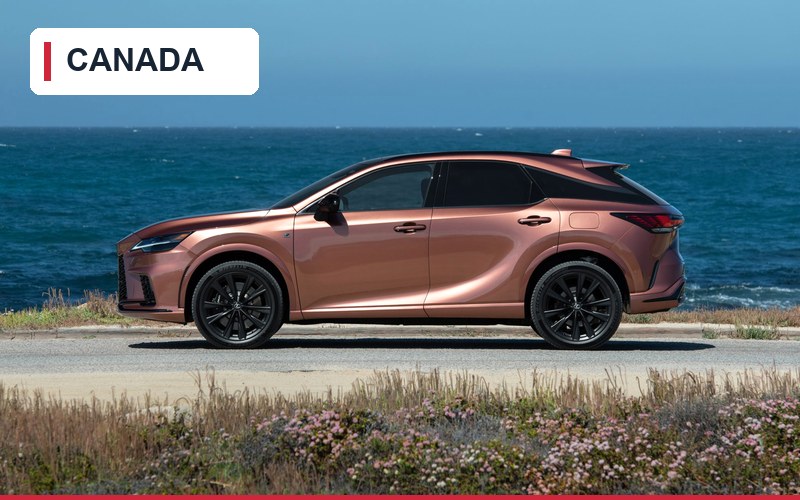
When it comes to importing vehicles into the EU, most people immediately think of the USA. However, the Canadian auto market often goes unnoticed, even though it offers many attractive opportunities. In this article, we will take a closer look at the Canadian auto market and explain why it is worth considering Canada when looking for your next vehicle.

Advantages of the Canadian Auto Market

Favorable Exchange Rate

A major advantage of buying a vehicle in Canada is the favorable exchange rate. While the USD rate is about 1.08 EUR, the CAD rate is only about 1.48 EUR. This means that your Euro is worth more in Canada, which can lead to significant cost savings when purchasing a vehicle.

Differences Between the US and Canadian Auto Markets

Tax Regulations

A significant difference between the US and Canada lies in the tax regulations. For direct exports from the seller, no taxes are incurred, provided the dealer does not insist on receiving the tax payment. However, if a transaction is handled through an intermediary like us, we as buyers must prepay the tax. This tax must be advanced for about two to three months before it is refunded, depending on the timing of the refund.

Provincial Taxes

Another important point is the special taxes in certain provinces. Quebec, Manitoba, and British Columbia are examples of provinces with their own tax regulations. The Harmonized Sales Tax (HST) can be easily refunded, but the specific provincial taxes can only be avoided if the dealer delivers the vehicle independently. This depends on the place of performance. If the performance occurs outside these provinces, these provincial taxes do not apply. We handle the coordination with the dealers who either waive the provincial tax and charge it completely as HST or plan the delivery of the vehicle by the dealer to our warehouse. The costs for collection would incur anyway, and the dealer delivers the vehicle independently to avoid the provincial tax.

Documentation Requirements

Unlike the USA, an original title is not required in Canada. Instead, the registration as a copy is sufficient for export. This simplifies the process and reduces administrative effort.

Specifics of Canadian Vehicles

Metric System

An interesting aspect of Canadian vehicles is the metric system. The vehicles display kilometers instead of miles, which can be an additional advantage for European buyers.

Indicator Colors

Many Canadian vehicles have yellow indicators, which conform to European standards. However, this is no guarantee that fewer modifications are required, as the headlights either need an E-mark or a certificate proving their compliance.

Vehicle Condition and Rust Susceptibility

Due to the weather conditions and the use of salt, Canadian vehicles are more susceptible to rust. This is especially true for vehicles that are heavily used, like pickups often employed as workhorses. Generally, one should pay special attention to whether the salt has possibly affected the condition of the vehicle.

Eligibility for preferential customs duty depends on origin and the required evidence. Our CETA guide to importing a car from Canada explains the conditions; the place of purchase alone is not sufficient.

Challenges and Solutions in Importing Vehicles from Canada

Pre-Financing Taxes

One challenge in importing from Canada is the necessary pre-financing of taxes. These must be advanced for a period of about two to three months. However, there are ways to reclaim the taxes, reducing the financial burden.

Avoiding Provincial Taxes

To avoid provincial taxes, one can strategically choose the place of performance. If the performance occurs outside the special provinces, these taxes do not apply. We handle the coordination with the dealers who either waive the provincial tax and charge it completely as HST or plan the delivery of the vehicle by the dealer to our warehouse.

Practical Tips for Buying a Car in Canada

Choosing the Right Dealer

When buying a vehicle in Canada, it is important to choose the right dealer. Foreign buyers often have difficulty purchasing vehicles for export due to mistrust. However, Canadians are generally very friendly, so you can try to buy vehicles on your own, negotiate the purchase price, and handle the transaction. However, buying through us is usually more successful.

Negotiation Strategies

Negotiations are generally similar to those in the USA and can be very challenging. Since the entire market in North America is very transparent and many vehicles are sold over the internet, cheap vehicles are often already at the bottom line. Additionally, many dealers profit from financing when a vehicle is purchased. This means that when a vehicle is paid for in cash, the dealers miss out on the commission from the financing business. This is why price negotiations are generally very difficult and usually involve an additional dealer or doc fee.

Customer Experience and Review

Customer Experiences

Many of our customers have already discovered the Canadian market, and we notice that the market is increasingly coming into focus, especially since some vehicles are significantly cheaper than in the USA.

Expert Opinions

As industry experts, we see great potential for European buyers in the Canadian auto market. However, one should not assume that the exchange rate positively affects all vehicles. Similar to the USA, all markets must be carefully analyzed to see which brands and models are attractive in which market, and generalizations should be avoided. Nevertheless, the Canadian market is a very attractive alternative that still receives too little attention.

Conclusion

The Canadian auto market offers numerous advantages and unique aspects that make it a worthwhile option for importing vehicles into the EU. If you are looking for a new vehicle, you should definitely consider Canada. Take the opportunity and discover the possibilities that the Canadian market offers.

phone2024-07-14
Importing Muscle Cars - It Doesn't Always Have to Be a Mustang

Importing Muscle Cars - It Doesn't Always Have to Be a Mustang

An American muscle car is an invaluable dream for many, yet beyond the well-known sports cars, there are also other classics that possess no less charm and power. And they show a bit more individuality.

Import Your Muscle Car - There Are Plenty of Alternatives

Muscle cars like the Ford Mustang, Shelby AC Cobra, Dodge Charger, or Chevrolet Camaro are well-known and in high demand, which accordingly drives up their prices. However, beyond the stars of the scene, there are several classics that receive little attention. Often unjustly so. Technically just as competent and also interesting in design, they are particularly rare on German roads. Such lesser-known vehicles often attract more attention than the "mass-produced" ones. Below, we introduce you to 11 interesting alternatives.

AMC AMX

AMC? Yes, this manufacturer also produced the infamous Gremlin. However, the AMX has little in common with it. It was often compared to the Corvette because of its relatively short wheelbase and powerful engines. Today, not only its design and power make it an interesting alternative. Its price-performance ratio is also reasonable. Despite having less power compared to some, its lighter weight allowed it to compete with much larger and more powerful rivals.

AMC Javelin

A direct competitor to the Ford Mustang and Chevrolet Camaro is the AMC Javelin. An interesting detail: The second generation's AMX variant was the first pony car to be used by law enforcement agencies. Already in the first generation, the car shone with several innovations in the field of safety. Engines ranged from 3.8 to 6.6 liters displacement, producing 110 to 340 horsepower. It was built from 1967 to 1974.

AMC Rambler-Marlin

The AMC Rambler Marlin also deserves a second look. Rare yet affordable, this two-door fastback was only produced for two years, making it even more of a rarity in Europe than in its home country. As an exotic, it attracts many looks here. The engines range from 3.8 to 5.4 liters, delivering power from 155 to 277 horsepower. Unlike many other muscle cars of that time, the Rambler Marlin was luxuriously equipped and finished with high-quality materials.

Buick Gran Sport

Buick also played in the muscle car league. Starting in 1965, the Buick Gran Sport 400 was offered with its 6.6-liter V8 engine producing 330 horsepower. In 1967, a completely newly developed engine with 345 horsepower was introduced. In 1969, the Buick was modified. Stage 1 now reached 350 horsepower, and the rare Stage 2 variant officially produced 365 horsepower. Measurements showed that the actual power was much higher. In 1970, the GS400 was replaced by the GS455, now using a 7.5-liter engine with 350 horsepower, and from 1972 as Stage 1, it also had 375 horsepower. A slightly less powerful sister model (Gran Sport 340/350) with a 5.6-liter V8 was produced starting in 1967. (Image author: Greg Gjerdingen)

Chevrolet Chevelle SS

The Chevelle was built from 1964 to 1977. The sporty versions, which are considered muscle cars, were offered from 1966. Initially, they were equipped with a 6.5-liter V8 engine, which delivered up to 380 horsepower to the road. Later, the Super Sport received a 7.4-liter engine producing more than 270 horsepower. (Image author: nakhon100)

Ford Torino

A highlight from Ford and also very popular in the USA is the Ford Torino. The sporty Torino Cobras, offered in some model years, hold particular collector value. This mid-sized car, built in several body styles, features engines ranging from 5.8 to 7.5 liters, producing 154 to 205 horsepower. The Torino impresses not with the most powerful engine performances. However, it definitely represents the muscle car class with its design, and due to its relatively good equipment and rarity, it's an interesting vehicle with potential for value appreciation. (Image author: Sicnag)

Mercury Cougar

Also significantly cheaper than its established competitors is the Mercury Cougar. It was produced from 1967 to 1970 as a so-called "Pony Car" with engines ranging from 4.7 to 7.0 liters. With the second generation from 1970 to 1973, it grew to over five meters in length. The sports cars, exclusively equipped with V8 engines, deliver between 202 and 380 horsepower. Mercury is a brand of the Ford Motor Company. The Cougar is technically similar in many respects to the Ford Mustang. It is considered the better-equipped version of the cult classic. (Image author Greg Gjerdingen)

Mercury Cyclone

The sister model to the Ford Mustang was introduced in 1964 and offered until 1971. Equipped with V8 engines ranging from 4.9 to 7.0 liters, they produce 213 to 390 horsepower. A particular highlight was the limited Cyclone Spoiler version offered from 1970 to 1971. It featured a locking differential on the rear axle, spoilers at the front and rear, and a special decorative stripe.

Plymouth Road Runner

Strong and in the typical style of the muscle cars of the 1960s and 1970s, the Road Runner makes its appearance. An almost endless hood and an elongated trunk dominate the silhouette. Also typical are the spartan equipment and the rather cheap-looking materials used in the interior. Nonetheless, it's a serious contender among American vintage sports cars. It was built between 1967 and 1980 with engines from 6.3 to 7.2 liters, producing between 340 and 431 horsepower. The peak of engine performance was reached in 1971. Due to insurance companies' refusal to insure these vehicles, the power slowly decreased. The Plymouth Road Runner Superbird reached a speed of 322 km/h (200 miles) in 1971, becoming the first muscle car to do so.

Plymouth Sport Fury

Little known is that the Plymouth Fury, in its Sport version, is also considered one of the early muscle cars. Built between 1964 and 1973, the car has a 7.0-liter V8 with 370 and 380 horsepower. It was available in several body styles and was Chrysler Corporation's response to the 1963 Pontiac GTO.

Pontiac LeMans GTO

The first generation of the GTO is relatively expensive. Vehicles from Series 2, from 1968 to 1972, are somewhat more affordable and offer comparable performance to Mustangs and the like. Visually, it also stands out and pleasantly differs from the sea of most muscle cars. The high-displacement V8s range from 6.6 to 7.5 liters, with 253 to 375 horsepower, making the GTO similar in strength to its competitors. Motor Trend magazine named the GTO the Car of the Year in 1968.

Underrated Stars - Individuality for Everyone!

Of course, this list is not exhaustive. The US and Canadian markets offer far more beauties with style and plenty of power. Maybe it doesn't have to be the classic muscle car. In America's earlier decades, large and powerful engines, typical for the American lifestyle, were also implanted in station wagons, vans, and pickups. Surely you will find your dream car with the characteristic V8 sound in our vehicle market. USCar-Trader.com not only offers you the search for your jewel, but we also take care of a safe purchase, the import including all formalities, and the conversion. Are you looking for a very specific car? Our detailed search function will help you find it.

phone2023-09-22
Differences when buying a new car: How it's done in the USA

Differences when buying a new car: How it's done in the USA

In Germany when purchasing a new car, buyers can customize their vehicle using a configurator according to their preferences. Although this is also possible in America, there are some differences. USCar-Trader.com explains how to buy a new car in the USA.

Almost every driver has used the configurator on car manufacturers' websites to design a new car according to their preferences and ultimately display the total price for their dream vehicle. Whether Volkswagen, Mercedes, or BMW: Almost all manufacturers offer the service to choose from different drives, paint finishes, or special features in Germany.

This is also possible when buying a new car in the USA; however, configurators in the States have several differences. After choosing a vehicle model on the manufacturer's website, such as the VW Atlas, you can select various equipment lines already equipped with corresponding special features and extras. This means: customizing the features is only possible to a limited extent!

For example, if customers choose the base model, in the case of the VW Atlas, the SE variant, they get a vehicle with 18-inch alloy wheels, a digital speedometer display (8 inches), and an emergency brake assist. Heated seats and a blind-spot assistant are already standard. The VW Atlas offers a total of five versions, which, with an increasing base price, offer an increased number of features, such as larger alloy wheels, automatic climate control, or additional assistance systems.

Hardly any individual wishes possible

In the next step, car buyers choose the engine, with a fixed drive usually assigned to each vehicle model. This means that the cheapest standard model often cannot be combined with the most powerful engine. Instead, only smaller adjustments are available, such as drive type (front, rear, or all-wheel drive) or transmission. Those who want a high-performance model cannot be satisfied with the standard equipment.

Subsequently, interested parties can choose the paint finish and a color for the interior. Finally, only minor details are left. Car buyers can choose wheels, for example, and order additional equipment (roof rack, bicycle rack, etc.). However, it is not possible to make in-depth changes to the vehicle. In contrast to the German market, where new cars can be customized down to the smallest detail according to individual requirements, car buyers in the USA must be satisfied with standard variants.

A solution in Germany as well?

Is this concept conceivable in Germany? Yes! The individual configuration of vehicles poses significant challenges for car manufacturers, and customers must expect considerable waiting times, especially in the current situation. The configurators of some car manufacturers, such as Tesla, have already been reduced to a minimum, comparable to the American system. Volkswagen's configurator has also been adapted to the US system for some time.

Most configurators on the websites of German car manufacturers are too complex, posing challenges for inexperienced car buyers. It is not without reason that more than 80 percent of all interested parties want personal contact in the car dealership. Only one in ten new cars is bought online. Online shopping for car purchases? Less likely in the future! This could also lead to car manufacturers further simplifying the configurator on their website in the future.

phone2023-02-13
Car Purchase in the USA - Considering Dealer Fees

Car Purchase in the USA - Considering Dealer Fees

In Europe, the principle for price indications is that they must be final prices. Therefore, the stated amount includes the sales tax - often separately itemized - and other costs associated with a purchase. This naturally applies to car purchases as well.

This is not the case in the USA. Here, additional amounts are added to the stated price for vehicles, which are often only specified when the buyer and dealer have agreed and a contract is signed. For German buyers purchasing a vehicle in the United States, the so-called documentation fee is particularly relevant. In addition, dealers charge their customers fees for US registration and sales tax. There are also other fees, but these are not consistently applied.

Varying Prices from State to State

A documentation fee is completely unknown in Germany. This fee is intended to cover the back-office costs of the car dealer. The paperwork involved in selling new or used cars requires a lot of work and effort. This is often handled by dedicated employees or the sales staff has to devote a significant part of their working time to it.

The calculation of the documentation fee is a standard practice across the US. Some car dealers are negotiable on the amount, many are not. It is not even mandatory for the fee to be explicitly mentioned in the invoice. Many dealers tend to not itemize the documentation fee separately, but rather combine it with other "additional costs" of the purchase into one item. A reason why many US car buyers pay little attention to the documentation fee, although the costs can be quite noticeable.

The amount of the documentation fee varies from state to state. The range is from a low of $55 to a high of $607. In 35 states, there are no legal limits to the fee, creating "room for maneuver" from the dealer's perspective. Sometimes the fees are calculated as a percentage of the agreed purchase price, and sometimes fixed amounts are applied. Only in one state - Alaska - must the fee be included in the car price; in all other states, it is calculated additionally.

The most expensive states in this regard are currently Florida (average $607), followed by Colorado ($508) and Georgia ($502). At the other end of the scale is California with an average of $55. The table listed here shows the current average values for all US states.

The dealer fee is only one cost item before registration. Our guide to the total costs of importing a US car puts purchase charges, transport, import taxes and technical approval into the complete calculation.

Consideration in Calculation

Consequence: two identical vehicles in terms of equipment, age, and condition, offered in Florida and California for $20,000 each, do not cost the same. In California, the car is on average about $550 cheaper. Of course, this is an isolated view, with other possible cost differences - such as transportation costs - not taken into account. However, German buyers should be aware that the documentation fee needs to be considered in their calculations.

Average Dealer Fees by State

StateDealer Fees
FloridaUSD 607
ColoradoUSD 508
GeorgiaUSD 502
North CarolinaUSD 466
AlabamaUSD 458
NevadaUSD 431
VirginiaUSD 403
ArizonaUSD 401
WyomingUSD 388
ConnecticutUSD 357
KentuckyUSD 354
MaineUSD 336
MassachusettsUSD 321
New HampshireUSD 304
IllinoisUSD 300
UtahUSD 293
South CarolinaUSD 293
IdahoUSD 286
MississippiUSD 274
New JerseyUSD 270
New MexicoUSD 263
OhioUSD 247
HawaiiUSD 245
OklahomaUSD 235
KansasUSD 235
Rhode IslandUSD 231
MontanaUSD 224
NebraskaUSD 222
MichiganUSD 220
MissouriUSD 190
IndianaUSD 178
West VirginiaUSD 175
WisconsinUSD 152
VermontUSD 148
WashingtonUSD 145
PennsylvaniaUSD 144
IowaUSD 134
MarylandUSD 131
TexasUSD 125
North DakotaUSD 124
LouisianaUSD 103
ArkansasUSD 97
South DakotaUSD 93
MinnesotaUSD 75
New YorkUSD 74
OregonUSD 61
CaliforniaUSD 55
Tennessee-
Delaware-
Alaska-
phone2021-03-12