Magazine

All
10
USCar Trader in the VOX Spotlight: Revolutionizing North American Car Imports

USCar Trader in the VOX Spotlight: Revolutionizing North American Car Imports

USCar Trader, was recently featured in an informative documentary of VOX Automotive Magazine, broadcast on December 10, 2023. This program provides a detailed insight into our innovative approach to importing vehicles from the USA and Canada.

USCar Trader's Comprehensive Service

With access to over 4 million vehicles, USCar Trader is revolutionizing the traditional vehicle import process. As shown in the VOX Automotive Magazine, we offer a service that resembles local vehicle purchase, simplifying the car buying and import process from North America.

Why Choose USCar Trader for Importing?

Over 50,000 dealers from the USA and Canada present a wide spectrum of vehicles on our platform, from the latest models to classic vintage cars. This diverse offering makes USCar Trader the first choice for importing American vehicles.

USCar Trader Focus at VOX

The VOX documentary emphasizes that our service goes far beyond a simple online marketplace. We provide complete support in purchasing and importing vehicles, ensuring the process is safe and straightforward for our customers.

Summary and Invitation to Further Explore

We are excited to invite you to learn more about our services and our extensive range of vehicles. Discover on our website how we make the process of car buying and importing from the USA and Canada safer, more efficient, and customer-friendly.


phone2023-12-14
US car titles explained: Clean, Salvage and Rebuilt

US car titles explained: Clean, Salvage and Rebuilt

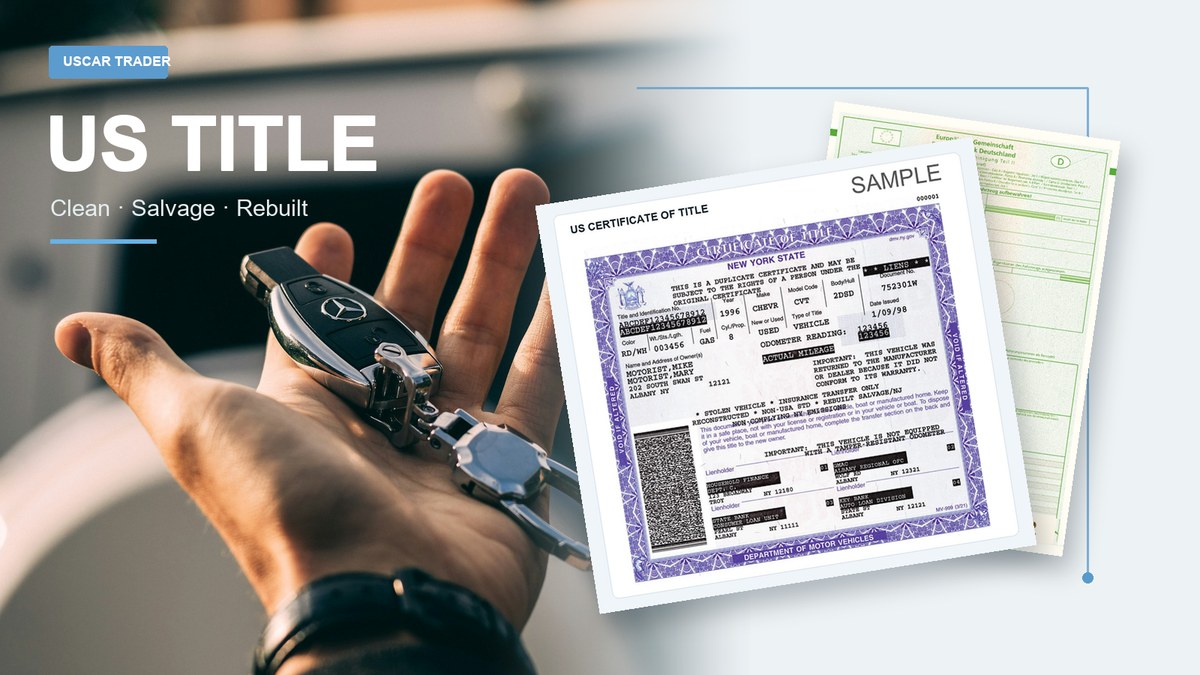
Official samples of a US title and Germany’s registration certificate Part II. The documents have different legal functions.

An attractive US listing may look straightforward until you spot “Salvage” or “Rebuilt”. The title helps explain the vehicle’s documented status. Here are the main terms and the checks to make before buying.

Clean Title

No corresponding damage brand

Usually a title without a corresponding damage brand. It does not prove an accident-free history. Check the vehicle and its records.

Understand Clean Title →

Salvage Title

Documented salvage status

A significant loss or another qualifying event has been recorded under state rules. Establish the damage and paperwork status.

Understand Salvage →

Rebuilt Title

Previously salvage, subsequently rebuilt

The vehicle completed the applicable state process. Its damage history still matters. Assess repair quality separately.

Understand Rebuilt →

What is a US vehicle title?

A Certificate of Title is a state-issued vehicle ownership document. It may record liens and information about the vehicle’s history. Registration for road use is a separate matter. A title does not replace a condition inspection or the requirements for registration in Germany.

For comparison: Germany’s Fahrzeugbrief is now called registration certificate Part II. It explicitly does not establish its holder as the vehicle owner. A US title records and transfers ownership under the issuing state’s rules. The two documents are therefore not legally identical equivalents.

Official New York MV-999 sample. Multiple remarks illustrate the form; this is not a Clean title example. Layouts and terminology vary by state.

How to read a US title

VIN & vehicleDo the vehicle identification number, model and model year match the car?

Owner & transferDo the seller, recorded owner and transfer documents agree?

Brands / remarksWhat damage brands or other remarks appear on the document?

Liens / security interestsAre creditors listed, and are any required lien releases available?

Historical status labels are called title brands. Names, thresholds and procedures vary between states. Neither the paper’s colour nor a seller’s shorthand is a quality guarantee. Read the exact wording, issuing state and historical records.

Clean Title does not automatically mean accident-free

Clean generally means the title has no corresponding damage brand. Accidents or repairs may still have occurred, and an empty history report does not certify the vehicle’s condition.

Compare the title and vehicle VIN, available history reports and an independent inspection. NMVTIS provides title, brand, odometer, total-loss and salvage indicators; it does not supply a complete repair history.

Our guide to vehicle history reports with Carfax and ClearVIN explains how to read and compare the available records.

Why US origin alone does not establish accident damage is explained in our fact check on the US-import accident-car stereotype.

Salvage Title: identify the underlying loss

Salvage is a state-defined status, commonly linked to substantial damage. Flood, fire or other qualifying events may also be involved. There is no single nationwide “70 percent” rule.

The label alone does not describe the exact damage or establish that repair makes financial sense. Request pre-repair photographs, a damage description and complete ownership paperwork. Returning a salvage vehicle to US road use commonly requires the applicable state rebuilding process first.

Rebuilt Title: repaired, with a recorded past

Rebuilt, Rebuilt Salvage and Prior Salvage generally refer to a formerly salvage vehicle that completed the required process after repair. “Rebuild” in a listing may be informal wording; check the actual document.

Inspection requirements vary by state. An administrative rebuilding process does not automatically certify the quality of every repair. Have the vehicle’s actual condition assessed independently.

Before buying: obtain original damage photographs, repair invoices and an independent condition report. Have structural repairs, airbags, electronics and possible water damage examined. Consider insurance availability and resale value.

Other important title brands

Junk / Nonrepairable / Certificate of Destruction

These documents may designate a vehicle for parts or destruction and prohibit a return to US road registration. Do not assume this is an ordinary import suitable for registration. Examine the exact document and state rules.

Flood / Water Damage / Fire Damage

Recorded water or fire damage. These labels can coexist with Salvage or Rebuilt. Investigate damage extent and possible subsequent faults separately.

Lemon Car / Manufacturer Buyback

A Lemon Law Buyback records a manufacturer repurchase because of documented warranty defects. “Lemon car” is an informal term for a defective vehicle. It does not automatically mean accident damage. Obtain the defect description and repair records; rules and title wording vary by state.

Not Actual Mileage / Odometer Discrepancy

The displayed mileage is not confirmed as the vehicle’s actual total. “Exempt” instead concerns an exemption from odometer disclosure; it does not automatically mean tampering.

Bonded, Lien, Electronic Title, MSO/MCO and Bill of Sale

Bonded Title: a special process, involving a surety bond, for incomplete or disputed ownership evidence. It is not a condition certificate.

Lien / Lienholder: a security interest, for example held by a lender. An unbranded title can still carry a lien. Resolve release or applicable export documentation before buying. Electronic Title / ELT: electronic recordkeeping, not a damage category.

MSO/MCO: manufacturer documentation for a new vehicle not yet conventionally titled. Bill of Sale: a sale receipt; it does not automatically replace a required title. “Title Pending” means paperwork is outstanding. Establish an acceptable document route before payment or shipment.

Prior Taxi / Police, Grey Market, Reconstructed and Replica: additional history or construction labels. Check the issuing state’s definition.

What does the title mean for importing into Germany?

US export and German registration are separate processes. Export requires the applicable ownership and export documents. For relevant sea exports, CBP requires advance presentation of paperwork at least 72 hours before export. Agree the port’s specific procedure in good time.

A Rebuilt Title does not guarantee German registration. Original foreign paperwork, insurance and appropriate technical assessment remain relevant. With salvage, nonrepairable or unclear history, resolve document acceptance and registration requirements before buying.

Our guide to conversion and German technical approval explains the technical steps.

Five checks before buying

  1. Document: complete front and back, state, VIN and exact brand.
  2. Ownership: seller, assignment chain and any lien release.
  3. History: earlier brands, losses and available pre-repair photographs.
  4. Condition: independent inspection and documented repairs.
  5. Import route: export paperwork, German technical approval and total costs.

Combine the document check with a calculation through registration. Our guide to total import costs explains the individual cost items.

Found a vehicle with an unclear title?

Send us the listing and VIN. We can agree the appropriate route for sharing full title documents and discuss the next check before purchase.

Discuss the vehicle before buying →

Common questions about US titles

Does a Clean Title prove that a car is accident-free?

No. Check document status, available history and the vehicle itself together.

What is the difference between Salvage and Rebuilt?

Salvage indicates the relevant loss or document status. Rebuilt generally means a formerly salvage vehicle completed the state process after repair. That does not erase its history.

Can a Salvage or Rebuilt vehicle be registered in Germany?

The label alone cannot answer this. Original documents, actual condition and the requirements of the technical inspection and registration authorities determine the next steps. Check them before buying.

Sources and image credits

These official sources explain the underlying principles. Examples from individual states do not replace checking the issuing state’s rules.

Document images: New York DMV: official MV-999 sample, front and FZV Annex 8: German registration certificate Part II. The US sample illustrates the form and is not a Clean title example. Image composition: USCar-Trader. Photo: Roland Denes / Unsplash.

Original research: 8 October 2026. Editorial revision: 10 October 2026. Requirements vary by state, vehicle and circumstances.

phone2026-05-16
Importing a US car duty-free: requirements and individual review

Importing a US car duty-free: requirements and individual review

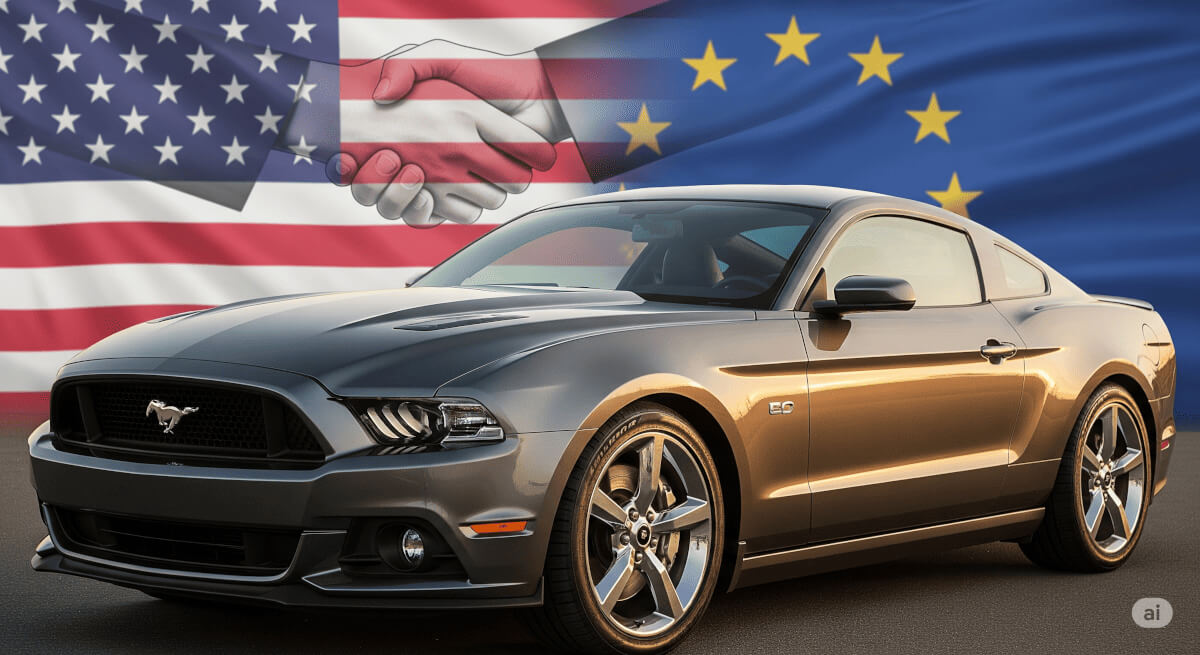
From 1 July 2026, the European Union eliminated duties on imports of US industrial goods. A 0% rate is still not automatic for an individual vehicle: tariff classification, non-preferential US origin, the transport route or evidenced non-alteration, and the documents accepted in the individual case remain decisive.

USCar Trader therefore separates three steps: technical origin pre-check, customs assessment and the complete import-cost calculation. A VIN can provide useful clues, but it does not prove customs origin on its own.

Updated 7 August 2026.

Pre-check a possible duty advantage  |  Check VIN manufacturing information  |  Understand all import costs

What has applied since 1 July 2026

The relevant EU measure is Regulation (EU) 2026/1455. The European Commission states that the EU eliminated duties on US industrial goods. For US-origin goods, Article 59a of the Union Customs Code Implementing Act additionally requires evidence of direct transport or, when routed through a third country, customs supervision and non-alteration.

The former statement that US cars may “soon” become duty-free is therefore outdated. It would also be wrong to promise that every vehicle bought or assembled in the United States automatically receives a 0% rate.

Four checks determine the possible rate

  1. Tariff classification: passenger cars, pickups, commercial vehicles and special-purpose vehicles may be classified differently. The actual vehicle, not its marketing label, is decisive.
  2. Non-preferential origin: where production involves more than one country, EU rules generally look to the place of the last substantial and economically justified processing. Brand, purchase country, registration country or the first VIN character is not conclusive.
  3. Transport or non-alteration: direct transport is the simplest evidence route. Routing through a third country can remain possible when customs supervision and non-alteration are evidenced sufficiently.
  4. Accepted evidence: the customs declaration must be supported by origin and transport information. The competent authority decides which manufacturing, purchase, shipping and customs documents are sufficient for the individual vehicle.

What role does the VIN play?

A VIN can provide manufacturer, model-year and plant clues and is therefore useful for a technical pre-check. It is neither automatic proof of customs origin nor a customs decision. Our existing VIN origin check intentionally focuses on manufacturing and assembly information and the limits of that information.

Customs duty is not import VAT

Cost blockWhat it coversStill needs review?
Customs duty0% may apply to qualifying US-origin goods.Yes: classification, origin, transport and evidence.
Import VATGenerally 19% in Germany on the relevant taxable amount.Yes, even where customs duty is 0%.
Transport and insuranceUS inland transport, port, ocean freight and cover.Yes, depending on vehicle and route.
Conversion, inspection and registrationTechnical work and German road registration.Yes, depending on model and condition.

German customs explains the general calculation logic: customs value normally includes the invoice price and transport costs included up to the relevant EU location; the import-VAT base builds on the customs value, customs duty and other relevant costs. This general information is not a binding quotation.

How USCar Trader reviews a vehicle before purchase

  1. Check vehicle data and the complete VIN for technical plausibility.
  2. Assess tariff classification and possible US-origin status separately.
  3. Review available manufacturing, purchase, transport and customs documents.
  4. Calculate customs, import VAT and ancillary-cost scenarios transparently.
  5. Resolve missing evidence before purchase and shipment where possible; the customs authority makes the final decision.

Request an individual vehicle review

Frequently asked questions about duty-free US car imports

Does 0% customs duty automatically apply to every car bought in the United States after 1 July 2026?

No. The EU eliminated duties on US industrial goods, but the individual vehicle must still meet the relevant tariff-classification, non-preferential US-origin, transport and evidence requirements. Buying a car in the United States is not enough on its own.

Does the VIN prove US customs origin?

No. A VIN can provide manufacturer, model or plant clues for a technical pre-check. On its own it is not proof of customs origin and does not guarantee a particular duty rate.

Can the vehicle travel through a third country?

Routing through a third country does not automatically prevent application. Evidence will normally be needed that the vehicle remained under customs supervision and was not altered. The competent customs authority decides which documents are accepted in the individual case.

Can the rules also apply to used vehicles?

A used vehicle is not excluded merely because of its age. The applicable requirements and reliable evidence for the specific vehicle remain decisive. Documents can be more difficult to obtain for older vehicles.

Is import VAT still due when customs duty is 0%?

Yes. A possible 0% rate concerns customs duty. Import VAT is generally due in Germany, and its taxable amount usually includes the customs value and other relevant costs. Transport, insurance, port charges, conversion, inspection and registration must also be budgeted.

What happens if origin or transport cannot be evidenced sufficiently?

The special rate for US-origin goods cannot then be used as a reliable basis. The duty rate applicable to the individual vehicle depends on its classification and the current legal framework. USCar Trader therefore reviews the evidence position before purchase wherever possible.

Official sources and notice

This page provides general information as at 7 August 2026 and is not a binding customs or legal opinion. USCar Trader supports technical pre-checks, documentation and cost scenarios; the competent customs authority decides classification, origin, evidence and the applicable rate in each case.

phone2025-07-28
Why European vehicles are increasingly being exported to the USA and Canada

Why European vehicles are increasingly being exported to the USA and Canada

USCar Trader connects the European and North American markets seamlessly. While our core business is importing vehicles from the USA and Canada for European customers, there is growing interest in special European vehicles on the other side of the Atlantic.


Whether rare classic cars, iconic vintage models or unique specialty vehicles – demand for vehicles originally found only in Europe is rising in the USA and Canada. We're capitalizing on this trend: Together with our experienced logistics partner, we offer reliable transportation solutions to export European vehicles safely and efficiently to North America.

➡️ Submit Your Transportation Request Now!

For collectors, auto enthusiasts, or dealers in the USA and Canada, this presents an opportunity to acquire authentic European automotive treasures and bring them home hassle-free.


Why Special European Vehicles Are So Sought-After in North America

In the USA and Canada, it's not just classic luxury vehicles that are in demand, but especially special models and rare finds imported from Europe. Vehicles like the Lancia Delta Integrale, the VW Golf MK2, and the BMW E30 or E36 have a dedicated following that cherishes these iconic models. The Mercedes-Benz W124, known for its reliability and timeless elegance, continues to attract new enthusiasts in North America.

But it's not just the well-known models being exported. There's particular demand for specialty vehicles like the BMW Isetta, vintage Porsche tractors, and the Land Rover Defender – vehicles that showcase the charm and uniqueness of European engineering. Additionally, there's demand for American models that made their way to Europe and are now being exported back, such as Ford Mustangs that were restored or modified in Europe and find a collector's market in the USA.

A Growing Market for Rare Vehicle Exports

According to SATS Group, the market for vehicle exports from Europe to the USA and Canada has seen steady growth in recent years. Particularly rare and well-preserved models that serve a niche customer base in Europe can command premium prices in the North American market. This offers sellers in Europe a lucrative opportunity to export high-demand vehicles with strong appreciation potential to the USA and Canada.

This trend shows that the vehicle market isn't just one-way but has evolved into a global exchange. European vehicles that are rare or hardly found in North America are increasingly gaining value there, and SATS Group plays a central role in handling these exports safely and efficiently.

Transportation Options for Vehicles to North America

For safe and efficient vehicle transportation to North America, we offer various options tailored to your specific requirements:

  • Roll-on/Roll-off (RoRo):
    The most cost-effective choice for drivable vehicles. No protection from weather conditions.
  • Container shipping:
    Flexible and secure – perfect for valuable individual pieces or consolidated shipments. Optimal protection from external elements.
  • Air cargo:
    Fastest but most expensive solution. Ideal for premium vehicles or time-critical shipments.


Thanks to our logistics partner's years of experience, we can serve nearly all major ports in the USA and Canada. Air cargo connections to selected airports also offer an attractive balance of speed and value.


Customized Services for Vehicle Exports to North America

A comprehensive service package ensures your vehicle reaches its destination reliably and safely:

  • Europe-wide pickup – open or enclosed transport.
  • Vehicle inspection and escrow service, based on situation and needs.
  • Transportation insurance to fully protect your vehicle.
  • Customs clearance and destination handling in North America.
  • Door-to-door delivery to recipient's address.

Combined with our diverse transportation options, we offer solutions precisely tailored to your needs.


The Complexity of Vehicle Export and How SATS Group Helps

Exporting a vehicle to North America largely depends on the vehicle's age. Classic cars that are over 25 years old can be imported into the USA without additional modifications. These vehicles are exempt from the strict safety and emissions regulations that apply to newer models.

Similar regulations apply to Canada, where vehicles 20 years and older can be imported through a simplified process.

For newer vehicles (under 25 years), homologation is typically required to meet U.S. or Canadian standards. Specialized companies in North America handle these modifications, while SATS Group organizes safe and on-time transportation to these service providers.

This makes classic and vintage vehicles particularly attractive for export – straightforward, value-stable, and in high demand across North America. Our experts handle the entire process – from pickup to on-site customs clearance.

Interested in Exporting a Vehicle from Europe to the USA or Canada?

If you want to export a vehicle from Europe to the USA or Canada, SATS Group offers tailored solutions for safe and reliable transportation. Use our request form to get a no-obligation consultation and organize the export process safely and efficiently.

Are you instead interested in importing a vehicle from the USA or Canada to Europe? Check out our guide to car shipping from North America for all important information about costs and procedures.


phone2024-12-19
Car shipping and transportation USA/Canada: prices and procedure

Car shipping and transportation USA/Canada: prices and procedure

The American car market offers vehicle enthusiasts a unique selection of models at often attractive prices. But anyone wanting to import a car from the USA or Canada faces an important question: What does car shipping cost and how does the process work? As Europe's leading portal for North American vehicles, USCarTrader, in cooperation with the SATS Group, has optimized and made transparent the entire import process. With over a decade of experience and thousands of successful shipments, we know all the challenges – and their solutions.

Key Facts About Car Shipping from North America

Shipping a vehicle from North America may seem complex at first glance. However, with the right support, the process becomes manageable and secure. We accompany you from the initial inquiry to the delivery of your vehicle and take care of all details.


Shipping Cars from USA to Germany: Costs and Services

The question of costs is the first priority for most interested parties. Understandably, as shipping a car from the USA or Canada is an important cost factor in importing. To offer you full transparency from the start, we have developed a detailed import calculator. This takes into account all relevant cost factors and gives you reliable guidance for the total investment. You can find this directly with our offers on our website. This serves as a reference value. For an exact cost breakdown, simply request a quote from us.

Let's go through how the costs are broken down using an example. We'll take a vehicle worth €22,139 as our basis:


Check current import taxes: An example does not replace an individual calculation. Before buying, review the requirements for a duty-free US car import or the CETA guide for vehicles from Canada. The complete import cost chain includes additional items through registration.

Sample calculation for vehicle import:

1. Basic Transport Costs:

The pure transport costs form the foundation of the calculation. In our example, shipping costs amount to €2,427.75 – this price includes complete sea transport including all port fees and documentation. The transport insurance (All-Risk) amounts to €221.39, which corresponds to about 1% of the vehicle value and thus represents very cost-effective protection. The final delivery is calculated according to your individual wishes.

2. Additional Services:

To ensure a smooth import, we recommend various services: The professional vehicle inspection on site (€275.00) gives you certainty about the condition of the vehicle. The purchase processing (€250.00) includes all necessary negotiations and contract work. Our escrow service (€463.56) guarantees secure payment processing. The technical conversion (€2,100.00) makes your vehicle fit for European standards, and registration (€267.75) completes the service.

This transparent cost breakdown leads to the following total costs (depending on the current dollar exchange rate):

  • A customs value of €25,776.89
  • Total costs net of €30,344.29
  • Total costs gross of €36,109.70


Car Shipping: Process and Timeline

Shipping a vehicle from North America is a carefully orchestrated process that we have optimized through years of experience. Typically, 70-75 days pass from first contact to final delivery. Let's go through the entire process in detail:

1. Preparation (Days 1-9)

The foundation for successful shipping is laid in the preparation phase. First, our inspectors conduct a thorough vehicle inspection. This includes not only the technical inspection but also documentation of the vehicle's condition through detailed photos and, where appropriate, video recordings. Simultaneously, we handle the entire purchase processing. Our escrow service ensures maximum security for your investment.

2. Land Transport in the USA/Canada (Days 9-16)

After successful purchase completion, the actual logistics begin. Our partners on site pick up the vehicle from the seller and transport it to the nearest shipping port. This transport occurs as open transport or in a closed special transporter, depending on the vehicle type and condition. Once the vehicle arrives at our warehouse, we take care of customs clearance. After customs clearance, the vehicle is professionally loaded into one of our collective containers.

3. Sea Freight (Days 16-56)

The longest stage is the actual sea transport. During this approximately 30-day journey, your vehicle is optimally protected. The closed container provides protection from weather influences, and our optional transport insurance covers all risks. Through our tracking system, regular updates keep you informed about the progress of the shipment.

4. Arrival and Onward Transport (Days 56-75)

With arrival in Bremerhaven, the final phase of import begins. Our customs specialists handle complete customs processing and all required formalities. Subsequently, your vehicle is transported for technical conversion. Here, all necessary adjustments for EU approval are made, including for example the conversion of the lighting system or obtaining necessary certifications. After successful TÜV approval, we organize transport to your desired address.


Shipping Cars from USA to Germany: Prices and Factors

The costs for car shipping are influenced by various factors that you should consider in your planning. Our many years of experience show that careful analysis of these factors is crucial for precise cost calculation.

Type of Transport

The choice of transport method has a significant influence on the total costs. Container transport is the safest option. In a closed 20- or 40-foot container, your vehicle is optimally protected from external influences. For price-conscious importers, RoRo shipping (Roll-on/Roll-off) can be a cost-effective alternative. However, especially for classic cars or high-value vehicles, we recommend protected container transport.

Pickup Location in the USA/Canada

The geographical location of the seller plays a decisive role in cost calculation. Vehicles from the East Coast benefit from shorter transit times to European receiving ports and from more favorable shipping rates compared to the West Coast. Vehicles from the West Coast require longer sea transports, which are associated with higher costs.

In some cases, it may even make sense to consider a longer transport route to the East Coast. Although pickup costs increase as a result, total costs may be lower due to more favorable sea freight rates from the East Coast. At the same time, the total transport duration is often shortened.

Our logistics experts analyze all options for you and determine the optimal transport route to minimize costs and time in the best possible way.

Vehicle Size and Type

The size of the vehicle can influence transport costs. Standard vehicles up to a certain size can be transported without problems in regular containers. For oversized vehicles such as a Dually Truck, special transport solutions may be required.


Shipping Cars in Containers: Advantages and Special Features

Container transport has established itself as the preferred method for car shipping, and for good reason. A container provides optimal protection for your vehicle throughout the entire journey. The closed environment protects against weather influences, salt water, and other external effects. Professional cargo securing prevents movement during transport.

Particularly valuable is the possibility of tracking. Modern container ships are equipped with GPS systems, allowing you to track your vehicle's location online. This enables precise planning of subsequent steps.

Flexible scheduling is another advantage of container transport. Unlike RoRo ships, which operate on fixed routes, containers can be transported on various ships. This allows better adaptation to your timing preferences.


Car Shipping USA Germany: USCarTrader Service

The success of car shipping lies in the details. As an experienced import service provider, the SATS Group offers a comprehensive service specially tailored to USCarTrader that leaves nothing to be desired. Our approach is divided into three main phases that seamlessly interlock:

1. Before Shipping

In this critical phase, we lay the foundation for successful import. Our free initial consultation gives you a comprehensive overview of the entire process. Particularly important is the professional vehicle inspection on site. Our inspectors thoroughly check the vehicle and document its condition. During purchase processing, you benefit from our negotiation experience and market knowledge to increase the chances of a successful purchase.

2. During Transport

Once your vehicle begins its journey, our well-thought-out support concept takes effect. The optional All-Risk insurance provides protection against almost all conceivable risks during transport. Regular updates keep you informed about the progress of shipping. Your personal contact person is available for any questions.

3. After Arrival

With arrival in Europe, the final phase of import begins. Our customs experts handle complete customs processing and ensure smooth import. Technical conversion takes place in specialized workshops that know and implement all EU requirements. The subsequent TÜV approval confirms successful adaptation to European standards. Our registration service saves you the trip to the authorities. The conclusion is delivery - punctual and reliable to your desired address.


Car Shipping Costs: Transparency through Online Calculator

Transparency in costs is particularly important to us. That's why we developed the USCar Trader Import Calculator - a clear online tool that immediately gives you a reference value for the expected total costs.

The calculator takes into account all relevant factors:

  • Purchase price of the vehicle in the USA/Canada
  • Desired services (inspection, processing, etc.)
  • Transport costs including insurance
  • Customs and import VAT
  • Costs for technical conversion and registration

You can play through different scenarios and immediately see how the selection of additional services affects the total costs. Prices from the import calculator serve as reference values for the expected total costs. Simply request a quote and we will calculate the costs for you.


Shipping Cars to Canada: Special Features and Prices

The Canadian market offers some interesting special features that distinguish it from the USA. While the somewhat more complex purchase through an intermediary like us requires advance payment of local Sales Tax (VAT), which is only refunded after the export has taken place. Nevertheless, it's worth taking a close look at the Canadian market, as many vehicles there are cheaper than in the USA.

Another advantage is the relatively stable exchange rate of EUR to CAD, which is subject to fewer fluctuations. However, the Canadian climate should not be underestimated: It requires special attention to rust protection, as the harsh winter conditions can put more strain on the vehicle body.

Our experience with the Canadian market shows:

  • Vehicle prices are often more attractive for some models than in the USA
  • The process is often somewhat more complex and initially requires a higher budget
  • Special rust protection checks are essential


Frequently Asked Questions About Car Shipping

Years of experience in vehicle transport has taught us which questions most concern importers. Here are the most important answers:

Is a Vehicle Inspection Necessary?

We strongly recommend having a comprehensive inspection carried out before purchasing a vehicle. In fact, many of the inspections we commission lead to deciding against the vehicle purchase.

How Long Does Shipping from the USA/Canada Take?

The pure sea freight takes between 16 and 58 days. The complete process from pickup to delivery extends over 70-75 days. This time is necessary for careful handling of all steps - from inspection through transport to technical conversion and registration.

What Does Shipping a Car from the USA Cost?

The pure shipping costs including port handling start at about €1,800. This price varies by departure port. Additional costs for services such as inspection, insurance, and import duties are added. Our online calculator gives you an overview of the expected total costs.

Is Insurance Necessary During Transport?

Yes, transport insurance is absolutely recommended. The costs for this amount to about 1% of the vehicle value - a very cost-effective protection against all transport risks. Our All-Risk insurance covers all damages during transport.


Conclusion: Safe and Transparent Car Shipping with USCarTrader

Shipping a vehicle from North America is a complex process that requires experience and expertise. USCarTrader ensures that you have a professional partner at your side who has been successfully bringing vehicles across the Atlantic for more than a decade. Our transparent import calculator, comprehensive service, and years of expertise guarantee smooth transport of your vehicle.

The key to success lies in careful planning and choosing the right partner. We offer you:

  • Full cost transparency
  • Professional consultation and support
  • Comprehensive service from inspection to delivery
  • Years of experience in vehicle import
  • Reliable partners in North America and Europe

Request an individual quote now or use our online calculator for an initial cost estimate. Our team is available to answer all your questions about car shipping and will gladly accompany you on the way to your dream vehicle from overseas.

phone2024-12-13
7-seater car: a comparison of the best alternatives from the USA

7-seater car: a comparison of the best alternatives from the USA

The typical 7-seater vehicles from Europe are well-known: Citroen Berlingo, Opel Zafira, or VW Multivan are common names in our region. However, there are good alternatives from America. Importing a 7-seater car from the USA can be significantly worthwhile: More features, stronger engines, and often better value for money compared to European models. Thanks to USCar-Trader.com, Europe's largest online marketplace for US vehicles, importing is now easier and safer than ever. The platform handles the complete import process and guarantees smooth processing.


While the search for a spacious family vehicle in Germany often begins with the VW Touran, Citroën Berlingo, or Opel Zafira, it's worth looking across the Atlantic. American 7-seaters offer not only more space and comfort but also impress with their comprehensive standard equipment and powerful engines. Particularly interesting: Thanks to the favorable dollar exchange rate and attractive pricing in the USA, imported vehicles can represent an economically sensible alternative despite additional costs.


Table of Contents


Overview of the Most Important US 7-Seaters


Chevrolet Suburban


EngineSpecificationTrim Level
5.3L EcoTec3 V8 (L84/NSS)355HP / 520 Nm
10-Speed Automatic
LS, LT, RST, Z71
6.2L EcoTec3 V8 (L87/NSS)420HP / 625 Nm
10-Speed Automatic
High Country
RST, Z71, Premier
Duramax 3.0L Turbo-Diesel (LM2)277HP / 625 Nm
10-Speed Automatic
LS, LT, RST, Premier, High Country


The Chevrolet Suburban isn't listed first without reason. This SUV enjoys special status and a long-standing tradition in America. The first generation was introduced in 1935 and has since served as an important means of transportation for both police and military. The Chevrolet Suburban is now in its 13th generation and offers up to nine seats, making it highly versatile.
Three engines are available: The smallest gasoline engine, a 5.3-liter EcoTec3 V8 (L84/NSS), delivers up to 355 HP with a maximum torque of 520 Nm. The 6.2-liter EcoTec3 V8 (L87/NSS) is more powerful with 420 HP and 625 Nm. The Duramax 3.0-liter turbo diesel (LM2) is also popular. The diesel engine with common-rail injection produces 277 HP and 625 Nm of torque, which is completely sufficient for everyday use.


Chevrolet Tahoe


EngineSpecificationTrim Level
5.3L EcoTec3 V8 (L84/NSS)355HP / 520 Nm
10-Speed Automatic
S, LT, RST, Z71
6.2L EcoTec3 V8 (L87/NSS)420HP / 625Nm
10-Speed Automatic
High Country, RST, Z71, Premier
Duramax 3.0L Turbo-Diesel (LM2)277HP / 625 Nm
10-Speed Automatic
LS, LT, RST, Premier, High Country


The smaller version of the Suburban is sold in America as the Chevrolet Tahoe. The SUV is slightly shorter than its big brother and therefore only offers space for seven instead of nine people. Nevertheless, the vehicle enjoys great popularity, now in its fifth generation. Both rear-wheel and all-wheel drive are available.
The engine range is identical to the Suburban with two gasoline engines (5.3-liter and 6.2-liter EcoTec3 V8) and one diesel (Duramax 3-liter turbo). The comfortable 10-speed automatic transmission is also used. Inside, car owners can enjoy abundant space with high comfort. This makes the Chevrolet Tahoe the perfect family car.


Premium Segment: Cadillac & Lincoln


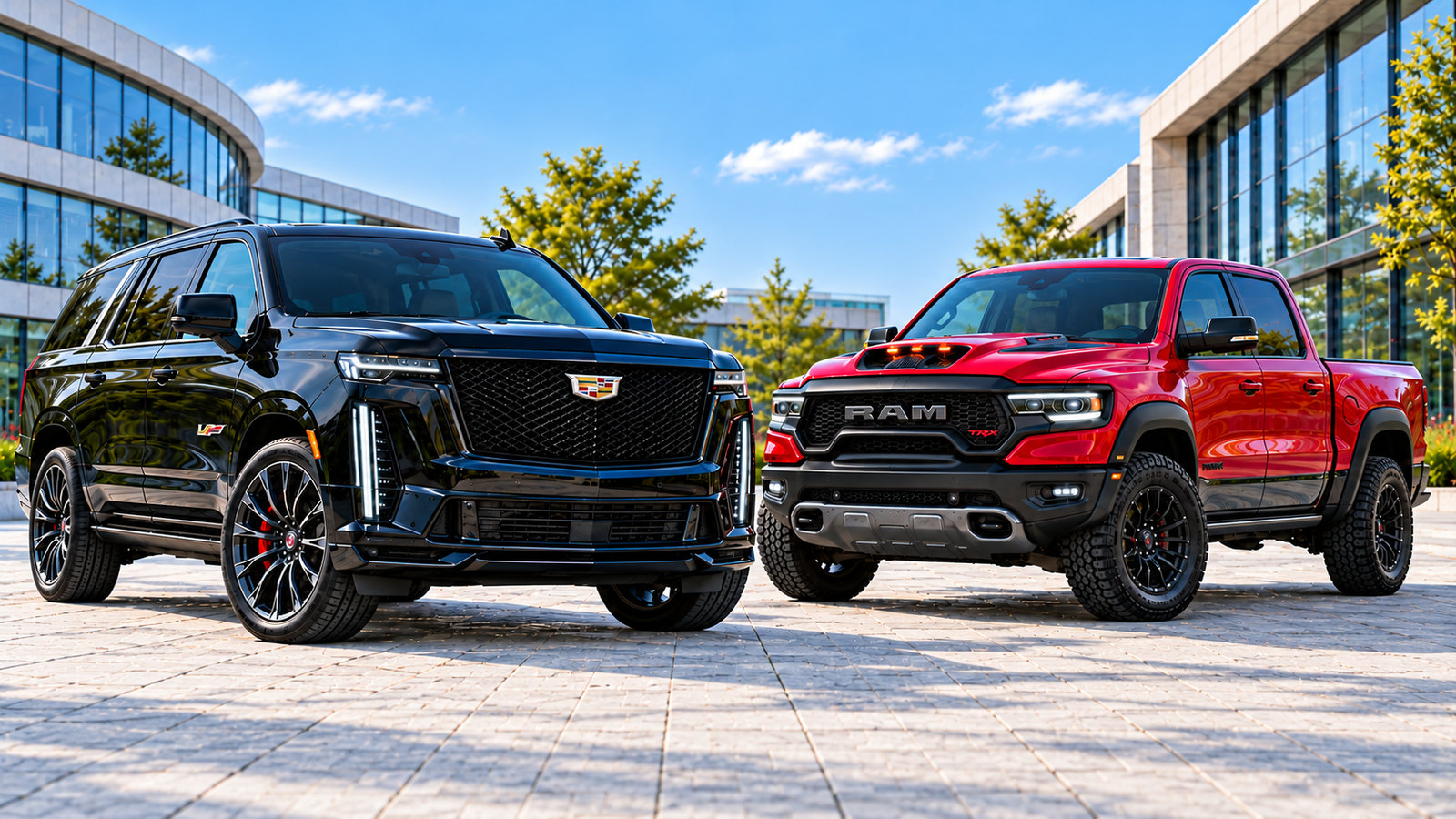
Cadillac Escalade


EngineSpecificationTrim Level
6.2L V8420HP / 625 Nm
10-Speed Automatic
Luxury, Premium Luxury, Sport, Premium Luxury Platinum, Sport Platinum
6.2L Supercharged V8 DI682HP / 885 Nm
10-Speed Automatic
Escalade-V
3.0L Duramax Turbo-Diesel277HP / 624Nm
10-Speed Automatic
Luxury, Premium Luxury, Sport, Premium Luxury Platinum, Sport Platinum


The Cadillac Escalade is a typical XXL SUV from the USA. The fifth generation (since 2020) impresses with its enormous dimensions and a length of more than five meters. Even the BMW X5 or Mercedes M-Class can't compete with this. It's no wonder that more than 1,500 vehicles were newly registered in Germany between 2006 and 2021. The Cadillac Escalade is a sought-after 7-seater in this region.
The "Chevy" is available with both gasoline and diesel engines. While the 3.0-liter Duramax turbodiesel produces up to 277 HP and 624 Nm, the gasoline engines are significantly more powerful. The smallest gasoline engine, a 6.2-liter V8, delivers 410 HP and a maximum torque of 625 Nm. It's surpassed by the 6.2-liter Supercharged V8 DI, which has been installed in the sporty Escalade-V since January 2022 and produces 682 HP and 885 Nm.


Lincoln Navigator


EngineSpecificationTrim Level
3.5L V6 Ecoboost455HP / 691 Nm
10-Speed Automatic
Standard, Reserve, Reserve L, Black Label, Black Label L


The Lincoln Navigator was introduced in August 1997 and is now sold in its fourth generation (since 2017). The model is based on the Ford Expedition but impresses with a higher standard. This makes the Lincoln Navigator, which competes with Cadillac Escalade and GMC Yukon, one of the luxurious full-size SUVs from America. With a length of nearly 5.70 meters, the model offers space for up to seven people.
For this, the 2.8-ton heavyweight needs powerful propulsion. In the fourth generation, only one gasoline engine is available with the 3.5 V6 Ecoboost, producing 455 HP and 691 Nm. With all-wheel drive and 10-speed automatic transmission, this allows the Lincoln Navigator to sprint from 0 to 62 mph in around 8.2 seconds.
 

Mid-Range: Chevrolet & Ford


Ford Expedition


EngineSpecificationTrim Level
3.5L V6 EcoBoost380HP / 637 Nm
10-Speed Automatic
XL STX, XLT, XLT MAX
3.5L V6 EcoBoost400HP / 651 Nm
10-Speed Automatic
Limited, Limited MAX, King Ranch, King Ranch MAX, Platinum, Platinum MAX
3.5L V6 EcoBoost High-Output440HP / 694 Nm
10-Speed Automatic
Timberline, Stealth Performance Edition


The Ford Expedition is not sold in Germany, but importing is still worthwhile. Ford's largest SUV model not only offers abundant space for seven people but also the latest technology in terms of assistance systems and infotainment. The large displays bring a cinema feeling for the whole family, and thanks to the "Blue-Cruise-System," the driver can also relax - at least on American highways.
The Ford Expedition is exclusively available with a 3.5 V6 Ecoboost and 10-speed automatic transmission, but in three power levels. The base model delivers 380 HP and 637 Nm of torque, while the middle model always provides 400 HP and 651 Nm. As the top model (High-Output), the V6 gasoline engine produces up to 440 HP and a maximum torque of 694 Nm. Rear-wheel drive is standard, with all-wheel drive available as an option.


GMC Yukon


GMC Yukon / Yukon XL – US model year 2021
EngineSpecificationTrim Level
5.3-liter V8265 kW (355 SAE hp) / 519 Nm
10-Speed Automatic
SLE, SLT, AT4
6.2-liter V8313 kW (420 SAE hp) / 623 Nm
10-Speed Automatic
Denali
Duramax 3.0-liter inline-six turbo-diesel207 kW (277 SAE hp) / 623 Nm
10-Speed Automatic
SLE, SLT, Denali


The following GMC Yukon and Yukon XL specifications apply to US model year 2021. GMC offered the then-new Yukon generation with an available 3.0-liter Duramax inline-six turbo-diesel. The manufacturer lists 207 kW (277 SAE hp) and 623 Nm for the diesel (SLE/SLT/Denali), 265 kW (355 SAE hp) and 519 Nm for the 5.3-liter V8 (SLE/SLT/AT4), and 313 kW (420 SAE hp) and 623 Nm for the 6.2-liter V8 (Denali). These engines were paired with a ten-speed automatic. Check the actual vehicle's model year, equipment and seating configuration separately.
Sources: GMC Yukon diesel MY2021 and GMC US specifications MY2021.


Cadillac XT6


EngineSpecificationTrim Level
2.0L Turbo 4-Cylinder237HP / 350 Nm
9-Speed Automatic
Luxury
3.6L V6310HP / 370 Nm
9-Speed Automatic
Premium Luxury, Sport


The Cadillac XT6 has been sold since 2019 and fills the gap between the smaller XT5, which doesn't qualify as a 7-seater, and the Cadillac Escalade. The XT6 is also more than five meters long, allowing space for a third row of seats with electrically folding seats. Drivers don't have to sacrifice luxury, as this US SUV offers all assistance systems, from 360-degree surround view system to adaptive cruise control and parking assist with brake function.
However, the Cadillac XT6 is only available with gasoline engines. The base model (Luxury) is powered by a 2.0-liter four-cylinder turbo engine that produces 237 HP and 350 Nm. The larger models (Premium Luxury and Sport) are equipped with a 3.6-liter V6 with 310 HP and 370 Nm. A 9-speed automatic transmission is responsible for power transmission. All models come standard with front-wheel drive, with all-wheel drive available as an option.


Large SUVs: GMC & Toyota


GMC Acadia


EngineSpecificationTrim Level
2.0L 4-Cylinder Turbo228HP / 350 Nm
9-Speed Automatic
SLE, SLT
3.6L V6310HP / 368 Nm
9-Speed Automatic
AT4, Denali


The GMC Acadia has been built since 2006 and is now in its second generation, which is slightly smaller than its predecessor. Nevertheless, the model offers space for up to seven people in three rows of seats. This makes the GMC Acadia a perfect alternative to the Yukon, especially on German roads. A compact turning circle, numerous equipment options, and modern design make the Acadia a competitor for all German SUV models.
Only gasoline engines with a 9-speed automatic transmission are available for propulsion. The small two-liter four-cylinder with turbocharger produces up to 228 HP and a maximum torque of 350 Nm. The larger 3.6-liter V6 powers the GMC Acadia with around 310 HP and a torque of 368 Nm. While this makes the SUV not a typical powerhouse, it's a good alternative among 7-seaters.


Toyota Sequoia


EngineSpecificationTrim Level
3.4L i-FORCE MAX Twin-Turbo V6 Hybrid437HP / 793Nm
10-Speed Automatic
SR5, Limited, Platinum, TRD Pro, Capstone


The current generation of the Toyota Sequoia (since 2022) leaves nothing to be desired. The powerhouse stands out with a typical American SUV design and a length of more than five meters. The generously designed interior offers either seven or eight seats depending on the configuration. Moreover, the Toyota Sequoia scores with a long list of features that provide the highest comfort.
It is powered by an innovative hybrid system, called i-Force Max Hybrid Powertrain, with a 3.4-liter V6 twin-turbo gasoline engine at its heart. This results in a system output of 437 HP and 793 Nm. The Toyota Sequoia comes standard with a 10-speed automatic transmission and rear-wheel drive. Alternatively, the American is also available with all-wheel drive and switchable off-road reduction.


VW Atlas


EngineSpecificationTrim Level
2.0L SE Turbo235HP / 350Nm
8-Speed Automatic
SE, SE with Technology, SEL
3.6L V6276HP / 360Nm
8-Speed Automatic
SEL Premium R-Line, SEL R-Line Black, SEL


The VW Atlas was specifically developed for the American market, as it is larger than the Tiguan but less expensive than the Touareg. The SUV model is based on Volkswagen's MQB platform, which offers the advantage that many spare parts are also available here and VW dealers are familiar with the technology. The vehicle is available in two lengths, but always with four doors and seven seats.
Car buyers have a choice between two engines, both paired with an 8-speed automatic. A two-liter four-cylinder gasoline engine with turbocharger produces up to 235 HP and a maximum torque of 350 Nm. The larger 3.6-liter V6 powers the VW Atlas with 280 HP and 360 Nm. Both models come standard with front-wheel drive, though all-wheel drive is available as an option for the top model.
 

Buying Guide: What to Consider When Importing?

We provide comprehensive information about all questions related to importing a used vehicle here on our website.

Check out the documentation of VOX car magazine about importing cars.

Learn more about our services here and how we support you with the import.


FAQ: Common Questions About US 7-Seaters

Which 7-seater SUV is the best?

Depending on requirements, we recommend:

  • For maximum luxury: Cadillac Escalade (best equipment, most modern technology)
  • For families: Ford Expedition (good value for money, plenty of space)
  • For high-mileage drivers: Chevrolet Suburban with diesel (economical, long range)
  • For city & daily use: GMC Acadia (more compact dimensions, good visibility)


Which 7-seaters are available from the USA in 2024?

The most important models by segment:

  • Premium: Cadillac Escalade, Lincoln Navigator
  • Premium Mid-Range: Cadillac XT6
  • Fullsize SUVs: Chevrolet Suburban/Tahoe, Ford Expedition, GMC Yukon
  • Mid-Range: GMC Acadia, VW Atlas


What does a 7-seater from the USA cost?

Price examples including import and conversion:

  • Mid-Range (GMC Acadia, VW Atlas): from approx. €45,000
  • Fullsize SUVs (Chevrolet Tahoe, Ford Expedition): from approx. €65,000
  • Premium (Cadillac Escalade, Lincoln Navigator): from approx. €90,000

Current offers can be found on our website.


How high are the operating costs?

The main cost factors:

  • Fuel: 10-15l/100km (gasoline), 8-10l/100km (diesel)
  • Insurance: typically classes 20-25
  • Maintenance: about 20% higher than European models
  • Spare parts: Good availability also in Europe


Which driving license class do I need?

  • Class B license is sufficient for all 7-seaters presented here
  • Also for models with 9 seats like the Suburban (under 3.5t)
  • No additional qualifications needed


Is importing a US 7-seater worth it?

Advantages:

  • More equipment than in European models
  • Often better value for money
  • More spacious interior

Disadvantages:

  • Higher consumption with gasoline engines
  • Larger exterior dimensions
  • Import effort (minimized through USCar-Trader.com)


Can I drive a US 7-seater in parking garages?

Heights of the most popular models:

  • GMC Acadia: 1.78m - fits in almost all garages
  • Ford Expedition: 1.95m - can be critical
  • Cadillac Escalade: 1.95m - also borderline

Tip: Check frequently used garages beforehand.


How much cargo space remains with full seating?

Cargo volume with 7 seats:

  • Compact (GMC Acadia): about 230 liters
  • Fullsize (Ford Expedition): about 550 liters
  • Extra Long (Suburban): over 1,000 liters


What needs to be considered during import?

Most important points:

  1. Technical Adjustments
    • Lighting system
    • Other adjustments depending on the vehicle
  2. Documentation for Registration
    • Original Title (USA) / Registration (Canada)
    • Customs clearance proof
    • Invoice / Bill of Sale
    • §21 Full approval
  3. Plan for Costs
    • Transportation
    • Customs (10%)
    • Import VAT (19%)
    • Conversion

When handled through USCar-Trader.com, all these points are professionally managed.


phone2024-11-21