Volvo XC40

Importing a used Volvo XC40 from the USA

The Volvo XC40 is the Swedish brand's compact premium SUV — the smallest of its SUV line, sitting below the XC60 and XC90, and the model that broadened Volvo's appeal to younger urban buyers. It is a European car sold worldwide, which makes a US import a slightly different proposition than importing an American-market truck: the mechanicals are familiar in Europe, but the US-specification cars carry their own equipment, trim and pricing history. USCar Trader operates strictly as an independent broker for used vehicles; we source, ship and clear the car, and we neither sell new cars nor hold a Volvo dealership.

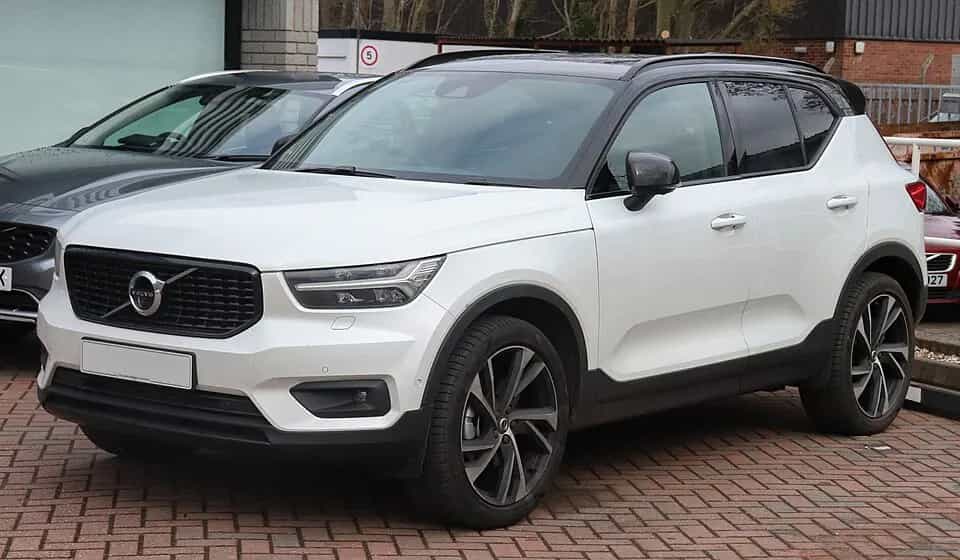
Volvo XC40 – used car imported from the USA
Photo: Vauxford · CC BY-SA 4.0 · Wikimedia Commons

From launch to today

The XC40 launched globally for the 2018 model year (2019 in the US) as the first Volvo on the Compact Modular Architecture (CMA) platform, developed with Geely. It won European Car of the Year in 2018. Volvo facelifted the range for the 2023 model year with a revised front end, and around the same time simplified US trim naming to Core, Plus and Ultimate. The combustion cars are the mainstream import; there is also a fully electric Recharge (later renamed EX40), which is a separate proposition with its own charging considerations. A US import today is generally a 2019 through 2024 car.

Engines and drivetrain in detail

US XC40s are almost all petrol. Early cars (2019-2021) used the T4 (front-wheel drive) and T5 (all-wheel drive) versions of Volvo's 2.0-liter turbocharged four-cylinder, the T5 producing around 248 hp. From 2022 Volvo moved US cars to the B4 and B5 badges, adding a 48-volt mild-hybrid system to the same 2.0 turbo four for smoother stop-start and slightly better efficiency; the B5 AWD makes about 247 hp. All use an 8-speed automatic transmission. The XC40 does not offer a diesel in the US market. For a German buyer, the T5/B5 AWD is the sensible target — strong performance and the traction most import buyers want.

Trim levels and variants

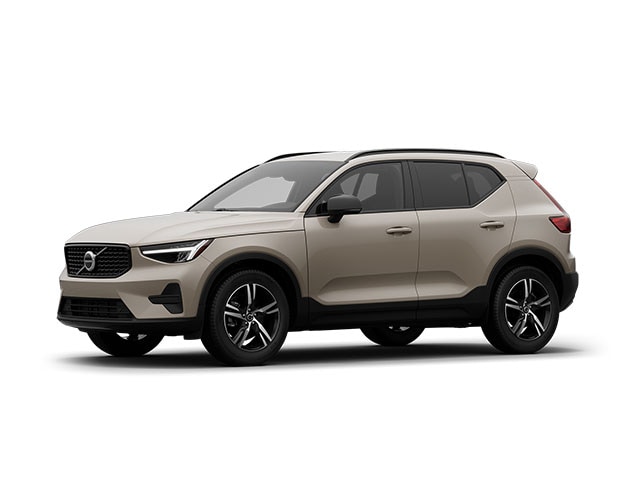
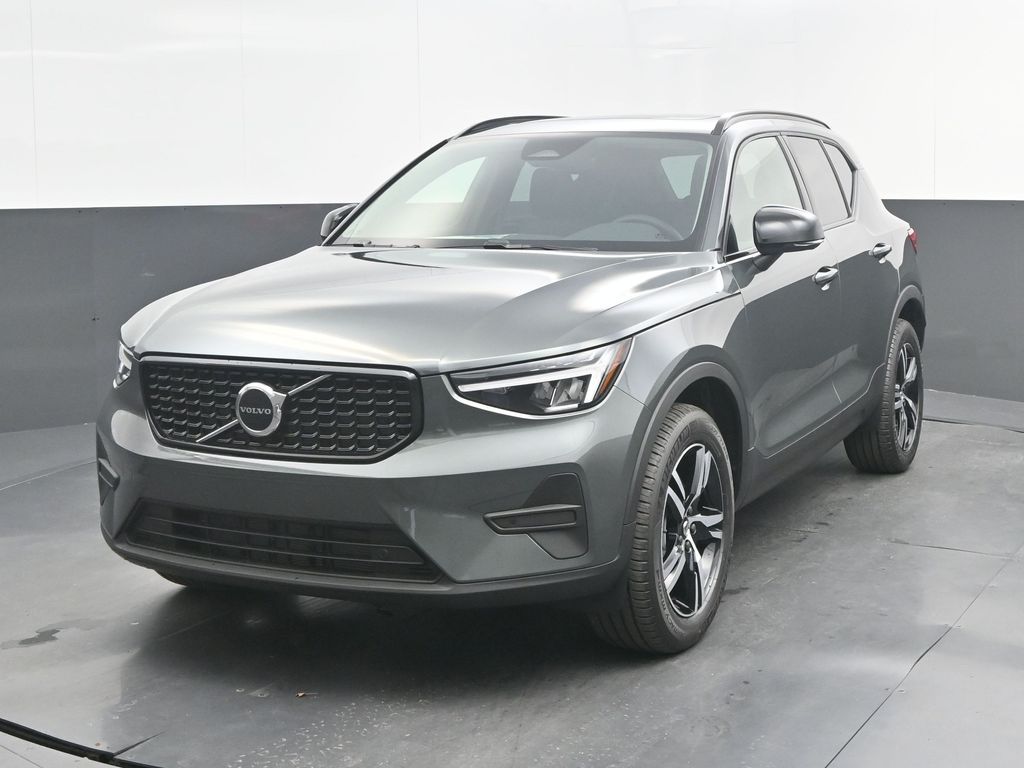
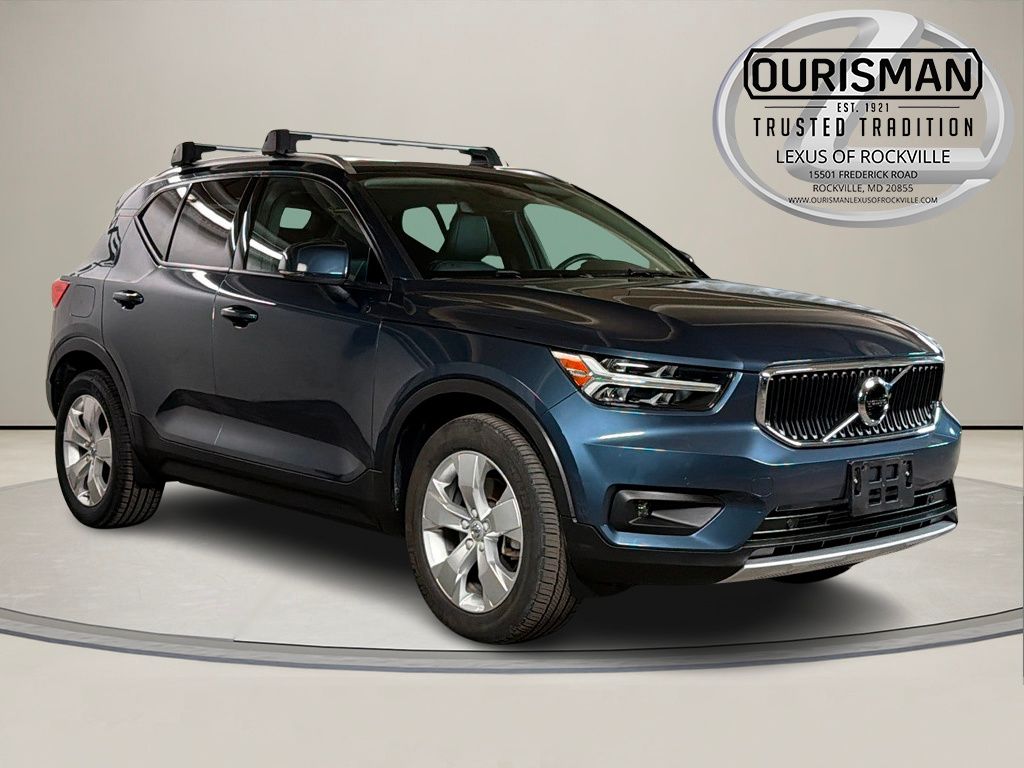
The XC40 is offered only as a five-door compact SUV with a notably upright, boxy silhouette that maximises interior space and visibility. US trims evolved from Momentum, R-Design and Inscription (pre-facelift) to the cleaner Core, Plus and Ultimate structure. R-Design cars bring sportier styling and seats; Inscription and Ultimate add leather, the Harman Kardon audio, and more driver-assist features. Watch for the panoramic roof, the excellent Harman Kardon sound system, the 360-degree camera, and — on 2023-on cars — the Google-based infotainment with built-in Google Maps and Assistant.

Used availability in the USA

The XC40 sold steadily in America as an entry into the premium-compact class, so used supply of 2019-2022 cars is reasonable, frequently coming off lease in good order. Typical candidates show moderate mileage and urban use. As a premium compact it attracted careful owners, but also city parking scrapes — inspect wheels and lower bodywork. Sun-belt cars avoid road salt and are the practical choice for shipping. Because the same car is common in Europe, a US import makes most sense when you find a specific well-optioned example at the right value rather than for scarcity reasons.

When importing makes sense

The XC40 suits a buyer who wants a compact, high-quality, safety-focused SUV that is easy to place in tight European streets yet feels premium inside, with Volvo's clean design and strong seats. It is a good fit for singles, couples and small families who prioritise usability and safety technology over outright size. It is less suited to anyone needing three rows or heavy towing; for that, step up to an XC60 or XC90.

Facts and figures

ItemDetail (2019-2024)
Body style5-door compact premium SUV
PlatformVolvo/Geely CMA
Engine (T5/B5)2.0 L turbo four-cylinder
T5 output~248 hp
B5 output (mild hybrid)~247 hp + 48V system
Entry engineT4 / B4 2.0 turbo four (FWD)
Transmission8-speed automatic (Aisin)
DriveFWD or AWD
Length~4,425 mm
Width (excl. mirrors)~1,863 mm
Wheelbase~2,702 mm
Kerb weight~1,700-1,850 kg
Boot capacity~452 L (seats up)
FuelPremium petrol (95+)
Seats5

Reliability and common problems

The XC40 is generally dependable, but a few themes recur. Early cars had infotainment (Sensus) freezes and occasional blank screens; the 2023-on Google-based system is a marked improvement but still relies on software updates. The 2.0 turbo four is a proven Volvo engine, though earlier examples across the Volvo range showed occasional oil-consumption and PCV issues, so check for oil use and clean cold starts. Watch the front suspension for early bushing and control-arm wear, and listen for a rattle from the panoramic roof shade. On mild-hybrid B4/B5 cars, the small 48-volt battery is a wear item to keep in mind on higher-mileage examples. Overall Volvo XC40 reliability is solid for the class; the electronics and normal turbo-engine maintenance are the main watch points rather than any endemic mechanical flaw.

How US versions differ

US XC40s run MPH clusters, headlamps aimed for right-hand traffic, no rear fog lamp, and North American radio tuning. Equipment packaging differs — some European options were bundled differently in US trims. Because the same generation is sold in Europe, the mechanical and safety hardware is familiar to German inspectors, but a US car still lacks a European COC and is approved individually. The B4/B5 mild-hybrid badging maps directly to the European equivalents.

From US purchase to registration

Choose the exact car and trim; verify the VIN and pull a full history report, confirming the build plant for the origin question; pay through escrow; arrange US inland transport and ocean freight to Bremerhaven; clear EU customs on arrival; present for TUEV inspection and individual approval (Einzelabnahme per Section 21 StVZO); then register at your local Zulassungsstelle.

Costs, duty and taxes at a glance

Remember: no origin proof, no 0% duty – and 19% German import VAT is due on every import.

This model is flagged origin-neutral, and the reason is the build location: XC40s for the North American market are built at Volvo's plant in Ghent, Belgium (with some global production in China), not in the United States. A European-built car does not meet the US-origin condition, so the 0% EU rate under Regulations (EU) 2026/1455 and 2026/1461 — which requires provable US origin and direct transport (since 1 July 2026, through 31 December 2029) — generally does not apply, and the standard EU import duty is charged instead. Origin must always be confirmed from the VIN and documents, never assumed. In every case the 19% German import VAT (Einfuhrumsatzsteuer) applies on the customs value plus duty and freight. We add no margin: you pay the seller, freight, duty and VAT, plus our transparent brokerage fee.

TÜV, approval and license plates

Expect to fit a rear fog lamp, correct the headlight beam pattern for right-hand traffic, and switch the cluster to a km/h-primary display (the XC40 changes units in its menu). The odometer is documented and converted from miles. Because the model is EU-sold, the inspector can reference the European type for many parameters, but the individual approval still substitutes for the missing COC.

Pre-purchase checklist

Decode the VIN and confirm the build plant so you know the likely duty treatment before you buy. Pull a full Carfax or AutoCheck for accidents, title branding and odometer integrity. Inspect wheels and lower body for the parking scrapes common on urban compacts. Check the engine for oil consumption and confirm service history and oil-change discipline. Verify the infotainment software version and that the screen behaves. Confirm the title is clean, not salvage, flood or rebuilt. Test the panoramic roof and all driver-assist features.

Import FAQ

Is the US XC40 the same as the European one?

Mechanically yes — it is the same CMA-platform car. US cars differ in lighting, instrumentation and equipment packaging, all addressed at approval.

Will it qualify for 0% EU import duty?

Generally no, because North American XC40s are built in Belgium (or China), not the USA, so they lack US origin. Standard duty applies, and the 19% import VAT always applies.

Which engine should I look for?

The T5 or the later mild-hybrid B5, both AWD versions of the 2.0 turbo four, offer the best blend of performance and traction for German conditions.

Is the XC40 reliable?

Broadly yes. Watch the infotainment software, potential oil consumption on the turbo four, and front suspension wear on higher-mileage cars.

Does it come as an electric car?

Yes, the fully electric Recharge (later EX40) exists, but it is a separate model with its own charging and import considerations.

How many seats and how much boot space?

Five seats and around 452 litres of boot capacity with the rear seats up.

What fuel does it take?

Premium unleaded petrol, 95 octane or higher; there is no US diesel version.

How long does the import take?

Usually several weeks from purchase to registration, mostly determined by ocean freight and the TUEV appointment.

Start here: browse Volvo in the Carhub, compare the larger Volvo XC60 and Volvo XC90, or the electric Volvo C40, or view current XC40 listings.