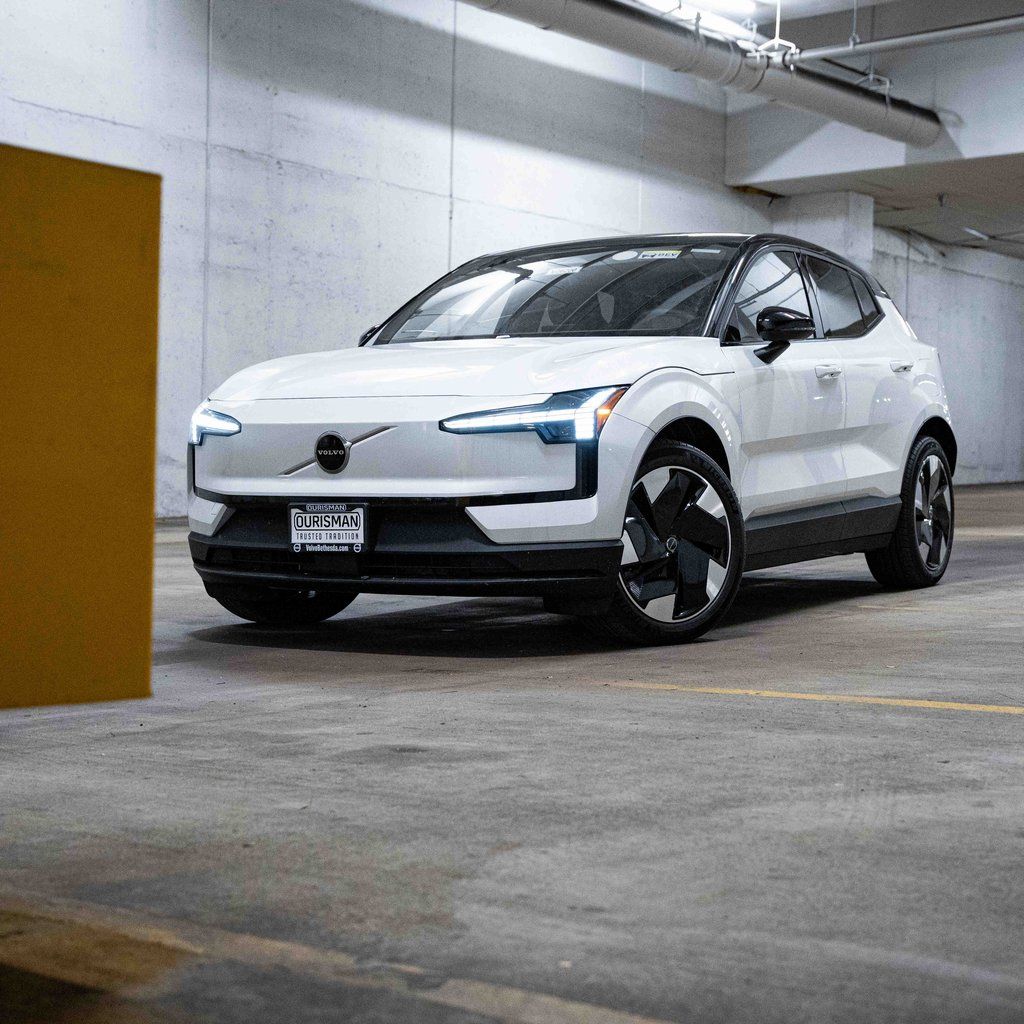
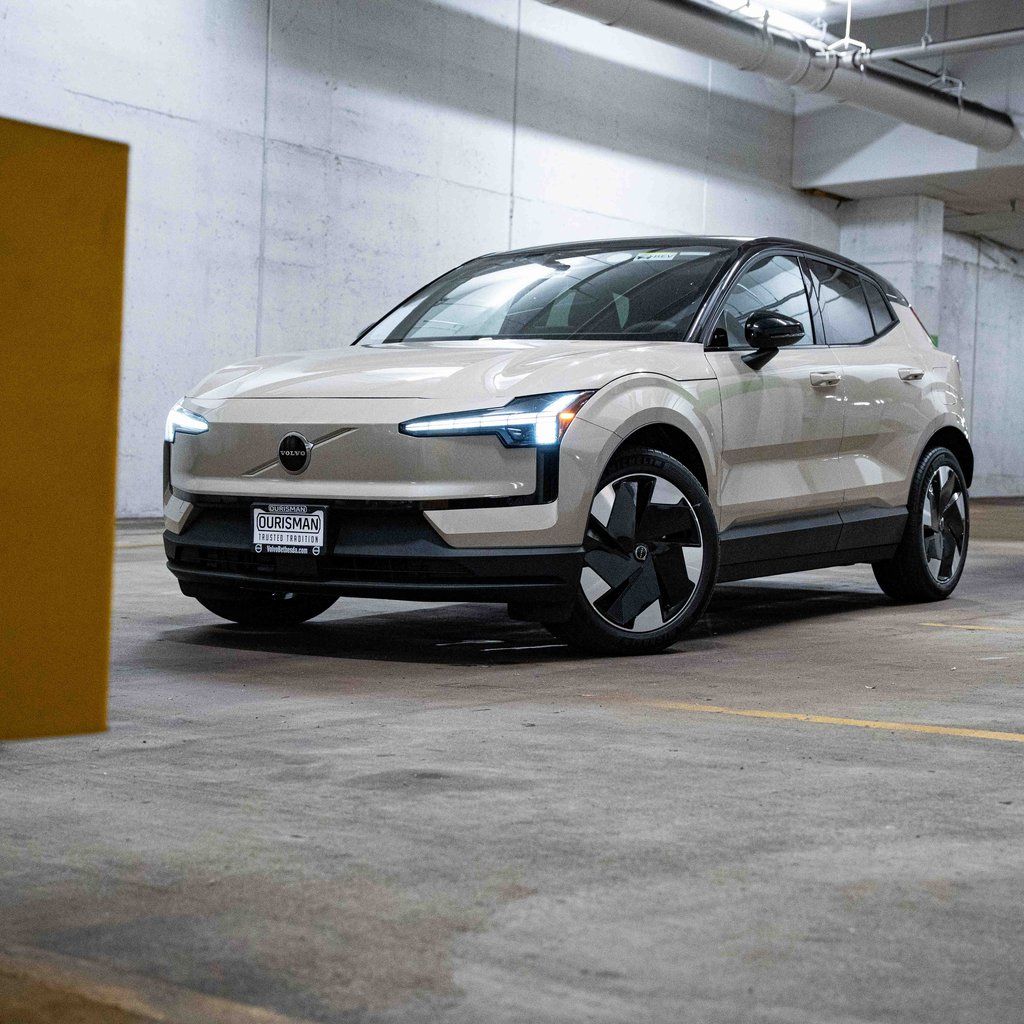
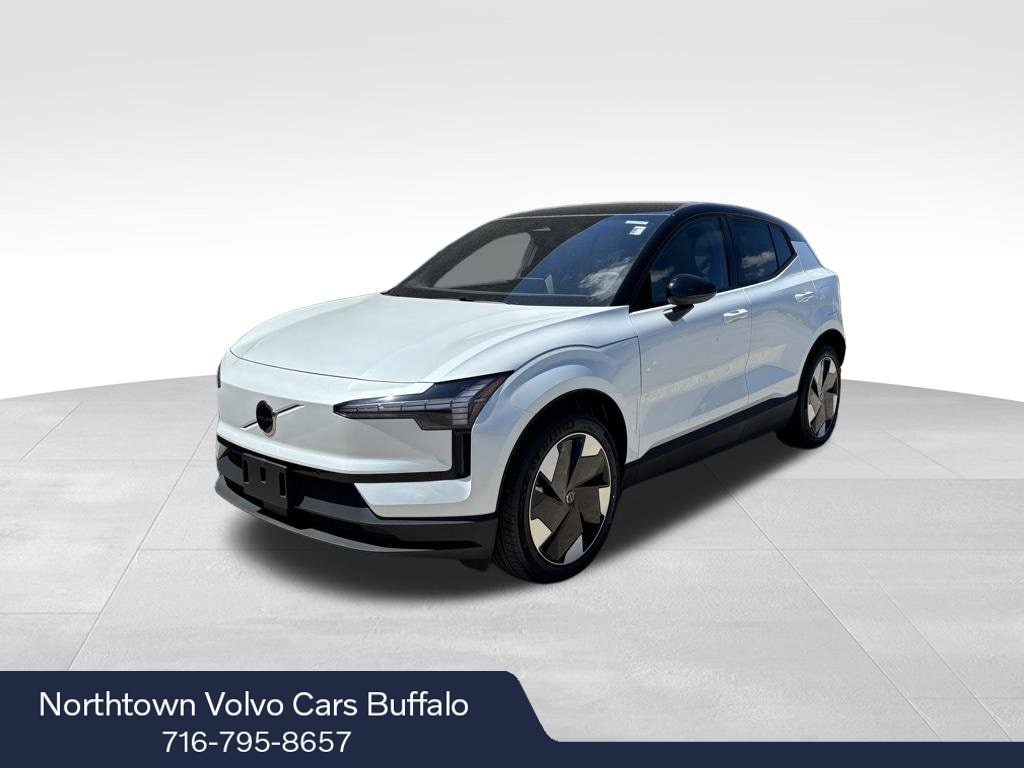
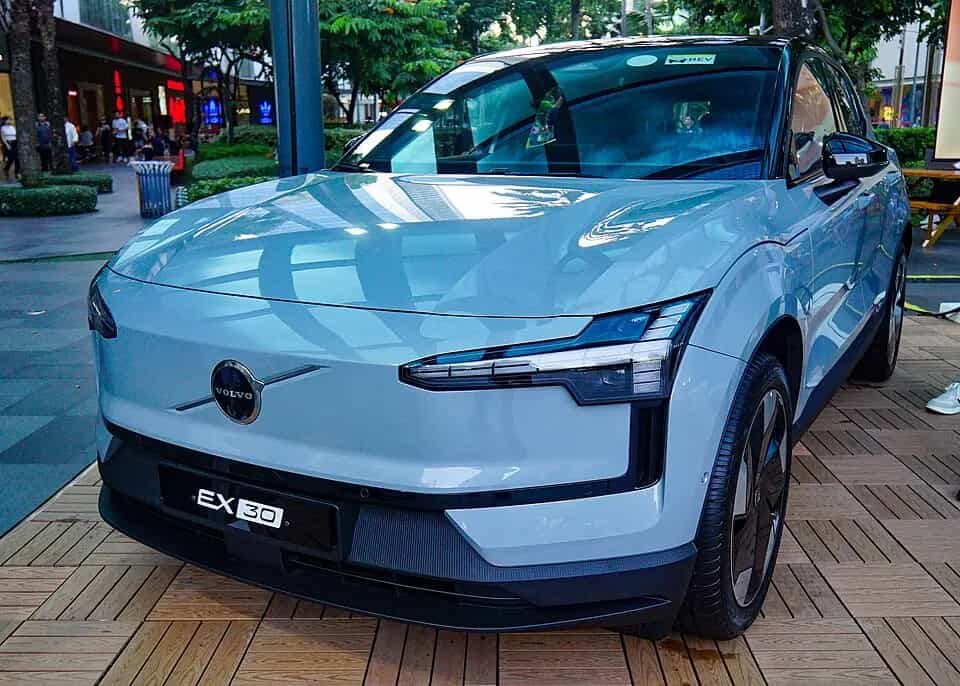
Volvo EX30
Importing a used Volvo EX30 from the USA
The Volvo EX30 is the smallest and most affordable electric car Volvo has built to date, and it arrived on the North American market later than in Europe. That timing matters: a used EX30 sourced in the United States is typically a very recent, low-mileage vehicle, often a 2025 or later car that a first owner has already traded or leased back. For German and EU buyers, importing a used EX30 from America can open up a specific configuration or colour that is scarce at home, sometimes with generous factory equipment. As an independent broker, USCar Trader sources and arranges the import for you without acting as a dealer and without adding a hidden vehicle margin.

Production years and key changes
The EX30 launched globally for the 2024 model year and reached US showrooms in 2025 after supply-chain and tariff adjustments delayed its debut. It sits on the SEA (Sustainable Experience Architecture) platform shared with parent group Geely, the same architecture underpinning the smart #1 and Zeekr X. Because it is a first-generation model, there are no major body changes yet, but early build cars did receive over-the-air software revisions that improved charging behaviour, regenerative braking calibration and the minimalist central-display interface. A Cross Country variant with raised ride height and cladding joined the range, broadening the line-up for buyers who want a slightly more rugged look.
What is under the hood
The EX30 is purely electric. US cars are built around a roughly 64 kWh (usable) NMC battery in the long-range versions. The Single Motor Extended Range uses one rear-mounted permanent-magnet motor producing about 268 hp (200 kW), driving the rear wheels — a genuinely quick small SUV. The Twin Motor Performance adds a front motor for all-wheel drive and around 422 hp (315 kW), with a 0-100 km/h time near 3.6 seconds, making it one of the fastest Volvos ever on paper. DC fast charging peaks around 150 kW, taking the pack from 10 to 80 percent in roughly 27 minutes under good conditions. There is no combustion or hybrid EX30.
Trims and body styles
Body-wise the EX30 is a single five-door subcompact crossover. US trim structure centres on Core, Plus and Ultra equipment tiers layered over the Single Motor and Twin Motor drivetrains, plus the Cross Country. Expect a Google-based Android Automotive infotainment system, a soundbar-style Harman Kardon audio option, a panoramic fixed glass roof and Volvo's Pilot Assist driver aids on higher trims. The cabin deliberately removes most physical switches, routing climate and mirror adjustment through the 12.3-inch portrait touchscreen.
What the US market offers
Because the EX30 is new to America, the used pool is small but growing, dominated by 2025 build-year cars with low mileage, many coming off short leases in coastal EV-friendly states such as California. Condition is generally excellent given the age, though you should still verify battery state of health and confirm that all software updates have been applied. Watch for cars that spent their life in hot climates, as sustained heat affects long-term battery longevity. Availability of the Twin Motor Performance is thinner than the Single Motor.
Who this import is for
Importing a used EX30 from the USA suits a buyer who wants a compact, premium electric SUV with strong performance and Scandinavian design, and who values a specific spec that is hard to find locally. It is a sensible route if you can identify a well-documented, low-mileage US car and want to benefit from the wider American used inventory. Buyers who need maximum range or tow capacity should look elsewhere, but for urban and regional use the EX30 is a compelling small EV.
Technical data and figures
| Attribute | Detail (typical US-market EX30) |
|---|---|
| Body style | Subcompact electric SUV, 5-door |
| Platform | Geely SEA |
| Battery (usable) | approx. 64 kWh NMC (Extended Range) |
| Single Motor output | approx. 268 hp / 200 kW, RWD |
| Twin Motor output | approx. 422 hp / 315 kW, AWD |
| 0-100 km/h (Twin) | approx. 3.6 s |
| Top speed | 180 km/h (limited) |
| WLTP range (Single) | up to ~480 km |
| DC fast charge peak | approx. 150 kW |
| AC onboard charger | up to 22 kW (market-dependent) |
| Length | approx. 4,233 mm |
| Wheelbase | approx. 2,650 mm |
| Kerb weight | approx. 1,750-1,900 kg |
| Boot capacity | approx. 318 l + 7 l frunk |
| Seating | 5 |
Reliability: trouble spots to check
As a young model the EX30's long-term reliability record is still forming, but early ownership feedback highlights software rather than mechanical faults. Owners have reported occasional infotainment freezes, sluggish wake-up from sleep, and connectivity hiccups with the Android Automotive system — most addressed by over-the-air updates, so a car with the latest software behaves noticeably better. The minimalist interior draws criticism because there is no driver-facing instrument cluster; all speed and range data appears on the central screen. Mechanically the drivetrain is simple and low-maintenance, but check the 12-volt auxiliary battery, verify that regenerative braking and one-pedal drive engage smoothly, and confirm the heat pump (where fitted) operates. Battery state-of-health documentation is the single most important item for any used EV import.
US vs. Europe differences
US EX30s use the North American charging ecosystem; many are equipped with, or adaptable to, the Tesla-style NACS connector, whereas EU cars use CCS2. Plan for a charging adapter or confirm the car's inlet before importing. Headlight beam pattern, side-marker lighting and the rear fog lamp differ between US and EU specifications and must be corrected for registration. Speedometer units, tyre pressure labelling and the eCall emergency system also follow different standards. Software region settings may need adjustment so that navigation, units and connected services work correctly in Europe.
How the import works
The process runs in a clear sequence: selecting a suitable, well-documented car; checking the VIN and confirming the exact build plant and origin; using a secure escrow arrangement so funds are only released on verified handover; arranging ocean freight in a container or RoRo vessel to a northern European port; clearing customs on arrival; presenting the car for TÜV individual approval (Einzelabnahme) with any required modifications; and finally registering it at your local authority. USCar Trader coordinates each stage as your broker.
Import duty, VAT and fees
In short: the 0% duty rate applies only with documented US origin (VIN/plant) – German import VAT of 19% is always due.
Two charges are separate and must not be confused. First, the EU import duty: the EX30's origin is not automatically American, so the rate depends on the vehicle's actual build plant as shown by the VIN. Only a car with provable US origin can qualify for the 0 percent duty introduced by Regulations (EU) 2026/1455 and 2026/1461 (in force since 1 July 2026, direct transport, valid until 31 December 2029). An EX30 built in China or Belgium does not meet that origin test, so the standard EU passenger-car import duty applies. Second, and always, the 19 percent German import VAT (Einfuhrumsatzsteuer) is charged on the customs value plus duty and freight. We never promise duty-free import.
From modifications to registration
For registration the car must meet German lighting rules, which usually means correcting the headlight beam pattern and ensuring a working rear fog lamp. The speedometer must display km/h, the odometer reading is documented, and the charging connector must be compatible with local infrastructure. As an EV the EX30 has no exhaust to convert, which simplifies TÜV compared with combustion imports.
Pre-buy inspection points
Before committing, confirm these points: the full VIN and documented build origin; a Carfax or AutoCheck history showing no accident or flood damage; battery state-of-health and charging performance; that all software updates are installed; the charging connector type (NACS vs CCS); the clean title status with no salvage or lemon branding; and complete service and warranty records.
What buyers ask most
Is the Volvo EX30 worth importing from the USA?
It can be, especially for a specific low-mileage spec that is scarce in Europe. The value depends on the total landed cost including duty and 19 percent import VAT, which we calculate transparently.
Does a used EX30 qualify for 0 percent EU import duty?
Only if its VIN proves US build origin. Many EX30s are built in China or Belgium, in which case the standard EU duty applies. We check the plant before you buy.
Will the American charging plug work in Germany?
US cars may use the NACS connector; Europe uses CCS2. An adapter or inlet check is needed, which we assess as part of the import.
What is the real range of the EX30?
The Single Motor Extended Range achieves up to around 480 km WLTP; real-world figures depend on temperature and driving style.
How reliable is the EX30?
Mechanically it is simple, but early cars had software quirks largely fixed by updates. A car on current software behaves well.
How long does the import take?
Typically several weeks from purchase to registration, driven mainly by ocean freight and TÜV scheduling.
Is the 19 percent import VAT always due?
Yes. German Einfuhrumsatzsteuer applies to every import regardless of the car's origin or duty rate.
Can you import the Twin Motor Performance?
Yes, though it is rarer on the US used market than the Single Motor version, so sourcing may take longer.
Ready to start? Browse Volvo in the Carhub, compare related models such as the Volvo XC40, the Volvo C40 and the larger Volvo EX90, or view current Volvo EX30 listings and let us handle the import.