Volvo S60
Importing a used Volvo S60 from the USA
The Volvo S60 is Sweden's answer to the compact executive sedan, and the US market has always taken it seriously. For a German buyer, an American-market S60 is an interesting proposition: the cars are often well specified, sold with strong safety packages, and — depending on the model year — actually assembled on US soil. USCar Trader acts as an independent broker, sourcing used examples and handling the paperwork from American auction or dealer to your German registration office. This page walks through what the S60 really is, which engines to look for, and what the import actually involves.

Model history: years and generations
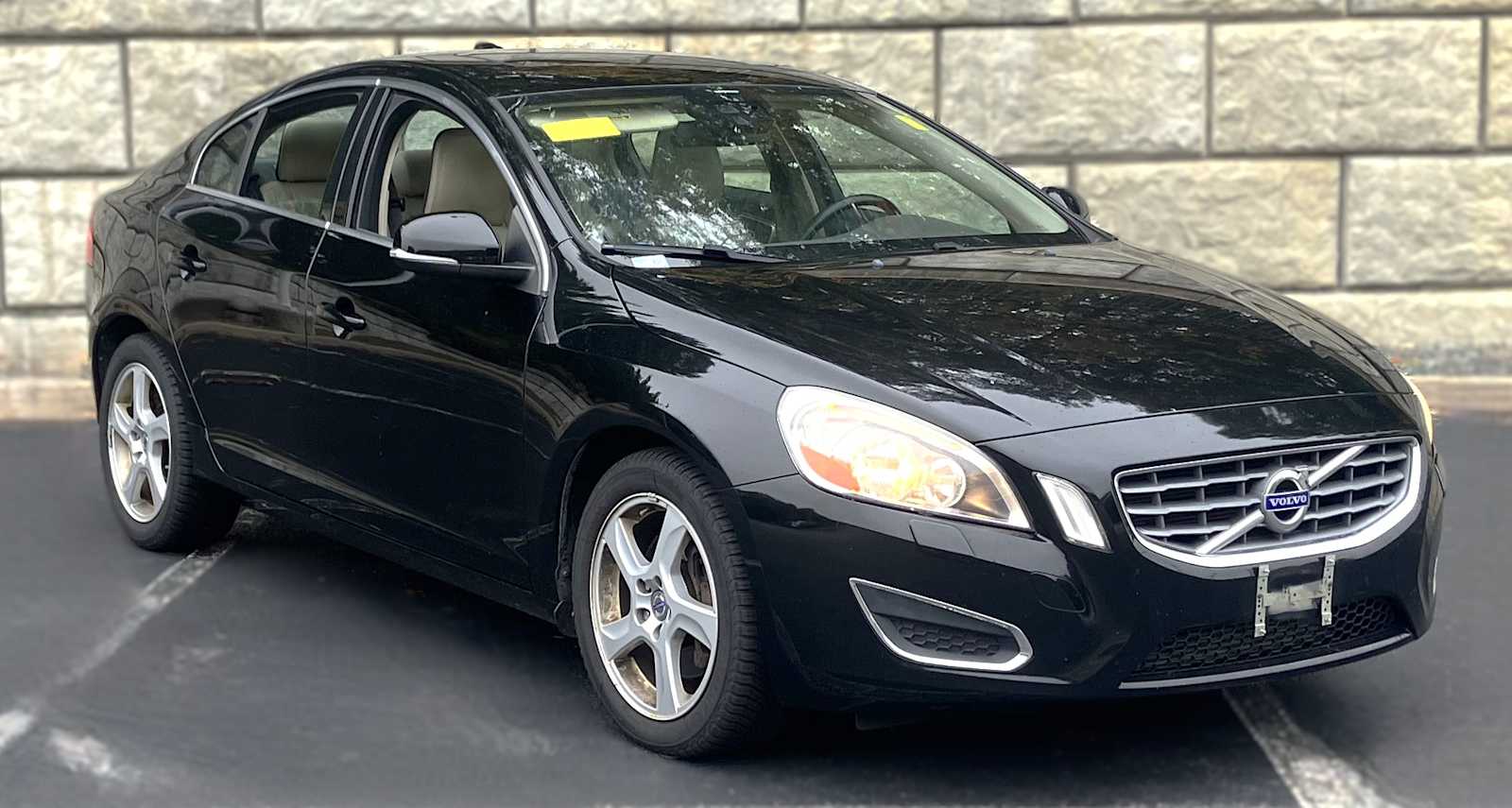
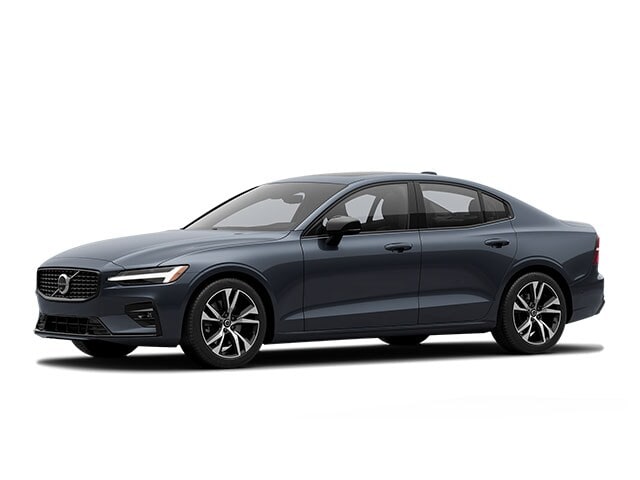
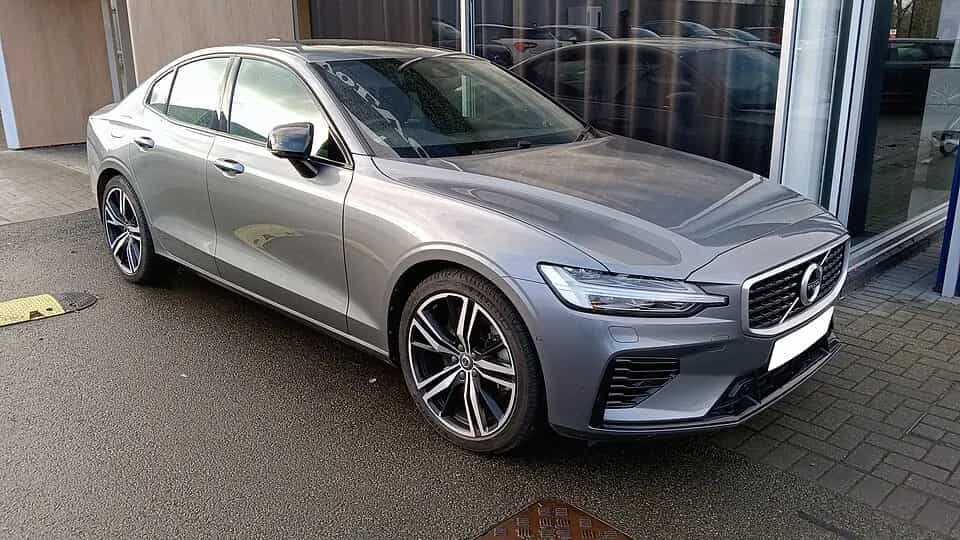
The nameplate arrived in 2000 as the first-generation S60 (P24 platform), sharing its bones with the larger S80. That car ran until 2009 and is best remembered for the S60 R, a 2.5-litre turbocharged five-cylinder producing around 300 hp with Haldex all-wheel drive. The second generation (2010–2018, P3 platform) modernised everything — sharper styling, the City Safety collision-avoidance system, and a shift from five-cylinder turbos toward the four-cylinder Drive-E family late in the run. The current third generation launched for 2019 on Volvo's SPA architecture. Crucially for import buyers, the third-gen S60 sold in North America is built at Volvo's plant in Ridgeville, South Carolina — the brand's first US factory. That means many late-model used examples carry a US build, which is directly relevant to customs origin.
Engines, transmissions and drive
American S60s are almost entirely turbocharged four-cylinders on the current car. The T5 pairs a 2.0-litre turbo (roughly 250 hp) with front-wheel drive; the T6 adds a supercharger on top of the turbo for about 316 hp and standard all-wheel drive. At the top sits the T8 plug-in hybrid — the same 2.0-litre combined with an electric rear axle for a system output near 400 hp in Polestar Engineered guise. Earlier second-generation US cars offered the 2.5-litre five-cylinder T5 and the 3.0-litre inline-six T6, plus a genuinely quick Polestar variant. Almost all use an Aisin eight-speed automatic (six-speed on older cars); a manual was never a US staple. If you want a used Volvo S60 with all-wheel drive, the AWD T6 and T8 are the ones to target.
Equipment lines and body styles
In the US the S60 is a four-door sedan only — the wagon equivalent is the V60. Trim ladders varied by year but generally ran Momentum, R-Design and Inscription, with the Polestar Engineered sitting above as a limited hybrid performance flagship. R-Design brings sportier seats and trim; Inscription leans luxury with open-pore wood and extended leather. Expect large touchscreen infotainment (Sensus, later Google-based Android on the newest cars), panoramic roofs, and Volvo's comprehensive driver-assist suite even on mid-level trims.
The US used market
Supply of used S60s in the States is healthy across 2011–2022 model years. Second-generation cars turn up with higher mileage but attractive equipment; third-generation examples from 2019 onward are the sweet spot for buyers who want the modern platform and the South Carolina build. Typical auction and trade-in cars sit anywhere from 40,000 to 130,000 km, and southern-state cars tend to be rust-free — a meaningful advantage over salt-belt German winters. Condition varies widely, so a documented service history and a clean history report matter more than the headline odometer figure.
Is an import right for you?
An imported S60 suits a driver who wants a discreet, safe, comfortable sedan that isn't on every German street corner. It rewards buyers who value crash protection, quiet cruising and a Scandinavian cabin over badge snobbery. The plug-in T8 appeals to anyone chasing performance with a company-car-friendly footprint. If you specifically want a car with a strong chance of qualifying for the 0% EU import duty, the US-built third-generation S60 is worth a close VIN check.
Specs at a glance
| Attribute | Typical figure (US third-gen S60) |
|---|---|
| Body style | Four-door sedan (D-segment) |
| Length | approx. 4,761 mm |
| Width | approx. 1,850 mm |
| Wheelbase | approx. 2,872 mm |
| Kerb weight | 1,650–1,950 kg depending on drivetrain |
| Engine (T5) | 2.0 L turbo I4, ~250 hp |
| Engine (T6) | 2.0 L super-/turbocharged I4, ~316 hp |
| Engine (T8) | 2.0 L PHEV, ~400 hp combined |
| Transmission | 8-speed Aisin automatic |
| Drivetrain | FWD (T5) or AWD (T6/T8) |
| Fuel | Petrol / plug-in hybrid |
| Seats | 5 |
| Assembly (current gen, US market) | Ridgeville, South Carolina, USA |
| Model years (US) | 2011–2022 (gens 2–3) |
Common issues buyers should know
The S60 is generally solid, but a few weak points recur. The Drive-E 2.0-litre uses a rubber timing belt that runs in oil and must be replaced on schedule — a neglected belt is a genuine engine risk, so check the service record. Some owners report elevated oil consumption and PCV-system issues on these engines. The supercharged-and-turbocharged T6 is complex; the two boosting systems and their plumbing add failure points. Infotainment (the Sensus system on 2019–2021 cars) has a reputation for occasional freezes and slow response. On the older inline-five cars, watch the PCV oil-trap, the electronic throttle module on early examples, and the aging automatic. None of this makes the S60 unreliable, but Volvo servicing in Germany is not cheap, so budget for it.
Differences from the European version
US-spec cars run amber side markers, sometimes red rear turn signals, and headlight aiming set for right-hand traffic — all of which the TÜV will scrutinise. The speedometer reads primarily in mph. American trims often bundle equipment differently than European ones (heated seats and large screens are common), and the newest cars use US navigation mapping that may need updating. Mechanically the cars are the same family, which keeps parts availability reasonable.
Import step by step
The process runs in a clear sequence: model selection and inspection in the US; a VIN and origin check to establish where the car was actually built; payment secured through escrow rather than a direct wire to a stranger; ocean freight (container or RoRo) to a European port such as Bremerhaven; customs clearance on arrival; a TÜV individual approval (§21 StVZO) with any required modifications; and finally German registration. USCar Trader coordinates each stage so nothing stalls at the port.
Customs and taxes: what applies
In short: the 0% duty rate applies only with documented US origin (VIN/plant) – German import VAT of 19% is always due.
Two separate charges apply and should never be blended together. First, the EU import duty: under Regulations (EU) 2026/1455 and 2026/1461, a 0% rate applies to vehicles of proven US origin imported by direct transport between 1 July 2026 and 31 December 2029. Because the S60 carries a "neutral" origin flag, the rate depends on where your specific car was built — a US-assembled South Carolina S60 can qualify at 0% with a VIN/plant match, while an older European-built example would attract the standard passenger-car rate. Nothing is guaranteed without documentary proof. Second, and always payable regardless of origin, is the 19% German import VAT (Einfuhrumsatzsteuer), calculated on the customs value plus duty and freight. USCar Trader charges a transparent brokerage fee and takes no hidden margin on the car.
Modifications and single-vehicle approval
Typical work to pass the German individual approval includes converting the lighting to European specification, retrofitting a rear fog lamp (mandatory in Germany and absent on US cars), and verifying the odometer reads correctly in km or is documented in miles. A CoC is rarely available for a US car, so the TÜV inspector works from the VIN and a technical assessment. Once approved, you register at your local Zulassungsstelle.
What to verify before buying
- Decode the VIN and confirm the build plant for origin purposes.
- Pull a Carfax or AutoCheck history for accidents, title and odometer records.
- Confirm the timing-belt service on Drive-E engines was done on time.
- Inspect underbody for rust — favour southern-state cars.
- Check the title is clean (not salvage or flood) unless priced accordingly.
- Verify infotainment, all electronics and the AWD system function.
- Review a complete service history rather than trusting the odometer alone.
Common questions
Is a used Volvo S60 from the USA reliable enough to import?
Yes, provided you buy on documentation. The main caveats are the Drive-E timing belt interval and infotainment quirks; a well-serviced car is dependable.
Can a US Volvo S60 qualify for the 0% EU import duty?
Only with proven US origin. The current-generation S60 for North America is built in South Carolina, which can support a 0% claim after a VIN/plant check. It is never automatic.
Does the 19% import VAT always apply?
Yes. The German Einfuhrumsatzsteuer of 19% is due on every import regardless of origin, calculated on customs value plus duty and freight.
Which S60 engine should I look for?
The T5 is the value pick, the AWD T6 the all-rounder, and the T8 the performance plug-in hybrid. Match the drivetrain to your use.
How long does the import take?
Allow roughly six to twelve weeks from purchase to German plates, driven mainly by shipping schedules and the TÜV appointment.
Do I need a rear fog lamp fitted?
Yes. US cars lack one, and it must be retrofitted for German road approval.
Is USCar Trader a Volvo dealer?
No. USCar Trader is an independent broker for used US vehicles, with no manufacturer partnership and no margin on the car itself.
Can I import a T8 plug-in hybrid?
Yes, the T8 imports like any other S60; factor in the high-voltage battery when arranging inspection and shipping.
Ready to start? Browse Volvo in the Carhub, compare related sedans such as the Volvo S90, the Volvo S80 and the Volvo V60, or view current S60 listings.