Production years and key changes
Two Touareg generations reached America. The first (7L, 2004–2010) launched with a shared Porsche Cayenne/Audi Q7 lineage and offered everything from a V6 to a V8 and even a V10 TDI in limited numbers.
 0049 (0)89 2000 791 00
 Mo - Fr 8:00am - 8:00pm
USCar Trader import service
Choose a specific vehicle. Where data is available, its detail page shows the import cost calculation. We assess any possible duty benefit with you before purchase.
Important: A 0% EU import-duty rate may be available for a vehicle covered by Regulation (EU) 2026/1455 that has US origin and is imported directly into the EU. CETA may apply to a vehicle with preferential Canadian origin. Whether the requirements are met is assessed for the individual case. Please contact us before purchase; we review the possible duty benefit and provide non-binding support through the process. Import VAT and other costs are assessed separately.
CarHub · Volkswagen
The Touareg is Volkswagen's premium full-size SUV, and the American-market cars have their own distinct history.

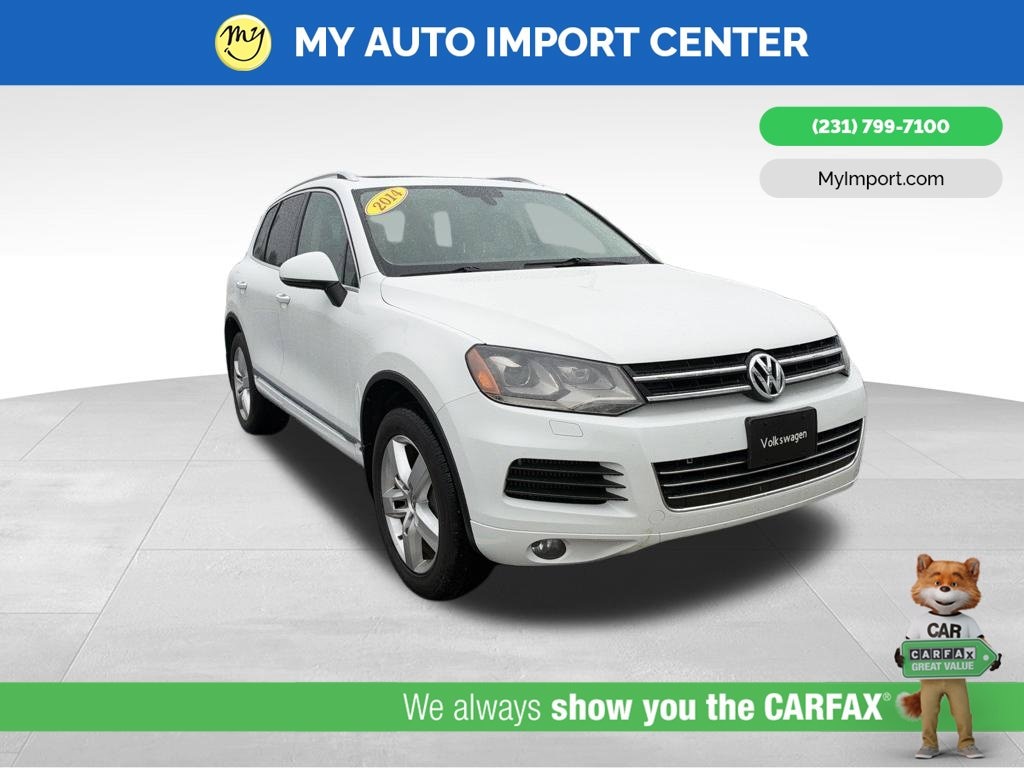
Price:14,898.00 USD
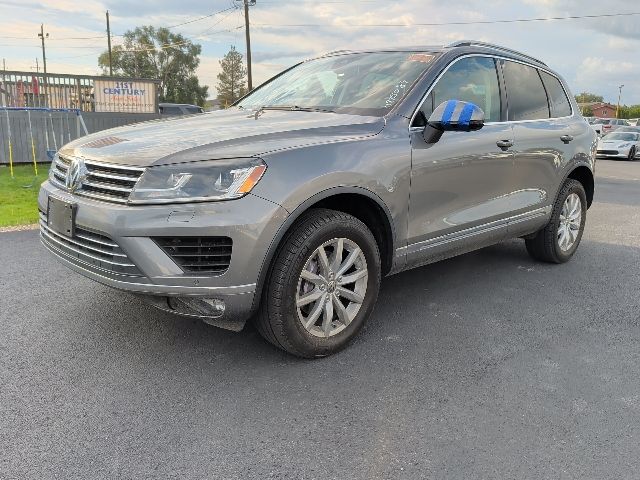
Price:12,462.00 USD
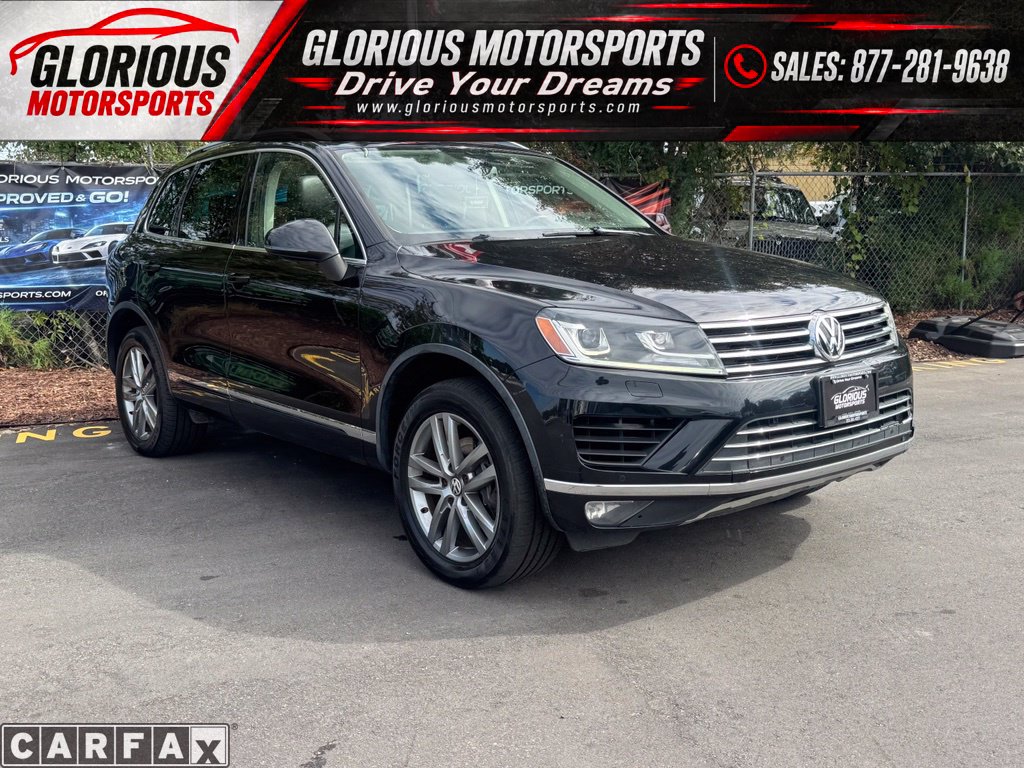
Price:12,126.00 USD
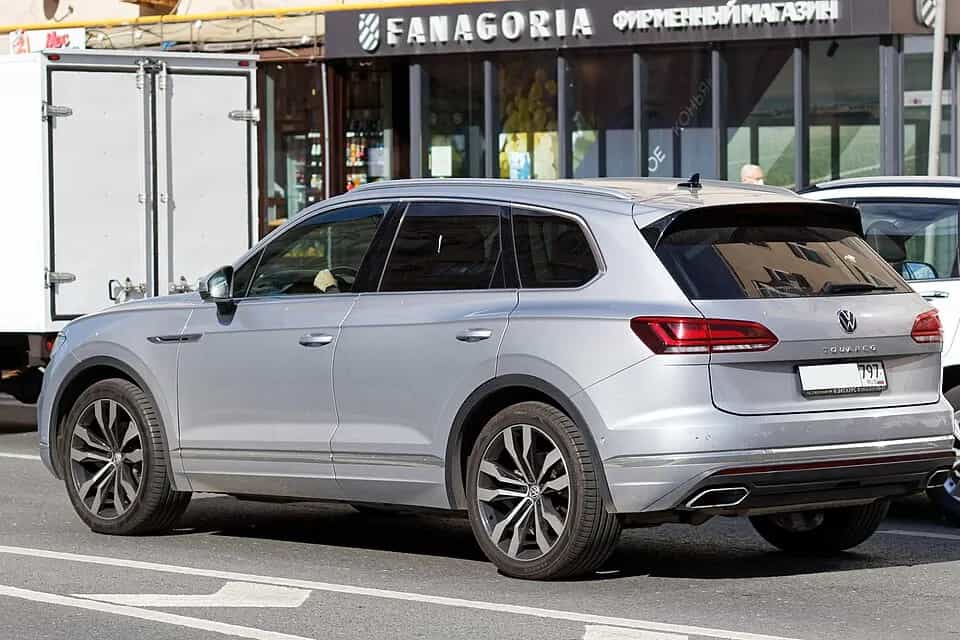
Price:10,899.00 USD

Price:6,995.00 USD
Model profile
Two Touareg generations reached America. The first (7L, 2004–2010) launched with a shared Porsche Cayenne/Audi Q7 lineage and offered everything from a V6 to a V8 and even a V10 TDI in limited numbers.
Powertrain and equipment
US Touaregs centred on the 3.6-litre VR6 petrol (about 280 hp) and, importantly, the 3.0-litre V6 TDI diesel (roughly 225–240 hp, 550 Nm) that made the second-gen car a strong tow vehicle. The first generation added a 4.2 V8 and the rare 5.0 V10 TDI.
The Touareg is a five-seat, five-door SUV only — no third row, unlike the Atlas that replaced it. US trims ran Sport, Lux, Executive and, on the diesel, TDI variants, with options for air suspension, panoramic roof, Nappa leather, keyless access and premium audio.
Vehicle selection
Because sales ended in 2017, the US pool is finite and ages upward.
Buyers who want a genuinely capable, quietly premium full-size SUV with real off-road hardware and, in TDI form, strong towing and range.
Vehicle data
| Body | Typical US-spec Touareg (2011–2017, 7P): 5-door, 5-seat full-size SUV |
|---|---|
| Length | Typical US-spec Touareg (2011–2017, 7P): approx. 4,800 mm |
| Wheelbase | Typical US-spec Touareg (2011–2017, 7P): approx. 2,890 mm |
| Seating | Typical US-spec Touareg (2011–2017, 7P): 5 |
| Kerb weight | Typical US-spec Touareg (2011–2017, 7P): approx. 2,150–2,300 kg |
| Engines | Typical US-spec Touareg (2011–2017, 7P): 3.6 L VR6 petrol / 3.0 L V6 TDI diesel |
|---|---|
| Power | Typical US-spec Touareg (2011–2017, 7P): approx. 280 hp (VR6) / 225–240 hp (TDI) |
| Torque | Typical US-spec Touareg (2011–2017, 7P): approx. 360 Nm (VR6) / 550 Nm (TDI) |
| Transmission | Typical US-spec Touareg (2011–2017, 7P): 8-speed Aisin automatic |
| Drive | Typical US-spec Touareg (2011–2017, 7P): Permanent 4Motion AWD |
| Fuel | Typical US-spec Touareg (2011–2017, 7P): Petrol (premium) or diesel |
| Assembly | Typical US-spec Touareg (2011–2017, 7P): Bratislava, Slovakia |
|---|---|
| Suspension | Typical US-spec Touareg (2011–2017, 7P): Steel springs or optional air suspension |
| Towing | Typical US-spec Touareg (2011–2017, 7P): up to approx. 3,175 kg |
Values are reproduced verbatim from the existing article table. The documents for the specific vehicle govern.
Pre-purchase review
The second-gen Touareg is well built but complex, and age is now the main factor. The air suspension, where fitted, can develop leaking struts and a failing compressor — an expensive fix, so check ride height and self-levelling. The VR6 is durable but watch for cooling-system and water-pump issues and coil packs.
Germany and Europe
US cars carry MPH-primary clusters, the US radio band and US lighting without a European rear fog lamp; beam patterns need adapting.
Typical work includes European headlight adaptation, adding or activating a rear fog lamp, a km/h speedometer check and documentation of the odometer.
USCar Trader services
As a buyer based in Germany, you do not have to inspect the vehicle yourself in the United States or Canada. Within the agreed scope, USCar Trader can coordinate document review, a separately commissioned on-site inspection and purchase processing.
Covered inspection points are agreed in advance. An on-site inspection records condition at the appointment and is not a guarantee.
Next step: Before commissioning, USCar Trader and the customer agree which document, history, inspection and transaction checks suit the vehicle and are included in the service. This records what was actually checked.
Import process
The assessment depends on the specific vehicle and the circumstances of the transaction. Please contact USCar Trader before purchase; we review any possible duty benefit and provide non-binding support. Import VAT and other costs are considered separately.
Questions and answers
VW stopped selling the Touareg in the USA after 2017, so every US import is a first- or second-generation car; the newer European model was never sold there.
Sometimes, but the US TDI emissions settlement means each diesel's status must be checked — bought-back, modified or clean — before purchase.
No, not automatically. A 0% EU import-duty rate may be available for a vehicle covered by Regulation (EU) 2026/1455 that has US origin and is imported directly into the EU. CETA may apply to a vehicle with preferential Canadian origin. Whether the requirements are met is assessed for the individual case. Please contact USCar Trader before purchase; we review the possible duty benefit and provide non-binding support. Import VAT and other costs are assessed separately.
It can be as cars age. Leaking struts and a tired compressor are the usual faults, so test the self-levelling before buying.
No. The Touareg is a five-seat SUV. If you need three rows, the Atlas is the VW to consider.
Very. Permanent 4Motion and, on TDI cars, up to around 3,175 kg towing make it a serious workhorse.
Yes. The Touareg shares much with the Audi Q7 and Porsche Cayenne of its era, so mechanical parts are well supported.
Available VIN, title and history information can be reviewed in the vehicle profile. USCar Trader can also arrange a separately booked on-site inspection within a scope agreed in advance.
More vehicles