Volkswagen Atlas

Importing a used Volkswagen Atlas from the USA

The Atlas is the big three-row Volkswagen SUV that Germany never officially received. Designed in Wolfsburg but engineered and built for North America, it fills the space above the Tiguan with genuine seven-seat room, a commanding driving position and equipment tuned to American buyers. For a German family that wants a full-size VW SUV, importing a used Atlas from the USA is one of the few ways to get one. There is a further wrinkle that matters at the customs desk: the Atlas is assembled in Chattanooga, Tennessee, so it is one of the rare European-badged models whose VIN often points straight back to a US plant. As an independent broker, USCar Trader sources these cars and manages the route from purchase to German plates — while always verifying the individual VIN before making any statement about duty.

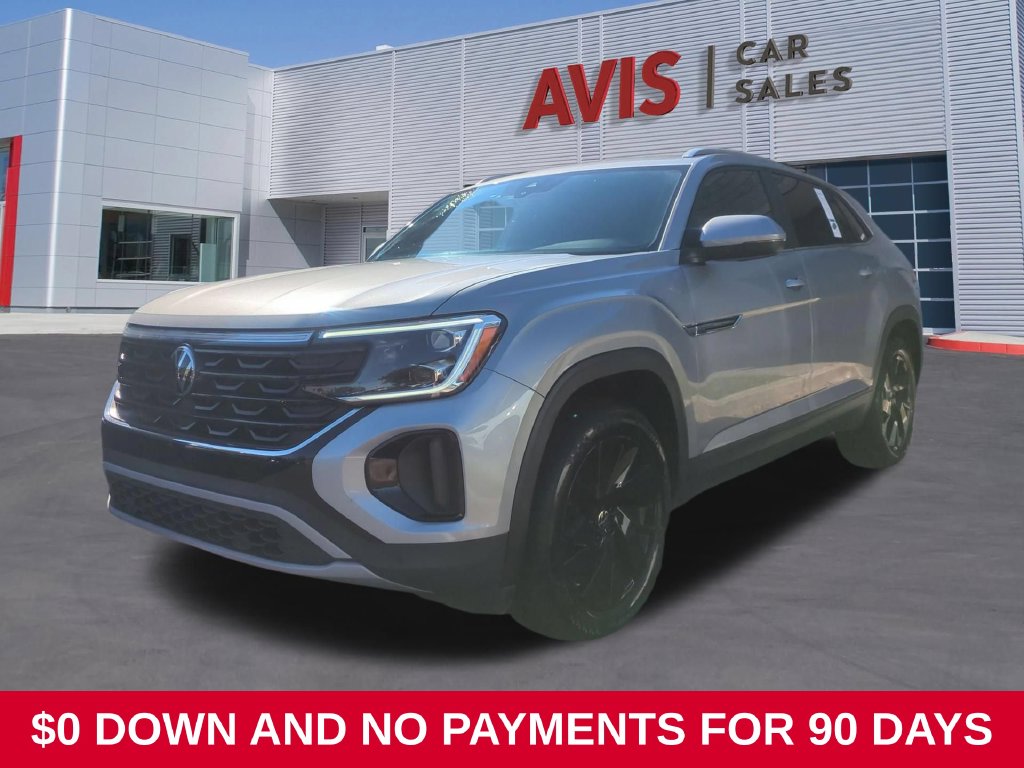
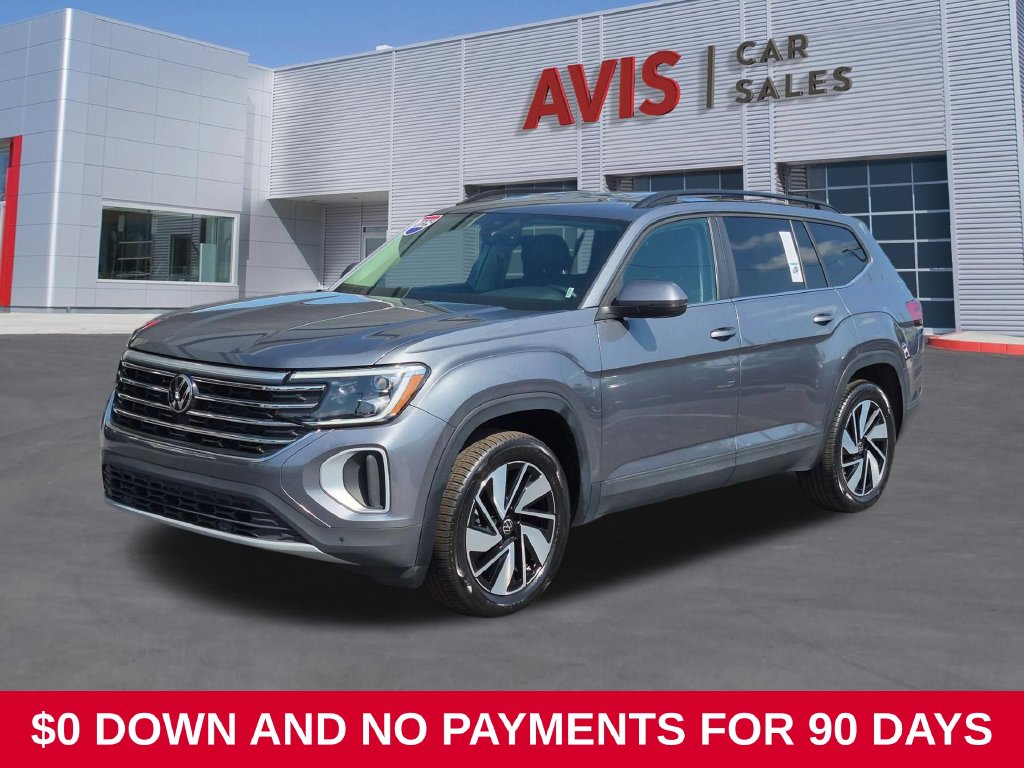
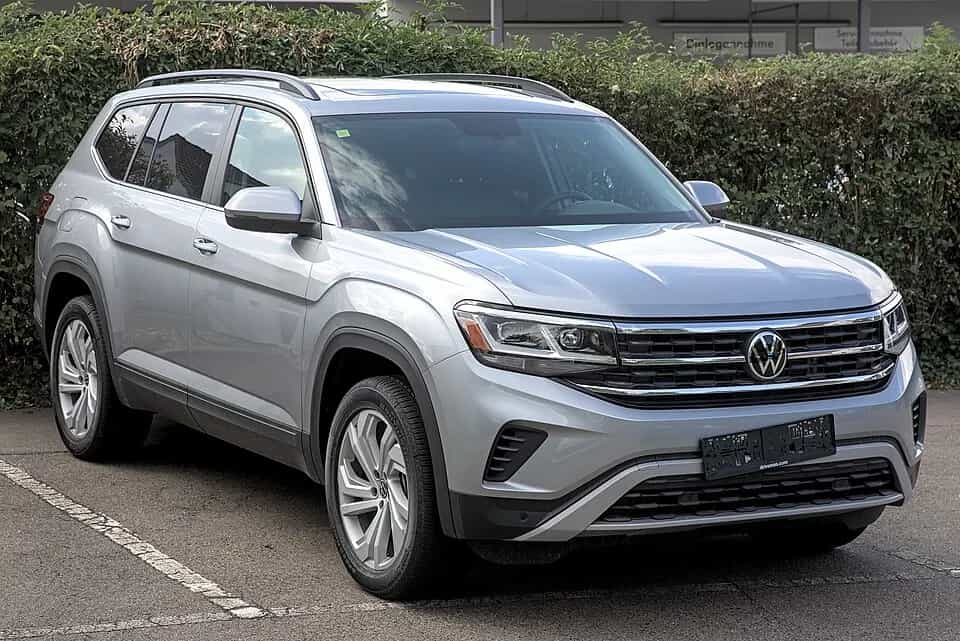
Volkswagen Atlas – used car imported from the USA
Photo: Alexander Migl · CC BY-SA 4.0 · Wikimedia Commons

Model history: years and generations

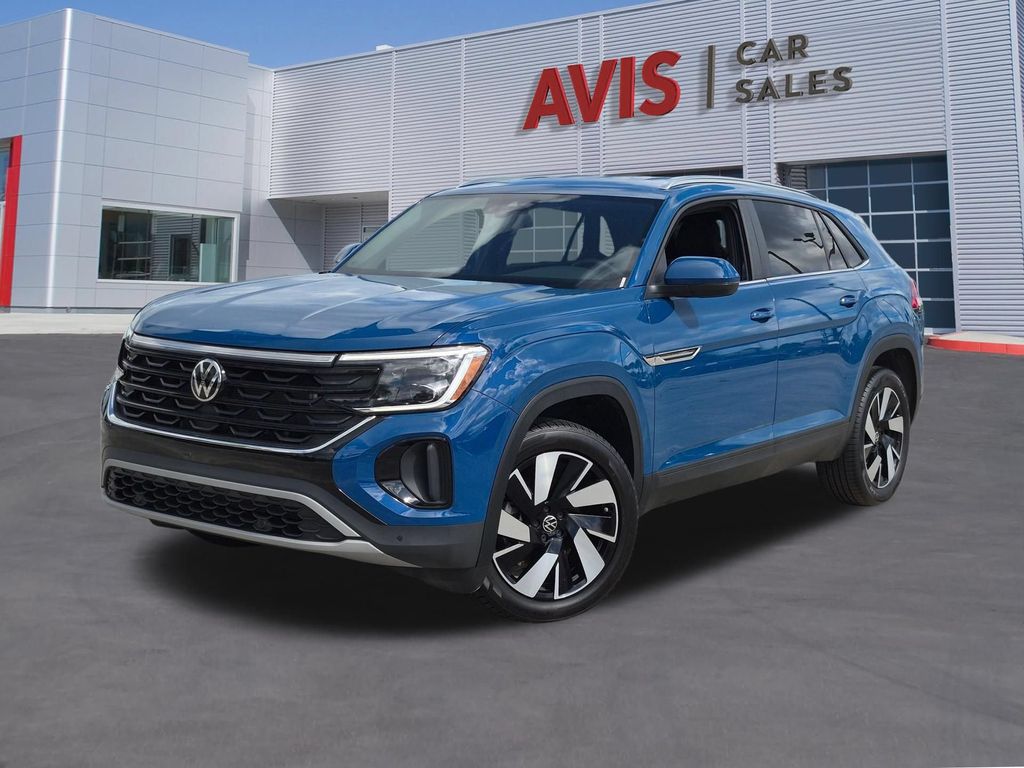
The Atlas launched for the 2018 model year on the MQB platform. A mid-cycle refresh for 2021 sharpened the styling and updated safety systems. A more substantial 2024 update brought a new interior, a large central touchscreen, and a switch to a single turbocharged four-cylinder engine across the range. Alongside the standard Atlas, VW added the Atlas Cross Sport for 2020 — a five-seat, coupé-roofline version of the same vehicle. Used supply spans 2018 through 2024, with the pre-2024 cars offering the option of the VR6 engine.

Engines, transmissions and drive

Two engines define the used Atlas. Early cars offered a 2.0-litre EA888 turbo four (about 235 hp) and, more popularly, a 3.6-litre VR6 narrow-angle six producing roughly 276 hp and 266 lb-ft. Both drove through an eight-speed automatic, with front-wheel drive standard and 4Motion all-wheel drive optional (standard with the VR6 on many trims). From 2024, VW dropped the VR6 and standardised a stronger 2.0 TSI making around 269 hp. The VR6 is smooth and characterful but thirsty; the turbo four is more efficient and, in later tune, quicker.

Equipment lines and body styles

The Atlas is a three-row, seven- or six-seat SUV (captain's chairs replace the middle bench on higher trims). US grades run S, SE, SE with Technology, SEL, SEL R-Line and SEL Premium R-Line, adding leather, panoramic roof, Fender audio, ventilated seats, a digital cockpit and full driver-assist as you climb. The Cross Sport shares the range but seats five under a lower rear roofline.

The US used market

Volume is healthy. The Atlas sold strongly, so 2018–2022 examples with 50,000–130,000 km (30,000–80,000 miles) are common, many as one-owner or lease-return family cars. VR6 cars command a following; turbo-four cars are cheaper to run. Prefer sun-belt vehicles for clean underbodies and confirm the third row and towing gear if the car was used as a hauler.

Is an import right for you?

Buyers who need a true three-row SUV with American proportions and a VW badge, and who like the idea that a Chattanooga-built car may qualify for the 0% US-origin duty once the VIN is checked. It suits large families and those who tow. It is not for buyers chasing sportiness or low fuel bills — especially the VR6, which drinks.

Specs at a glance

AttributeTypical US-spec Atlas (2018–2024)
Body3-row full-size SUV (6–7 seats)
Engines2.0 L EA888 turbo I4 / 3.6 L VR6 (petrol)
Powerapprox. 235 hp (I4) / 276 hp (VR6); 269 hp (2024 I4)
Torqueapprox. 258 lb-ft (I4) / 266 lb-ft (VR6)
Transmission8-speed automatic
DriveFront-wheel drive or 4Motion AWD
AssemblyChattanooga, Tennessee (USA)
Lengthapprox. 5,040 mm
Wheelbaseapprox. 2,980 mm
Seating6 or 7
FuelPetrol
Tankapprox. 70 L
Towingup to approx. 2,270 kg (VR6, 4Motion)
Kerb weightapprox. 1,950–2,100 kg

Common issues buyers should know

The Atlas is generally solid, but each engine has its watch-points. The VR6 is durable but has been noted for occasional oil leaks and higher fuel and maintenance costs; its timing components live deep in the engine. The 2.0 EA888 shares the family's tendency toward intake-valve carbon build-up and the odd water-pump leak. Across the range, early infotainment units could be laggy or reboot, and some owners reported HVAC actuator noises and rear-hatch electrical niggles. The eight-speed automatic is reliable with clean fluid. As a heavy vehicle, brakes and tyres wear at full-size-SUV rates, so budget for consumables.

Differences from the European version

The Atlas was never homologated for Germany, so lighting (rear fog lamp, beam pattern), the MPH-primary cluster and US radio band all need attention. Emissions and OBD data are US-spec and must be matched to an EU individual approval. Equipment such as the Fender audio and specific driver-assist calibrations are US-market. Because it is a genuinely American-built VW, the paperwork trail for origin is often clearer than for European-made VWs.

Import step by step

First the right car and drivetrain are chosen, then the VIN and plant are verified. Funds are best handled through escrow, released on confirmed handover. The car is booked onto ocean freight (container or RoRo) to a North European port, clears EU customs on arrival, then passes TÜV and, where required, an individual approval (Einzelabnahme) before German registration.

Customs and taxes: what applies

In short: the 0% duty rate applies only with documented US origin (VIN/plant) – German import VAT of 19% is always due.

Keep the two charges separate. Import duty: the 0% EU rate for US-origin vehicles under Regulations (EU) 2026/1455 and 2026/1461 (in force since 1 July 2026, direct transport) applies only when US origin is provable. Because the Atlas is built in Chattanooga, a US-plant VIN often supports the 0% claim — but we still verify each VIN and never promise the outcome in advance. Separately, the 19% German import VAT (Einfuhrumsatzsteuer) is due on every import, whatever the origin. USCar Trader adds no margin; the figures are the real ones.

Modifications and single-vehicle approval

Expect headlight adaptation to the European beam, addition or activation of a rear fog lamp, a km/h speedometer check and documentation of the odometer reading. Emissions data is matched to the EU type. After the TÜV sign-off the Atlas is registered on German plates.

What to verify before buying

Confirm the VIN, title and Chattanooga build plant. Pull a Carfax or AutoCheck for accidents, title brands and service. On VR6 cars, check for oil leaks and cooling-system history; on turbo cars, ask about carbon-cleaning. Inspect the underbody for rust and the towing hardware if fitted. Test all three rows, the panoramic roof and the infotainment. Verify a clean (non-salvage) title.

Common questions

Was the Atlas ever sold in Germany?

No. It was built and sold for North America, so importing a used one from the USA is the normal way to own one here.

Is the Atlas built in the USA?

Yes, in Chattanooga, Tennessee. That US plant often supports a 0% duty claim once we verify the VIN, though we never guarantee it in advance.

Which engine should I choose?

The VR6 is smooth and strong for towing but thirsty; the 2.0 turbo is more economical and, in later form, quicker. Both use the eight-speed automatic.

Does the 19% import VAT still apply?

Yes, always. The German import VAT is due on every import regardless of the car's origin or duty rate.

How reliable is it?

Broadly dependable. Watch VR6 oil leaks, EA888 carbon build-up and early infotainment glitches, and keep the transmission fluid serviced.

Can it tow?

Yes. Properly equipped VR6 4Motion cars are rated to around 2,270 kg; verify the specific car's towing package.

What about parts in Germany?

The MQB mechanicals and EA888/VR6 engines are well supported. Some US-specific body and trim parts may need to be ordered.

See the full range in the Volkswagen in the Carhub, compare with the Atlas Cross Sport, the smaller Tiguan and the Touareg, or view the current Atlas listings.