Volkswagen Tiguan
Importing a used Volkswagen Tiguan from the USA
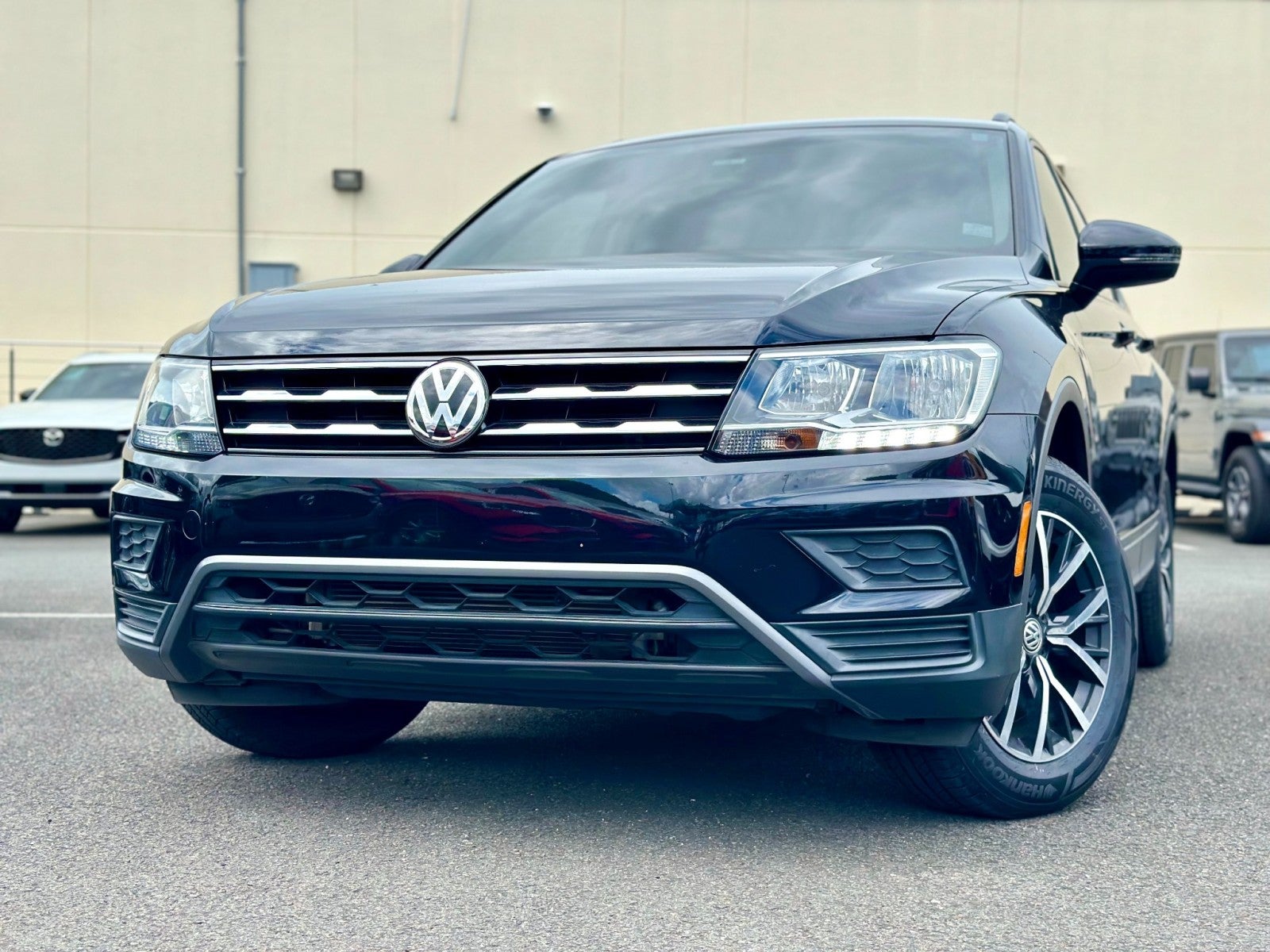
The Tiguan is Volkswagen's global best-seller, but the version sold in North America is not the same car Europeans know. Since 2018 the US market has received the long-wheelbase Tiguan, a stretched two-row-plus-optional-third-row family SUV built specifically for American tastes. That makes a used Tiguan imported from the USA an interesting proposition for a German buyer: more interior space, a softer ride and equipment packages that were never offered here. As an independent broker, USCar Trader sources these cars for private and commercial clients and handles the process from selection to German registration. The Tiguan is a European-badged model, so the import duty is not automatic — it hinges on where the individual car was actually built, which the VIN tells you.

Generations at a glance
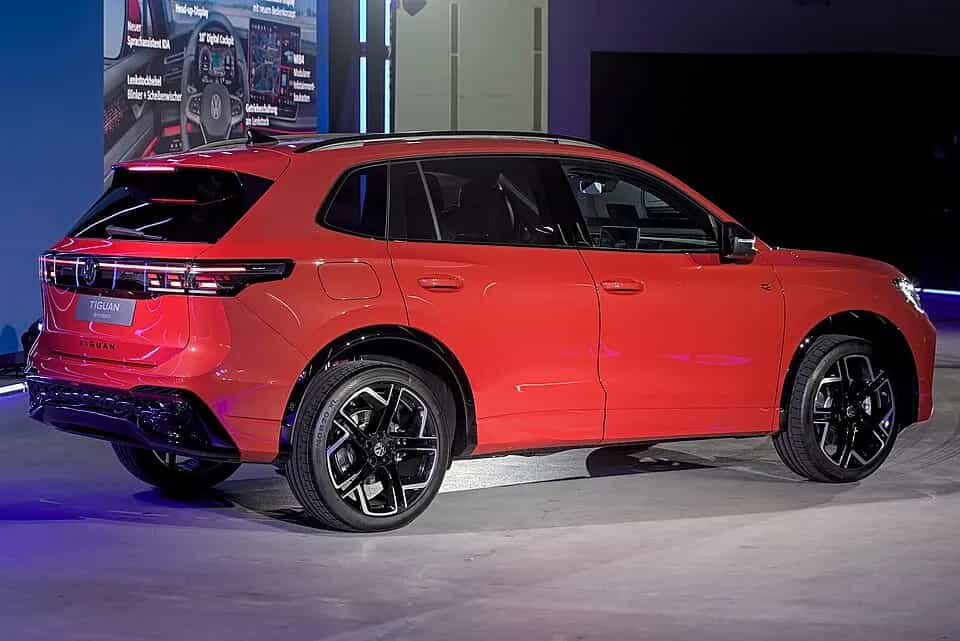
The first Tiguan (5N, 2007–2016) reached the US late and sold in modest numbers. The story changes with the second generation. Global markets got the MQB-based Tiguan in 2016, but the USA received the extended "Tiguan Allspace" wheelbase as the 2018 model year, roughly 11 cm longer than the European short version, with a standard sliding second row and an available small third row. A facelift arrived for 2022 with a revised nose, new infotainment and a digital cockpit. The all-new third-generation Tiguan launched globally for 2024/2025; US availability of that car is only now ramping up, so the used market is dominated by 2018–2024 long-wheelbase examples.
Powertrain lineup
US Tiguans are refreshingly simple to understand: essentially one engine. It is the 2.0-litre EA888 turbocharged four-cylinder, tuned in the States to 184 hp and 221 lb-ft (300 Nm), paired with an eight-speed Aisin torque-converter automatic rather than the DSG used in Europe. Front-wheel drive is standard; 4Motion all-wheel drive is optional across the range. There are no diesel, plug-in-hybrid or high-output R variants in the US line-up, which keeps parts and diagnostics straightforward. The American tune prioritises smoothness over outright pace, so acceleration is relaxed rather than urgent.
Trims in the US market
The body is a five-door SUV only. US trims run S, SE, SE R-Line Black, SEL and SEL Premium R-Line, with the third-row bench standard on front-drive cars and optional on 4Motion. Higher trims add leather, panoramic roof, Fender audio, ventilated seats, adaptive cruise and the Digital Cockpit instrument display. R-Line packages bring sportier bumpers and larger wheels without changing the mechanicals.
The used market stateside
Supply is deep. The Tiguan was a volume seller, so 2018–2022 cars with 40,000–110,000 km (25,000–70,000 miles) are plentiful, many coming off lease in clean condition. Sun-belt cars (Texas, Arizona, Florida, California) are the pick for rust-free underbodies. Because most were family vehicles, check for interior wear and a documented service history rather than mechanical abuse.
Who should import one
A buyer who wants a roomy, US-spec seven-seat-capable Tiguan with equipment combinations unavailable in Germany, or who simply finds the right car at the right specification stateside. It suits families who value space and a comfortable ride over sportiness. It is less suited to anyone expecting the European short-wheelbase Tiguan or a diesel — those were never sold in the USA.
Key specifications
| Attribute | Typical US-spec Tiguan (2018–2024) |
|---|---|
| Body | 5-door mid-size SUV (long wheelbase) |
| Engine | 2.0 L EA888 turbo inline-4 (petrol) |
| Power | 184 hp (137 kW) |
| Torque | 221 lb-ft / 300 Nm |
| Transmission | 8-speed Aisin automatic |
| Drive | Front-wheel drive or 4Motion AWD |
| 0–100 km/h | approx. 8.9–9.4 s |
| Length | approx. 4,720 mm |
| Wheelbase | approx. 2,790 mm |
| Seating | 5, with optional third row (up to 7) |
| Fuel | Petrol, 91 AKI / 95 RON premium recommended |
| Tank | approx. 58 L |
| Cargo (2 rows up) | approx. 1,065 L |
| Kerb weight | approx. 1,650–1,780 kg |
How reliable is it?
The US Tiguan is a mostly dependable car, but the EA888 engine has known quirks. Early second-gen units can suffer carbon build-up on the intake valves (a direct-injection trait) and the occasional water-pump or thermostat housing leak. The timing chain tensioner on older EA888 generations was a weak point; the versions used here are improved but a listening check at cold start is wise. Watch for oil consumption on higher-mileage cars and confirm oil-change intervals were kept short. The eight-speed Aisin automatic is generally robust — more so than a DSG — but a fluid service history is reassuring. Infotainment glitches and the panoramic roof drains blocking are the usual annoyances rather than serious faults.
What US models do differently
Beyond the longer body, US cars use amber rear turn signals or combined red units, MPH-primary clusters, and lack the European rear fog lamp. Radio tuning is the US band, and some driver-assist calibrations differ. The eight-speed automatic replaces the European DSG, and there is no diesel option. Equipment such as ventilated front seats and Fender audio appears on US trims that had no direct German equivalent.
Seven steps to your import
Selection of the right car and specification comes first, then a VIN and origin check to establish the actual plant of build. We recommend an escrow arrangement so funds are only released on verified handover, followed by ocean freight (usually container or RoRo) to a North European port. On arrival the car clears EU customs, then goes through TÜV inspection and, where needed, an individual approval (Einzelabnahme) before German registration.
Customs, taxes and costs explained
Remember: no origin proof, no 0% duty – and 19% German import VAT is due on every import.
Two charges are separate and must not be confused. First, the import duty: the 0% EU rate for vehicles of US origin (Regulations (EU) 2026/1455 and 2026/1461, in force since 1 July 2026, direct transport) applies only where US origin is provable from the VIN and plant. Many US-market Tiguans are built in Puebla, Mexico, not the USA — for those the standard passenger-car duty applies, so we never promise 0% and always verify the VIN first. Second, the 19% German import VAT (Einfuhrumsatzsteuer) is due on every import regardless of origin. USCar Trader charges no hidden margin; you see the actual figures.
German TÜV and registration
Typical work includes converting or adding a rear fog lamp, adapting the headlights to European beam pattern where required, and confirming the speedometer reads km/h. The odometer reading is documented and the emissions data matched to the EU type. Once the TÜV signs off, the car is registered on German plates.
The buyer checklist
Verify the VIN against title and build plant. Pull a full Carfax or AutoCheck history for accidents, title brands and service records. Inspect the underbody for rust, especially on non-sun-belt cars. Confirm oil-service intervals and any timing/water-pump work. Check the panoramic roof drains and the third-row mechanism if fitted. Confirm the title is clean, not salvage or rebuilt, unless that is a deliberate choice.
Questions and answers
Is the US Tiguan bigger than the German one?
Yes. The US version is the long-wheelbase model, about 11 cm longer, with a sliding second row and an optional small third row that Europe's short version did not offer.
Does it have a diesel?
No. US Tiguans are petrol only, all using the 2.0 TSI EA888 engine.
Will I pay 0% import duty?
Only if the VIN proves US build. Many are made in Mexico, so we check each car and never guarantee the rate in advance. The 19% import VAT always applies.
Is the eight-speed automatic reliable?
The Aisin torque-converter automatic is generally durable and simpler to maintain than a DSG. A documented fluid service adds confidence.
What mileage should I look for?
Many clean lease returns sit between 40,000 and 110,000 km. Service history matters more than the raw number.
Are parts available in Germany?
Yes. The EA888 engine and MQB platform are shared widely, so most mechanical parts are standard VW stock; a few US-specific trim items may need ordering.
How long does the import take?
Typically several weeks from purchase to registration, driven mainly by ocean-freight scheduling and the TÜV appointment.
Explore more options in the Volkswagen in the Carhub, compare it with the Atlas, the Atlas Cross Sport and the electric ID.4, or browse the current Tiguan listings.