Model history and generations
The New Beetle (internally the A4-platform car) ran from 1998 to 2011 in the US, built on the same architecture as the fourth-generation Golf and Jetta. A convertible arrived for 2003 and became a big seller stateside.
 0049 (0)89 2000 791 00
 Mo - Fr 8:00am - 8:00pm
USCar Trader import service
Choose a specific vehicle. Where data is available, its detail page shows the import cost calculation. We assess any possible duty benefit with you before purchase.
Important: A 0% EU import-duty rate may be available for a vehicle covered by Regulation (EU) 2026/1455 that has US origin and is imported directly into the EU. CETA may apply to a vehicle with preferential Canadian origin. Whether the requirements are met is assessed for the individual case. Please contact us before purchase; we review the possible duty benefit and provide non-binding support through the process. Import VAT and other costs are assessed separately.
CarHub · Volkswagen
The New Beetle was a huge hit in North America, and that popularity is precisely why the US used market still offers so many of them in colours and specifications that were rare or never sold in Germany.
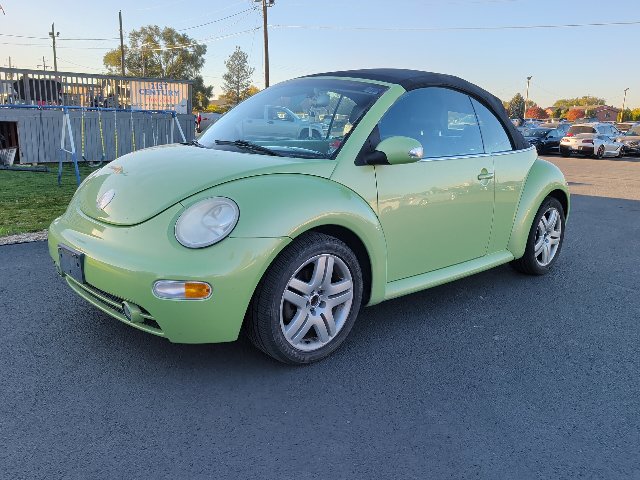
Price:7,549.00 USD
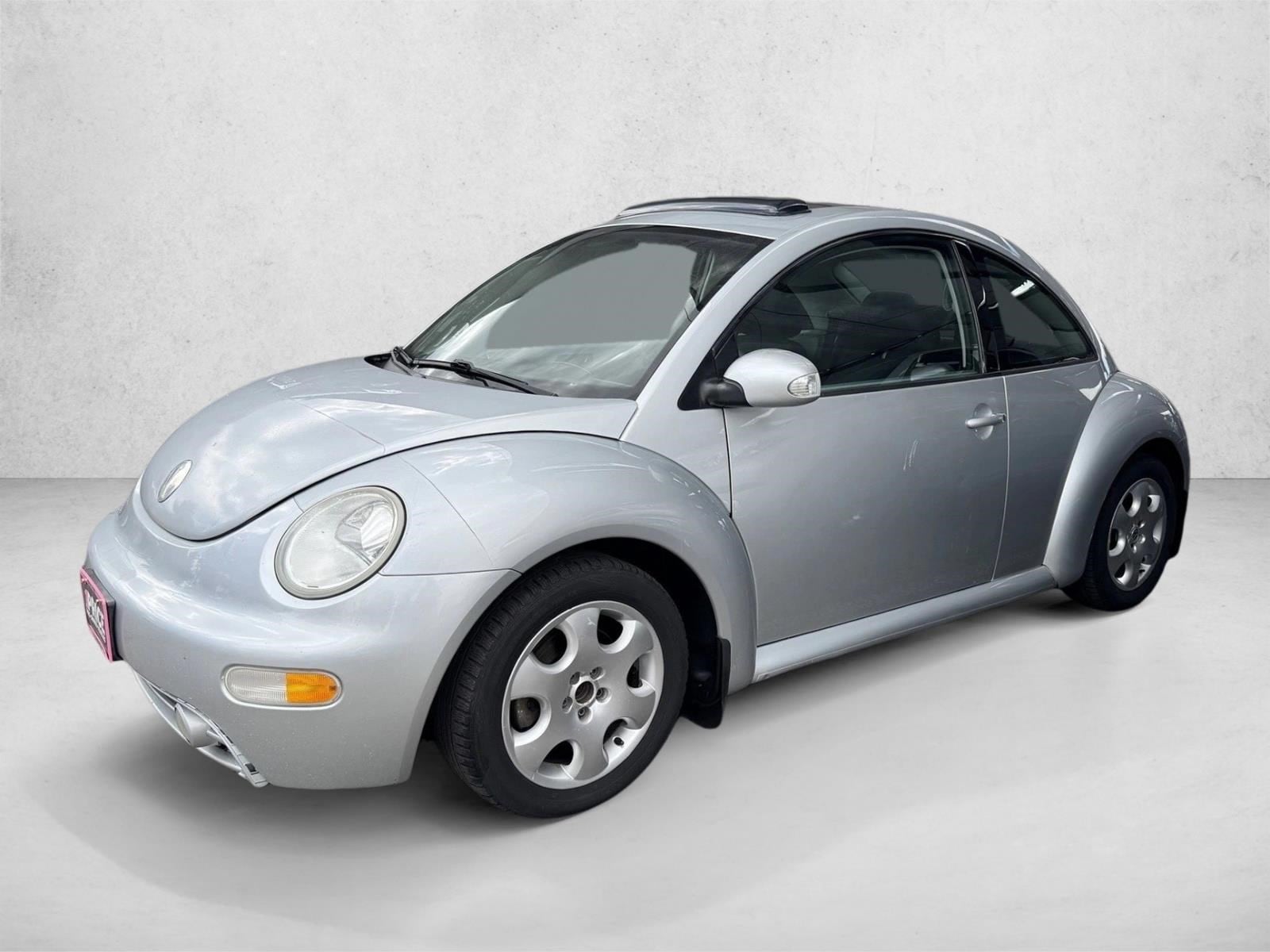
Price:2,999.00 USD
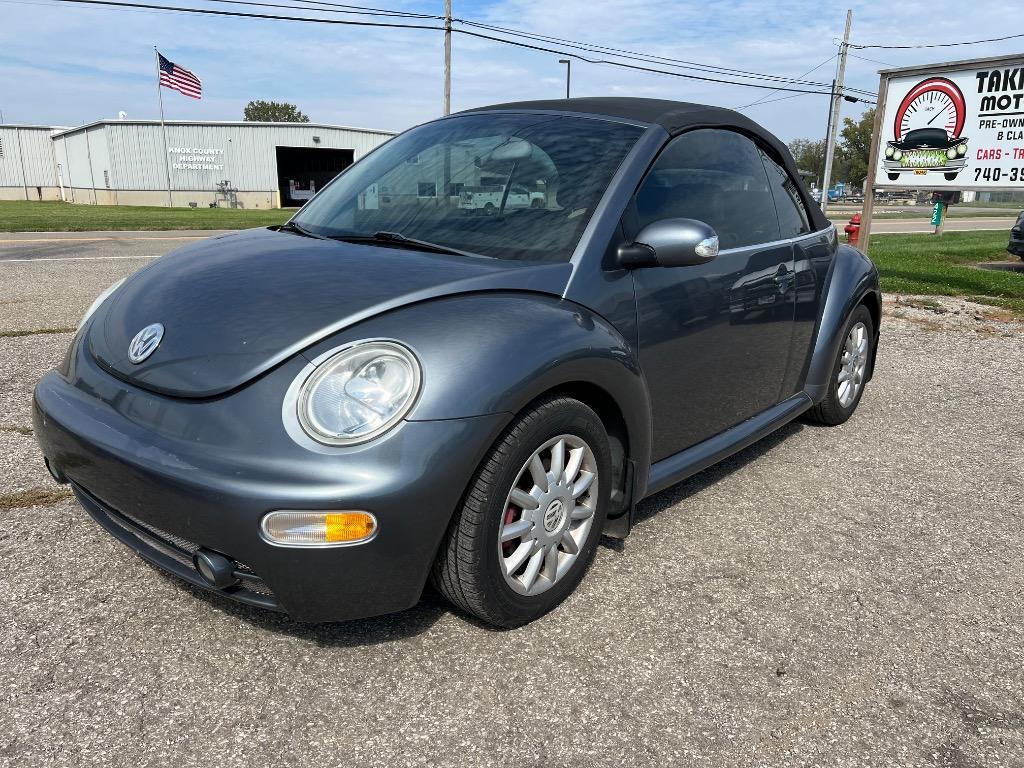
Price:3,995.00 USD
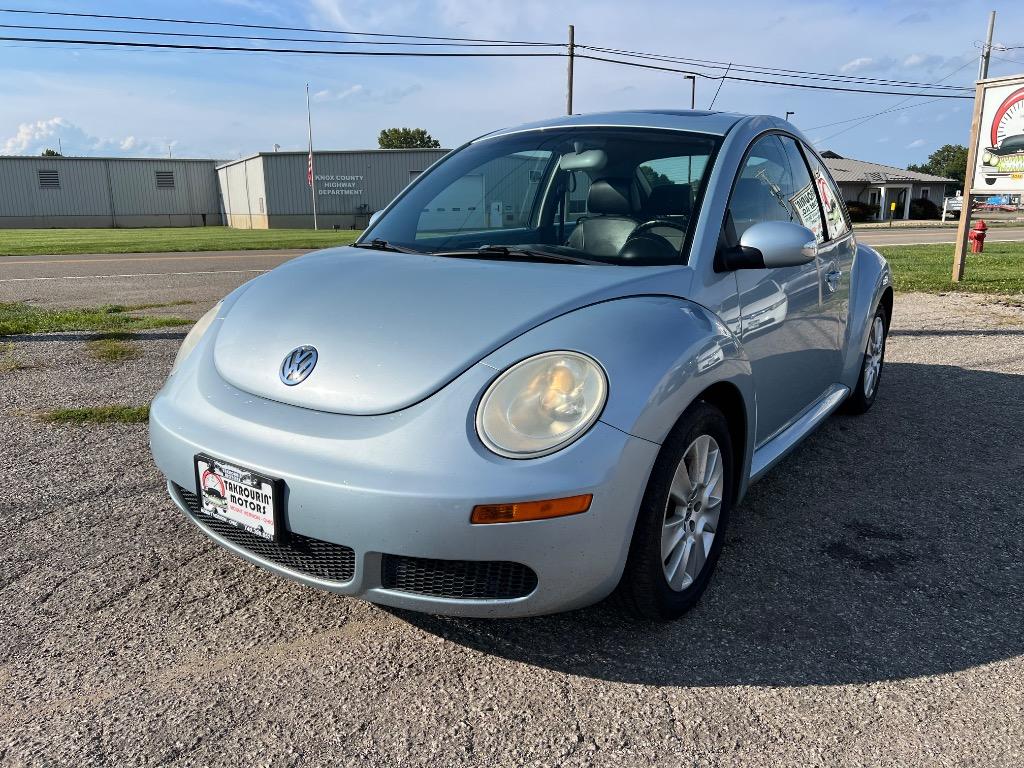
Price:5,393.00 USD
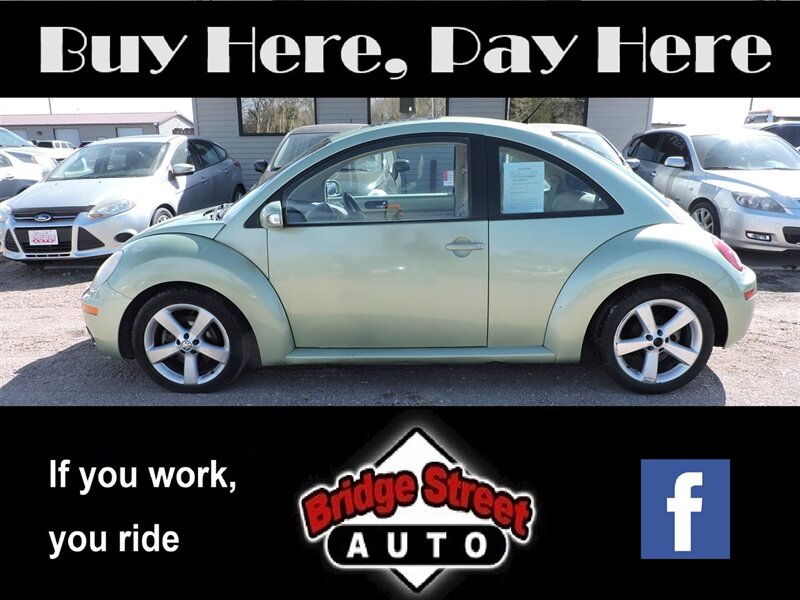
Price:5,495.00 USD
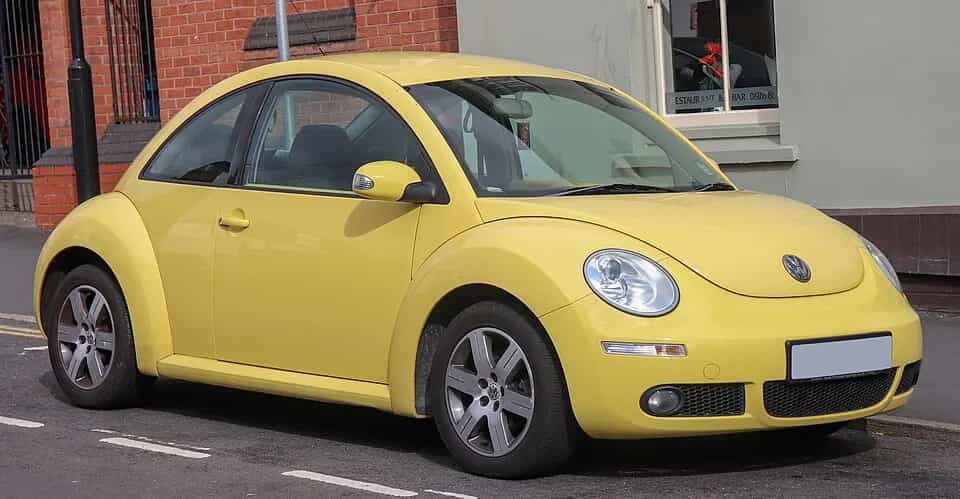
Model profile
The New Beetle (internally the A4-platform car) ran from 1998 to 2011 in the US, built on the same architecture as the fourth-generation Golf and Jetta. A convertible arrived for 2003 and became a big seller stateside.
Powertrain and equipment
US New Beetles came with a range of engines over the years: the 2.0-litre 8-valve four (around 115 hp), the punchy 1.8-litre turbo (150 hp, and 180 hp in the Turbo S), the 1.9-litre TDI turbodiesel that American enthusiasts prized for economy, and from the mid-2000s the 2.5-litre five-cylinder (around 150 hp) that became the volume petrol engine.
Two body styles matter: the fixed-roof coupe and the soft-top convertible. Trim names varied by year (GL, GLS, GLX, and the Turbo S), with the higher grades adding alloy wheels, a Monsoon sound system, leather and heated seats.
Vehicle selection
Supply is deep and varied, spanning the whole 1998-2011 run.
Import a used New Beetle from the USA if you want a characterful, affordable modern classic with proven Golf Mk4 mechanicals and easy parts supply, ideally in a colour or edition that stands out.
Vehicle data
| Body style | Detail (typical US New Beetle, A4): Two-door coupe or convertible |
|---|---|
| Length | Detail (typical US New Beetle, A4): approx. 4,129 mm |
| Wheelbase | Detail (typical US New Beetle, A4): approx. 2,515 mm |
| Kerb weight | Detail (typical US New Beetle, A4): approx. 1,230-1,400 kg |
| Seating | Detail (typical US New Beetle, A4): 4 |
| Petrol engines | Detail (typical US New Beetle, A4): 2.0 8v, 1.8T (150/180 hp), 2.5 five-cylinder |
|---|---|
| Diesel engine | Detail (typical US New Beetle, A4): 1.9 TDI turbodiesel |
| Power output | Detail (typical US New Beetle, A4): approx. 90-180 hp depending on engine |
| Transmission | Detail (typical US New Beetle, A4): 5-speed manual, 4-speed auto, later 6-speed Tiptronic |
| Drivetrain | Detail (typical US New Beetle, A4): Front-wheel drive |
| Fuel tank | Detail (typical US New Beetle, A4): approx. 55 L |
| Fuel type | Detail (typical US New Beetle, A4): Petrol or diesel |
| Production (US) | Detail (typical US New Beetle, A4): 1998-2011 |
|---|---|
| Platform | Detail (typical US New Beetle, A4): Volkswagen A4 (shared with Golf Mk4) |
| Typical US mileage | Detail (typical US New Beetle, A4): widely variable |
Values are reproduced verbatim from the existing article table. The documents for the specific vehicle govern.
Pre-purchase review
Because it is Golf Mk4 underneath, the New Beetle's weak points are well known. Electric window regulators fail routinely, ignition coil packs on the 1.8T are a common cause of misfires, and the interior door-lock and central-locking modules can act up. The 2.0 8v is durable but unexciting; the 1.8T rewards strict oil-change discipline because neglect leads to oil sludge and turbo wear.
Germany and Europe
US cars use amber side markers, mph-primary clocks and US headlight aiming, and the radio is US-band. Some engine calibrations and emissions equipment differ slightly from European cars.
Expect rear fog lamp fitment, headlight adjustment or replacement for the correct beam pattern, amber-free indicators where required, a km/h speedometer and a documented odometer reading.
USCar Trader services
As a buyer based in Germany, you do not have to inspect the vehicle yourself in the United States or Canada. Within the agreed scope, USCar Trader can coordinate document review, a separately commissioned on-site inspection and purchase processing.
Covered inspection points are agreed in advance. An on-site inspection records condition at the appointment and is not a guarantee.
Next step: Before commissioning, USCar Trader and the customer agree which document, history, inspection and transaction checks suit the vehicle and are included in the service. This records what was actually checked.
Import process
The assessment depends on the specific vehicle and the circumstances of the transaction. Please contact USCar Trader before purchase; we review any possible duty benefit and provide non-binding support. Import VAT and other costs are considered separately.
Questions and answers
Yes. It shares the A4 platform with the Golf Mk4, so mechanicals and many parts are common.
The 2.5 five-cylinder is the easy daily choice, the 1.8T Turbo S is the enthusiast's pick, and the 1.9 TDI suits economy-focused buyers.
Very. The shared Golf Mk4 mechanicals mean most service parts are widely available.
No, not automatically. A 0% EU import-duty rate may be available for a vehicle covered by Regulation (EU) 2026/1455 that has US origin and is imported directly into the EU. CETA may apply to a vehicle with preferential Canadian origin. Whether the requirements are met is assessed for the individual case. Please contact USCar Trader before purchase; we review the possible duty benefit and provide non-binding support. Import VAT and other costs are assessed separately.
It is generally durable but is a wear item; the mechanism and hydraulics should be tested before purchase.
Dry US examples are usually cleaner than old European cars, but the sills and floor should still be inspected.
The five-speed and six-speed manuals are the driver's choice; the four-speed automatic is smoother but less engaging.
Typically several weeks from purchase to registration, driven by shipping and TÜV.
More vehicles