Volkswagen Jetta

Importing a used Volkswagen Jetta from the USA

The Jetta occupies a curious position: it is a German nameplate that lives its fullest life in North America. For decades Volkswagen has tailored the Jetta to American buyers who wanted a compact sedan with more trunk than a Golf, and the result is a car that is far more common on US used lots than in most European classifieds. If you want to import a used Jetta from the USA, you are shopping the market where it was designed to sell, which means deep inventory, generous equipment and body styles you rarely see in Germany. As an independent broker, USCar Trader arranges the purchase and transport of used examples only; we hold no dealer margin and no manufacturer partnership.

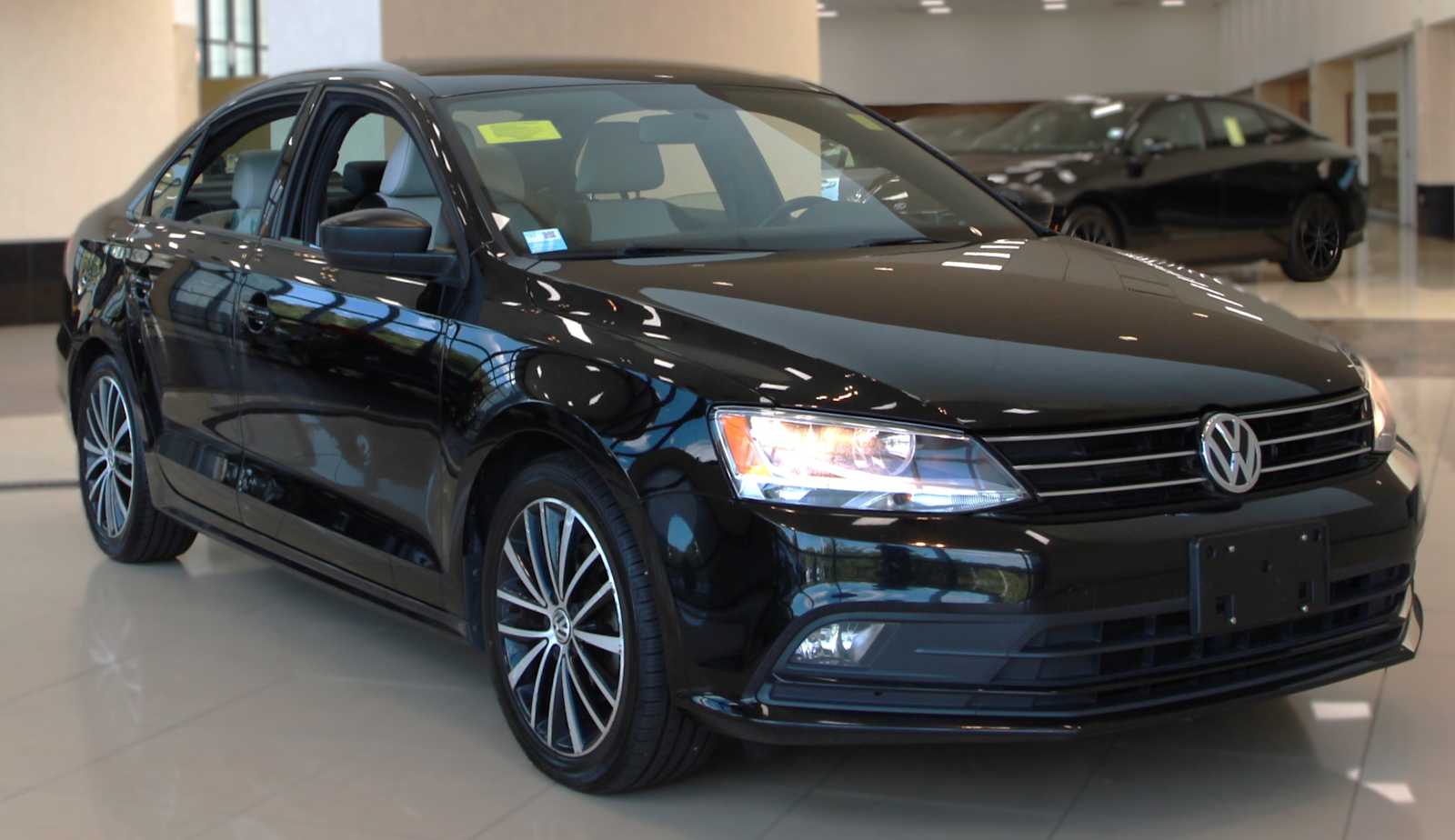
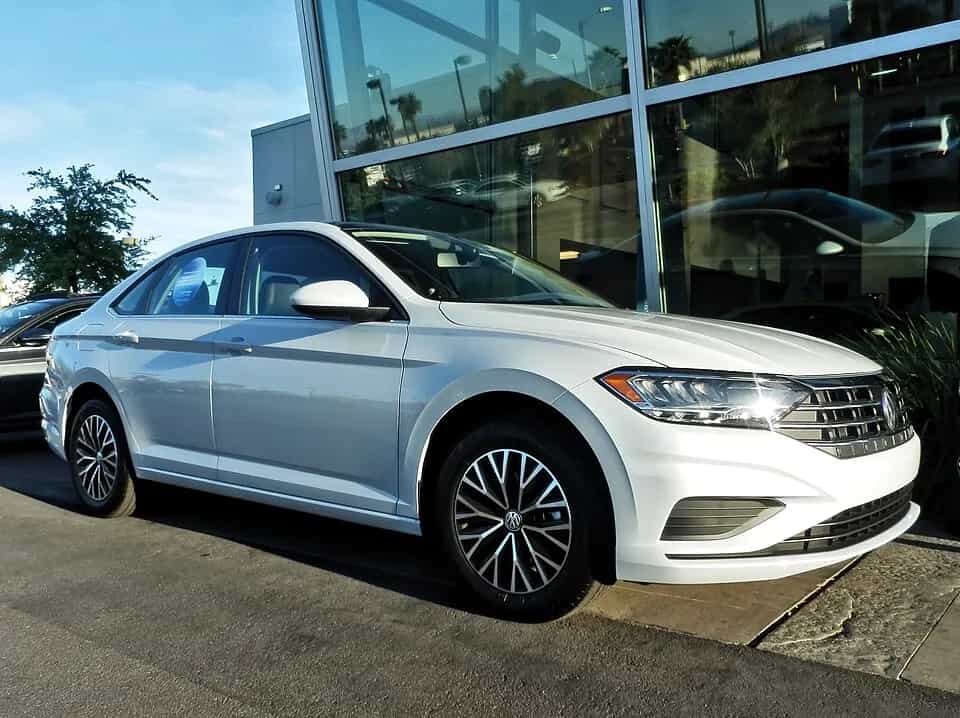
Volkswagen jetta – used car imported from the USA
Photo: Alexander-93 · CC BY-SA 4.0 · Wikimedia Commons

Generations at a glance

The relevant generations for import today are the Mk5 (A5, 2005-2010), the Mk6 (A6, 2011-2018) and the Mk7 (A7, 2019-2024, with a mid-cycle refresh for 2025). The Mk6 was a deliberately Americanised car: longer, softer and cheaper to build, with a torsion-beam rear axle on base trims and the return of the 2.5-litre five-cylinder. The Mk7 moved the Jetta onto the modern MQB platform, bringing a stiffer shell, independent rear suspension on higher trims and a turbocharged four as the sole gasoline engine. The sporting GLI has run as a parallel line throughout, effectively a Jetta with GTI mechanicals.

Powertrain lineup

US Jettas cover a wide spread. Early Mk5 and Mk6 cars used the 2.5-litre inline-five (around 150-170 hp), a smooth but thirsty unit unique to North America. Diesel buyers will find the 2.0 TDI (EA189 in the affected 2009-2015 window, later EA288), though post-"dieselgate" software and hardware fixes matter for these. The Mk7 standardised the 1.4 TSI turbo (147 hp, EA211) with either a six-speed manual or an eight-speed torque-converter automatic. The GLI runs the 2.0 TSI (EA888, roughly 228 hp) with a limited-slip differential, DSG or manual. Front-wheel drive is universal; there is no AWD Jetta.

Trims in the US market

The US range typically runs S, SE, SEL and the GLI performance flagship, with the sedan being by far the dominant body. The SportWagen and Golf-based Alltrack estates are catalogued separately. Well-optioned SEL and GLI cars carry the equipment German buyers expect: digital cockpit, LED lighting, ventilated seats on later cars, adaptive cruise and BeatsAudio. Cloth interiors and steel wheels sit at the entry end.

The used market stateside

Jetta supply in the States is enormous. Fleet and rental turnover keep three-to-six-year-old cars flowing, and it is realistic to find low-to-moderate mileage Mk7s with a clean single-owner history. Southern and western states offer rust-free bodies; a well-kept 1.4 TSI or GLI with full service records is a sensible import target. Condition varies widely, so a documented history is worth more than a low odometer alone.

Who should import one

A used Jetta from the USA suits the buyer who wants a practical, familiar VW sedan with US-market spec, or the enthusiast chasing a GLI at a configuration not sold here. It is also a low-risk first import: parts are shared with European VWs, workshops know the engines, and TUV acceptance is straightforward once lighting and a rear fog lamp are addressed.

Key specifications

Body styleCompact four-door sedan (SportWagen catalogued separately)
PlatformPQ35 (Mk5), PQ35-derived (Mk6), MQB (Mk7)
Length (Mk7)approx. 4,702 mm
Wheelbase (Mk7)approx. 2,686 mm
Petrol engines2.5L I5, 1.8 TSI, 1.4 TSI (EA211), 2.0 TSI GLI (EA888)
Diesel2.0 TDI (EA189/EA288)
Power (1.4 TSI)approx. 147 hp
Power (GLI 2.0 TSI)approx. 228 hp
Transmissions6-speed manual, 8-speed automatic, 7-speed DSG (GLI)
DrivetrainFront-wheel drive
Fuel tankapprox. 50 litres
Seating5
Trunk (sedan)approx. 399-510 litres depending on generation
AssemblyPuebla, Mexico (most US-market cars)
Emissions classRequires individual assessment for German registration

How reliable is it?

Jetta reliability is generally solid, with a few well-known weak points. The 1.4 TSI is durable but the water pump and thermostat housing can leak, and the ignition coils are a routine wear item. On the 2.0 TSI GLI, watch for carbon build-up on the intake valves (a direct-injection trait) and the timing chain tensioner on early EA888 units. Mk6 cars with the DSG dry-clutch (DQ200) can suffer mechatronic faults, so check for jerky low-speed shifts. Diesel TDIs demand proof of the emissions recall work and healthy DPF/EGR behaviour. Across the range, the electric parking brake and infotainment glitches are common minor complaints rather than serious faults.

What US models do differently

US Jettas run amber rear turn signals combined into the tail cluster on many trims, MPH-dominant instruments, and often a simpler emissions setup than European equivalents. Daytime running lights, a rear fog lamp and headlight beam pattern are the usual conversion points. American cars frequently carry equipment bundles (BeatsAudio, panoramic roof, cooled seats) at price points Germans find generous, but telematics and connected services may be US-locked.

Seven steps to your import

The process runs: model selection and inspection in the US, VIN and origin check (the Jetta is almost always Mexican-built, which affects the duty rate), secure payment through escrow, booking ocean freight in a container or RoRo, arrival and customs clearance at a European port, then TUV individual approval (Einzelabnahme) and finally German registration. USCar Trader coordinates each stage and keeps documentation aligned for the customs declaration.

Customs, taxes and costs explained

In short: the 0% duty rate applies only with documented US origin (VIN/plant) – German import VAT of 19% is always due.

Two charges are separate and must be understood as such. Import duty depends on the country of manufacture proven by the VIN and plant code. The zero-percent EU rate under Regulations (EU) 2026/1455 and 2026/1461 (in force since 1 July 2026, direct transport, until 31 December 2029) applies only where genuine US origin is provable. The Jetta is generally assembled in Puebla, Mexico, so most examples do not qualify for the US-origin zero rate and instead face the standard third-country passenger-car duty. On top of any duty, the 19% German import VAT (Einfuhrumsatzsteuer) always applies, calculated on the customs value plus duty and freight. We quote these as pass-through charges with no margin.

German TÜV and registration

Typical work for German approval covers headlight adjustment or replacement for the correct beam pattern, adding a rear fog lamp, sometimes side indicators, and confirming the odometer reads correctly (a kilometre conversion or documentation may be required). A speedometer showing km/h is expected. Once the TUV individual assessment passes, the car receives its German papers and can be registered.

The buyer checklist

Verify the VIN against the title and confirm the plant code. Pull a full Carfax or AutoCheck history for accidents, title brands and odometer consistency. Inspect for underbody rust despite the southern-state assumption. Confirm complete service records, especially timing and DSG service. Check title status is clean, not salvage or rebuilt, unless deliberately chosen. Test the DSG/automatic for smooth low-speed shifts. For diesels, demand recall completion proof.

Questions and answers

Is the Volkswagen Jetta a good car to import from the USA?

Yes, particularly the Mk7 and GLI. It shares parts with European VWs, workshops know the engines, and the US market offers deep, well-equipped inventory.

Does a used Jetta qualify for 0% EU import duty?

Only if the VIN proves US origin. Most Jettas are built in Puebla, Mexico, so they usually fall under the standard passenger-car duty rather than the US-origin zero rate.

Is the 19% German import VAT always due?

Yes. The Einfuhrumsatzsteuer of 19% applies to every import regardless of duty rate, calculated on the customs value plus duty and freight.

Which Jetta engine is most reliable?

The 1.4 TSI EA211 has a strong record when serviced, with coil packs and the water pump as the main wear items. The GLI 2.0 TSI is robust but needs attention to intake carbon.

Can a US Jetta pass German TUV?

Yes, after headlight and rear fog lamp conversion and an odometer check. The individual approval (Einzelabnahme) is routine for this model.

What mileage should I look for?

Three-to-six-year-old cars with documented service and a clean history offer the best balance. A verified record matters more than a low odometer alone.

Are diesel Jettas worth importing?

Only with full proof of the emissions recall work and a healthy DPF/EGR system. Otherwise the gasoline TSI cars are the safer choice.

Does USCar Trader sell the car to me?

No. We are an independent broker arranging the purchase and import of used vehicles on your behalf, with customs and VAT passed through at cost.

Ready to start? Browse Volkswagen in the Carhub, compare the sportier Golf GTI, the four-door coupe CC or the compact Taos crossover, and view current Jetta listings.