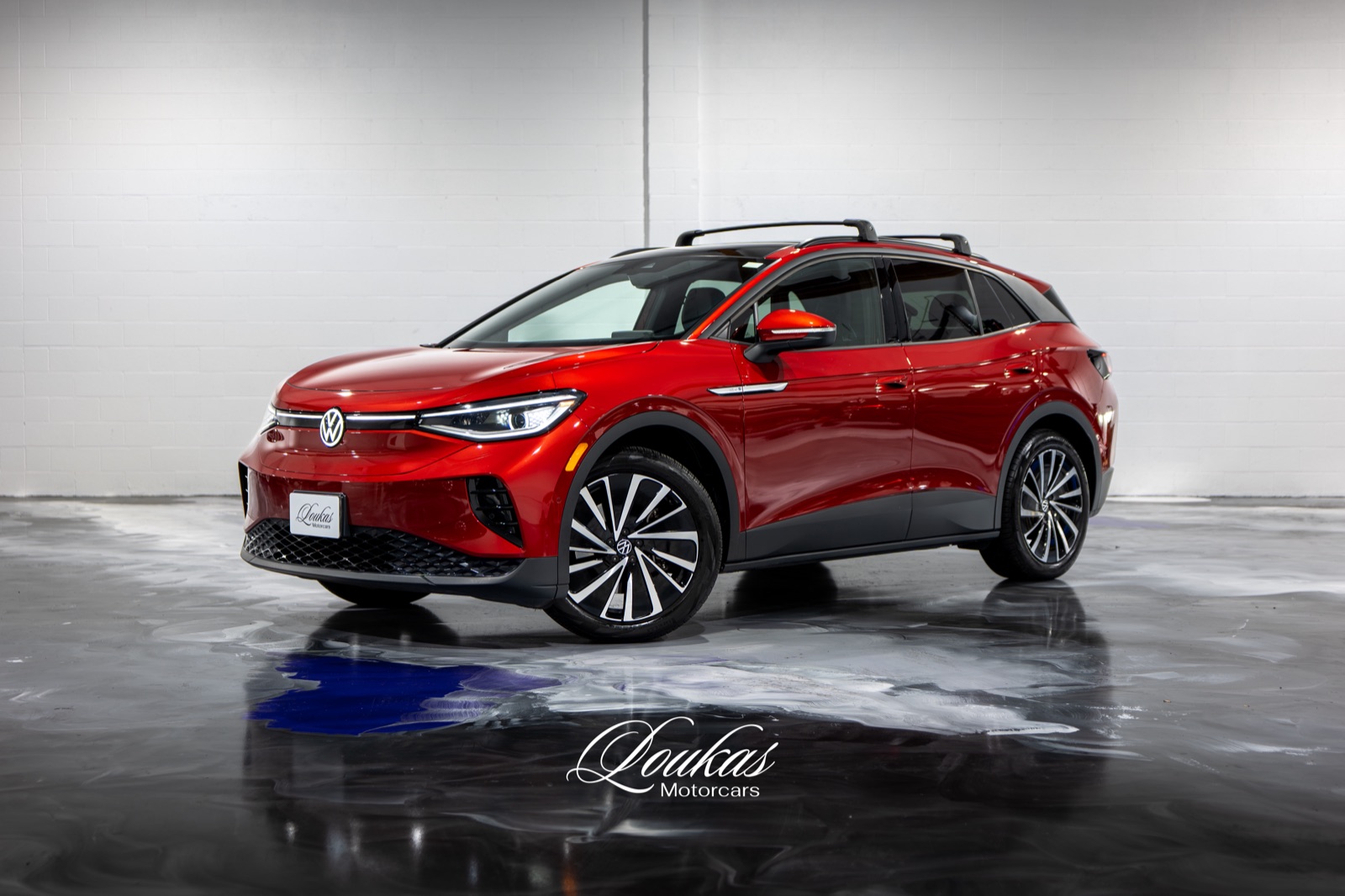
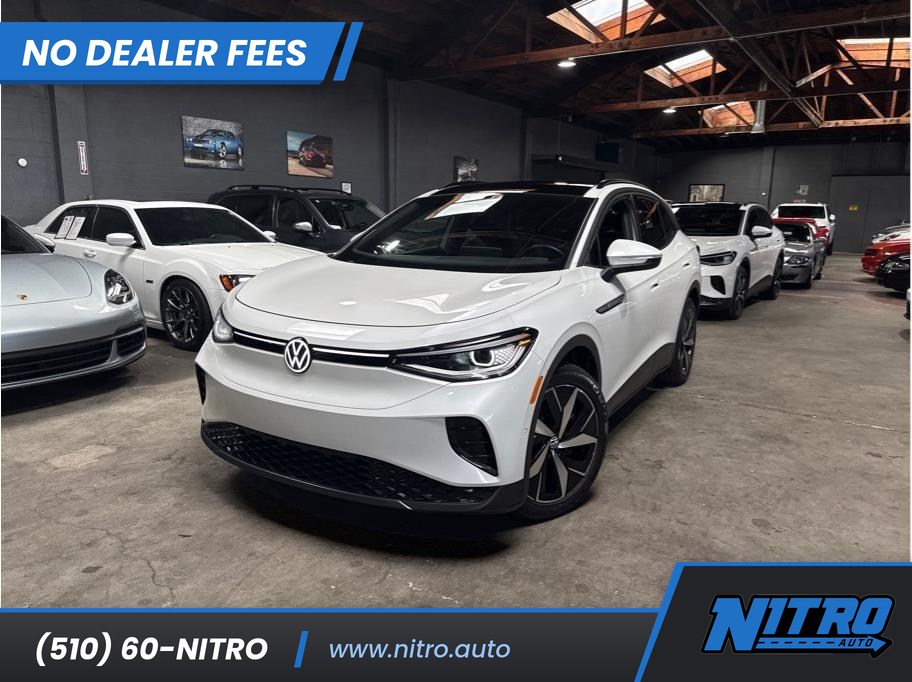
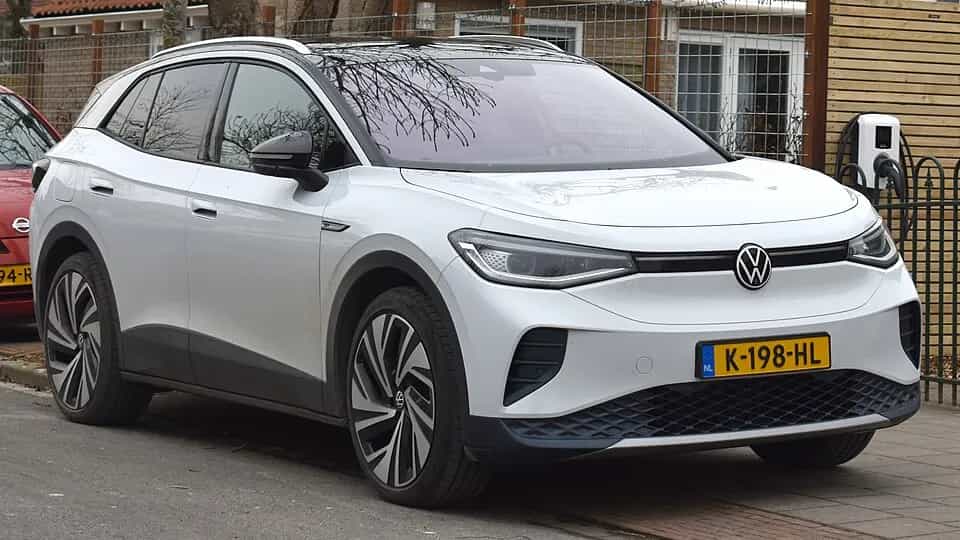
Volkswagen ID.4

USCar Trader import service

Import this model from the USA or Canada

Choose a specific vehicle. Where data is available, its detail page shows the import cost calculation. We assess any possible duty benefit with you before purchase.

Important: A 0% EU import-duty rate may be available for a vehicle covered by Regulation (EU) 2026/1455 that has US origin and is imported directly into the EU. CETA may apply to a vehicle with preferential Canadian origin. Whether the requirements are met is assessed for the individual case. Please contact us before purchase; we review the possible duty benefit and provide non-binding support through the process. Import VAT and other costs are assessed separately.

CarHub · Volkswagen

Volkswagen ID.4

The assessment depends on the specific vehicle and the circumstances of the transaction. Please contact USCar Trader before purchase; we review any possible duty benefit and provide non-binding support. Import VAT and other costs are considered separately.

Body style
Typical US-market figures: Compact/mid electric SUV, 5 seats
Powertrain
Typical US-market figures: Battery-electric, MEB platform
Drive
Typical US-market figures: RWD (single motor) or AWD (dual motor)
Power (RWD)
Typical US-market figures: approx. 201 hp (early) / 282 hp (2023+)
Volkswagen ID.4

Model profile

Model history and generations

From launch to today

The ID.4 launched for the 2021 model year on Volkswagen's MEB platform and has been continuously updated since. Early US cars were imported from Zwickau in Germany, but from the 2023 model year the bulk of US-market ID.4s came from Volkswagen's Chattanooga, Tennessee plant.

Powertrain and equipment

Engines, drivetrain and trims

Engines and drivetrain in detail

The ID.4 is fully electric on the MEB platform. Rear-wheel-drive versions use a single rear-mounted motor; AWD versions add a front motor. Early single-motor cars produced around 201 hp, while the 2023 update lifted the rear motor to roughly 282 hp.

Trim levels and variants

The ID.4 is a five-seat compact-to-mid electric SUV. US trims have included Standard, Pro, Pro S, and the AWD Pro/Pro S versions, with the S trims adding features such as a panoramic fixed glass roof, upgraded interior materials and larger wheels.

Vehicle selection

North American market and suitability

Used availability in the USA

Supply is healthy and growing as early lease returns reach the market.

When importing makes sense

It is a strong choice if you value everyday usability and space over sportiness. If you want the best of the software and charging behaviour, target a later build year.

Vehicle data

Technical data by generation and specification

Body and dimensions

Body styleTypical US-market figures: Compact/mid electric SUV, 5 seats
LengthTypical US-market figures: approx. 4,584 mm
Kerb weightTypical US-market figures: approx. 2,000–2,150 kg

Engine and drivetrain

PowertrainTypical US-market figures: Battery-electric, MEB platform
DriveTypical US-market figures: RWD (single motor) or AWD (dual motor)
Power (RWD)Typical US-market figures: approx. 201 hp (early) / 282 hp (2023+)
Power (AWD)Typical US-market figures: approx. 295 hp (spec dependent)
Battery (usable)Typical US-market figures: approx. 62 kWh standard / 77–82 kWh long-range
TransmissionTypical US-market figures: Single-speed reduction gear
Range (EPA)Typical US-market figures: approx. 330–475 km depending on spec
DC fast chargeTypical US-market figures: up to approx. 135–175 kW (later cars)
Onboard AC chargerTypical US-market figures: 11 kW

Model and other data

TowingTypical US-market figures: up to approx. 1,200 kg (spec dependent)
Build plantsTypical US-market figures: Chattanooga (US) or Zwickau (DE)

Values are reproduced verbatim from the existing article table. The documents for the specific vehicle govern.

Pre-purchase review

Model-specific inspection points

Reliability and common problems

The ID.4 is mechanically simple as an EV, but early cars had a reputation for software issues rather than hardware failures. The most reported ID.4 common problems concern the infotainment and MIB3 software (freezes, laggy touch controls, connectivity glitches), a door-handle electronics recall on some early cars, and occasional 12-volt battery and high-voltage sensor faults that were addressed via updates.

Germany and Europe

Differences, adaptation and registration

How US versions differ

US ID.4s use CCS1 (Combo 1) DC charging and a J1772 AC inlet, which differ from the German CCS2/Type 2 standard — this is the single biggest practical difference and typically requires connector adaptation or a documented solution for home and public charging.

From US purchase to registration

The assessment depends on the specific vehicle and the circumstances of the transaction. Please contact USCar Trader before purchase; we review any possible duty benefit and provide non-binding support. Import VAT and other costs are considered separately.

TÜV, approval and license plates

Typical TÜV work includes converting or adapting the DC/AC charging inlets to European standards, fitting a rear fog lamp, adapting the headlights, addressing amber side markers, and confirming the speedometer reads km/h.

USCar Trader services

Inspection, purchase processing and escrow

As a buyer based in Germany, you do not have to inspect the vehicle yourself in the United States or Canada. Within the agreed scope, USCar Trader can coordinate document review, a separately commissioned on-site inspection and purchase processing.

  • Vehicle profile and history: The profile can show the VIN, US title status and available history records. No data source guarantees that every earlier event was reported.
  • Optional CARFAX report: Additional reported maintenance or service entries can be included. The report is not a complete service book or proof of every interval.
  • On-site inspection / USCT AutoCheck: USCar Trader can arrange a separately booked vehicle inspection. Agreed visible and accessible areas are documented. Road or functional tests require suitable access and seller approval; the visual review is not a lift inspection or workshop diagnosis.
  • Purchase processing and escrow: After approval, USCar Trader can coordinate seller contact, negotiation, contract and the escrow and import service. Fees, payment route and responsibilities are recorded in advance.
  • Recalls: Open safety recalls can be checked by VIN through the NHTSA recall search; they do not describe overall condition.

Covered inspection points are agreed in advance. An on-site inspection records condition at the appointment and is not a guarantee.

Next step: Before commissioning, USCar Trader and the customer agree which document, history, inspection and transaction checks suit the vehicle and are included in the service. This records what was actually checked.

Import process

Import, customs, costs and delivery

Process for the specific listing

The import process for a Volkswagen ID.4 is planned around the specific listing, location, documents and commissioned service scope.

Questions and answers

Common questions about importing this model

Does this vehicle automatically qualify for a 0% import-duty rate?

No, not automatically. A 0% EU import-duty rate may be available for a vehicle covered by Regulation (EU) 2026/1455 that has US origin and is imported directly into the EU. CETA may apply to a vehicle with preferential Canadian origin. Whether the requirements are met is assessed for the individual case. Please contact USCar Trader before purchase; we review the possible duty benefit and provide non-binding support. Import VAT and other costs are assessed separately.

When should USCar Trader be contacted before purchase?

Whether a duty benefit may be available for the specific vehicle is assessed individually. Please contact USCar Trader before purchase; we review the case and provide non-binding support through the process.

Will US charging work in Germany?

The ID.4 uses CCS1/J1772 in the US, so you will need a connector solution for CCS2/Type 2 charging here. We address this as part of the import.

What's the biggest reliability concern?

Early software and infotainment glitches rather than hardware. Later cars with current updates are much improved.

How is import VAT treated when importing a Volkswagen ID.4?

Import VAT and other taxes or costs are assessed separately under the applicable rules and the circumstances of the individual case. A blanket answer for every vehicle would not be reliable.

Which battery size should I look for?

The long-range pack (around 77–82 kWh usable) gives the best range; confirm capacity and EPA range per car.

Will it pass TÜV?

Yes, after the charging-connector conversion and the usual lighting and speedometer changes, plus individual approval where required.

Is my payment protected?

Yes, we use escrow so funds release only against the correct documents.

More vehicles