Volkswagen Golf SportWagen

Importing a used Volkswagen Golf SportWagen from the USA

The Golf SportWagen is the North American name for the Golf Variant estate, and it is one of the more interesting Volkswagens to bring back from the States. American buyers received a slightly different specification than European ones, and because the wagon sold in modest numbers there, the used pool holds plenty of low-mileage, well-kept examples. If you want a practical MK7-platform estate with a turbocharged petrol engine, optional all-wheel drive and a level of trim not always offered in Europe, importing a used Golf SportWagen from the USA is a genuinely sensible route. As a broker, USCar Trader sources the car, verifies its history and manages the freight and clearance; we do not sell from stock and we add no vehicle margin.

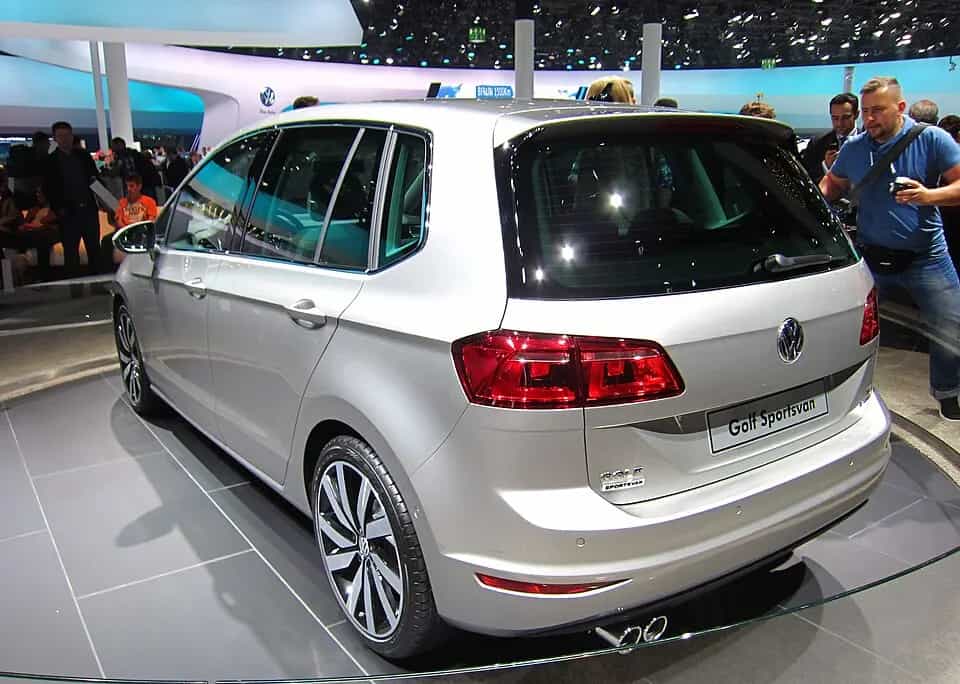
Volkswagen golf-sportwagen – used car imported from the USA
Photo: Rutger van der Maar · CC BY 2.0 · Wikimedia Commons

Model history: years and generations

Volkswagen launched the SportWagen name for the 2015 model year on the seventh-generation (MK7) Golf, replacing the earlier Jetta SportWagen. Built on the MQB platform, it ran through the 2019 model year in the US. A mild facelift arrived for 2018 (MK7.5) with revised bumpers, LED lighting on higher trims and updated infotainment. Alongside the standard front-wheel-drive wagon, Volkswagen added the raised, plastic-clad Golf Alltrack from 2017, which came exclusively with 4Motion all-wheel drive. Note that unlike Europe, the US SportWagen was assembled in Puebla, Mexico for most of its run, so the plant of origin — and therefore the customs treatment — must always be confirmed from the VIN.

Engines, transmissions and drive

Early cars (2015) were offered with the 2.0 TDI EA288 turbodiesel producing about 150 hp and a strong 320 Nm, paired with a 6-speed manual or 6-speed DSG. After the diesel emissions scandal, VW withdrew the TDI, so from 2016 onward the SportWagen relied on the 1.8-litre TSI EA888 turbocharged four (Gen 3), rated at roughly 170 hp and 250 Nm. Transmission choices were a 5- or 6-speed manual and a 6-speed torque-converter automatic (Tiptronic) in the US, rather than the DSG used in Europe. 4Motion all-wheel drive with a Haldex-type coupling was optional on the wagon and standard on the Alltrack.

Equipment lines and body styles

The body style is a single five-door estate. US trim walk ran S, SE and SEL. The base S came with cloth, a 6.5-inch touchscreen and alloy wheels; SE added keyless entry, a panoramic sunroof, heated seats and blind-spot monitoring; SEL brought navigation, leatherette, a larger 8-inch screen and adaptive cruise on later cars. The Alltrack mirrored SE and SEL equipment but added 17mm of ride height, underbody cladding, unique bumpers and an off-road driving mode.

The US used market

Because the wagon was a niche seller in a crossover-obsessed market, many SportWagens were bought by enthusiasts and dog owners who looked after them. Typical import candidates are 2016–2019 1.8T cars with 60,000–120,000 miles (roughly 100,000–190,000 km). Rust is rarely a structural issue on cars from the southern and western states, though examples from the salt-belt should be inspected underneath. Service history through VW dealers or independent specialists is common and worth requesting. Diesel TDI cars still circulate but many were bought back and modified under the settlement, so a clean, unmodified TDI is now scarce.

Is an import right for you?

This is the car for the buyer who wants Golf driving manners with estate practicality and does not want to pay for a premium badge. It suits families, tradespeople and long-distance commuters who value the flat load floor, the roughly 860-litre boot with seats up, and the frugal turbo engine. If you specifically want all-wheel drive, target a 4Motion wagon or an Alltrack. Buyers who value a manual gearbox will also find far more three-pedal cars in the US than survive in Germany.

Specs at a glance

Body style5-door compact estate (wagon)
PlatformVolkswagen MQB (MK7 Golf)
US model years2015–2019
Petrol engine1.8 TSI EA888 Gen 3, turbo I4
Petrol outputapprox. 170 hp / 250 Nm
Diesel engine (2015)2.0 TDI EA288, approx. 150 hp / 320 Nm
Transmissions5/6-speed manual, 6-speed automatic
DriveFront-wheel or 4Motion AWD (Alltrack: AWD std.)
Lengthapprox. 4,562 mm
Wheelbaseapprox. 2,631 mm
Boot (seats up / down)approx. 860 / 1,880 litres
Kerb weightapprox. 1,400–1,520 kg
Fuel tankapprox. 55 litres
Seating5
Typical import mileage60,000–120,000 miles

Common issues buyers should know

The 1.8T EA888 is a robust engine, but there are known Golf SportWagen common problems worth checking. The Gen 3 unit can consume oil through the PCV valve and piston rings, so watch the dipstick and look for a documented consumption pattern. The plastic water pump and thermostat housing are wear items around 80,000–100,000 miles. The timing chain tensioner was improved on Gen 3, yet a listen for rattle at cold start is still prudent. Carbon build-up on the intake valves affects all direct-injection VWs and a walnut-blast service may be due. On automatic cars, confirm smooth shifting; on manuals, check the clutch and dual-mass flywheel. Interior electronics such as the touchscreen and rear-view camera are generally reliable but not immune to failure. Overall Golf SportWagen reliability is good when servicing has been kept up.

Differences from the European version

US cars use the 1.8T rather than Europe's 1.4 TSI or 1.5 TSI, and a conventional automatic rather than DSG in most cases. Lighting is set for right-hand traffic with amber rear turn signals and no rear fog lamp — both must be addressed for German registration. Speedometers read primarily in mph, the daytime running lights and headlight aim differ, and infotainment may default to US map data. Equipment such as heated seats and blind-spot monitoring is often generously specified.

Import step by step

The process runs in a clear sequence. First, selection: we identify a suitable SportWagen from US auctions or dealers to your brief. Second, a VIN and origin check to establish the plant of assembly and pull the vehicle history. Third, secure payment via escrow so funds are only released on clean documentation. Fourth, inland transport to port and ocean freight to a European port such as Bremerhaven. Fifth, customs clearance on arrival. Sixth, technical approval — TÜV inspection and, where needed, an individual approval (Einzelabnahme) under §21 StVZO. Finally, registration at your local authority.

Customs and taxes: what applies

In short: the 0% duty rate applies only with documented US origin (VIN/plant) – German import VAT of 19% is always due.

Two charges apply and must be viewed separately. Import duty depends on the car's actual country of origin, which for the Golf SportWagen is usually Mexico. If the VIN proves genuine US assembly, the temporary 0% EU import duty under Regulations (EU) 2026/1455 and 2026/1461 may apply for cars shipped directly from the USA between 1 July 2026 and 31 December 2029; if the plant is Mexican or otherwise non-US, the standard car duty rate applies instead. Separately, the 19% German import VAT (Einfuhrumsatzsteuer) is charged on the customs value in every case. USCar Trader passes these official charges through at cost and adds no margin.

Modifications and single-vehicle approval

Typical modifications for German approval are converting the rear lighting to include a red rear fog lamp, adjusting or replacing headlights for right-hand traffic, and confirming the amber-to-red rear indicator arrangement is compliant. The odometer should be verified and, if in miles, this is noted. A valid CoC is rarely available for US cars, so an individual approval with an emissions and safety check is the normal path before the vehicle can be registered.

What to verify before buying

Before committing, confirm these points: (1) VIN decode and plant of origin for customs treatment; (2) a Carfax or AutoCheck report showing no accident, flood or salvage flags; (3) underbody inspection for salt-belt corrosion; (4) documented oil consumption and full service history on the 1.8T; (5) clean, transferable title with no lien; (6) gearbox operation, manual or automatic; (7) for TDI cars, proof the vehicle was not modified under the buyback programme.

Common questions

Is the Golf SportWagen the same as the European Golf Variant?

Mechanically it is the same MK7 estate, but US cars use the 1.8T engine and often a conventional automatic, with US-market lighting and instrumentation.

Which engine should I look for?

For most buyers the 1.8T TSI petrol from 2016–2019 is the pragmatic choice; clean, unmodified TDI diesels are now rare.

Does it have all-wheel drive?

4Motion AWD was optional on the wagon and standard on the Alltrack; most base cars are front-wheel drive.

Will the 0% import duty apply?

Only if the VIN proves US assembly and the car ships directly; many SportWagens were built in Mexico, in which case the standard duty rate applies. The 19% import VAT always applies.

How reliable is the 1.8T engine?

Generally durable, but watch oil consumption, the water pump and carbon build-up, and keep to the service schedule.

What mileage is realistic to import?

Most sensible candidates sit between 60,000 and 120,000 miles with a clean history.

Can I get a manual gearbox?

Yes — the US market kept more manual SportWagens than survive in Europe.

What has to change for TÜV?

Primarily the rear fog lamp, headlight conversion for right-hand traffic and confirmation of compliant indicators.

USCar Trader can guide the whole process end to end. Browse Volkswagen in the Carhub, compare related wagons such as the Golf Alltrack, the Jetta SportWagen and the standard Golf, or view current Golf SportWagen listings.