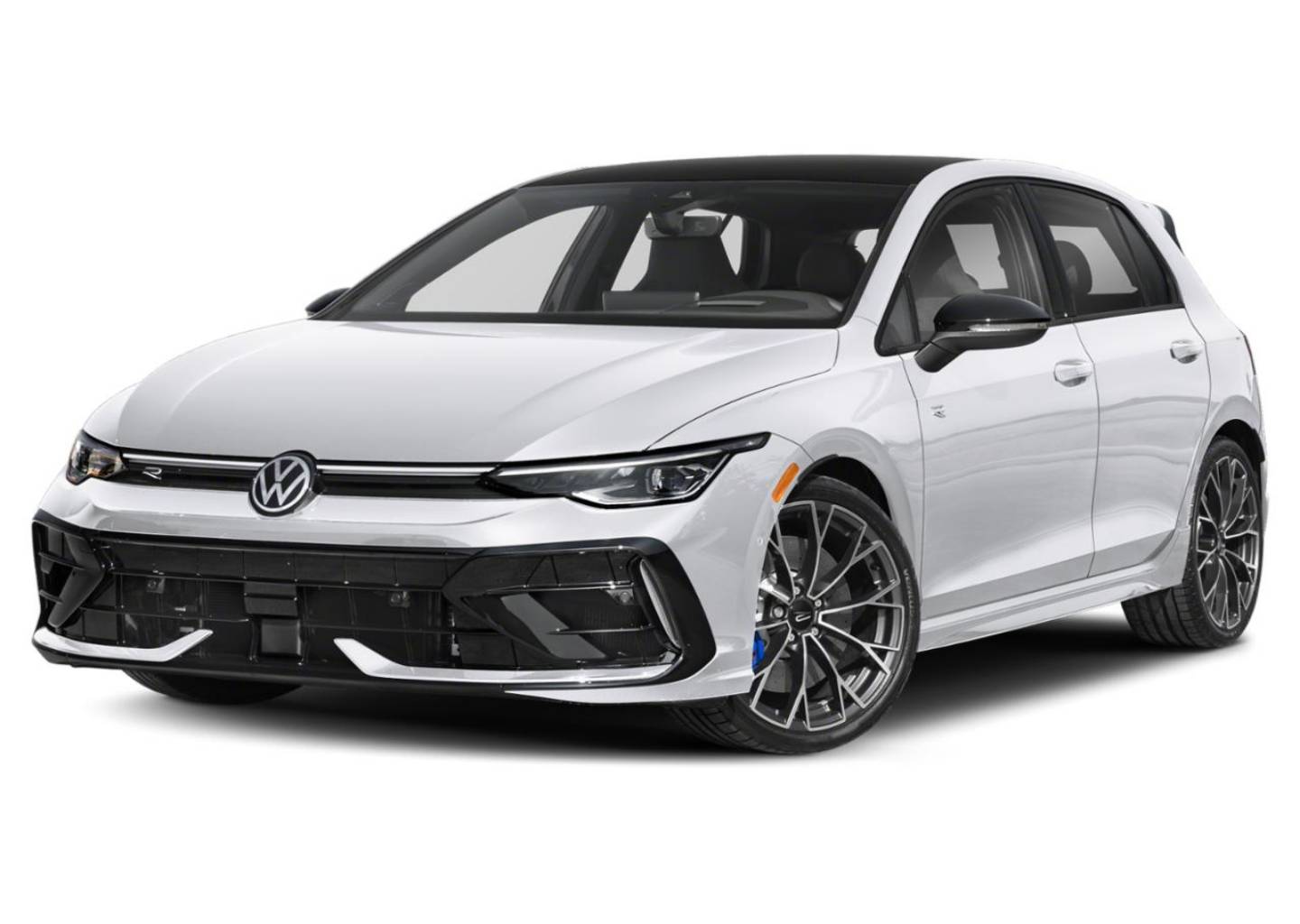
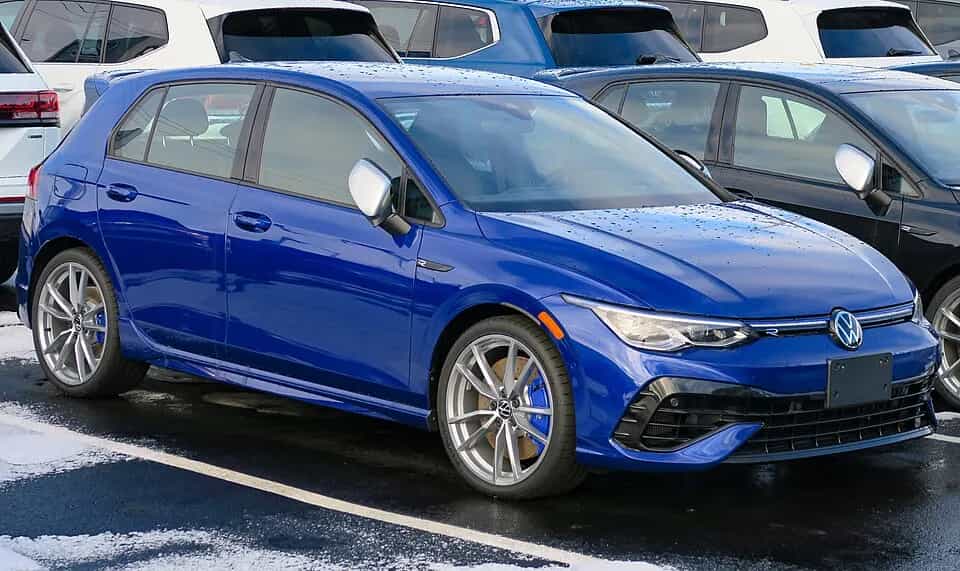
Volkswagen Golf R

Importing a used Volkswagen Golf R from the USA

The Golf R is the all-wheel-drive flagship of the Golf range, and the American-market cars are a smart hunting ground for importers who want a well-specified, often carefully driven example. US Golf Rs came fully loaded by default, with fewer options to decode than European cars, and enthusiasts there tend to maintain them well. Because the Golf R is built in Wolfsburg, Germany, the customs treatment depends on the plant, so the VIN check comes first. If you want to import a used Volkswagen Golf R from the USA, the appeal is a clean, high-spec hot hatch with 4Motion traction.

Model history: years and generations

The US market received the Golf R from the Mk7 generation. The Mk7 arrived for the 2015 model year and the facelifted Mk7.5 followed for 2018-2019. After a short pause, the Mk8 Golf R returned to the US for the 2022 model year and continued from there, including special editions such as the 20th Anniversary. Earlier Golf R (Mk6) and the Golf R32 were largely European, so American cars are predominantly Mk7, Mk7.5 and Mk8.

Engines, transmissions and drive

Every US Golf R uses the EA888 2.0-litre turbocharged four-cylinder. Mk7 cars produced around 215 kW (292 hp), while the Mk8 raised output to roughly 235 kW (315 hp) with a torque-vectoring rear differential. Power goes to all four wheels through VW's 4Motion system with a Haldex-type coupling. US buyers could choose a six-speed manual or the DSG dual-clutch (six-speed on Mk7, seven-speed DSG on Mk8). The combination of turbo four, all-wheel drive and a proper manual option is a large part of the car's enthusiast appeal.

Equipment lines and body styles

In the US the Golf R was sold almost as a single well-equipped trim rather than a ladder of versions, which simplifies the used search. It came as a five-door hatchback (the three-door was not a US staple). Standard kit included adaptive DCC dampers, leather, digital cockpit on later cars, and on the Mk8 a configurable drive-mode system with a track-oriented setting. Special editions added unique wheels and trim.

The US used market

Golf R supply in the US is steady but not huge; these were niche performance cars. Typical listings are 2015-2019 Mk7/Mk7.5 cars and newer Mk8s, with a spread of mileage. Manual-transmission cars command interest from enthusiasts. Condition is the main variable: some cars have been tuned or tracked, others are stock and pampered. A stock car with documented service and no accident history is the target, especially if you value a clean TUEV process. Because these cars attract modification, verifying the software and hardware state matters.

Is an import right for you?

The Golf R suits the driver who wants year-round performance in a discreet, practical five-door: fast, all-wheel drive, and usable every day. It is ideal for someone who wants a manual hot hatch that is increasingly hard to find, or a clean Mk8 with the latest running gear. Buyers who want a stripped-out track toy or a cheap runabout should look elsewhere, but for a do-everything performance Golf, a US import is compelling.

Specs at a glance

SpecificationDetail (US-market Golf R)
Body styleHot hatchback, 5-door
Generations (US)Mk7 / Mk7.5 (2015-2019), Mk8 (2022+)
Engine2.0 EA888 turbo four-cylinder
Mk7 outputapprox. 215 kW / 292 hp
Mk8 outputapprox. 235 kW / 315 hp
Transmission6-speed manual / 6- or 7-speed DSG
Drivetrain4Motion all-wheel drive (Haldex)
0-100 km/happrox. 4.7-5.1 s
Lengthapprox. 4.28-4.29 m
Kerb weightapprox. 1,470-1,550 kg
FuelPremium petrol
Seating5
AssemblyWolfsburg, Germany
Fuel tankapprox. 55 litres

Common issues buyers should know

The EA888 is a strong engine but has known habits: carbon build-up on the intake valves from direct injection (a walnut-blast clean is common maintenance), timing-chain tensioner wear on earlier units, and PCV and water-pump failures with age. The Haldex all-wheel-drive coupling needs its oil and filter changed on schedule, or the rear axle stops contributing drive. DSG gearboxes require their fluid service; a neglected mechatronic unit is costly. Tuned cars deserve extra scrutiny, since a Stage 1 or 2 map raises stress on the clutch and drivetrain. For Golf R reliability, prioritise documented Haldex and DSG service and confirm the software state.

Differences from the European version

US Golf Rs run amber side markers, US-specification headlights and mph-primary instruments. Some driver-assistance and lighting features differ from EU homologation, and the infotainment radio bands are US-configured. The Mk8's speed limiter and drive modes are otherwise the same. Mechanically the cars mirror the European Golf R, which keeps parts availability good.

Import step by step

Select a stock, documented car first. Verify the VIN and plant, run a Carfax or AutoCheck report, and check for accident or title branding. Pay through escrow, then book ocean freight (container recommended for a performance hatch). Clear EU customs on arrival and present the car for TUEV individual approval. Registration follows once modifications and paperwork are complete.

Customs and taxes: what applies

Key point: duty depends on the plant of build; only a VIN check secures the 0% rate. Import VAT of 19% applies regardless.

The Golf R is assembled in Wolfsburg, Germany, so it is a European-built car and generally will not have provable US origin. That means the 0% EU import duty tied to US origin under Regulations (EU) 2026/1455 and 2026/1461 typically will not apply, and a standard car duty rate applies as determined from the VIN. We never promise duty-free status. Separately, the 19% German import VAT (Einfuhrumsatzsteuer) always applies to any US import, calculated on customs value plus duty and freight, and is stated separately. USCar Trader acts only as a broker and adds no margin to these state charges.

Modifications and single-vehicle approval

Typical work includes converting the headlights to EU beam pattern, fitting a rear fog lamp, verifying the odometer, and checking tyres and lighting. Any performance modifications (tunes, exhaust, suspension) must be documented and may require separate approval or reversal for the individual inspection.

What to verify before buying

  • Decode the VIN and confirm the exact generation and model year.
  • Order a Carfax or AutoCheck history and check for accidents and title status.
  • Confirm a clean, non-salvage title in the seller's name.
  • Verify Haldex oil and filter service history.
  • Confirm DSG fluid service where fitted and check for clutch shudder.
  • Establish whether the car is stock or tuned, and inspect for track use.
  • Check for carbon-cleaning history and cold-start rattle from the tensioner.

Common questions

Does the 0% EU import duty apply to a US Golf R?

Usually not, because the Golf R is built in Wolfsburg, Germany. The 0% rate is tied to provable US origin, so the VIN check sets the correct duty.

Which generation should I import?

Mk7 and Mk7.5 offer strong value and a manual option; the Mk8 adds power and a torque-vectoring rear differential.

Manual or DSG?

The six-speed manual is prized by enthusiasts and increasingly rare; the DSG is quicker and easier in traffic. Both are reliable when serviced.

Are tuned US Golf Rs a problem to import?

They can be. Modifications must be documented for TUEV and may need approval or reversal, and tuning stresses the drivetrain.

What is the biggest maintenance item?

Regular Haldex oil and filter changes plus DSG fluid service, alongside managing intake-valve carbon build-up.

Does the 19% import VAT always apply?

Yes. The German import VAT applies to every US import and is charged separately from any customs duty.

Is parts supply an issue in Europe?

No. The Golf R shares most components with European cars, so parts are widely available.

What does TUEV approval involve?

Mainly lighting conversion, a rear fog lamp, odometer verification, and documentation of any modifications.

See the full range at Volkswagen in the Carhub, compare the Volkswagen Golf GTI and the Volkswagen Golf, or browse current Golf R listings.