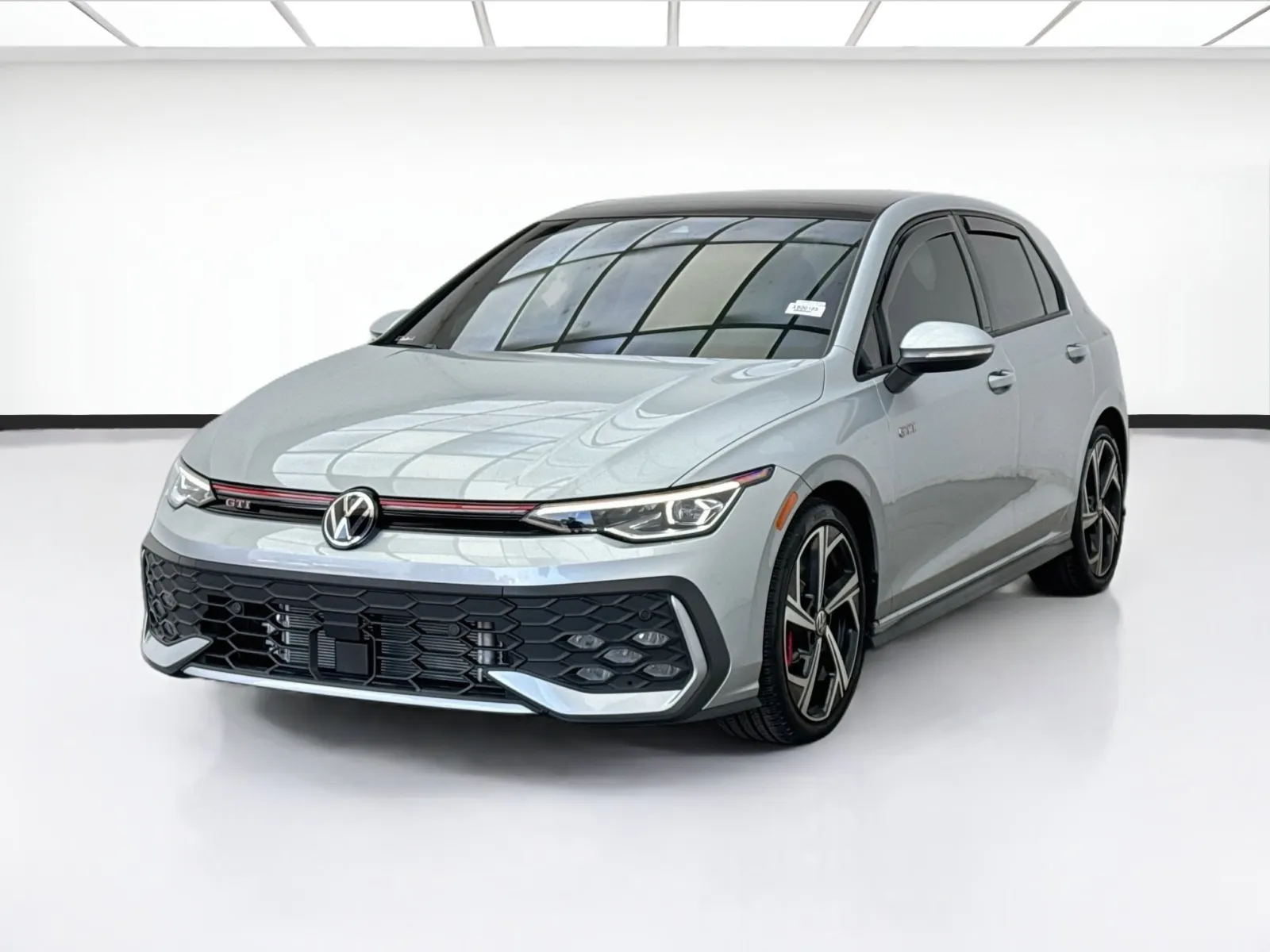
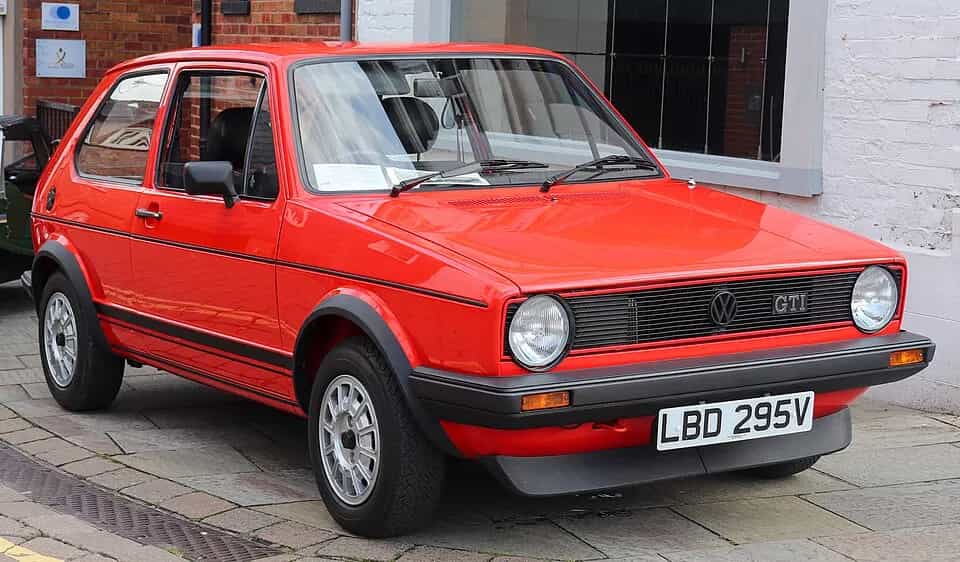
Volkswagen Golf GTI
Importing a used Volkswagen Golf GTI from the USA
The Volkswagen Golf GTI is the definitive hot hatch, and importing a used one from the USA appeals to enthusiasts chasing a specific US-market edition, a manual-gearbox car, or simply a clean, well-kept example found stateside. The GTI is of course a German car sold on both sides of the Atlantic, but American versions carry their own trim structure, colour options and special editions that never reached Europe. USCar Trader is an independent broker for used vehicles: we locate and manage the import on your behalf, without a dealer margin or manufacturer relationship.

Model history: years and generations
The GTI generations relevant to the US used market span the Mk5 (2006-2009), Mk6 (2010-2014), Mk7 (2015-2017), the Mk7.5 facelift (2018-2021) and the Mk8 (2022-2024). The Mk5 reintroduced the GTI as a serious performance bargain; the Mk6 refined it; and the Mk7, on the MQB platform, is widely regarded as a high point for balance, quality and everyday usability. The Mk7.5 added updated infotainment and lighting, while the Mk8 brought a fully digital cabin and more power - though its early touch-based controls proved divisive. Each is a five-door (or, earlier, three-door) hatchback.
Engines, transmissions and drive
The GTI has been powered by the turbocharged 2.0-litre four throughout. The Mk5 used the 2.0T FSI (around 200 hp); the Mk6 the EA888 2.0T (200-210 hp); the Mk7 and Mk7.5 the updated EA888 (210-220 hp, with a 228 hp Performance/Autobahn tune); and the Mk8 raised output to around 245 hp. US cars offered a six-speed manual - a big reason enthusiasts import them - or a dual-clutch DSG automatic (six-speed on earlier cars, seven-speed on the Mk8). Drive is to the front wheels, and Performance-package cars add a VAQ electronically controlled limited-slip differential and larger brakes.
Equipment lines and body styles
US GTIs were sold in trims such as S, SE and Autobahn, plus limited runs like the Rabbit Edition. Higher trims added leather, upgraded audio, adaptive dampers (DCC) and driver-assistance features; the Autobahn is the loaded flagship. The special editions, with unique wheels, colours and trim, are often exactly what a US-import buyer is after, since they were never sold here. All are practical five-door hatchbacks that double as sensible daily cars.
The US used market
The GTI has a strong enthusiast following in the United States, so the used market offers everything from lightly modified project cars to carefully preserved stock examples. Typical import candidates are Mk7 and Mk7.5 cars, ideally with the six-speed manual, with mileage from 40,000 to 140,000 km. Because enthusiasts often modify GTIs, verifying whether a car is stock or tuned - and how tastefully - is an important part of the search. A clean history report and evidence of proper maintenance matter enormously here.
Is an import right for you?
A US GTI import suits the enthusiast who wants a specific American edition, a manual car in good condition, or an emotional return-import. It is quick, fun, practical and comfortable enough for daily use. If you only want any GTI, the German market is simpler - but for a particular US-spec car, importing a used Golf GTI from the USA is a rewarding route.
Specs at a glance
| Specification | Typical figure (Mk7.5 2.0T) |
|---|---|
| Body style | Hot hatch (5-door) |
| Engine | 2.0 L TSI EA888 turbo four, petrol |
| Power output | approx. 220-228 hp |
| Torque | approx. 350 Nm |
| Transmission | 6-speed manual or 6/7-speed DSG |
| Drivetrain | Front-wheel drive (VAQ diff on Performance) |
| 0-100 km/h | approx. 6.2-6.4 s |
| Top speed | approx. 250 km/h (limited) |
| Length | approx. 4.27 m |
| Wheelbase | approx. 2.63 m |
| Kerb weight | approx. 1,370-1,450 kg |
| Boot capacity | approx. 380 litres |
| Fuel tank | approx. 50 litres |
| Seating | 5 |
| Generations | Mk5, Mk6, Mk7/7.5, Mk8 |
Common issues buyers should know
The EA888 2.0T is a strong engine, but there are well-documented Golf GTI common problems to check. Earlier EA888 units (Mk6 and early Mk7) can suffer timing-chain-tensioner wear that must be addressed before it causes damage. Direct injection leads to carbon build-up on the intake valves over the miles, sometimes needing cleaning. The water pump and thermostat housing are common failure items, and the PCV valve and diverter valve are typical replacements. On DSG cars, the mechatronic unit and clutch packs need proper fluid servicing; a neglected DSG can be expensive. Tuned cars deserve extra scrutiny, since a remap or hardware changes can accelerate wear. A stock, well-serviced GTI with records is the safest bet for long-term reliability.
Differences from the European version
US GTIs use miles-per-hour instruments, US Federal lighting and North American infotainment/radio bands. Some equipment and driver-assistance features differ from European cars, and special US editions carry unique trim. Emissions calibration is US-market. None of this prevents registration, but it shapes the conversion work needed for German approval.
Import step by step
Selection to your brief; VIN and origin verification with a full history report (and a careful check for modifications); escrow payment so funds release only against clean documents; ocean freight by container or RoRo from a US port to Bremerhaven or Rotterdam; EU customs clearance; technical inspection and individual approval at TUV or DEKRA; and German registration. We coordinate each step.
Customs and taxes: what applies
Remember: no origin proof, no 0% duty – and 19% German import VAT is due on every import.
Two separate charges apply at the border. The customs import duty is origin-dependent: the 0% rate under Regulations (EU) 2026/1455 and 2026/1461 (1 July 2026 to 31 December 2029, direct transport) applies only to vehicles of provable US origin verified by VIN and plant. US-market GTIs are built in Germany (Wolfsburg), not the USA, so they are not of US origin and the standard duty rate normally applies; we confirm the exact rate from the VIN. Separately, and in every case, the 19% German import VAT (Einfuhrumsatzsteuer) is levied on the customs value. We never call any import "duty-free" or guaranteed, and we itemise these costs with no hidden margin.
Modifications and single-vehicle approval
Conversion work typically covers European-compliant headlights, a rear fog lamp, side marker/indicator adaptation and a km/h speedometer (the GTI cluster can often switch units). Any aftermarket modifications - suspension, exhaust, wheels, tuning - must be documented and approved for the individual approval, or returned to stock. The odometer reading is recorded and converted where required. After passing, you receive the papers to register the car and get German plates.
What to verify before buying
Before buying, confirm: decode the VIN and identify generation, engine tune and transmission; obtain a full Carfax or AutoCheck history for accidents, title and odometer; establish whether the car is stock or modified, and how well any work was done; check for timing-chain-tensioner and water-pump service on earlier EA888 cars; verify DSG fluid-service history on automatic cars; confirm a clean, non-salvage title; and arrange an independent inspection where possible.
Common questions
Can I import a used VW Golf GTI from the USA to Germany?
Yes. A US-market GTI can be imported and registered here after individual approval, including manual and special-edition cars.
Does a US GTI qualify for 0% import duty?
No, not on origin grounds. US GTIs are built in Germany, so they are not of US origin and the standard duty normally applies. We confirm the rate from the VIN.
Is the 19% import VAT always due?
Yes. The 19% German import VAT applies to every import regardless of origin, on the customs value.
Manual or DSG?
Many enthusiasts import US cars specifically for the six-speed manual. The DSG is quicker and easier but needs proper fluid servicing.
How reliable is the Golf GTI?
The EA888 is strong when maintained. Watch timing-chain tensioners on earlier cars, the water pump, and DSG service history.
Should I worry about a modified GTI?
Modifications need scrutiny - both for wear and for TUV approval. A stock, well-documented car is usually the safer import.
How is it shipped?
By container or RoRo from a US port to Bremerhaven or Rotterdam, then EU customs clearance.
Will a US GTI pass German TUV?
Yes, after standard lighting, rear fog lamp and speedometer work, plus approval of any modifications, and individual approval.
Discover more from Volkswagen in the Carhub, compare the standard VW Golf, the sedan VW Jetta or a rival hatch like the Honda Civic Hatchback, or view the current Golf GTI listings.