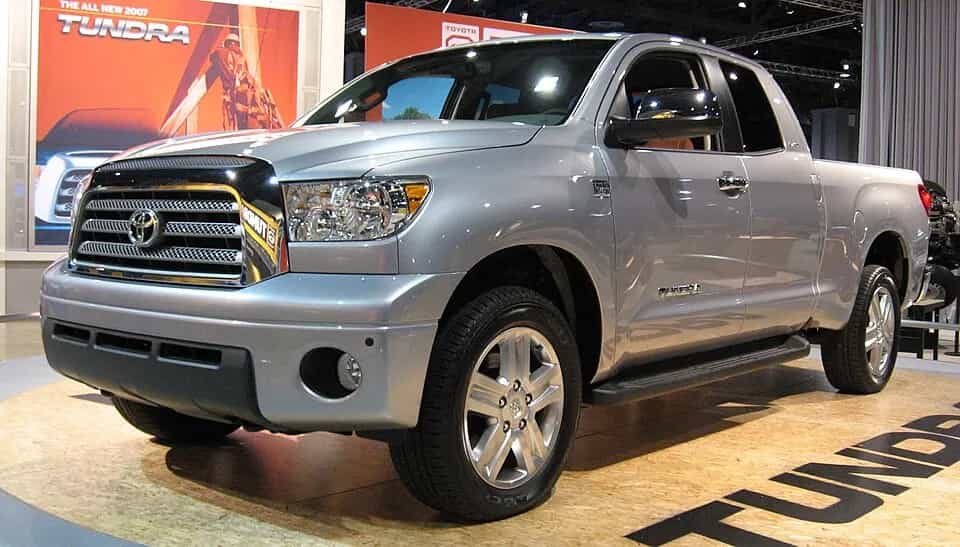
Toyota Tundra
Importing a used Toyota Tundra from the USA
The Toyota Tundra is the brand's full-size pickup, built in San Antonio, Texas, and sold almost exclusively in North America. That makes it a natural import candidate: Toyota never offered it through European dealers, so bringing one over from the US market is the realistic route to ownership. USCar Trader works as an independent broker for used vehicles only — no new-car sales, no factory tie. Below is the detail you actually need to judge a used Tundra before importing it from the USA.

Model history and generations
Two generations dominate the used market. The second-generation Tundra (XK50, 2007–2021) is the classic body-on-frame V8 truck that built the model's reputation for going the distance. The third generation (XK70, from 2022) is a clean-sheet redesign: Toyota retired the V8, switched to twin-turbo V6 power, adopted coil-spring rear suspension on many configurations and introduced a hybrid option. If you want the traditional naturally aspirated V8, you are shopping 2007–2021; for the modern turbo and hybrid trucks, 2022 onward.
Engines and drivetrain
The second-gen Tundra's headline engine is the 5.7-litre 3UR-FE V8, producing around 381 hp and 544 Nm, mated to a six-speed automatic — a genuinely stout combination. Smaller 4.0 V6 and 4.6 V8 options existed early on. The third generation runs the 3.5-litre twin-turbo V35A-FTS V6 in two forms: standard i-FORCE at roughly 358–389 hp, and the i-FORCE MAX hybrid at up to 437 hp and 790 Nm, both with a ten-speed automatic. Rear-wheel drive is standard; a part-time four-wheel-drive system with low range is widely fitted and is what most European buyers will want.
Which trim makes sense
Cab and bed choices include Double Cab and the roomier CrewMax, with several bed lengths. Trim levels span SR, SR5, Limited, Platinum, 1794 Edition and the off-road-focused TRD Pro, plus TRD Off-Road packages. Higher trims add leather, large touchscreens, ventilated seats and adaptive suspension; the TRD Pro brings Fox shocks, skid plates and a lifted stance.
Supply on the US market
Tundras are plentiful and were often bought by owners who kept them a long time, so you will find both high-mileage workhorses and carefully kept examples. The 5.7 V8 trucks are prized for longevity and are frequently offered with six-figure mile odometers that still run strong. Rust is the main regional variable — Texas and southwestern trucks are usually the cleanest underneath, which is exactly what German TÜV inspectors look at.
Who benefits from importing
A used Tundra suits buyers who want a durable full-size pickup for towing, hauling, overlanding or simply the American truck experience, with Toyota's drivetrain reputation behind it. The V8 second-gen appeals to those who value mechanical simplicity; the hybrid third-gen suits buyers who want the newest technology and stronger torque. Either way, it is a large vehicle — size and running costs should factor into your decision.
Technical data
| Attribute | Typical figure (generation-dependent) |
|---|---|
| Body style | Full-size pickup (Double Cab / CrewMax) |
| Engine (2nd gen) | 5.7 L V8 (3UR-FE) |
| Engine (3rd gen) | 3.5 L twin-turbo V6 (V35A-FTS), optional hybrid |
| Power (5.7 V8) | approx. 381 hp |
| Power (i-FORCE MAX) | up to approx. 437 hp |
| Torque (hybrid) | up to approx. 790 Nm |
| Transmission | 6-speed (V8) or 10-speed automatic (V6) |
| Drive | RWD or part-time 4WD with low range |
| Length | approx. 5.8–6.0 m |
| Kerb weight | approx. 2,300–2,600 kg |
| Towing | up to approx. 5,400 kg (config-dependent) |
| Payload | approx. 700–900 kg |
| Fuel type | Petrol / petrol-hybrid |
| Origin | Built in San Antonio, Texas (USA) |
Known weak points and maintenance
The 5.7 V8 Tundra is one of the more dependable full-size trucks you can buy, but it is not flawless. Early second-gen trucks in salted regions suffered frame rust — Toyota ran a recall program, and any candidate should have its frame inspected. Some 5.7 engines developed a cam-tower oil leak, and air-injection pump failures triggered check-engine lights on cold-climate cars. Water-pump wear and exhaust manifold issues appear with age. On the third-generation turbo trucks it is early days, but there have been reports of engine concerns on some units and the usual teething with a new platform; a documented history and any completed recalls are important. Brakes and suspension wear in line with the truck's weight.
US and EU spec compared
The Tundra is a pure North American product: mph speedometer, US lighting (often no separate rear fog lamp, red rather than amber turn signals on some years), DOT glass and US emissions calibration. Its width and length exceed typical European norms, which is worth remembering for parking and narrow roads, though it has no bearing on approval beyond dimension documentation.
The import process in detail
Selection and configuration check first; then a VIN and origin verification to establish the plant of build; payment via escrow; ocean freight from a US port (RoRo is common for pickups) to Bremerhaven or Rotterdam; German customs clearance; TÜV inspection and individual approval; and finally local registration.
What customs clearance really costs
Bottom line: what matters is the factory shown by the VIN – proven US origin unlocks 0% duty. The 19% import VAT always applies.
Expect two distinct charges. The import duty: the standard EU passenger-vehicle rate is 10%, while a 0% preferential rate can apply where US origin is provable by VIN and plant under Regulations (EU) 2026/1455 and 2026/1461 (in force since 1 July 2026, direct transport, until 31 December 2029). The Tundra is built in Texas, which often supports a US-origin claim — but verification is per VIN and never guaranteed. Separately and always, the 19% German import VAT (Einfuhrumsatzsteuer) applies on the customs value. We state both openly and add no margin.
TUEV, modifications and registration
Common items are adding or converting a rear fog lamp, adapting the headlight beam pattern to ECE, confirming or converting the speedometer to km/h, and recording the odometer reading. Aftermarket bull bars or non-compliant lighting bars usually have to be removed or certified. Once approved, registration follows the standard path.
Check before you buy
- Decode the VIN and confirm the Texas build for origin.
- Inspect the frame thoroughly for rust and prior recall work.
- Pull a Carfax or AutoCheck report for accidents and title status.
- Check for the 5.7 cam-tower oil leak and air-injection faults.
- Review service records, especially on high-mileage trucks.
- Confirm a clean (non-salvage) title.
- Test 4WD engagement and low-range operation.
Common questions
Which Tundra engine is best for import?
The 5.7 V8 (2007-2021) is the durability benchmark; the i-FORCE MAX hybrid (2022+) offers the most torque and newest tech.
Was the Tundra ever sold in Europe?
Not through official Toyota channels, which is why importing from the US market is the usual route.
Does the 0% duty apply to the Tundra?
It can, since the Tundra is built in Texas, but only with US origin proven per VIN. The 19% import VAT always applies.
How much can a Tundra tow?
Up to roughly 5,400 kg depending on configuration, though European registration and licence rules govern what you may actually tow.
Is frame rust a real concern?
On early second-gen trucks from salted regions, yes. Always inspect the frame and check recall history.
Will a Tundra pass German TÜV?
Yes, after lighting and documentation adjustments during individual approval.
How is it shipped?
Usually RoRo from a US port to a northern European port, followed by customs clearance.
See the wider Toyota in the Carhub, compare it with the 4Runner or the Land Cruiser, and browse current Tundra listings.