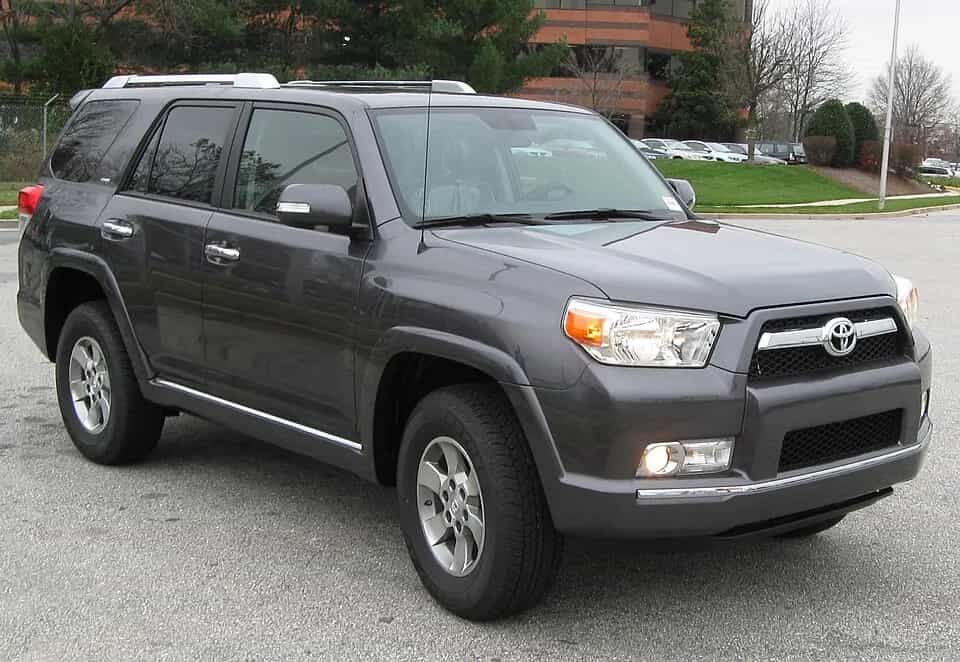
Toyota 4Runner

Importing a used Toyota 4Runner from the USA

The Toyota 4Runner is a body-on-frame, truck-based SUV that stayed true to its rugged formula long after most rivals went unibody. Toyota built it in Japan but sold it overwhelmingly in North America, so for a European buyer the US used market is where the 4Runner actually lives. USCar Trader is an independent broker handling used vehicles only — no new cars, no manufacturer franchise. This page lays out what you should know before importing a used 4Runner from the USA.

Toyota 4Runner – used car imported from the USA
Photo: IFCAR · Public domain · Wikimedia Commons

Generations at a glance

The generation most relevant to today's import buyer is the fifth generation (N280, 2009–2024), an unusually long-lived model that Toyota kept in production with periodic updates for roughly fifteen years. Its longevity means huge parts and knowledge availability. A brand-new sixth generation arrived for 2025 with turbocharged and hybrid power, but the vast majority of used 4Runners on the market are the fifth-gen 4.0 V6 trucks. The fourth generation (N210, 2003–2009) is also imported by enthusiasts who want the earlier, slightly smaller body with V6 or V8 options.

Powertrain lineup

The fifth-generation 4Runner is defined by one engine: the 4.0-litre 1GR-FE V6, producing around 270 hp and 377 Nm, mated to a five-speed automatic for essentially its whole run. It is a deliberately old-school, robust combination with a strong reputation. Fourth-gen cars offered the 4.0 V6 or a 4.7-litre V8. Drivetrains include rear-wheel drive, part-time four-wheel drive with low range on off-road trims, and a full-time four-wheel-drive system on the Limited. The new sixth generation switches to a 2.4-litre turbo four, with an available hybrid.

Trims in the US market

The 4Runner is a five-door SUV, with an optional third row on some fifth-gen trims raising seating to seven. Trim levels include SR5, TRD Off-Road, TRD Pro, Limited and the retro-styled TRD Sport and 40th Anniversary specials. The TRD Off-Road and TRD Pro add a locking rear differential, crawl control, KDSS or specialized suspension and, on the Pro, Fox or comparable shocks — the trims serious overlanders seek out.

The used market stateside

4Runners hold value strongly in the US precisely because they are durable and desirable, so bargains are rare but supply is steady. Expect a wide mileage spread; these trucks routinely pass 300,000 km with care. Southwestern and western examples tend to be rust-free, which matters for the frame and TÜV. Off-road trims command a premium and are worth inspecting for evidence of hard trail use.

Who should import one

A used 4Runner suits buyers who want a genuinely capable off-road SUV with proven Toyota mechanicals and long-term durability, rather than a car-based crossover. It is the natural choice for overlanders, rural buyers and anyone who values a body-on-frame SUV that Europe rarely offered. It drives like the truck it is — buyers wanting car-like refinement should test one first.

Key specifications

AttributeTypical figure (5th gen)
Body styleBody-on-frame SUV, 5-door
Seating5 (optional 7)
Engine4.0 L V6 (1GR-FE)
Powerapprox. 270 hp
Torqueapprox. 377 Nm
Transmission5-speed automatic
DriveRWD, part-time or full-time 4WD with low range
Lengthapprox. 4.82 m
Wheelbaseapprox. 2.79 m
Kerb weightapprox. 2,050–2,200 kg
Ground clearanceapprox. 23 cm
Towingup to approx. 2,270 kg
Fuel typePetrol
OriginBuilt in Japan (Tahara / Hino)

How reliable is it?

The fifth-gen 4Runner is one of the most dependable SUVs on the used market, but a few issues recur. The 1GR-FE V6 is very robust, though some owners note it is thirsty and modestly powered for its weight. Watch for frame and rear-suspension corrosion on trucks from salted regions — the frame is the key inspection point. The KDSS anti-roll system on off-road trims can develop leaks and is expensive to service. Some cars have dashboard cracking in hot climates, and the aging five-speed automatic, while durable, feels dated. Regular fluid changes and a clean history are the best guarantees of a long life after import.

What US models do differently

As a US-market SUV, the 4Runner comes with an mph speedometer, US lighting (frequently no separate rear fog lamp, red turn signals on some years), DOT glazing and US emissions tuning. Third-row and cargo features are configured to US tastes. None of this blocks registration, but each becomes an item on the approval list.

Seven steps to your import

Choose the vehicle and confirm trim and drivetrain; run a VIN and origin check to establish the plant of build; pay through escrow; arrange ocean freight (RoRo or container) from a US port to Bremerhaven or Rotterdam; clear German customs; present for TÜV and individual approval; and register locally.

Customs, taxes and costs explained

Remember: no origin proof, no 0% duty – and 19% German import VAT is due on every import.

Two separate charges apply. The import duty: the standard EU passenger-car rate is 10%, and a 0% preferential rate can apply only where US origin is provable by VIN and plant under Regulations (EU) 2026/1455 and 2026/1461 (in force since 1 July 2026, direct transport, until 31 December 2029). The 4Runner is built in Japan, so it typically will not qualify for the US-origin 0% rate — expect the standard duty unless a VIN check proves otherwise. Separately and always, the 19% German import VAT (Einfuhrumsatzsteuer) applies on the customs value. We quote both transparently with no margin.

German TÜV and registration

Typical work includes adding or converting a rear fog lamp, adapting the headlights to ECE beam pattern, confirming a km/h speedometer, and documenting the odometer. Lift kits, oversized tyres or aftermarket bumpers common on US off-road trims must be certified or reversed to pass. Registration follows once approval is granted.

The buyer checklist

  • Decode the VIN and confirm the build plant and origin.
  • Inspect the frame and rear suspension for corrosion.
  • Pull a Carfax or AutoCheck report for accidents and title events.
  • On TRD trims, check KDSS for leaks and evidence of hard off-road use.
  • Review service history for fluid changes and timing-chain-era care.
  • Confirm a clean, non-salvage title.
  • Test 4WD engagement, low range and any locking differential.

Questions and answers

Is the 4Runner a real off-roader?

Yes. It is body-on-frame with low range and, on TRD trims, a rear locker and crawl control, making it genuinely capable.

Which generation should I import?

The fifth generation (2009-2024) with the 4.0 V6 is the most common and well-supported choice.

Does the 0% import duty apply to the 4Runner?

Usually not, because it is built in Japan. Expect the standard duty unless a VIN check proves US origin; the 19% import VAT always applies.

How reliable is the 1GR-FE V6?

Very. It is a durable, low-stress engine, though not especially powerful or economical for the truck's weight.

Does it have a third row?

Some fifth-gen trims offer an optional third row, raising seating to seven.

Will it pass German TÜV?

Yes, after lighting and documentation changes, and certification of any aftermarket off-road modifications.

How is it shipped from the USA?

By RoRo or container from a US port to a northern European port, followed by customs clearance.

Browse the full Toyota in the Carhub, compare it with the Land Cruiser or the retro FJ Cruiser, or look at the Tundra pickup, and see current 4Runner listings.