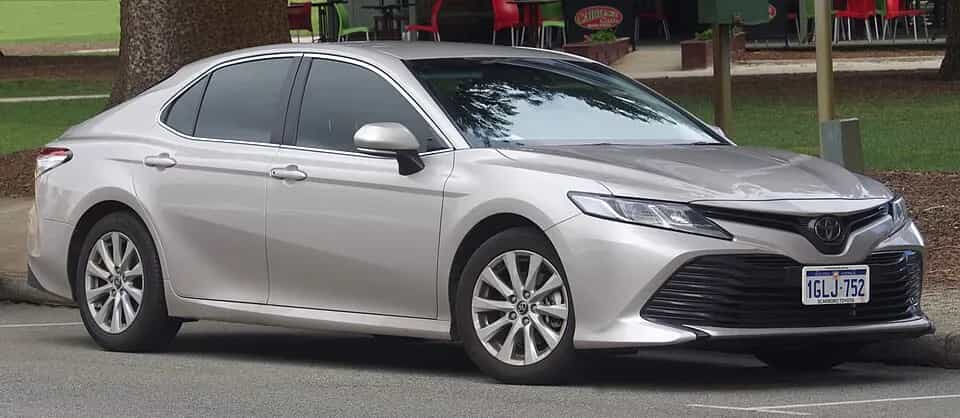
Toyota Camry

Importing a used Toyota Camry from the USA

The Toyota Camry is one of the most heavily produced sedans in North America, and that scale is exactly why it makes sense as an import. Toyota builds the Camry in Georgetown, Kentucky, so the US used market is deep, well documented and full of clean, high-mileage examples that were maintained on regular service intervals. As an independent broker, USCar Trader sources used Camrys already registered and driven in the States and handles the journey to Germany end to end. Nothing here is a new-car sale and there is no manufacturer tie; you buy a specific used vehicle, we manage the logistics, customs and paperwork around it.

Toyota camry – used car imported from the USA
Photo: EurovisionNim · CC BY-SA 4.0 · Wikimedia Commons

Production years and key changes

Most Camrys reaching Europe today fall into three generations. The XV50 (2011–2017) introduced a stiffer platform and a sharper mid-cycle refresh in 2015. The XV70 (2017–2024), built on Toyota's TNGA-K architecture, is the volume seller on the US used market: lower, wider, with a fully independent rear suspension and, from 2020, optional all-wheel drive. The current XV80, launched for the 2025 model year, moved to a hybrid-only lineup. Because origin here is neutral, the exact build plant matters for customs, and the VIN is what tells us whether a car was assembled in Kentucky or elsewhere.

What is under the hood

The bread-and-butter engine is the 2.5-litre four-cylinder — the 2AR-FE in earlier cars and the direct-injection A25A-FKS (Dynamic Force) in the XV70, producing roughly 200–206 hp. The prize for many importers is the 3.5-litre V6: the 2GR-FE in the XV50 (268 hp) and the 2GR-FKS in the XV70 (301 hp), the latter paired with a slick eight-speed automatic. Hybrids combine the 2.5 with Toyota's proven THS-II system and a CVT. Front-wheel drive is standard; the electronic AWD offered from 2020 is comparatively rare and worth confirming on the window sticker.

Trims and body styles

The Camry is a four-door sedan throughout this period (the two-door Solara is a separate, older model). US trims run L, LE, SE, XLE and XSE, with the sporty TRD V6 added in 2020. XSE and TRD cars bring larger wheels, firmer damping and a black roof; XLE leans toward comfort with leather and a larger touchscreen. Hybrid variants mirror most of these trims.

What the US market offers

Supply is excellent. Three-to-eight-year-old Camrys with 40,000 to 120,000 miles are everywhere, and because so many were fleet or commuter cars, service histories tend to be consistent. Rust is rarely a structural issue on cars from southern and western states, though salt-belt examples deserve a closer look underneath. V6 and TRD cars command a premium but remain findable. We assess condition, accident history and title status before anything moves.

Who this import is for

Import a used Toyota Camry from the USA if you want a large, comfortable, genuinely durable sedan with strong parts availability and low running anxiety. The V6 in particular is hard to replicate in the European market, where Toyota long ago dropped six-cylinder mid-size sedans. Buyers who value long-term reliability over badge prestige, and who like the idea of a specific, traceable US car, are the natural audience.

Technical data and figures

Body styleFour-door sedan
Generations (typical imports)XV50, XV70, XV80
Model years2011–present
Base engine2.5 L I4 (2AR-FE / A25A-FKS)
Base outputapprox. 178–206 hp
Top petrol engine3.5 L V6 (2GR-FKS)
V6 outputup to 301 hp
Hybrid system2.5 L + THS-II (CVT)
Transmission6/8-speed automatic, CVT (hybrid)
DriveFWD; AWD optional (2020+)
Length (XV70)approx. 4,880 mm
Wheelbaseapprox. 2,825 mm
FuelPetrol / petrol-electric hybrid
Seating5
Build plant (VIN-dependent)Georgetown, Kentucky (typical)

Reliability: trouble spots to check

The Camry earns its reputation, but no car is faultless. On the 2AR-FE four-cylinder, watch for occasional oil consumption and, on higher-mileage cars, a slightly noisy water pump. Early XV50 automatics could feel hesitant at low speed; a software update addressed much of it. The V6 is robust, though the timing components and water pump are the main long-interval jobs. Hybrids are dependable, but the 12-volt auxiliary battery and, eventually, the traction battery are wear items worth budgeting for. Overall Toyota Camry reliability is strong, which is precisely why service records still matter — a well-kept example is markedly better than a neglected one.

US vs. Europe differences

US Camrys run amber rear turn signals in many years, lack a rear fog lamp, and use SAE headlight aiming and units not homologated for Europe. The instrument cluster reads miles per hour, and the telematics/DAB provisions differ from European cars. Trim content also diverges — features like ventilated seats or specific driver-assist packages follow US option logic. These differences are normal for an import and are resolved during type approval.

How the import works

Selection comes first: you pick a specific car and we vet it. We then run a VIN and origin check to establish the build plant, which drives the customs classification. Payment is handled through secure escrow, never a wire to an unknown seller. The car is booked onto ocean freight (typically container or RoRo) to a North Sea port. At arrival we handle customs clearance, then arrange the technical inspection and individual approval (Einzelabnahme) at TUEV or DEKRA, followed by German registration.

Import duty, VAT and fees

In short: the 0% duty rate applies only with documented US origin (VIN/plant) – German import VAT of 19% is always due.

Two charges are separate and must be treated as such. First, the customs import duty: the standard third-country rate for passenger cars is 10 percent, but under Regulations (EU) 2026/1455 and 2026/1461, a 0 percent rate can apply to vehicles of provable US origin, in direct transport, for imports between 1 July 2026 and 31 December 2029. Because the Camry's origin is neutral, that 0 percent is not automatic — it depends on the actual plant shown by the VIN and the required documentation. Second, and always, the 19 percent German import VAT (Einfuhrumsatzsteuer) is due on the landed value. We never promise duty-free status and never add a hidden margin; you see the real figures.

From modifications to registration

To pass the individual approval, a US Camry typically needs European-spec headlights or approved conversion, a rear fog lamp fitted and wired, and confirmation of the odometer reading in kilometres for the documents. Speedometer marking, tyre load ratings and sometimes side-marker handling are checked. Once the inspector issues the approval, the car is registered at the local authority like any other vehicle.

Pre-buy inspection points

Before committing to any used Camry, work through these: verify the VIN matches the title and the car; pull a full Carfax or AutoCheck history for accidents and title brands; inspect the underbody for salt-belt corrosion; confirm consistent service records, especially fluid and timing work on the V6; check for a clean, non-salvage title; on hybrids, ask about battery health; and confirm which drivetrain (FWD or AWD) and engine you are actually buying.

What buyers ask most

Is it worth importing a used Toyota Camry from the USA?

If you want the V6 or a specific well-kept example, yes — the US used market offers depth and configurations Europe never sold in volume.

Does the 0 percent EU customs duty always apply?

No. It applies only to vehicles of provable US origin under the 2026 regulations. The Camry's origin is neutral, so the rate depends on the build plant confirmed by the VIN.

Do I always pay the 19 percent import VAT?

Yes. The German Einfuhrumsatzsteuer of 19 percent is always due on import, independent of the customs duty rate.

Which Camry engine is most sought after?

The 3.5-litre V6, especially the 301 hp 2GR-FKS in the XV70 and the TRD variant, because no comparable European Camry exists.

Are US Camrys reliable enough to import?

Toyota Camry reliability is among the best in the class; the main variable is how well the individual car was maintained, which is why history checks matter.

What has to change for TUEV approval?

Usually headlights, a rear fog lamp and documentation adjustments such as odometer in kilometres; the exact list depends on model year.

How long does the whole import take?

Ocean freight and clearance typically span several weeks; the timeline depends on shipping schedules and the inspection appointment.

Can you check the car before I buy?

Yes, we vet condition, accident and title history and confirm the origin before any funds move through escrow.

Ready to move? Browse Toyota in the Carhub, compare closely related sedans such as the Honda Accord, the Toyota Corolla and the Toyota Avalon, or view current Camry listings.