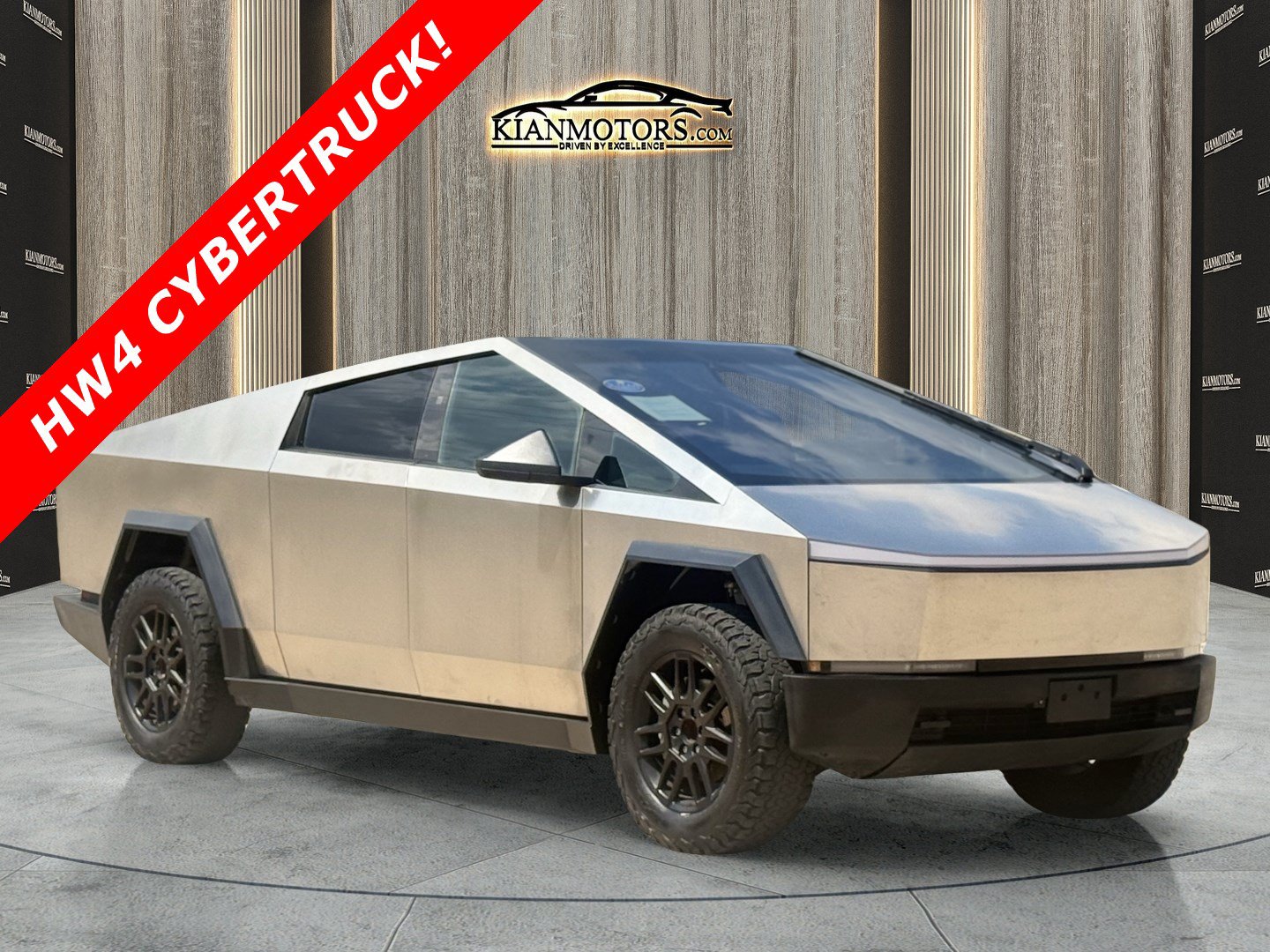
Tesla Cybertruck

Importing a used Tesla Cybertruck from the USA

Few vehicles polarise a car park like the Tesla Cybertruck. Built almost exclusively for the North American market, it is one of the hardest US models to find on European roads, which is precisely why so many enthusiasts ask us about bringing one over. As an independent broker for used US vehicles, USCar Trader sources a Cybertruck on your behalf, handles the paperwork and shipping, and walks the truck through German type approval. We do not sell new cars and we take no margin on the vehicle itself. If you want to import a used Tesla Cybertruck from the USA, the sections below cover what actually matters: the versions on the road, the known weak points, and how the customs and tax side works.

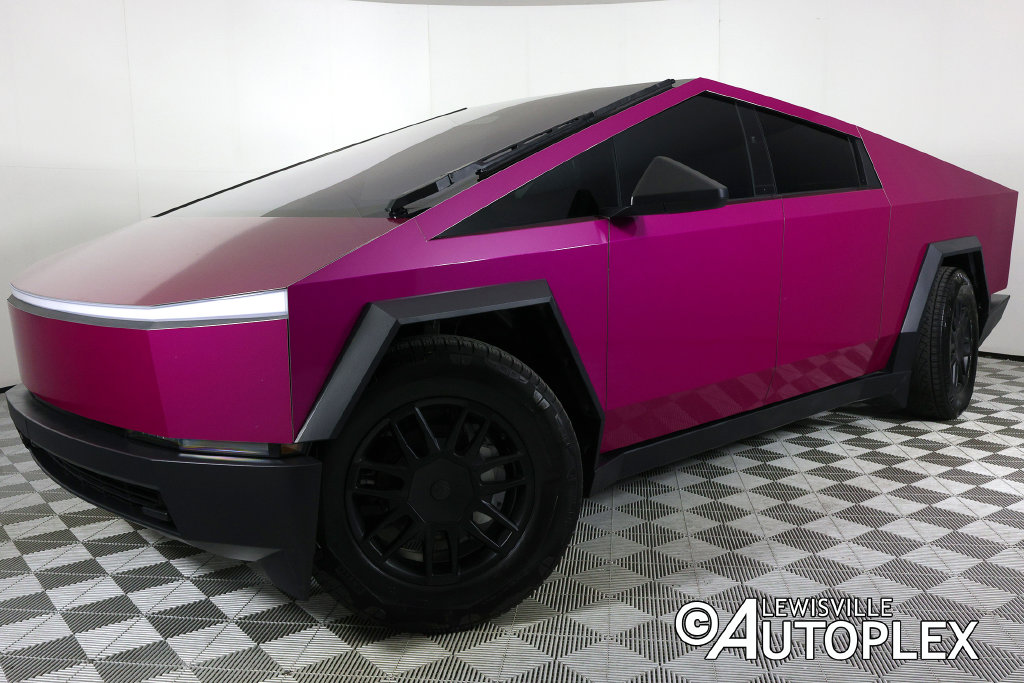
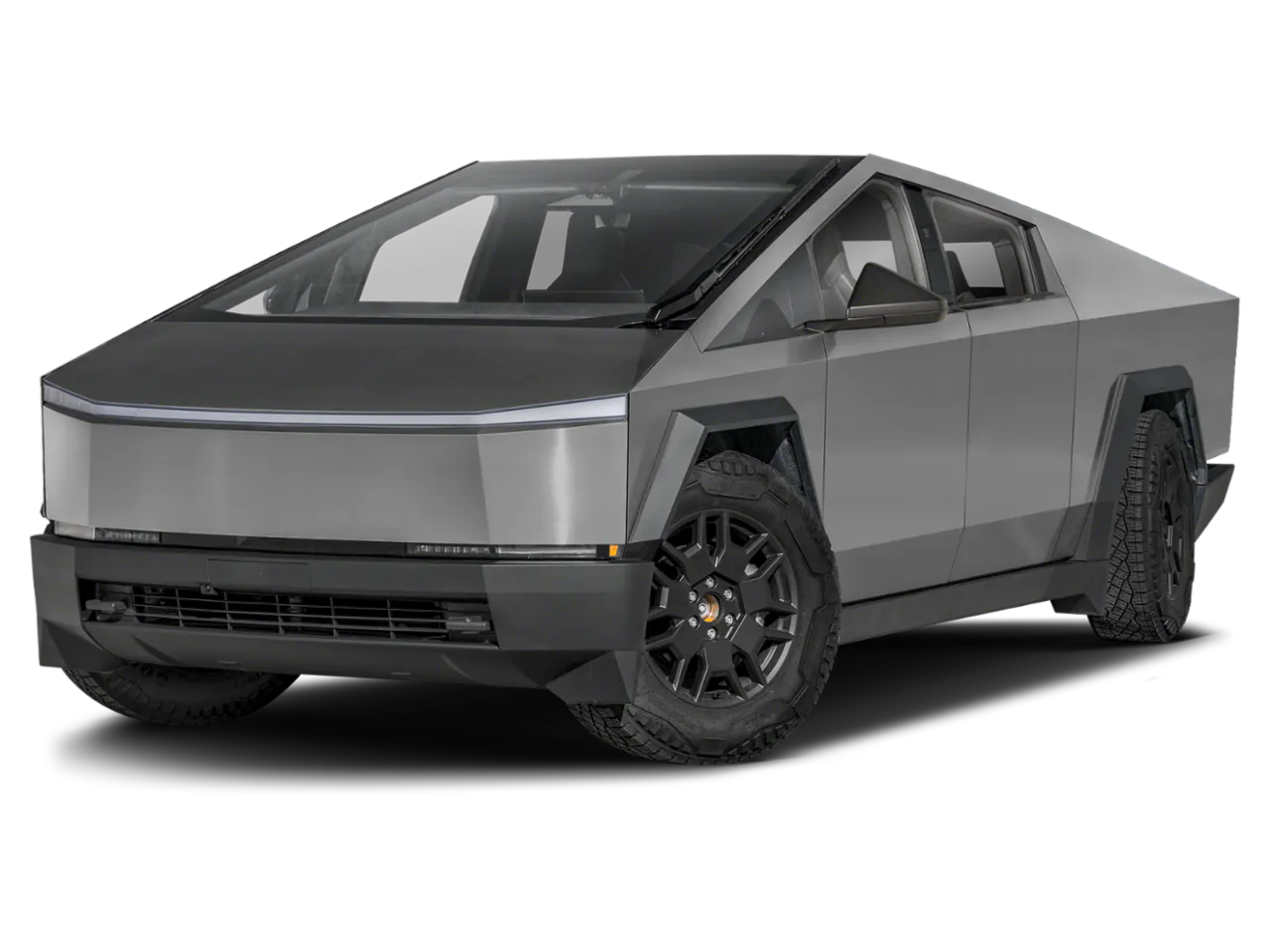
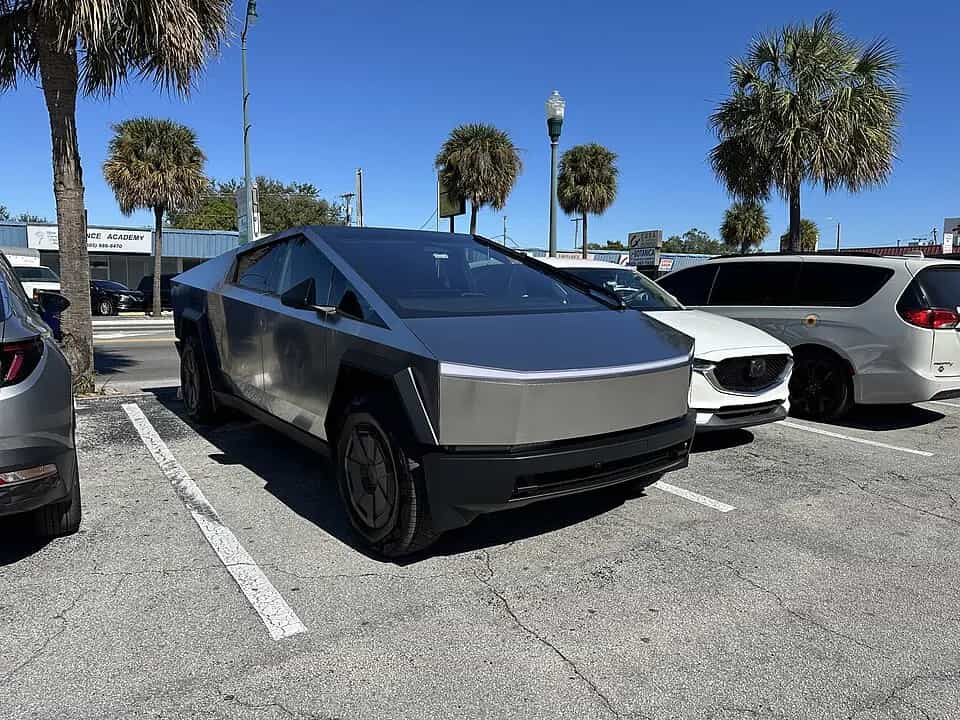
Tesla cybertruck – used car imported from the USA
Photo: Phillip Pessar · CC BY 2.0 · Wikimedia Commons

From launch to today

The Cybertruck was unveiled in 2019 and finally reached customers in late 2023, several years behind the original schedule. There is only one generation so far, but the line-up has shifted. Deliveries began with the top Cyberbeast and the dual-motor All-Wheel Drive, both riding on an 800-volt-class architecture and a 48-volt low-voltage system that is unusual in the industry. A cheaper single-motor rear-wheel-drive version followed in 2025, dropping the air suspension and some equipment to hit a lower price. Because the truck is so young, almost every used Cybertruck on the US market is a 2024 or 2025 build, often with low mileage and still inside its original battery and drive-unit warranty period.

Engines and drivetrain in detail

The Cybertruck is fully electric, so there is no combustion engine to service. The dual-motor AWD delivers roughly 600 hp, while the tri-motor Cyberbeast is quoted around 845 hp and sprints to 60 mph in the low three-second range despite weighing close to 3,000 kg. Power comes from a structural battery pack of roughly 123 kWh usable, giving an EPA range of about 320 miles for the AWD. A signature feature is steer-by-wire with rear-wheel steering, which shrinks the turning circle dramatically for a truck this size. The 48-volt architecture, 800-volt charging and Powershare bidirectional capability are the technical headline acts.

Trim levels and variants

Body-wise there is one shape only: a rigid stainless-steel exoskeleton crew-cab pickup with a roughly 1.8 m bed and a powered tonneau. Trims are defined by drivetrain rather than luxury level. Rear-wheel drive is the entry point, dual-motor AWD is the volume seller, and the Cyberbeast sits on top with adaptive air suspension, more power and unique badging. All versions share the same austere cabin, a single large central touchscreen and no instrument binnacle.

Used availability in the USA

Supply is thin but growing. Early adopters who bought in 2024 are now trading, and because Tesla removed its resale restrictions, more trucks are appearing at auction and with US dealers. Expect low-mileage examples, typically well under 30,000 miles, and check carefully for owners who used the truck hard off-road or for towing. Condition varies: the bare stainless panels show fingerprints and minor scuffs readily, and some early builds had panel-gap and trim issues addressed under warranty. Focus your search on well-documented 2024-2025 AWD and Cyberbeast trucks.

When importing makes sense

This is a truck for someone who wants the most conversation-stopping EV pickup available and accepts that it was never engineered for European roads or dealers. It suits collectors, tech enthusiasts and businesses wanting a statement vehicle, provided they are comfortable that spare parts and service in Germany run through a limited channel. If you need a practical daily workhorse, a conventional pickup is easier. If you want the Cybertruck specifically, importing is realistically the only route into the EU.

Facts and figures

Body styleCrew-cab electric pickup, stainless exoskeleton
GenerationFirst (2023-present)
DrivetrainRWD, dual-motor AWD or tri-motor (Cyberbeast)
Power (AWD)approx. 600 hp
Power (Cyberbeast)approx. 845 hp
0-60 mph (Cyberbeast)approx. 2.6 s
Battery (usable)approx. 123 kWh
EPA range (AWD)approx. 320 miles
Architecture800 V drive, 48 V low-voltage system
Max chargingup to approx. 250 kW DC
SteeringSteer-by-wire + rear-wheel steering
Towing (AWD)approx. 11,000 lb
Kerb weightapprox. 2,900-3,100 kg
Bed lengthapprox. 1.8 m
Fuel typeElectric

Reliability and common problems

Because the platform is so new, long-term data is still forming, but several Cybertruck common problems are already documented. Early trucks saw panel alignment and stainless trim complaints, and a widely reported recall covered an accelerator pedal that could dislodge and stick. Some owners note windscreen wiper motor failures, drive-inverter faults on very early units, and issues with the powered tonneau cover jamming. The bare stainless steel does not rust like painted steel, but it collects surface marks and can develop orange discolouration from airborne iron particles if not cleaned. Software is updated over the air, so many niggles are fixed remotely. Overall Cybertruck reliability looks acceptable for a first-year product, but budget for out-of-warranty service being specialised.

How US versions differ

US Cybertrucks run on the North American Charging Standard (NACS) port, so European Supercharging and public CCS charging require an adapter or retrofit. Lighting is set up to US regulations, headlight beam pattern differs, and there is no rear fog lamp as standard. Amber side markers, mph-primary displays and US telematics bands are all points that surface during type approval. None of these are unfixable, but they define the TUEV work.

From US purchase to registration

The process runs in a clear sequence. You choose a specific truck from our US network; we verify the VIN and the plant of manufacture to establish origin for customs; funds are held via escrow until inspection clears; the vehicle is booked onto an ocean vessel from a US port to a European harbour such as Bremerhaven; on arrival we handle customs clearance and pay the taxes on your behalf; the Cybertruck then goes through TUEV and individual approval (Einzelabnahme); finally you register and plate it in Germany.

Costs, duty and taxes at a glance

In short: the 0% duty rate applies only with documented US origin (VIN/plant) – German import VAT of 19% is always due.

Two charges are separate and must not be confused. First, the EU import duty. Since 1 July 2026, Regulations (EU) 2026/1455 and 2026/1461 allow a 0% duty rate for cars of provable US origin shipped directly from the USA, valid until 31 December 2029. Tesla builds the Cybertruck at Giga Texas, so a VIN-verified truck usually qualifies, but the 0% is never automatic or guaranteed without documented origin. Second, the 19% German import VAT (Einfuhrumsatzsteuer) always applies on the customs value regardless of origin. We add no margin and quote both items transparently.

TÜV, approval and license plates

Typical work includes headlight conversion to an ECE-compliant beam and marker layout, fitting a rear fog lamp, adapting or adding side reflectors, and confirming the speedometer reads in km/h. The odometer and charging documentation are checked, and a data plate for the EU may be required. Once the individual approval certificate is issued, registration at your local office follows normally.

Pre-purchase checklist

Before committing to any Cybertruck, confirm these points: the VIN and Giga Texas build plant for origin; a full Carfax or AutoCheck history with no accident or salvage flags; the title is clean and not branded; battery and drive-unit warranty status; evidence of any recall completion, especially the accelerator pedal; panel and tonneau condition; and whether the truck was used for heavy towing or off-road duty.

Import FAQ

Can you import a used Tesla Cybertruck to Germany?

Yes. It reaches the EU almost exclusively through private import, and we handle sourcing, shipping and German type approval as your broker.

Will the Cybertruck qualify for 0% EU import duty?

Often, because it is built in Texas, but only with a VIN-verified US origin and direct transport. The 0% is never guaranteed in advance.

Does the 19% import VAT still apply?

Yes. The German Einfuhrumsatzsteuer of 19% applies to every import regardless of origin and is calculated separately from any duty.

Can I charge it at European Superchargers?

With the NACS port you need an adapter or retrofit for CCS and most European Supercharger sites. This is a routine part of preparing the truck.

How long does the whole import take?

From purchase to German plates it typically runs a few months, driven mainly by ocean freight scheduling and the approval appointment.

Is the Cybertruck reliable?

As a first-generation product it has early-build issues, but many are fixed via recalls and over-the-air updates. Check recall completion before buying.

Do I need individual approval?

Yes. Without EU type approval the Cybertruck goes through Einzelabnahme at TUEV, which is standard for US imports.

Ready to start? Browse the Tesla in the Carhub, compare it with the Tesla Model S, the GMC HUMMER EV or the Ford F-150 Lightning, and see current Cybertruck listings.