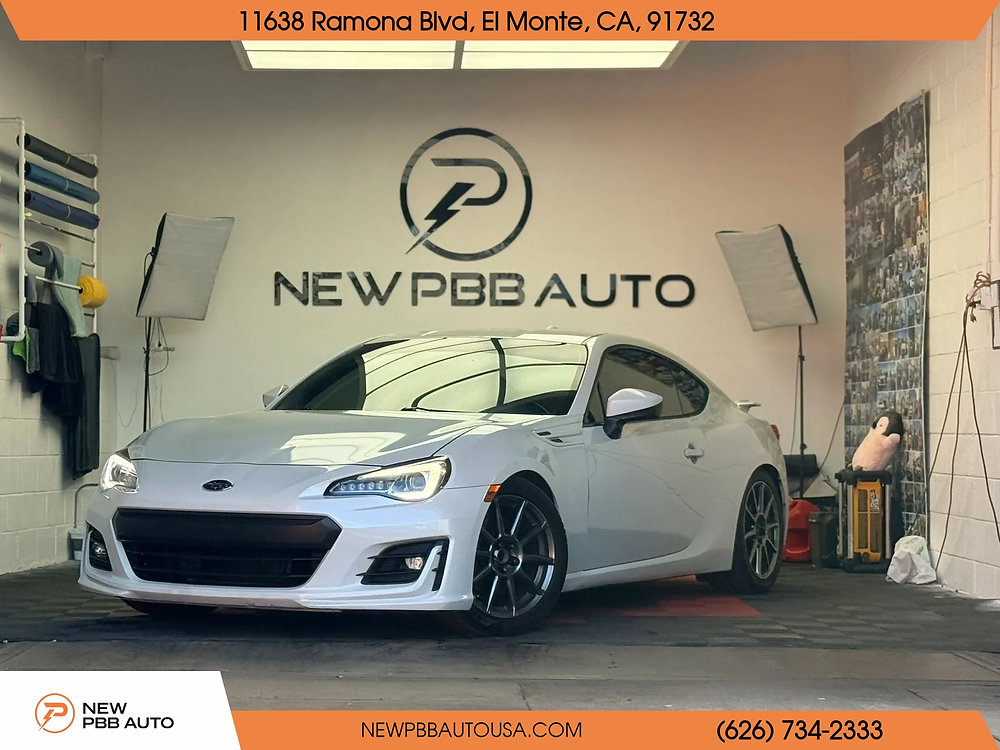
Subaru BRZ

Importing a used Subaru BRZ from the USA

The Subaru BRZ is the enthusiast's answer to a market obsessed with weight and turbos: a lightweight, rear-drive coupe with a low-mounted boxer engine, natural aspiration and a slick manual gearbox. It sold strongly in the United States, where a healthy aftermarket and a deep used pool make it easy to find a clean, well-kept example. For a German buyer, the reasons to import a used Subaru BRZ from the USA are simple: more cars, more manual transmissions and often better value than the thin European supply, all wrapped in a chassis that many consider the purest affordable sports car of its era.

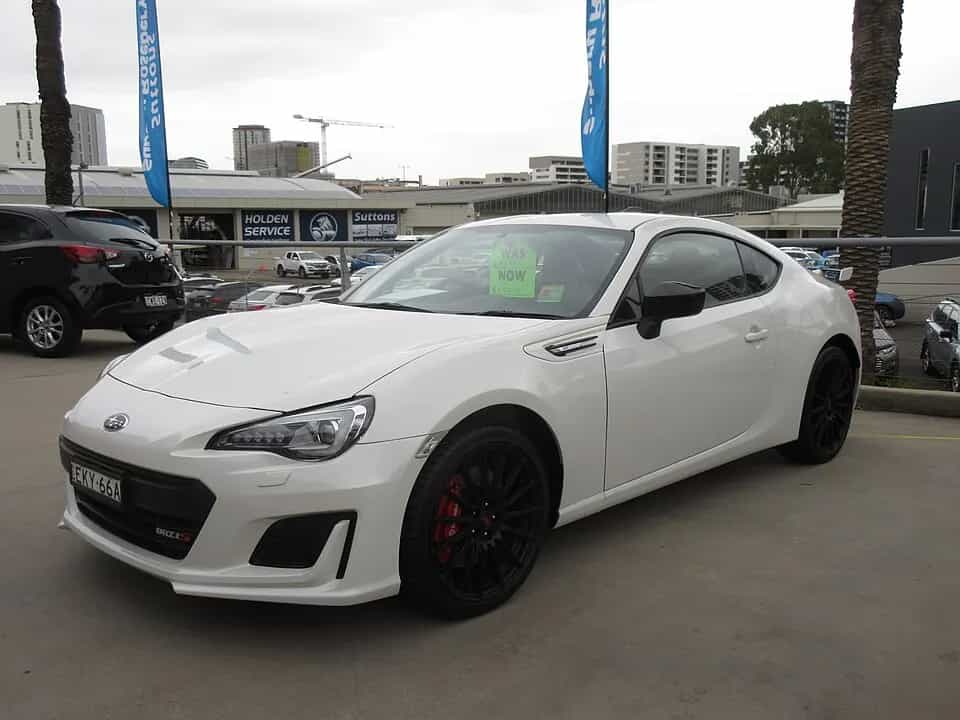
Subaru brz – used car imported from the USA
Photo: zombieite · CC BY 2.0 · Wikimedia Commons

Generations at a glance

The BRZ arrived in 2012 (chassis ZC6) as Subaru's half of a joint project with Toyota, which sold its version as the GT86/FR-S and later GR86. That first generation ran through 2020 with the 2.0-litre FA20 boxer. The second generation (ZD8) launched for 2022 with a larger 2.4-litre engine, revised styling and a stiffer body. Both generations keep the defining formula intact: front engine, rear drive, near 50:50 balance and a low centre of gravity thanks to the flat-four layout.

Powertrain lineup

The first-generation BRZ uses the FA20, a naturally aspirated 2.0-litre boxer making around 200 hp, with a characteristic dip in the mid-range that the second generation set out to fix. The current ZD8 runs the FA24 2.4-litre boxer producing roughly 228 hp with a much flatter torque curve, making it noticeably more flexible on the road. Both generations offer a six-speed manual — the transmission of choice for enthusiasts — or a six-speed automatic. Drive is always to the rear wheels, and a Torsen limited-slip differential is standard, which is central to the car's playful handling.

Trims in the US market

The BRZ is a 2+2 coupe. US trims typically run Premium and Limited, with a track-focused tS added later on the second generation featuring retuned dampers and upgraded brakes. Common US option content includes heated seats, the touchscreen infotainment system and, on later cars, the EyeSight driver assistance suite when paired with the automatic. The Limited grade adds leather-and-Alcantara trim and larger wheels.

The used market stateside

The American market spans low-mileage second-generation cars and plenty of well-sorted first-generation examples aged five to ten years. Manual cars are abundant, which is the main draw. Because the BRZ has an active enthusiast following, many cars come with documented maintenance, though a proportion will have been modified or tracked, so buyer diligence matters. Sun-belt cars offer rust-free bodies that compare favourably with salt-exposed European examples.

Who should import one

The BRZ suits the driver who prizes handling and feel over outright power, the buyer who wants a naturally aspirated manual coupe that is cheap to run, and anyone struggling to find a clean, unmodified example locally. It is not the car for buyers who need turbocharged pace, all-wheel drive or usable rear-seat space.

Key specifications

Vehicle classLightweight sports coupe (2+2)
GenerationsZC6 (2012–2020), ZD8 (2022–)
Gen 1 engineFA20 2.0 L boxer, approx. 200 hp
Gen 2 engineFA24 2.4 L boxer, approx. 228 hp
Transmission6-spd manual / 6-spd automatic
DriveRear-wheel drive
DifferentialTorsen limited-slip (standard)
LayoutFront engine, near 50:50 balance
Body2-door coupe
Seats4 (2+2)
FuelPetrol (premium)
US trimsPremium, Limited, tS (gen 2)
Co-developed withToyota GT86 / GR86
Origin (import)Neutral — determined by VIN/plant

How reliable is it?

The BRZ is broadly dependable, but there are known items to check. First-generation FA20 engines were subject to a valve-spring recall on certain 2013–2014 cars, so confirm the recall work was completed. The FA20 can consume some oil, so check levels and history. Both generations reward regular oil changes given the boxer engine's appetite for clean lubrication, and hard-driven cars can wear clutches and rear differentials. The second-generation FA24 is still young but generally solid; early cars saw isolated engine concerns under extreme use, so evidence of track abuse is the main thing to screen for. Overall Subaru BRZ reliability is good and common problems are well documented and manageable.

What US models do differently

The US market simply offers more BRZ coupes and more manuals than Europe, along with a stronger parts and aftermarket base. The import-relevant legal differences are the usual ones: US headlamps, amber front side markers and red rear markers that are not ECE-compliant, and no rear fog lamp. The speedometer reads in mph and the infotainment is US-configured.

Seven steps to your import

Select the specific car and confirm its condition; verify the VIN and the actual build plant to establish the customs origin; place funds in escrow rather than paying the seller directly; book ocean freight from a US port; clear customs at a European port such as Bremerhaven; complete the TUEV and individual approval (Einzelabnahme); then register the car locally.

Customs, taxes and costs explained

Remember: no origin proof, no 0% duty – and 19% German import VAT is due on every import.

The BRZ carries a neutral origin, so the import duty is not fixed in advance — it depends on where the specific car was actually built, which the VIN and plant code confirm. Where provable US origin exists, the 0% preferential EU rate under Regulations (EU) 2026/1455 and 2026/1461 can apply for direct transport (in force since 1 July 2026, through 31 December 2029); where the plant is elsewhere, the standard passenger-car rate applies. Separately and in every case, the 19% German import VAT (Einfuhrumsatzsteuer) is charged on the customs value. We never describe any import as duty-free or guaranteed, and we take no margin on the vehicle.

German TÜV and registration

Plan for ECE-compliant headlights and side markers, the addition of a rear fog lamp, and verification or conversion of the speedometer to km/h. Because the BRZ is a popular tuning platform, any aftermarket exhaust, suspension, wheels or ECU changes must be documented and approved for the individual approval to pass.

The buyer checklist

  • Decode the VIN and confirm the build plant for the customs origin.
  • Pull a Carfax or AutoCheck report for accident and title history.
  • Confirm the gen-1 valve-spring recall was completed on 2013–2014 cars.
  • Check oil level and history given the boxer engine's oil use.
  • Inspect for track use, modified ECU or aftermarket parts.
  • Verify the title is clean, not salvage or rebuilt.

Questions and answers

Can I import a manual Subaru BRZ from the USA?

Yes, and manual cars are plentiful in the US, which is the main reason enthusiasts import the BRZ.

Does the 0% customs rate apply to a Subaru BRZ?

Only where the VIN proves US origin. The BRZ is neutral origin, so the rate depends on the actual plant. The 19% import VAT always applies.

Which BRZ generation should I import?

The second-generation FA24 offers stronger mid-range performance; a well-kept first-generation car is the value choice.

Is the Subaru BRZ reliable?

Generally yes; confirm the gen-1 valve-spring recall and watch oil consumption and evidence of track use.

How does the BRZ compare to the Toyota GR86?

They are mechanically near-identical co-developed cars; choose on trim, condition and price rather than performance.

What has to change for the TUEV?

Mainly the lighting: ECE headlights and markers plus a rear fog lamp, and the speedometer in km/h; any mods must be documented.

How is the car shipped from the USA?

By RoRo or container from a US port to a European port, then customs clearance and inland transport.

How long does the import take?

Usually several weeks from purchase to registration, mostly ocean freight and customs time.

See the full range in the Subaru in the Carhub, compare it with the co-developed Toyota GR86 and the turbocharged Nissan Z, or cross-shop the Mazda MX-5 Miata, and browse current Subaru BRZ listings.