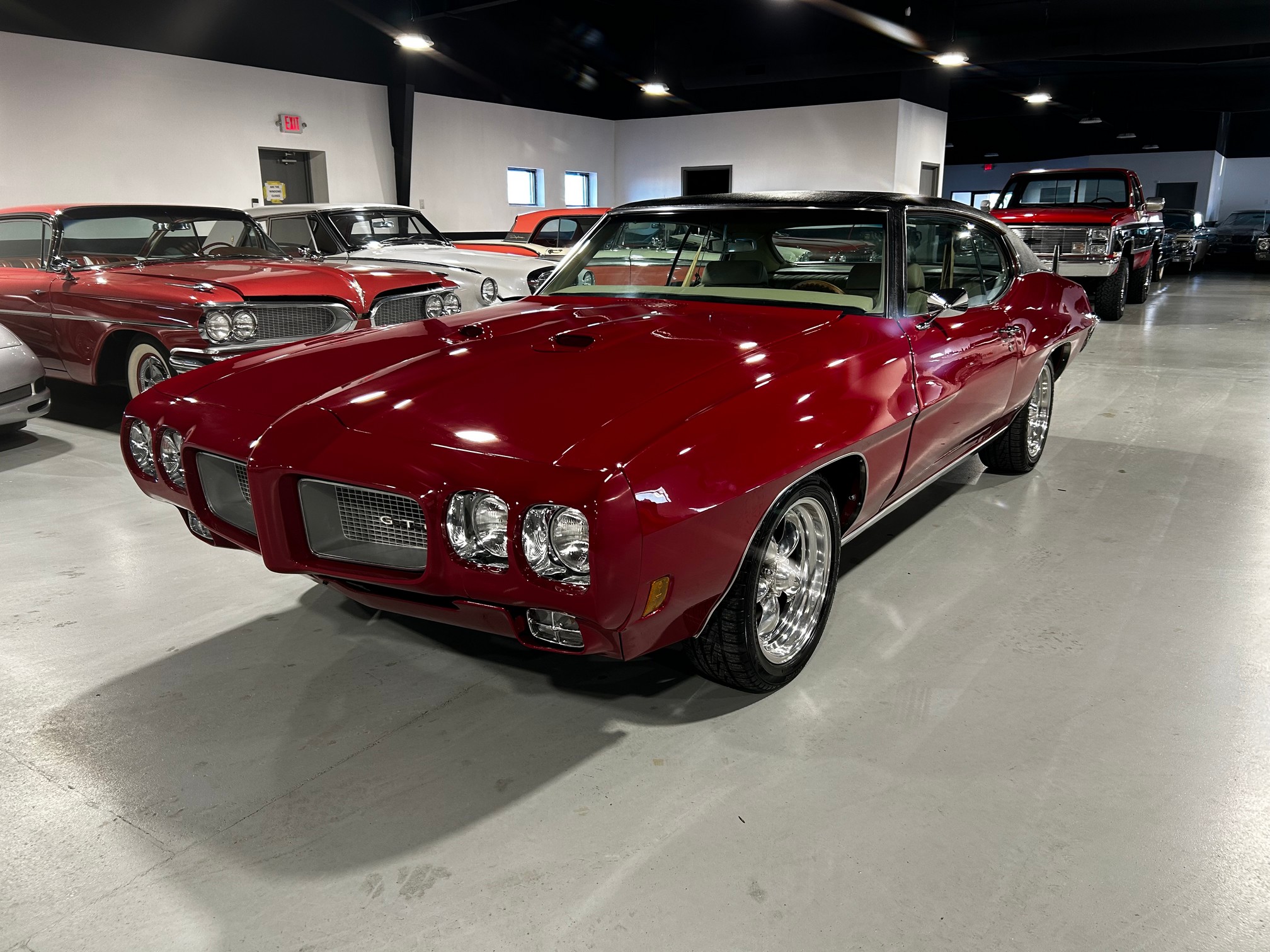
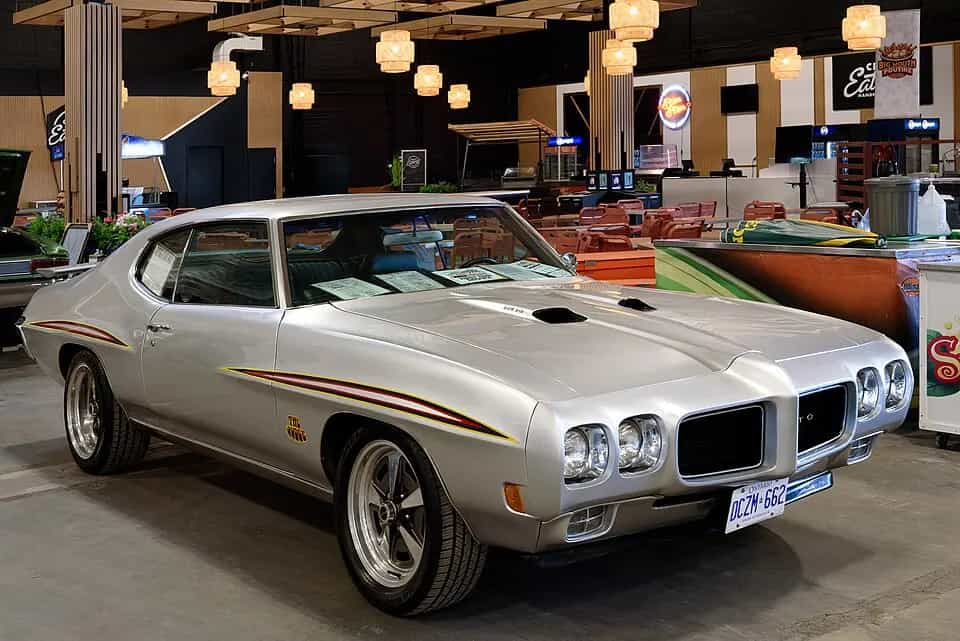
Pontiac GTO
Importing a used Pontiac GTO from the USA
The Pontiac GTO is one of the most misunderstood cars in the American muscle catalogue, and that is exactly why it makes such a rewarding import. The name carries the weight of the 1960s original, but the car most buyers actually want today is the 2004 to 2006 revival: a rear-drive, LS-powered coupe that flew under the radar when it was new and has quietly become a collector favourite. As a German broker for used US vehicles, USCar Trader sources these cars directly from the American market, where clean, unmolested examples still turn up regularly. If you are researching how to import a used Pontiac GTO from the USA, the details below cover generations, engines, the used market and the practical import steps.

Generations at a glance
Two very different cars wear the GTO badge. The classic GTO ran from 1964 to 1974 as a performance version of the Pontiac Tempest and LeMans, and those cars were built in the United States. The modern GTO, which dominates today's import interest, ran only for the 2004, 2005 and 2006 model years. It was essentially a rebadged Holden Monaro, engineered and assembled by Holden in Australia and shipped to North America for Pontiac dealers. That origin matters a great deal for customs, and we return to it below. The 2004 car launched with a 5.7-litre engine; for 2005 and 2006 the GTO received a larger 6.0-litre unit, twin bonnet scoops and revised brakes, addressing most of the criticism aimed at the debut model.
Powertrain lineup
Every modern GTO uses a General Motors LS-family V8 driving the rear wheels. The 2004 model came with the LS1, a 5.7-litre pushrod V8 rated at roughly 350 horsepower. For 2005 and 2006, Pontiac fitted the LS2, a 6.0-litre V8 producing around 400 horsepower and 400 lb-ft of torque. Both engines are famous for their tuning headroom and simple, robust architecture. Buyers could choose a Tremec T56 six-speed manual or a four-speed automatic; the manual is the enthusiast's pick and the one that holds value best. The classic 1960s cars used Pontiac big-block V8s of 6.4 to 7.5 litres with two- or three-speed automatics and four-speed manuals, a completely different mechanical world.
Trims in the US market
The modern GTO was sold in a single, well-equipped two-door coupe body with no convertible or hatchback variant. Because it launched near the top of Pontiac's range, most cars already carried leather sport seats, dual-zone climate control and a premium sound system as standard, so trim confusion is minimal. Options were limited mainly to colour, transmission and a handful of dealer accessories. The vintage GTO, by contrast, was offered as a coupe, hardtop and convertible across the Tempest and LeMans lines, with a wide spread of engine and axle combinations.
The used market stateside
Modern GTOs were never sold in huge numbers, so supply is finite but steady. Clean 2005 and 2006 LS2 cars command the most attention, while 2004 LS1 examples offer a more accessible entry point. Typical survivors show moderate mileage, though many have been modified with intakes, exhausts or tunes, so an honest, stock car with documented history is worth seeking out. Southern and western states yield the best rust-free bodies. Classic GTOs range from unrestored projects to concours restorations, and pricing reflects originality, matching numbers and documentation rather than mileage alone.
Who should import one
The modern GTO suits the driver who wants a genuine V8 grand tourer with everyday manners, understated looks and real tuning potential, without paying Camaro or Corvette collector premiums. The classic GTO appeals to the traditional muscle-car enthusiast who values period authenticity. Either way, this is a car for someone who enjoys the character of a large-displacement American V8 and does not mind a coupe that prioritises straight-line thrust and comfort over outright agility.
Key specifications
| Specification | Detail (2005/2006 GTO, LS2) |
|---|---|
| Body style | 2-door coupe, 4 seats |
| Engine | 6.0 L LS2 V8, naturally aspirated |
| Power | approx. 400 hp (298 kW) |
| Torque | approx. 400 lb-ft (542 Nm) |
| Transmission | 6-speed Tremec T56 manual or 4-speed automatic |
| Drive layout | Rear-wheel drive |
| 0-100 km/h | approx. 5.0-5.3 s |
| Length | approx. 4,725 mm |
| Width | approx. 1,870 mm |
| Wheelbase | approx. 2,788 mm |
| Kerb weight | approx. 1,650 kg |
| Fuel | Petrol |
| Fuel tank | approx. 71 L |
| Assembly | Elizabeth, South Australia (Holden) |
| Production years (modern) | 2004-2006 |
How reliable is it?
The LS1 and LS2 engines are among the most durable V8s GM ever built, and Pontiac GTO reliability is generally strong when maintenance is respected. Known weak points are chassis and detail items rather than the powertrain. Early 2004 cars are prone to axle tramp and driveline clunk under hard acceleration, which some owners address with aftermarket bushings. The rear differential can whine if fluid changes are neglected. Radiators and coolant crossover seals age, and the factory clutch on manual cars wears faster if the car has been launched hard. LS engines can develop lifter tick and, on high-mileage cars, some oil consumption, so a compression or leak-down check is worthwhile. Interior trim and the parcel shelf can rattle. Because so many were modified, the single biggest risk is a car that has been tuned or driven aggressively without records.
What US models do differently
The modern GTO was never officially sold in Germany or most of Europe, so parts familiarity at general workshops is limited, though LS mechanicals are widely supported by specialists. US cars use amber-to-red rear lighting logic and a speedometer in mph, both of which are addressed during approval. Headlight beam pattern follows US SAE standards and must be adapted or replaced for European roads. The car has no European type approval, so an individual inspection route applies.
Seven steps to your import
The process runs in a clear sequence: vehicle selection and a documented condition report; VIN and origin verification, which for the GTO is especially important; a secure escrow payment so funds are only released once ownership is confirmed; ocean freight from a US port to a northern European port such as Bremerhaven; customs clearance on arrival; a TÜV individual inspection (Einzelabnahme) with any required modifications; and finally German registration. USCar Trader coordinates each stage as your intermediary.
Customs, taxes and costs explained
In short: the 0% duty rate applies only with documented US origin (VIN/plant) – German import VAT of 19% is always due.
Origin is the decisive question for the GTO. The 0% EU import duty introduced under Regulations (EU) 2026/1455 and 2026/1461 (in force since 1 July 2026, direct transport, valid to 31 December 2029) applies only to vehicles with provable US origin, established via the VIN and build plant. The modern 2004-2006 GTO was built in Australia by Holden, so it does not qualify for the US-origin rate; the standard third-country car duty of 10% applies. A classic 1960s GTO built in the United States can qualify for the 0% rate if origin is documented. In every case the 19% German import VAT (Einfuhrumsatzsteuer) applies on top and is calculated separately. We never quote a margin or a guaranteed figure; the exact duty depends on the individual VIN.
German TÜV and registration
Typical work for the individual inspection includes converting or replacing headlights to a European beam pattern, adding a rear fog lamp (not fitted on US cars), and confirming the speedometer reads in km/h or is corrected. The odometer reading is documented and must be plausible against the history. Once the TÜV certificate is issued, the car is registered at the local authority and receives German plates.
The buyer checklist
Verify the VIN against the title and the visible plates. Order a Carfax or AutoCheck history to check for accidents, odometer rollback and title branding. Inspect underbody and rear arches for rust, especially on cars from northern states. Confirm service records and, on manual cars, clutch and driveline condition. Check for modifications and whether the ECU has been retuned. Confirm the title is clean and not salvage or rebuilt. Have the LS engine assessed for lifter noise and oil consumption.
Questions and answers
Was the modern Pontiac GTO built in the USA?
No. The 2004-2006 GTO was engineered and assembled by Holden in Australia and rebadged for Pontiac, which affects its customs classification.
Does the GTO qualify for 0% EU import duty?
The modern Australian-built GTO does not; the standard 10% car duty applies. A US-built classic GTO can qualify with documented origin.
Is the 19% import VAT always due?
Yes. The German Einfuhrumsatzsteuer of 19% applies to every import regardless of origin and is calculated separately from any duty.
Which engine should I look for?
The 2005-2006 6.0-litre LS2 offers the most power and the strongest values, while the 2004 5.7-litre LS1 is a more affordable entry.
Is the GTO reliable?
The LS V8 is very durable. Watch for driveline clunk, differential wear and the effects of aggressive modification.
Can I register a GTO in Germany?
Yes, via a TÜV individual approval covering lighting, a rear fog lamp and speedometer units, followed by standard registration.
How long does the import take?
Allow roughly six to twelve weeks from purchase to registration, depending on freight scheduling and inspection slots.
Are parts available in Europe?
Powertrain parts are widely supported through LS specialists; some body and interior trim items are easier to source from the US.
Explore more American performance imports through our Pontiac in the Carhub, or compare related rear-drive coupes such as the Pontiac Firebird, the Pontiac Solstice and the Chevrolet Monte Carlo. You can also browse the current GTO listings we can source and import for you.