Pontiac Firebird

Importing a used Pontiac Firebird from the USA

The Pontiac Firebird is a cornerstone of the American pony-car story, and for European enthusiasts a used import is the natural way to own one — these cars were never sold new through German dealers. From early muscle-era coupes to the muscular LS1-powered Trans Am of the late 1990s, the Firebird offers V8 rear-drive character at a level that is genuinely hard to find on this side of the Atlantic. USCar Trader operates strictly as an independent broker: we find and inspect the exact Firebird you want and organise the shipping, with no margin on the car itself.

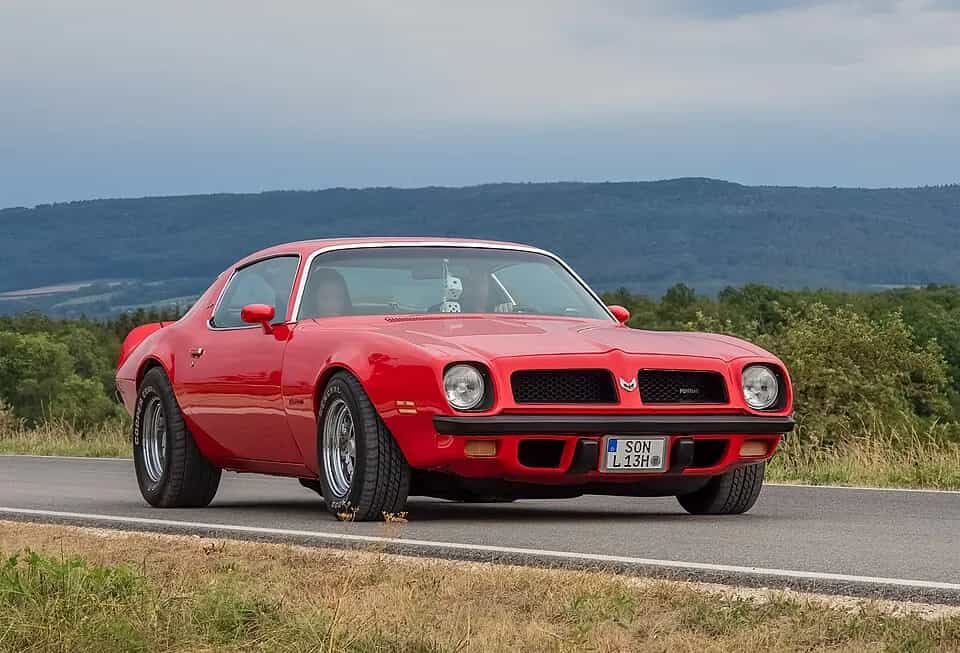
Pontiac firebird – used car imported from the USA
Photo: Reinhold Möller · CC BY-SA 4.0 · Wikimedia Commons

Production years and key changes

Pontiac built four generations of Firebird between 1967 and 2002, sharing its platform with the Chevrolet Camaro throughout. The first generation (1967–1969) established the shape; the second (1970–1981) became a 1970s icon, immortalised by the black-and-gold Trans Am. The third generation (1982–1992) modernised with a lighter body and pop-up headlights. The fourth and final generation (1993–2002) is the one most buyers chase today, with sleek aero styling, T-top roofs and, from 1998, the LS1 V8. Pontiac closed the Firebird story with a Collector Edition in 2002.

What is under the hood

The Firebird is rear-wheel drive throughout. Fourth-generation base cars used a 3.4-litre and later 3.8-litre V6 (the 3800 Series II, around 200 hp), while the Formula and Trans Am carried V8 power: the 5.7-litre LT1 (275–305 hp) up to 1997, then the aluminium LS1 (around 305–325 hp) from 1998, with the WS6 Ram Air package lifting output further. Transmissions were a four-speed 4L60E automatic or, on the V8, a Borg-Warner/Tremec T56 six-speed manual — the combination that made the LS1 Trans Am a genuine performance bargain.

Trims and body styles

Body styles were a two-door coupe (frequently with removable T-tops) and a convertible. The line ran from the base Firebird up through the Formula and the flagship Trans Am, with the WS6 performance package sitting on top. Trans Am models are the most desirable, and WS6 cars especially so, thanks to the Ram Air induction, functional hood scoops and uprated wheels and suspension.

What the US market offers

Fourth-generation Firebirds are well represented in the US used market, ranging from tidy V6 daily drivers to cherished low-mileage WS6 Trans Ams. Manual LS1 cars and clean convertibles are the prizes and are climbing in value. Because these cars are increasingly collectible, history and originality checks matter; many have been modified or hard-driven. Southern and western cars tend to be the rust-free examples.

Who this import is for

A used Firebird suits the enthusiast who wants big rear-drive V8 character, a manual gearbox and unmistakable American presence, rather than tidy running costs. The LS1 Trans Am in particular delivers performance that still holds up today. If you want a usable future classic with real driver appeal, an imported Firebird makes a strong case.

Technical data and figures

SpecificationDetail (fourth generation, typical)
Body styles2-door coupe (T-tops), convertible
LayoutFront engine, rear-wheel drive
Production years1967–2002 (four generations)
Base engine3.8 L V6 (3800 Series II)
V8 engines5.7 L LT1, then 5.7 L LS1
Trans Am outputapprox. 305–325 hp (LS1 / WS6)
Transmission4L60E 4-speed auto / T56 6-speed manual
Performance packageWS6 Ram Air
Lengthapprox. 4,910 mm
Wheelbaseapprox. 2,565 mm
Kerb weightapprox. 1,550 kg
FuelPetrol
AssemblySainte-Thérèse, Quebec (Canada)

Reliability: trouble spots to check

The LS1 V8 is famously durable, but there are known Pontiac Firebird common problems to check. The plastic intake manifold and, on V6 cars, the well-documented 3800 intake-gasket failures can cause coolant loss and overheating. The LS1 can suffer piston slap on cold start (usually cosmetic noise) and, importantly, valve-spring wear that leads to misfires — many owners upgrade the springs. The 4L60E automatic is a known weak point under hard use and can need a rebuild. Watch also for leaking T-top seals and resulting damp carpets, sagging door hinges, worn rear-end bushings, and clutch wear on manual cars driven hard. Rust in the rear rails and floor is the big structural check on northern-state cars.

US vs. Europe differences

US Firebirds run amber side-marker lights, MPH speedometers and headlamps aimed for right-hand traffic. As a North American-only model, there is no European homologation to fall back on, so the German individual approval process establishes the car's compliance from scratch. Emissions equipment is the US OBD-II setup on fourth-generation cars.

How the import works

The route is: select your Firebird; we verify the VIN and confirm the build plant and origin; funds are held in escrow until the car is confirmed; the vehicle is booked onto ocean freight to a European port; it clears German customs on arrival; it goes through a TÜV individual approval (§21 StVZO); and it is registered for the road. USCar Trader coordinates the whole chain.

Import duty, VAT and fees

Bottom line: what matters is the factory shown by the VIN – proven US origin unlocks 0% duty. The 19% import VAT always applies.

Two separate charges apply. The customs import duty rate depends on the vehicle's actual origin as proven by the VIN and plant code. The fourth-generation Firebird was assembled in Sainte-Thérèse, Quebec, so many cars are of Canadian rather than US origin — which means the 0% US-origin preferential rate under Regulations (EU) 2026/1455 and 2026/1461 does not automatically apply. We check the VIN and plant code and tell you the correct rate before you commit; we never promise duty-free. Separately, the 19% German import VAT (Einfuhrumsatzsteuer) is always due on import regardless of origin. USCar Trader adds no margin to the car.

From modifications to registration

For German registration a Firebird typically needs a rear fog lamp fitted, headlights corrected for right-hand traffic, and the odometer reading documented from the MPH cluster. Aftermarket exhausts, lowered suspension, wider wheels and any Ram Air or intake changes must be certified or reverted to stock for the individual approval. A clean, well-documented car passes far more smoothly.

Pre-buy inspection points

Confirm before buying: the full VIN and build plant; a clean Carfax or AutoCheck record with no salvage, flood or odometer flags; LS1 valve-spring and 4L60E service history; the condition of T-top seals and the floor for rust; that any modifications are documented and reversible; the title status; and, on a WS6, that the Ram Air components are genuine and intact.

What buyers ask most

Is a Pontiac Firebird eligible for 0% import duty?

Not automatically. Fourth-generation cars were built in Canada, so origin must be checked from the VIN. Only documented US origin enables the 0% preferential rate; otherwise the standard rate applies.

Do I always pay the 19% import VAT?

Yes. The German import VAT applies to every imported vehicle regardless of origin and is billed separately from any customs duty.

Which Firebird should I import?

The fourth-generation Trans Am WS6 with the T56 manual is the enthusiast favourite and the strongest for future value.

Is the LS1 engine reliable?

Very. The LS1 is one of GM's most durable V8s; valve springs and the 4L60E automatic are the main items to check on a used car.

Can you find a manual Trans Am?

Yes. Manual WS6 and LS1 cars are exactly the sort of Firebird we search for on the US market to your specification.

Do T-tops cause problems at TÜV?

Not in themselves, as long as the seals are sound and there is no water damage; leaking seals should be addressed before shipping.

How long does the whole import take?

Ocean freight to a northern European port takes several weeks, followed by customs clearance and the individual approval.

Are you selling the car directly?

No. USCar Trader is an independent broker. You buy the vehicle directly and we handle sourcing, inspection, logistics and paperwork for a transparent fee.

See more in the Pontiac in the Carhub overview, compare it with the Pontiac GTO or the Pontiac Grand Prix, or browse current Firebird listings.