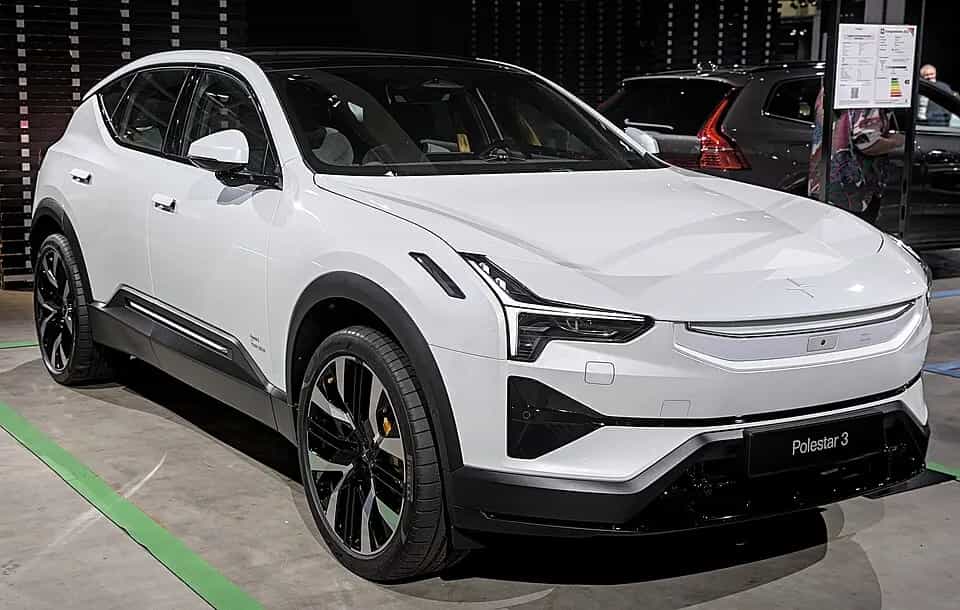
Polestar 3

Importing a used Polestar 3 from the USA

The Polestar 3 is the brand's first full-size electric SUV, and the US market has been one of its most important launch regions. That matters for importers, because a meaningful share of American cars now leaves a factory in the United States rather than in China. Bringing a used Polestar 3 across the Atlantic can make sense when you want a well-equipped, low-mileage electric SUV with a battery health record you can actually verify. This page walks through the generations, the drivetrains, the used-market picture and the practical import steps for the German and wider EU market.

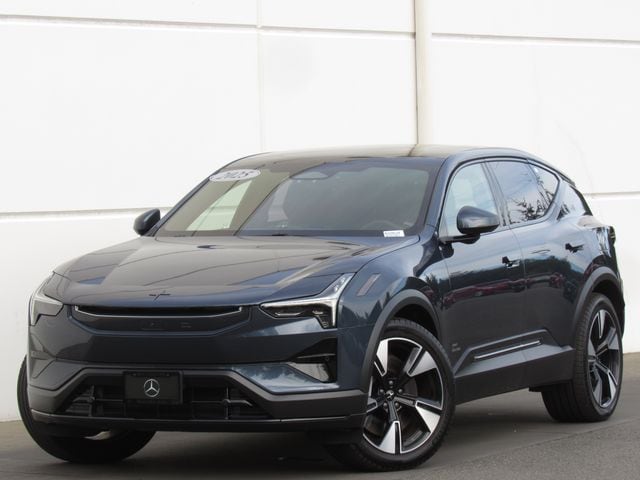
Polestar 3 – used car imported from the USA
Photo: Alexander-93 · CC BY-SA 4.0 · Wikimedia Commons

From launch to today

The Polestar 3 was revealed in 2022 and reached customers from 2024 as a 2025 model-year vehicle. It rides on Volvo's second-generation SPA2 architecture, the same platform underpinning the Volvo EX90, so it is best understood as a large, technology-led SUV rather than a lifted hatchback. Early cars were built in Chengdu, China; from 2024 Polestar added production at the Volvo plant in Ridgeville, South Carolina, specifically to supply North America. Because the 3 is a young model there are no true "generations" yet, but you will already see equipment and software revisions between the first cars and later builds, including the addition of a lower-priced single-motor variant.

Engines and drivetrain in detail

The Polestar 3 is battery-electric only. The volume version is a dual-motor all-wheel-drive car with roughly 360 kW (about 489 hp) in standard tune, rising to around 380 kW (approximately 517 hp) with the Performance Pack, which also adds Brembo brakes and a firmer chassis tune. A rear-biased dual-clutch on the rear axle allows torque vectoring and lets the front motor decouple for efficiency. A later single-motor rear-wheel-drive version produces about 220 kW (roughly 299 hp). All cars use a large battery of around 111 kWh gross, with 400V architecture and DC fast charging up to roughly 250 kW. EPA range depends on version and wheels but typically lands in the 279 to 315 mile band.

Trim levels and variants

Body-wise the Polestar 3 is a single five-seat SUV coupe-fastback silhouette. US cars are usually configured through the Plus Pack (upgraded audio, heat pump, extended interior features) and Pilot Pack (advanced driver assistance, LiDAR-ready hardware on some builds). The Performance Pack is the sporting flagship. Nappa leather, ventilated seats and a large panoramic roof are common on American examples, which tend to be generously specified compared with base European fleet cars.

Used availability in the USA

Because deliveries only began in 2024, the used Polestar 3 pool is still young. Expect 2025 model-year cars with low mileage, many of them lease returns or early-adopter trade-ins. Condition is generally excellent, but the key check on any electric SUV is battery state of health and charging history, both of which the on-board diagnostics and service records can confirm. Availability is concentrated in EV-friendly states such as California, and dual-motor cars dominate the used listings. When you import a used Polestar 3 from the USA, the single most valuable document is proof of where the specific VIN was assembled.

When importing makes sense

This is a car for a buyer who wants a large, quiet, powerful electric SUV and is comfortable with a young model's evolving software. It suits families who value long range and a premium cabin over badge tradition. If you specifically want a US-built example to keep the customs position clean, the Polestar 3 is unusual in that American production genuinely exists — but the VIN must be checked case by case rather than assumed.

Facts and figures

Body styleFull-size electric SUV (5 seats)
PlatformVolvo SPA2
Drivetrain (volume)Dual-motor AWD
Power (standard)approx. 360 kW / 489 hp
Power (Performance)approx. 380 kW / 517 hp
Power (single-motor)approx. 220 kW / 299 hp
Battery (gross)approx. 111 kWh
Architecture400V
DC fast chargeup to approx. 250 kW
EPA rangeapprox. 279–315 miles
0–100 km/happrox. 4.6–4.9 s (dual-motor)
Lengthapprox. 4,900 mm
Kerb weightapprox. 2,570–2,670 kg
Production (US)Ridgeville, South Carolina
Production (CN)Chengdu, China
Market launch2024 (MY2025)

Reliability and common problems

As a new model the long-term record is still forming, but early ownership feedback points to software as the main irritant rather than hardware. Infotainment freezes, over-the-air update hiccups and occasional phantom warnings have been reported and are usually resolved with subsequent software releases. The heavy kerb weight is hard on tyres, so check tread evenly across the axle. On Performance cars inspect the Brembo brakes and larger wheels for kerb damage. As with any recent EV, the drivetrain itself has few wear parts, which is precisely why battery state of health and 12V battery condition should top your inspection list.

How US versions differ

US Polestar 3 cars use amber rear turn signals in many builds and North American charging hardware. Depending on model year the car may carry a CCS1 port or a NACS/Tesla-style port; either way an adapter or port consideration is part of planning EU charging. Headlight beam pattern, rear fog lamp provision and the speedometer's primary units are the typical items a German inspection will scrutinise. Driver-assistance features tuned for US roads generally transfer without issue.

From US purchase to registration

Selection of a specific car and VIN; VIN and origin check to establish the assembly plant (US-built cars can change the duty picture); a secure escrow payment so funds are only released against clean paperwork; ocean freight in a container or RoRo to a North Sea port such as Bremerhaven; customs clearance with the correct commodity code; TÜV inspection and individual approval (Einzelabnahme) where an EU type approval is not carried over; then German registration.

Costs, duty and taxes at a glance

In short: the 0% duty rate applies only with documented US origin (VIN/plant) – German import VAT of 19% is always due.

Two charges are separate and must be read separately. First, EU import duty: the 0% preferential rate under Regulations (EU) 2026/1455 and 2026/1461 applies only to vehicles of provable US origin, imported by direct transport, in force since 1 July 2026 and available until 31 December 2029. A China-built Polestar 3 does not qualify and is dutiable at the applicable rate. Second, German import VAT (Einfuhrumsatzsteuer) at 19% always applies, regardless of origin, and is calculated on the customs value plus duty and freight. We never promise duty-free status; the origin is verified from the VIN.

TÜV, approval and license plates

Typical work includes adapting or replacing lighting to meet ECE requirements, confirming a rear fog lamp, and providing a speedometer reading in km/h. The car's data plate and battery documentation support the individual approval. Charging-port compatibility should be settled before the car arrives so it can be moved and topped up on arrival.

Pre-purchase checklist

Confirm the full VIN and decode the assembly plant. Pull a Carfax or AutoCheck history for accidents, title branding and service events. Verify battery state of health via diagnostics. Check tyre wear across both axles given the weight. Inspect wheels and brakes on Performance cars. Confirm the title is clean (not salvage or rebuilt). Review the charging-port type for the specific build.

Import FAQ

Can a used Polestar 3 be imported to Germany duty-free?

Only if the specific VIN is a US-built car of provable origin under the 2026 EU regulations and it is shipped by direct transport. We never guarantee 0% in advance; we verify it.

Does the 19% import VAT always apply?

Yes. German import VAT is charged on every import regardless of origin and is separate from customs duty.

Is the Polestar 3 built in the USA?

Some are, at the Volvo plant in South Carolina; others are built in China. The VIN tells you which, and that determines the customs position.

What range can I expect?

EPA figures for US cars run roughly 279 to 315 miles depending on version and wheels; real-world range is lower in cold weather.

Will US charging hardware work in Europe?

With the right adapter or port configuration, yes. This should be clarified before shipping.

How reliable is the Polestar 3?

Early issues are mostly software-related and improve with updates; the electric drivetrain has few wear parts.

How long does the import take?

Typically several weeks from purchase to registration, driven mainly by ocean freight and inspection scheduling.

Explore more electric models with Polestar in the Carhub, compare with the Volvo EX90 that shares its platform, the BMW iX or the smaller Polestar 2, or browse current Polestar 3 listings.