Model history and generations
The Polestar 2 launched for the 2021 model year on Volvo's CMA platform, initially only as a Long Range Dual Motor. Single-motor versions followed, and each model year brought refinements.
 0049 (0)89 2000 791 00
 Mo - Fr 8:00am - 8:00pm
USCar Trader import service
Choose a specific vehicle. Where data is available, its detail page shows the import cost calculation. We assess any possible duty benefit with you before purchase.
Important: A 0% EU import-duty rate may be available for a vehicle covered by Regulation (EU) 2026/1455 that has US origin and is imported directly into the EU. CETA may apply to a vehicle with preferential Canadian origin. Whether the requirements are met is assessed for the individual case. Please contact us before purchase; we review the possible duty benefit and provide non-binding support through the process. Import VAT and other costs are assessed separately.
CarHub · Polestar
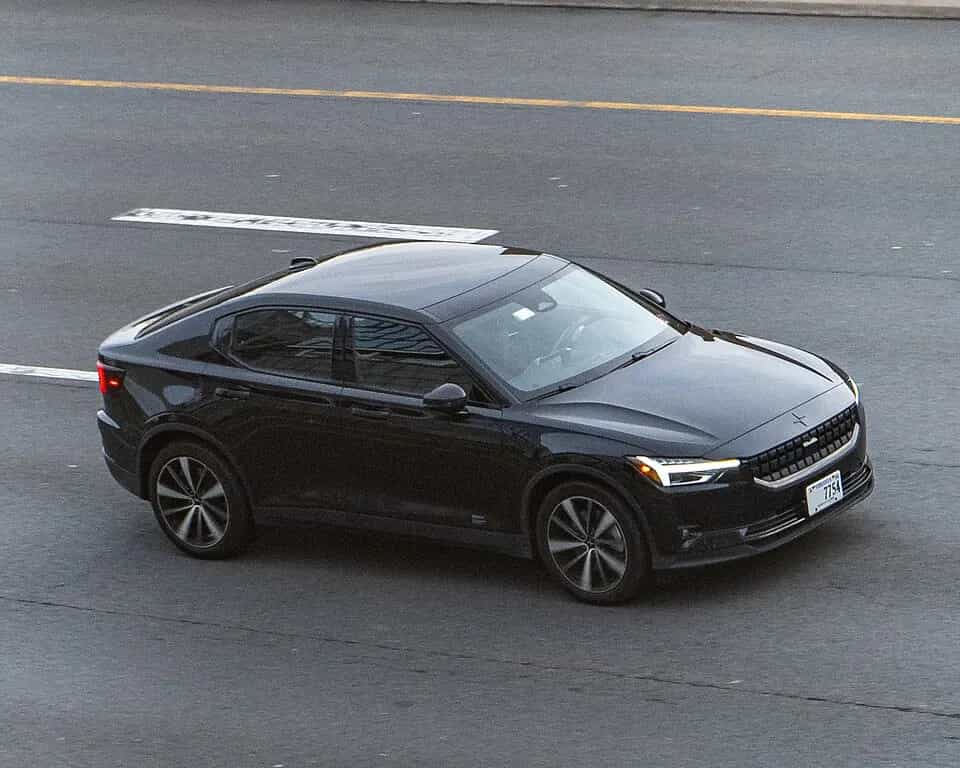
The Polestar 2 was the first fully electric car from Volvo's performance spin-off, and it landed as a credible, cleanly designed rival to the Tesla Model 3.
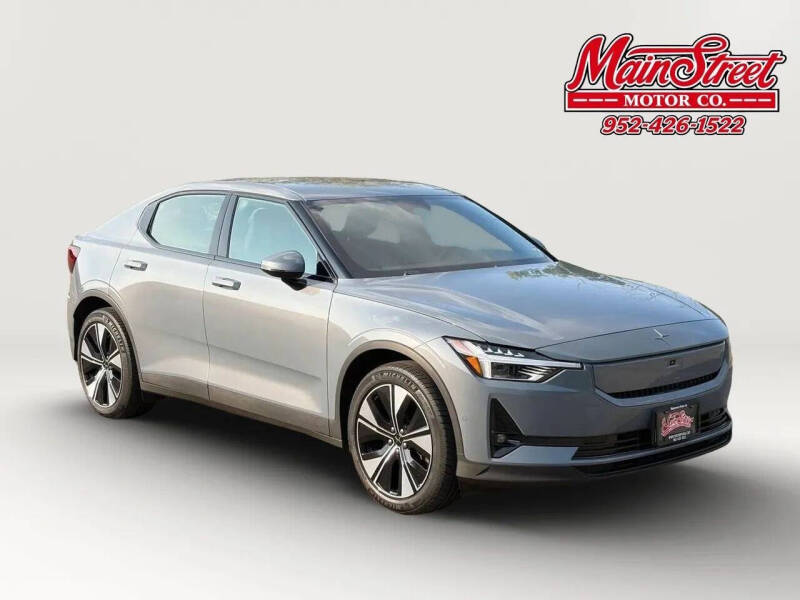
Price:24,995.00 USD
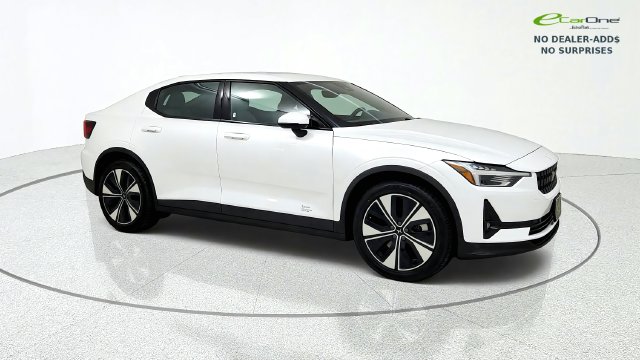
Price:20,970.00 USD
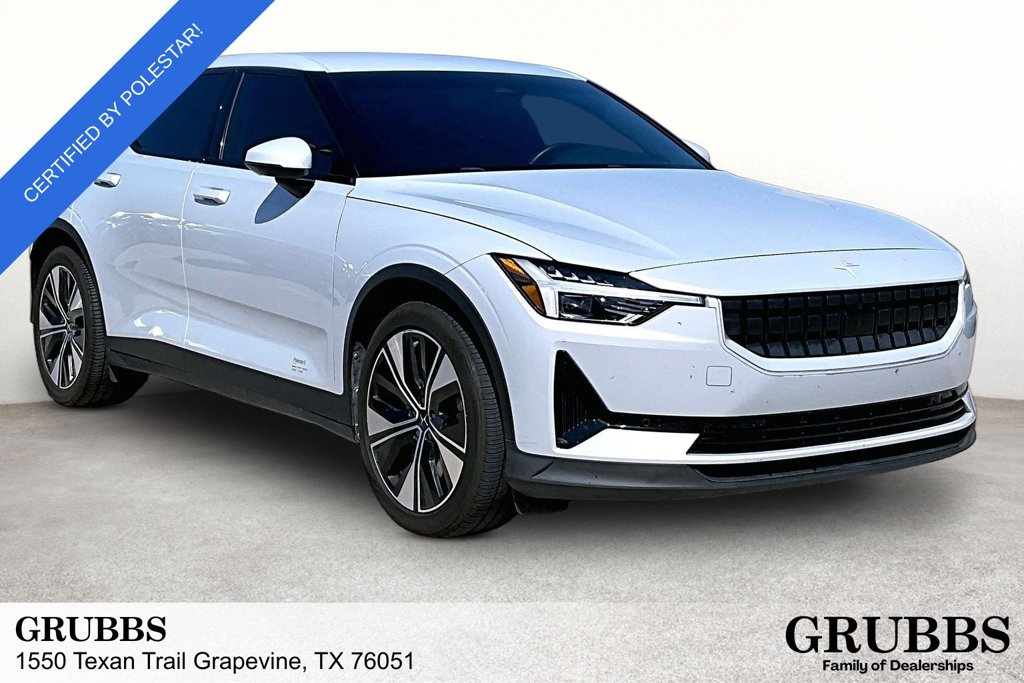
Price:22,970.00 USD
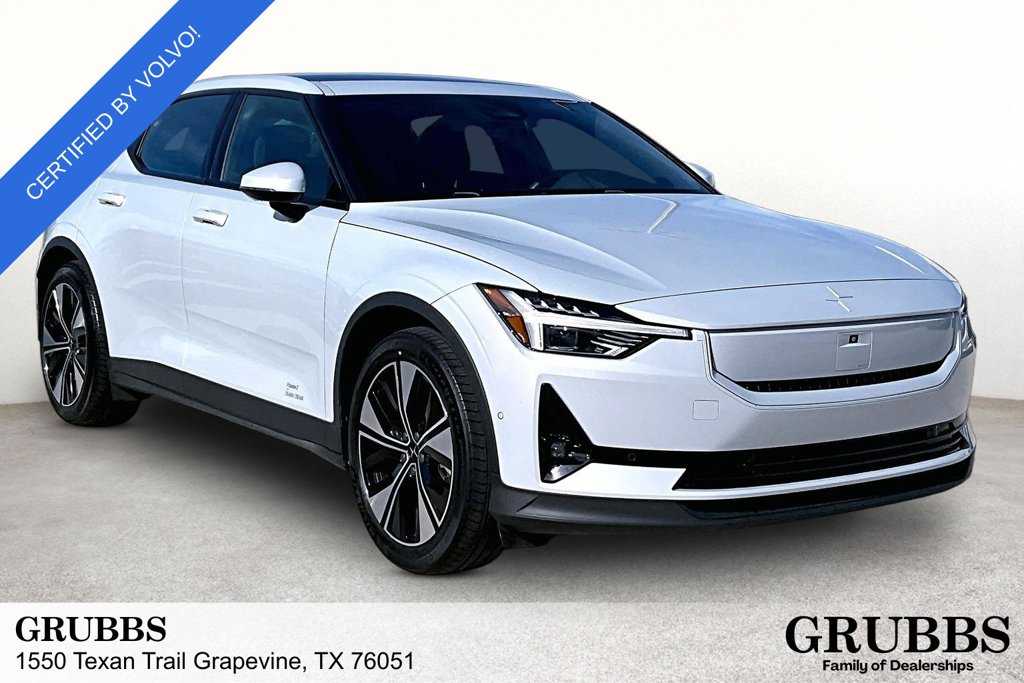
Price:23,770.00 USD

Price:24,862.00 USD
Model profile
The Polestar 2 launched for the 2021 model year on Volvo's CMA platform, initially only as a Long Range Dual Motor. Single-motor versions followed, and each model year brought refinements.
Powertrain and equipment
Early Single Motor cars were front-drive with around 231 hp; the Dual Motor added a second motor for all-wheel drive and roughly 408 hp, dropping the 0–100 km/h time to about 4.5 seconds.
The Polestar 2 is offered in one body: a five-door fastback that sits between a saloon and a crossover, with a raised ride height and a practical hatch.
Vehicle selection
Most import candidates are 2021–2023 Long Range cars with 15,000 to 60,000 miles (roughly 25,000–100,000 km), often lease returns from coastal states.
A US-import Polestar 2 suits a buyer who wants a well-built, restrained, genuinely quick electric car and is comfortable planning around the charging-inlet difference described below.
Vehicle data
| Vehicle class | Detail (varies by model year): Compact premium electric fastback |
|---|---|
| Body style | Detail (varies by model year): 5-door fastback |
| Length | Detail (varies by model year): approx. 4,606 mm |
| Width (excl. mirrors) | Detail (varies by model year): approx. 1,859 mm |
| Height | Detail (varies by model year): approx. 1,479 mm |
| Wheelbase | Detail (varies by model year): approx. 2,735 mm |
| Kerb weight | Detail (varies by model year): approx. 1,994–2,113 kg |
| Battery (usable) | Detail (varies by model year): approx. 69 kWh / 78–82 kWh |
|---|---|
| Power range | Detail (varies by model year): approx. 231–476 hp |
| Drivetrain | Detail (varies by model year): FWD (early SM), RWD (2024+ SM), AWD (Dual Motor) |
| WLTP range | Detail (varies by model year): approx. 470–635 km depending on version |
| DC fast charging | Detail (varies by model year): approx. 150–205 kW (CCS1 inlet in US) |
| Production start | Detail (varies by model year): 2020 (2021 model year) |
|---|---|
| 0–100 km/h | Detail (varies by model year): approx. 4.2–6.4 s |
| Assembly plant | Detail (varies by model year): Luqiao, China |
Values are reproduced verbatim from the existing article table. The documents for the specific vehicle govern.
Pre-purchase review
Polestar 2 reliability is generally good, and the mechanically simple EV drivetrain has few wear items. The issues that do appear are mostly early-life software and electronics: 12-volt battery drain and occasional no-start conditions on the first model years, infotainment freezes since resolved by updates, and a rear-view-camera fault addressed under recall.
Germany and Europe
The single most important difference is charging.
Expected work includes a rear fog lamp, headlight adjustment to European aim, a km/h speed display and emissions/type documentation for the electric drivetrain.
USCar Trader services
As a buyer based in Germany, you do not have to inspect the vehicle yourself in the United States or Canada. Within the agreed scope, USCar Trader can coordinate document review, a separately commissioned on-site inspection and purchase processing.
Covered inspection points are agreed in advance. An on-site inspection records condition at the appointment and is not a guarantee.
Next step: Before commissioning, USCar Trader and the customer agree which document, history, inspection and transaction checks suit the vehicle and are included in the service. This records what was actually checked.
Import process
The assessment depends on the specific vehicle and the circumstances of the transaction. Please contact USCar Trader before purchase; we review any possible duty benefit and provide non-binding support. Import VAT and other costs are considered separately.
Questions and answers
Yes, with the correct adapter for AC and, for DC fast charging, appropriate hardware to bridge the CCS1 inlet to CCS2 networks. Plan this before you rely on the car daily.
The 2024-and-later car is more efficient, charges faster and drives its rear axle; earlier cars are cheaper and still capable. Choose by budget and priorities.
No, not automatically. A 0% EU import-duty rate may be available for a vehicle covered by Regulation (EU) 2026/1455 that has US origin and is imported directly into the EU. CETA may apply to a vehicle with preferential Canadian origin. Whether the requirements are met is assessed for the individual case. Please contact USCar Trader before purchase; we review the possible duty benefit and provide non-binding support. Import VAT and other costs are assessed separately.
Most are low-mileage and hold up well, but always request a measured state-of-health figure before purchase.
Mechanically simple and generally dependable; the early niggles were software-related and are largely fixed through updates.
Typically eight to twelve weeks from purchase to German registration.
Rear fog lamp, headlight adjustment, a km/h display and drivetrain/emissions documentation; the electric powertrain itself needs no conversion.
Available VIN, title and history information can be reviewed in the vehicle profile. USCar Trader can also arrange a separately booked on-site inspection within a scope agreed in advance.
More vehicles