Nissan Versa
Importing a used Nissan Versa from the USA
The Nissan Versa is America's entry-level Nissan sedan, a practical subcompact built to a price and sold in very large numbers. It was never a mainstream European model, so importing one is usually about a specific need: an inexpensive, simple, fuel-efficient runabout with a large boot, or curiosity about the American small-car market. As an independent broker for used US vehicles, USCar Trader can source and import a documented Versa and take it all the way to German registration. If you have been looking into how to import a used Nissan Versa from the USA, the sections below cover the generations, the mechanicals, what to watch for and how the import works.

Model history and generations
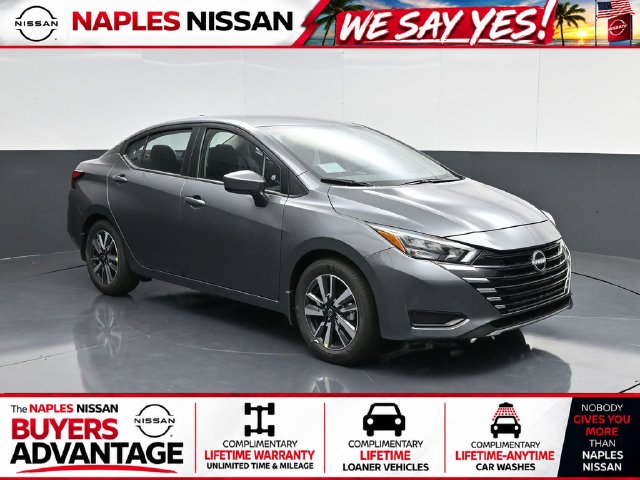
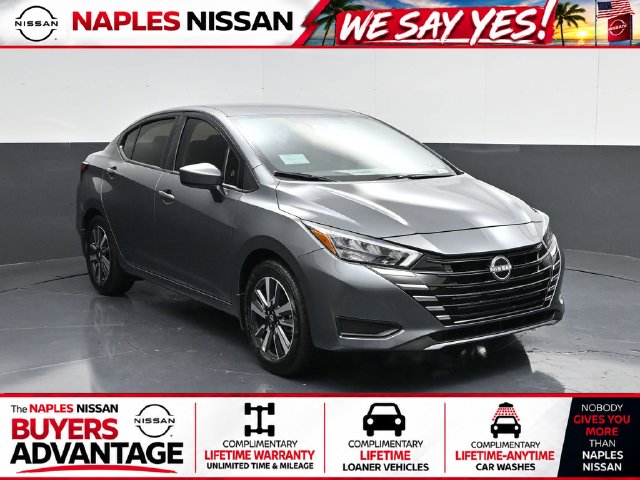
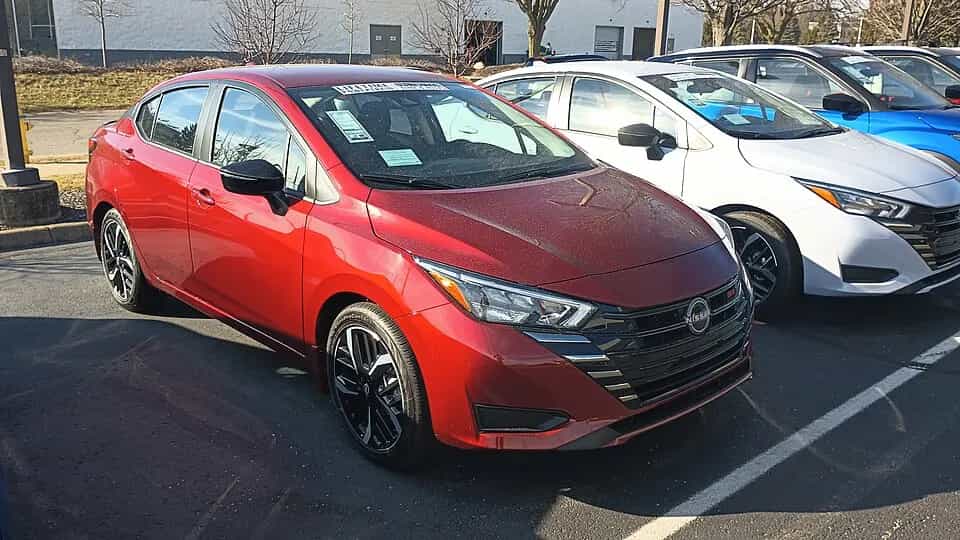
The Versa name has covered several generations in the US. The first generation (C11, 2007–2012) arrived as both a sedan and a practical hatchback and became known for surprising interior space. The second generation (N17, 2012–2019) focused hard on value, becoming one of the cheapest new cars in America; the Versa Note hatchback was sold alongside it. The current third generation (N18, from 2020) is a much better-looking and better-equipped sedan with modern safety technology, sharper styling and a more grown-up cabin. Across all of them the recipe is the same: affordable, roomy for the class and cheap to run.
Engines and drivetrain
The Versa has always been front-wheel drive with a small, economy-focused four-cylinder petrol engine. The current N18 uses the 1.6-litre HR16DE producing roughly 122 hp, paired with either a five-speed manual on the base trim or Nissan's Xtronic CVT on higher trims. Earlier N17 cars used a 1.6-litre four as well, again with a manual or CVT. These are not fast cars; they are tuned for low fuel consumption and easy town driving. The CVT is the common transmission and defines much of the driving character, giving smooth but unhurried acceleration.
Which trim makes sense
In its current form the Versa is a four-door sedan; the Note was the hatchback variant of the previous generation. US trims run from the basic S through SV to the better-equipped SR, with the SR adding alloy wheels, upgraded infotainment with Apple CarPlay and Android Auto, and more driver-assistance features such as automatic emergency braking. Because it is a budget car, a well-specified SR is usually the more satisfying used example to import.
Supply on the US market
Supply in the United States is abundant. The Versa sold in huge volumes as a value car and a fleet and rental favourite, so used examples are everywhere, in a wide range of mileages and conditions. That abundance is an advantage: you can afford to be selective and reject cars with heavy rental wear, patchy service or high mileage in favour of a clean, privately owned example. Sun-belt cars tend to have rust-free bodies, which matters for a small car that will face German winters.
Who benefits from importing
The Versa makes sense for a buyer who wants a cheap, dependable, easy-to-park sedan and specifically wants a US example, perhaps to match an existing American car, for a returning resident, or simply because a particular clean car came up. It is not a performance or prestige purchase; it is transport that does its job without drama. If low running costs and simplicity matter more than badge or pace, importing a used Nissan Versa from the USA can be a sensible, no-nonsense choice.
Technical data
| Attribute | Typical figures (US-market Nissan Versa) |
|---|---|
| Body style | Subcompact four-door sedan (Note: hatchback, prior gen) |
| Generations | C11 (2007–2012), N17 (2012–2019), N18 (2020–present) |
| Layout | Front engine, front-wheel drive |
| Current engine | 1.6 L HR16DE inline-4 |
| Output | approx. 122 hp |
| Transmission | 5-speed manual (base) or Xtronic CVT |
| Length (N18) | approx. 4,495 mm |
| Wheelbase (N18) | approx. 2,620 mm |
| Fuel | Petrol |
| Fuel economy | Strong for the class |
| Drive wheels | Front |
| Assembly | Aguascalientes, Mexico (typical) |
| Seating | 5 |
| Typical US mileage | Wide range; many high-mileage fleet cars, so select carefully |
Known weak points and maintenance
The Versa is mechanically simple, which helps reliability, but the CVT deserves the closest attention on any used example. Nissan's Xtronic CVT can develop issues if fluid changes were neglected or if the car was driven hard while towing or overloaded; symptoms include shuddering, whining or hesitation. A test drive that reaches highway speed and a check of transmission fluid condition are essential. Beyond that, the small engines are durable, though check for oil consumption and skipped services on high-mileage cars. Interior plastics are budget-grade and can rattle or wear. Suspension and bushings are cheap but do wear on hard-used ex-rental cars. Confirm the air conditioning works, as compressor repairs can outweigh a bargain purchase price.
US and EU spec compared
US cars use mph speedometers, US federal lighting and typically lack a rear fog lamp required for German registration. Infotainment and radio bands may differ, though CarPlay and Android Auto sidestep most of this. Because the Versa was not type-approved for Europe in this form, a US car goes through individual approval rather than being registered on an EU certificate.
The import process in detail
With a broker handling it, the sequence is: select and inspect the car; check the VIN and build origin for customs; pay through escrow so funds release only against clean documents; ship by ocean freight to a North European port; clear customs on arrival; complete TÜV and individual approval (Einzelabnahme); then register in Germany. USCar Trader manages each stage for you.
What customs clearance really costs
Bottom line: what matters is the factory shown by the VIN – proven US origin unlocks 0% duty. The 19% import VAT always applies.
Customs depends on where the car was actually built, confirmed by the VIN. The Versa is typically assembled in Mexico, which means it does not qualify as US-origin goods and the standard EU passenger-car import duty applies. The 0% rate under EU Regulations 2026/1455 and 2026/1461 is reserved for vehicles with provable US origin imported by direct transport in the qualifying window; it cannot be claimed for a Mexican-built car and is never guaranteed. Separately, in every case, the 19% German import VAT (Einfuhrumsatzsteuer) applies to the customs value. On an inexpensive car, these charges form a meaningful share of the landed cost, so we quote duty and import VAT clearly and add no margin.
TÜV, modifications and registration
Typical work includes fitting or converting a rear fog lamp, confirming headlight compliance and documenting the odometer in kilometres. The inspector checks brakes, emissions data and identity against the VIN. Once the individual approval certificate is issued, registration proceeds normally.
Check before you buy
- Decode the VIN and confirm build plant and exact engine and transmission.
- Pull a Carfax or AutoCheck history and check for rental or fleet use.
- Confirm a clean, non-salvage title in the seller's name.
- Test the CVT thoroughly at speed; check transmission fluid condition.
- Inspect underbody and arches for rust on northern-state cars.
- Verify air conditioning and all electronics work.
- Prefer a lower-mileage, privately owned car over a hard-used ex-rental.
Common questions
Is the Nissan Versa the same as the Versa Note?
The Versa is the sedan; the Versa Note was the hatchback version of the previous generation. They share mechanicals but differ in body style.
Should I worry about the CVT?
The CVT is the main reliability watch point. A well-maintained one is fine, but always test drive at speed and check fluid history before buying.
Does the 0% import duty apply to a Versa?
No. The Versa is usually built in Mexico, so the standard passenger-car duty applies. The 0% rate is only for provable US-origin cars.
Is the Versa expensive to import relative to its value?
Duty and 19% import VAT are a larger share of a cheap car's cost, so we quote everything transparently so you can judge the total.
Will it pass German TÜV?
Yes, with standard adaptations such as a rear fog lamp and lighting checks, via individual approval.
Are parts available in Germany?
Many mechanical parts are shared with other Nissan models and are obtainable; some US-specific trim may need ordering.
How long does the import take?
Typically several weeks from purchase to registration, mainly determined by ocean freight and inspection scheduling.
See the full Nissan in the Carhub, or compare related small Nissans such as the Nissan Versa Note, the Nissan Sentra and the Nissan Kicks. You can also browse current Versa listings.