Nissan 350Z Roadster
Importing a used Nissan 350Z Roadster from the USA
The 350Z put Nissan's Z car back on the map, and the Roadster added open-top driving to a package built around a front-mid-mounted V6 and rear-wheel drive. The United States was the model's biggest market by far, which means a broad choice of used convertibles is out there today. USCar Trader acts as an independent broker for used cars only, so this page focuses on finding a sound American 350Z Roadster and bringing it to Germany or the EU the right way.

Model history: years and generations
The 350Z (chassis code Z33) launched for the 2003 model year as a coupe, with the Roadster convertible following for 2004. It ran through 2009 before the 370Z replaced it. The most significant mid-life change came in 2007, when Nissan switched from the earlier VQ35DE to the higher-revving VQ35HR, which brought a taller redline, more power and a raised bonnet bulge to clear it. Suspension, brakes and interior detailing were also refined across the run, so a late Roadster feels notably more polished than an early one.
Engines, transmissions and drive
Every 350Z uses a 3.5-litre VQ35 V6. Early cars (VQ35DE) made roughly 287-300 hp depending on year; the 2007-on VQ35HR lifted output to around 306 hp with a higher 7,500 rpm redline. Drive goes to the rear wheels through a close-ratio six-speed manual or a five-speed automatic with manual mode. A viscous limited-slip differential featured on many trims. The Roadster's power-operated soft top folds under a hard tonneau, and the chassis carries extra bracing to offset the loss of the coupe's fixed roof.
Equipment lines and body styles
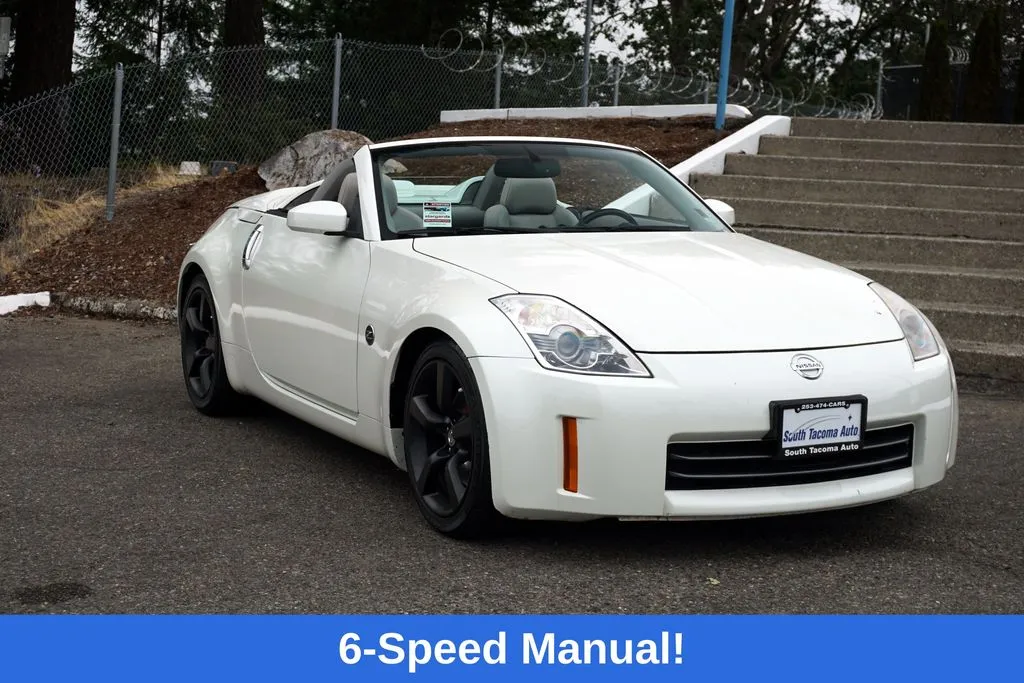
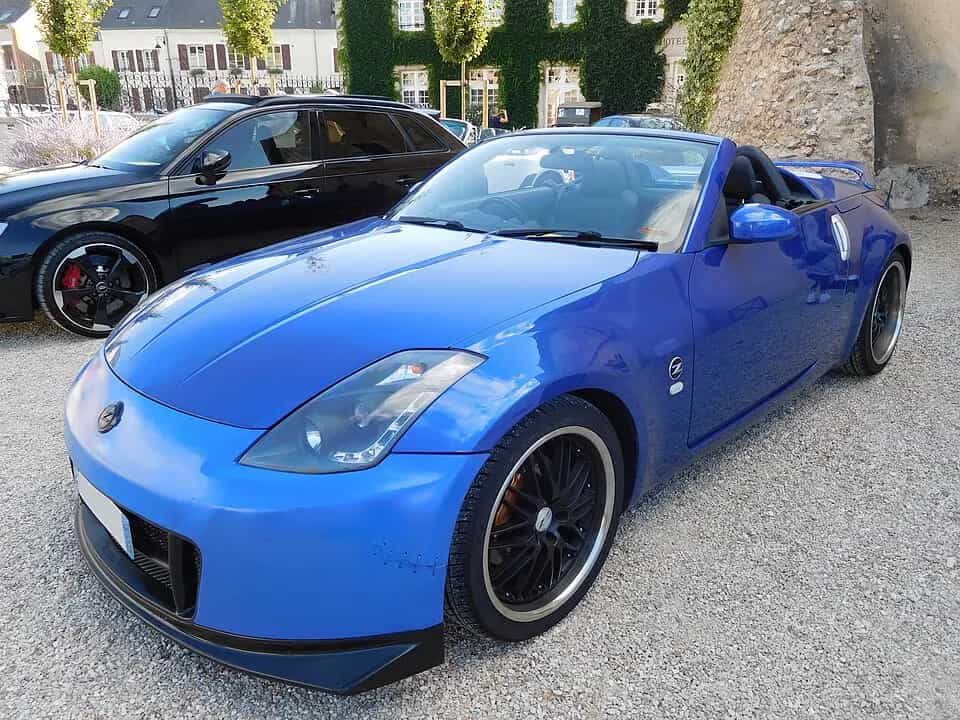
This page covers the Roadster (convertible) specifically. US Roadsters were offered in Enthusiast, Touring and Grand Touring flavours, with the Touring and Grand Touring adding heated leather seats, Bose audio and upgraded wheels. The manual gearbox is the enthusiast's pick, though many US Roadsters left the factory as automatics for relaxed top-down cruising. Bright colours such as Le Mans Sunset and Daytona Blue are sought after.
The US used market
Supply is genuinely good. Because the Roadster was popular as a weekend and warm-climate car, many examples come from California, Florida, Arizona and Texas, states where underbody corrosion is far less of a worry than in the salted north. Mileage varies widely, from pampered garage queens to well-used daily drivers. Modified cars are common, so an unmolested, documented Roadster with a healthy soft top is worth waiting for. We do not quote Euro prices here, only what to look for.
Is an import right for you?
A 350Z Roadster suits a buyer who wants an affordable, naturally aspirated V6 convertible with proper rear-drive balance and a growing classic following. It is ideal if you value a manual gearbox and an analogue driving experience over turbocharged pace. If you need rear seats, all-weather traction or long-distance refinement, look elsewhere; if you want an accessible modern classic to enjoy on dry days, the Roadster delivers.
Specs at a glance
| Chassis code | Z33 |
| Body style | 2-door Roadster (convertible) |
| Engine (late) | VQ35HR 3.5L V6 |
| Displacement | 3,498 cc |
| Power (VQ35HR) | approx. 306 hp |
| Power (VQ35DE) | approx. 287-300 hp |
| Torque | approx. 363 Nm (268 lb-ft) |
| Redline (HR) | 7,500 rpm |
| Transmission | 6-speed manual / 5-speed auto |
| Drivetrain | Rear-wheel drive, viscous LSD |
| 0-100 km/h | approx. 5.7-6.0 s |
| Length | approx. 4,315 mm |
| Wheelbase | approx. 2,650 mm |
| Kerb weight | approx. 1,550 kg |
| Fuel | Premium unleaded |
| Production origin | Japan |
Common issues buyers should know
The 350Z is mechanically honest but has a handful of well-known issues. Early VQ35DE engines, particularly 2003-2004 units, are notorious for oil consumption, so check the level, look for smoke and ask how often the owner tops up. Rear tyres wear on the inner edge and can feather quickly if the alignment or suspension bushings are tired, a classic sign of a neglected chassis. Manual cars can develop a notchy or baulky shift into fourth and fifth as synchros age, so test every gear. On the Roadster specifically, inspect the soft top for tears, a worn rear window and a smooth, reliable power mechanism, and check the drainage channels for blockages that let water into the boot and cabin. Feeler-gauge the usual suspects: clutch health, brake wear and the condition of the exhaust and cats on higher-mileage cars.
Differences from the European version
US 350Z Roadsters run mph-primary instruments, amber-integrated rear lighting and headlights aimed for right-hand traffic. There is no EU-spec rear fog lamp from the factory, and the audio and any factory nav are North American. These are standard conversion points during approval rather than serious hurdles.
Import step by step
Follow the order: select and inspect the car; verify the VIN and read the history; confirm the build origin from the VIN; place funds in escrow; arrange inland transport and ocean freight; clear EU customs; present for TUEV and individual approval where needed; then register. The 350Z is a Japanese-built car, so resolve origin before paying.
Customs and taxes: what applies
Remember: no origin proof, no 0% duty – and 19% German import VAT is due on every import.
Origin governs the duty. The 0% EU import duty for US vehicles applies only with documented US origin via the VIN and plant, under Regulations (EU) 2026/1455 and 2026/1461, in force since 1 July 2026 for direct transport and valid until 31 December 2029. The 350Z is built in Japan, so it does not qualify as US origin and the standard car duty rate applies. Separately, the 19% German import VAT (Einfuhrumsatzsteuer) always applies to the import value. We never promise duty-free import and take no margin.
Modifications and single-vehicle approval
Typical items include converting the rear lighting to provide a compliant rear fog lamp, adjusting the headlights for the correct beam pattern, and confirming the speedometer reads in km/h. The odometer is documented and cross-checked. Because many US 350Zs carry aftermarket exhausts, coilovers, wheels or intakes, each modification needs paperwork for the inspector; a stock car is simpler to approve.
What to verify before buying
Confirm the 17-digit VIN matches the car and the title. Pull a Carfax or AutoCheck report and check for accidents, title brands and odometer flags. Inspect the underbody for rust, favouring Sun Belt cars, and check the soft top and its mechanism thoroughly. Ask for oil, clutch and service history, and gauge oil consumption on early cars. Verify the title is clean rather than salvage or rebuilt. Test every gear on a manual for synchro wear. Commission a specialist pre-purchase inspection before releasing escrow.
Common questions
What is the best year 350Z Roadster to import?
Many buyers prefer 2007-2009 cars with the VQ35HR engine for the higher redline, extra power and refinement, but a documented early car in good order is still rewarding.
Can the 350Z be imported duty-free?
No. It is built in Japan, so it does not qualify for the 0% US-origin rate and the standard duty applies. We never guarantee duty-free import.
Does the 19% import VAT apply?
Yes, German import VAT at 19% is charged on the import value in every case.
Is the VQ35 engine reliable?
Broadly yes, but early VQ35DE units can use oil; check the level and look for smoke before buying.
What should I check on the soft top?
Inspect for tears, a clear rear window, smooth power operation and clear drainage channels to avoid water in the boot.
Manual or automatic?
Both were offered. The six-speed manual is the enthusiast choice; automatics suit relaxed cruising.
Are modified cars a problem for TUEV?
Modifications are common and each one needs documentation for approval, so a stock car is generally quicker and cheaper to register.
Explore more via Nissan in the Carhub, compare the Nissan 370Z, the current Nissan Z and the flagship Nissan GT-R, and see our current 350Z Roadster listings.