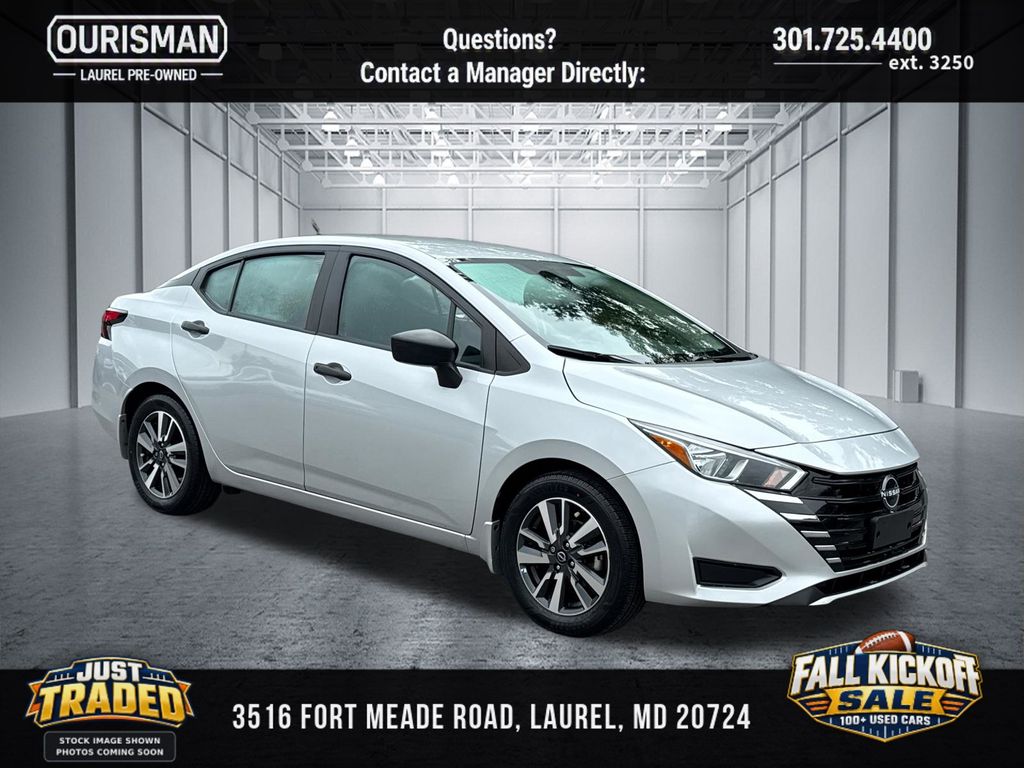
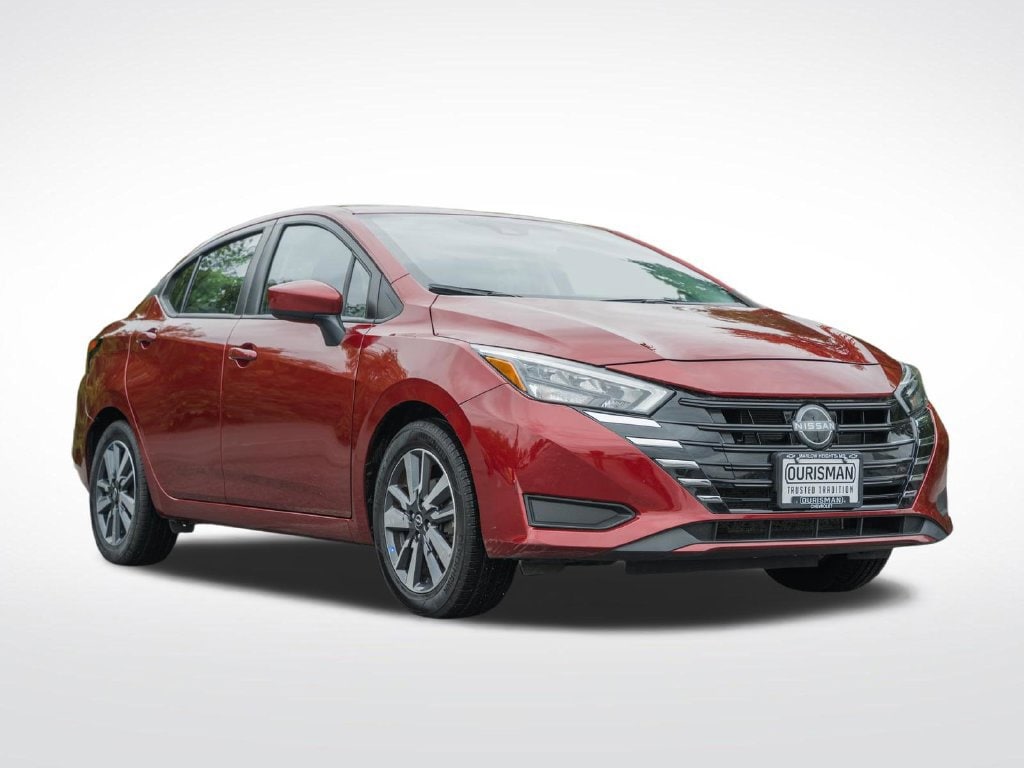
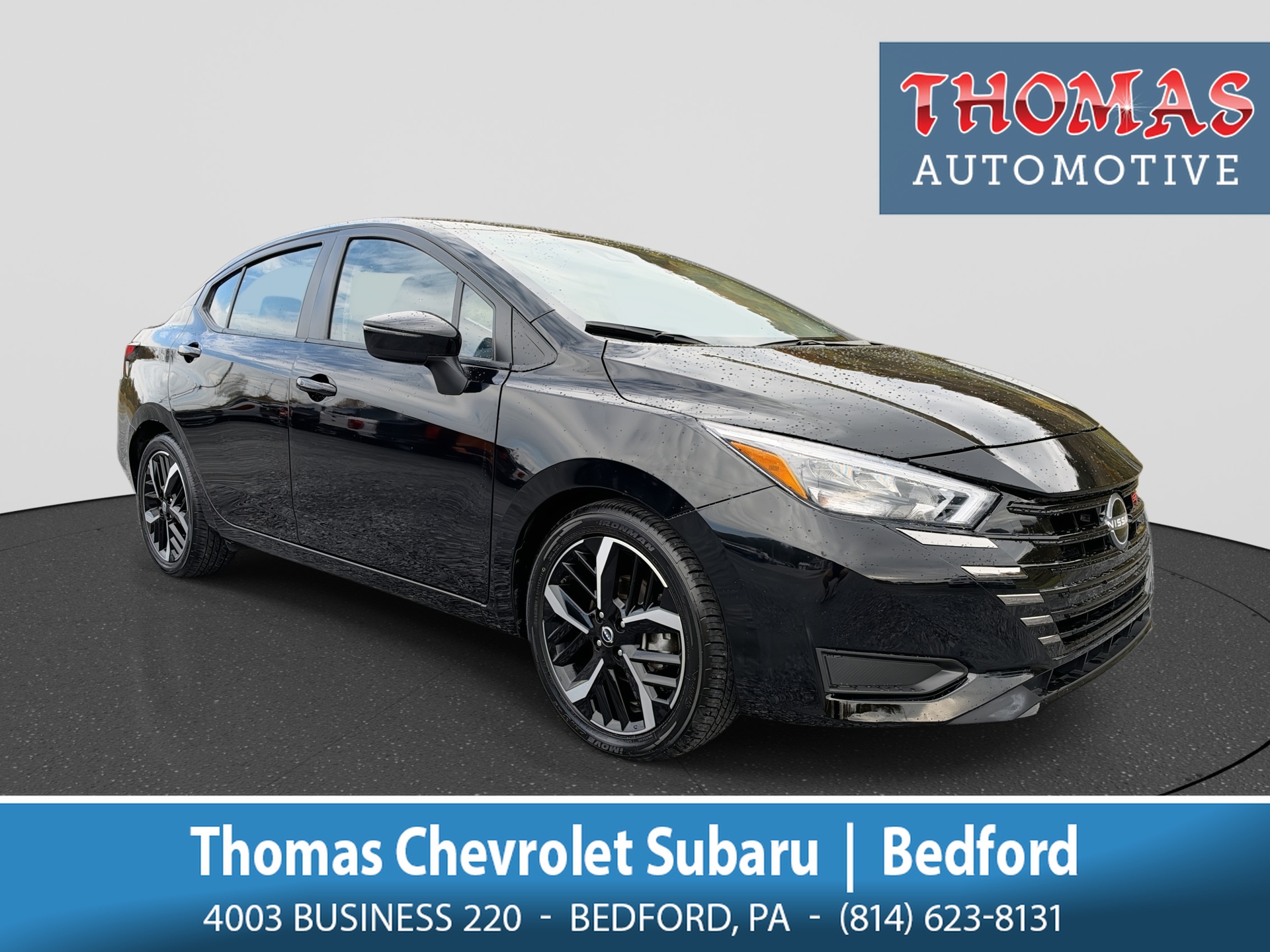
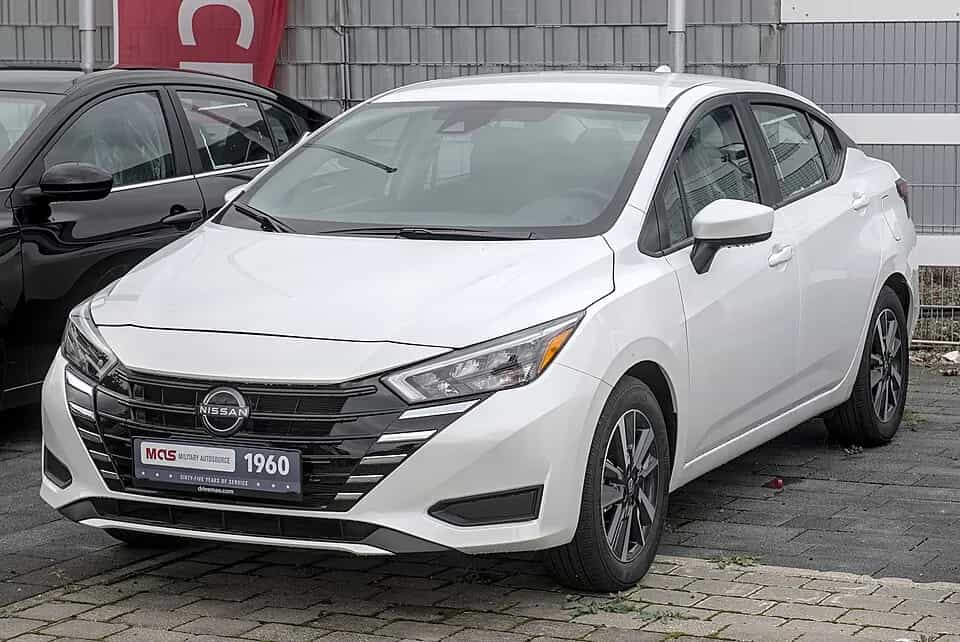
Nissan Versa Sedan
Importing a used Nissan Versa Sedan from the USA
The Versa is one of the least glamorous and most sensible cars Nissan builds, and that is precisely why it is interesting to a European buyer. It was never officially sold in Europe, so every example on German roads is an import. That novelty aside, the Versa is a genuine subcompact sedan built to a price, engineered for durability under fleet and rental use, and available in the American market in enormous numbers. If you want a simple, cheap-to-run three-box sedan with a proper boot and no pretensions, importing a used Nissan Versa from the USA gives you access to a car most Germans have never seen in the metal. The trade-off is that you need to know the model's history, particularly around its CVT gearbox, before you buy.

Model history and generations
Two generations are relevant to importers. The second-generation Versa Sedan (chassis N17) ran from roughly 2012 to 2019, a deliberately basic, roomy small sedan that became a staple of rental fleets. The third generation (N18) arrived for the 2020 model year and was a substantial step up: sharper styling borrowed from larger Nissans, a much better interior, and standard safety kit including automatic emergency braking. Both were built in Aguascalientes, Mexico, for the North American market. The N18 is the car most worth targeting today because it addressed many of the earlier car's shortcomings while staying true to the Versa's budget brief.
Engines and drivetrain
Mechanically the Versa is straightforward. Power comes from Nissan's 1.6-litre HR16DE naturally aspirated four-cylinder, making around 109 hp in the second generation and 122 hp in the third. Drive goes to the front wheels. A five-speed manual was offered on the very cheapest trims, but the overwhelming majority of American Versas use Nissan's Xtronic continuously variable transmission (CVT). This matters: the CVT defines the ownership experience and the reliability profile. Early Xtronic units had a poor reputation, so a documented fluid-service history and a smooth, judder-free test drive are essential when evaluating any Nissan Versa reliability question.
Which trim makes sense
This page covers the four-door sedan specifically; a hatchback (Versa Note) existed separately. US trims followed Nissan's familiar S, SV and SR ladder. The base S is famously spartan, sometimes with steel wheels and manual features, while SV and SR added alloy wheels, a larger touchscreen, keyless entry and cosmetic upgrades. The third-generation SR in particular looks far more expensive than it is. Because American cars were often ordered in mid-grade fleet specification, a typical import will be a well-equipped SV with the CVT and the modern driver-assistance suite.
Supply on the US market
Availability is excellent and the Versa is one of the more affordable cars in the entire American used market. Many examples come from rental and lease fleets, so mileage can be higher than average and interiors may show fleet wear. That said, the mechanicals are simple and parts are cheap. Look for cars from dry states to avoid corrosion, and prioritise a clean, documented history over the lowest possible price. Because so many were sold, you can afford to be selective and wait for a well-kept, low-owner example rather than settling for a tired ex-rental.
Who benefits from importing
The Versa suits a buyer who wants an inexpensive, no-nonsense sedan and enjoys the rarity of running a car that essentially does not exist in the German market. It is a practical choice for a first car, a commuter, or anyone who values a real boot over a hatchback. It is not the car for you if you want performance, a premium badge, or a diesel. And because the Versa is so cheap in the US, the fixed costs of shipping and clearing an import weigh more heavily here than on an expensive vehicle, so run the numbers carefully. USCar Trader brokers the import for you and never marks up the car itself.
Technical data
| Specification | Nissan Versa Sedan (N18, 2020+) |
|---|---|
| Generations | N17 (2012–2019), N18 (2020–present) |
| Body style | 4-door subcompact sedan |
| Engine | 1.6 L HR16DE inline-4 |
| Power output | approx. 122 hp (N18) |
| Torque | approx. 114 lb-ft |
| Transmission | 5-speed manual or Xtronic CVT |
| Drivetrain | Front-wheel drive |
| Fuel type | Petrol (regular unleaded) |
| Length | approx. 4,494 mm (N18) |
| Width | approx. 1,740 mm |
| Wheelbase | approx. 2,620 mm |
| Boot volume | approx. 419 L |
| Seating | 5 |
| Country of build | Aguascalientes, Mexico (verify by VIN) |
| Model years (US) | 2012 onward |
Known weak points and maintenance
The Versa's core weakness is the Xtronic CVT. Older second-generation units are known for judder, whining, overheating in stop-and-go traffic and, in the worst cases, premature failure. Nissan improved the transmission over time and the third-generation car is noticeably better, but the advice is unchanged: check for a fluid-change history, feel for any shudder on light acceleration, and be wary of a car that has never had the CVT serviced. Beyond the gearbox, the HR16DE engine is durable and undemanding. Interior plastics on base cars are hard and can rattle, and cheaper trims skimp on sound insulation. These are common-sense Nissan Versa common problems: none exotic, but the CVT is the one that can turn a cheap car into an expensive one.
US and EU spec compared
Because the Versa was never sold here, there is no European equivalent to cross-reference, which makes the individual approval a little more involved than for a globally shared model. American lighting uses amber turn signals and side markers, and the car has no rear fog lamp. The instrument cluster reads in mph and the trip computer in US units. None of this is difficult to address, but budget for it as part of the TÜV process.
The import process in detail
Choose a clean, well-documented car; decode and verify the VIN, confirming the plant of build for customs; hold the purchase funds in escrow rather than wiring the seller directly; book ocean freight to a northern European port; clear customs on arrival; complete the TÜV individual approval with the necessary lighting and speedometer changes; and finally register the car locally. USCar Trader coordinates the chain and keeps the vehicle transaction separate from our fee.
What customs clearance really costs
Key point: duty depends on the plant of build; only a VIN check secures the 0% rate. Import VAT of 19% applies regardless.
The Versa is built in Mexico, not the United States, so its origin is treated as neutral and must be proven by the VIN. The 0% preferential EU import duty under Regulations (EU) 2026/1455 and 2026/1461 applies only to vehicles of provable US origin imported by direct transport between 1 July 2026 and 31 December 2029. A Mexican-built Versa will generally not qualify, in which case the standard EU passenger-car duty of 10% applies. Separately, and in every case, the 19% German import VAT (Einfuhrumsatzsteuer) is charged on the customs value. We never promise duty-free treatment; the outcome depends on the documented plant of manufacture.
TÜV, modifications and registration
Expect to fit a rear fog lamp, adapt the lighting to European requirements, and ensure the speedometer displays km/h. The odometer reading is recorded during approval. Once the TÜV expert issues the Einzelabnahme, registration follows and plates are issued.
Check before you buy
- Verify the VIN and confirm the country of manufacture for customs.
- Obtain a Carfax or AutoCheck history report.
- Confirm the title is clean, not salvage or flood-damaged.
- Insist on a CVT fluid-service record and test for shudder.
- Check for corrosion, favouring cars from dry states.
- Inspect the interior for heavy fleet or rental wear.
- Confirm mileage against the service and history records.
Common questions
Was the Nissan Versa ever sold in Europe?
No. The Versa Sedan was a North American model, so any car in Germany is an import, which is part of its appeal to buyers who want something genuinely uncommon.
How reliable is the Versa's CVT gearbox?
The Xtronic CVT is the car's main reliability concern, especially on older examples. Third-generation cars are improved, and a documented fluid-service history plus a shudder-free test drive are the best reassurance.
Is there a manual Versa available?
Yes, but only on the cheapest base trims and in small numbers. The vast majority of American Versas use the CVT.
Does the Versa have a real boot?
Yes. As a three-box sedan it offers a proper separate boot of around 419 litres, larger than many hatchbacks of similar size.
Will I owe import duty on a used Versa?
Most likely yes, because the Versa is built in Mexico rather than the USA, so the standard 10% duty typically applies. Only provable US origin qualifies for the 0% rate. The 19% import VAT applies regardless.
Are parts for the Versa available in Germany?
Many mechanical parts are shared with other Nissan models and the HR16DE engine is widely used, so servicing is manageable, though some trim-specific parts may need to be sourced from North America.
Does USCar Trader sell the Versa directly?
No. We are an independent broker for used vehicles and never own stock or add a margin to the car. We arrange and manage the import on your behalf.
Start here: browse Nissan in the Carhub, compare stablemates like the Sentra and Altima or the compact Kia Forte, or see current Versa Sedan listings.