Nissan Pathfinder
Importing a used Nissan Pathfinder from the USA
The Nissan Pathfinder is one of the most abundant three-row SUVs on the American used market, which makes it a practical candidate for a private import to Germany or the wider EU. Because most Pathfinders sold in the United States are also assembled there (Smyrna, Tennessee), a used example can often qualify for the 0% EU import duty introduced in July 2026 — but only when US origin is documented by VIN and build plant. This page walks through the generations, engines, the state of the US used market and what a sensible import actually involves. USCar Trader acts purely as an independent broker: we source, verify and coordinate transport, we do not sell new cars and we take no hidden vehicle margin.

Model history and generations
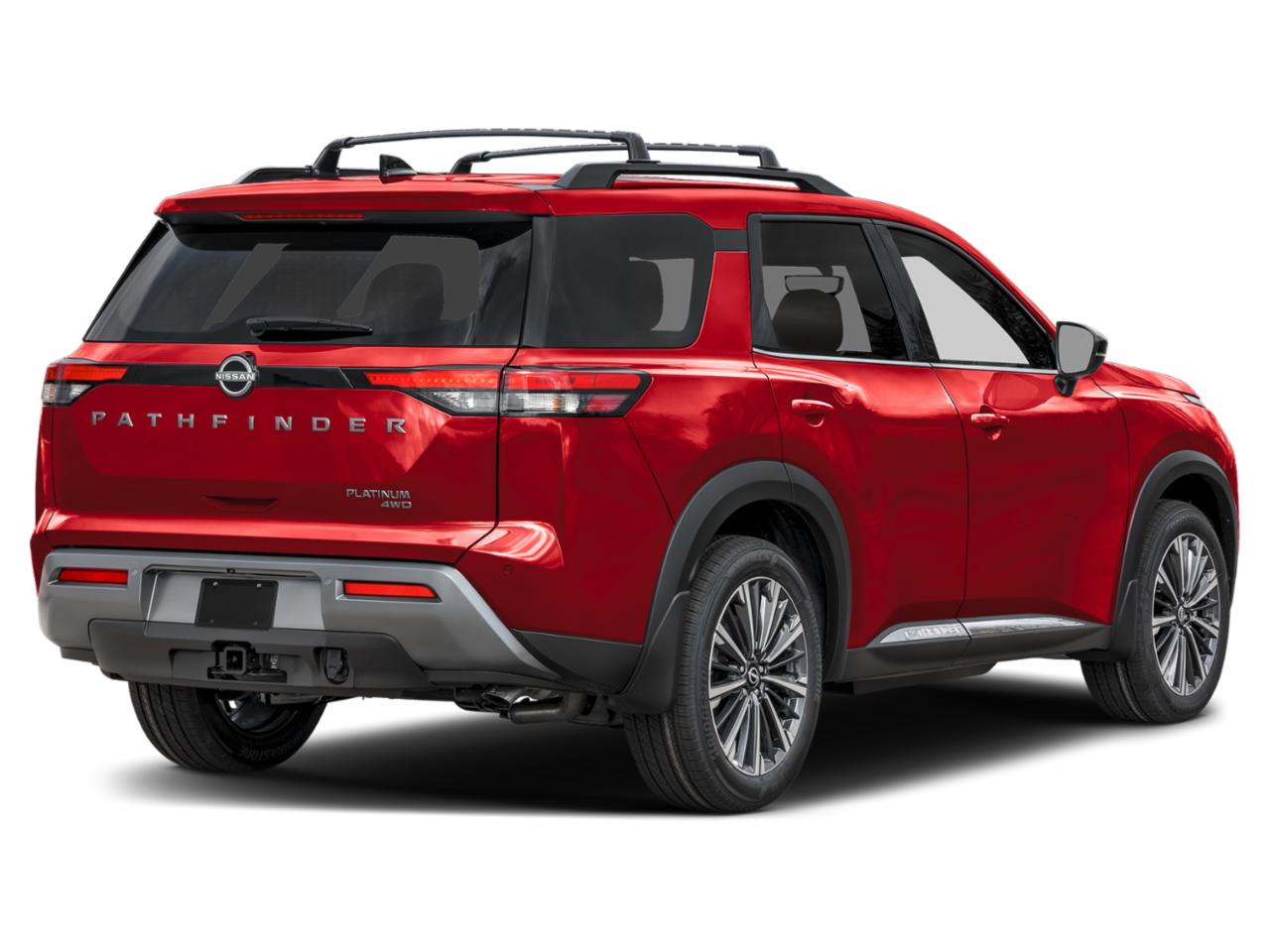
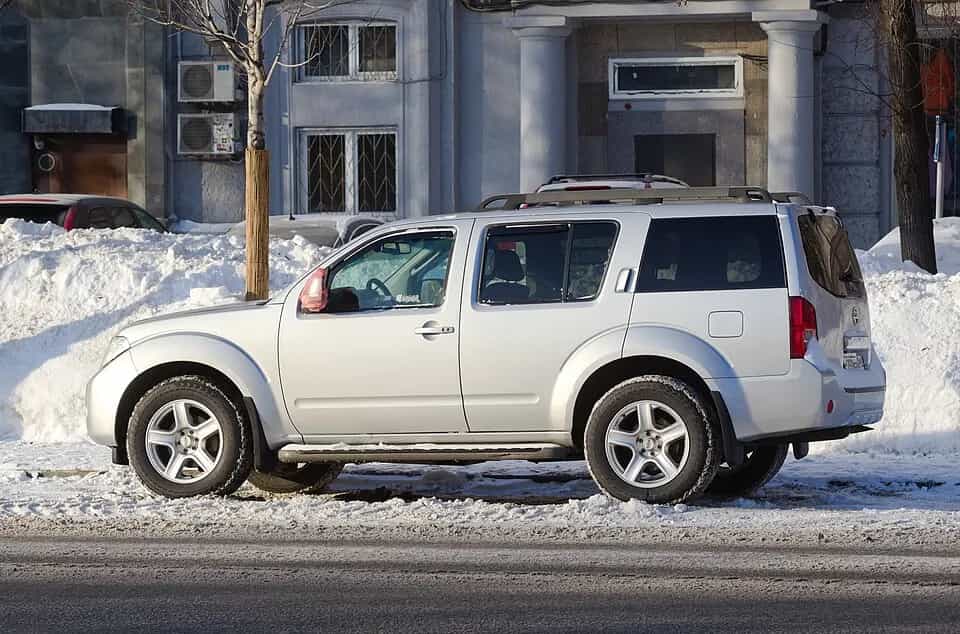
The nameplate spans five generations. The third generation (R51, 2005–2012) is a body-on-frame SUV built for towing and light off-road use. The fourth generation (R52, 2013–2020) switched to a car-derived unibody platform, prioritising ride comfort, interior space and fuel economy over rugged ability. The current fifth generation (R53, from the 2022 model year) keeps the unibody but adopts squarer, more traditional SUV styling, a stiffer structure and a conventional automatic in place of the earlier CVT. For most importers, the R52 and R53 are the relevant cars: plentiful, modern enough for German traffic, and covered by good service documentation.
Engines and drivetrain
Nissan kept the drivetrain simple. The R51 used the VQ40DE 4.0-litre V6 with around 266 hp. The R52 runs the familiar VQ35DE 3.5-litre V6 (around 260 hp, later 284 hp on facelifted cars) paired with Nissan's Xtronic CVT. The R53 carries a direct-injected VQ35DD 3.5 V6 rated at 284 hp and 259 lb-ft, now matched to a nine-speed torque-converter automatic. All generations offer front-wheel drive or Nissan's on-demand "Intelligent 4WD" with selectable 2WD, Auto and 4WD-Lock modes. There is no diesel and no hybrid in the mainstream US Pathfinder, so buyers looking to import a used Pathfinder from the USA are almost always dealing with a naturally aspirated petrol V6.
Which trim makes sense
The Pathfinder is sold only as a five-door, seven- or eight-seat SUV. US trim walk typically runs S, SV, SL and Platinum, with a rugged-look Rock Creek edition on the current car. Higher trims add leather, panoramic roof, motion-activated tailgate, tri-zone climate, larger touchscreens and driver-assist packages. Because American buyers tend to option family SUVs generously, well-equipped SL and Platinum cars are easy to find on the used market.
Supply on the US market
Supply is deep. Pathfinders were sold in very large numbers across the US and Canada, so you can be selective on colour, trim and condition rather than taking the first car available. Typical used candidates are three to eight years old with mileage that reflects long American commutes — higher odometer readings are normal and not automatically a problem on a well-maintained V6. Southern and western states offer the cleanest, rust-free bodies, which matters a great deal for a later TÜV inspection. Condition, not price, is what we screen for, and we do not quote Euro pricing here.
Who benefits from importing
A used Pathfinder import makes sense if you want a spacious, comfortable seven-seater with a proven petrol V6 rather than a small turbo engine, and you value the wide US selection over the thinner European Pathfinder market. It suits families, trailer users (the R53 tows up to around 2,700 kg / 6,000 lb) and anyone who prefers straightforward mechanicals. If your priority is low fuel consumption or a diesel, this is the wrong car — the V6 drinks accordingly.
Technical data
| Item | Detail (5th gen R53, typical) |
|---|---|
| Body style | 5-door SUV, 7–8 seats |
| Engine | 3.5 L V6 (VQ35DD), direct injection |
| Power | approx. 284 hp (212 kW) |
| Torque | approx. 259 lb-ft (351 Nm) |
| Transmission | 9-speed automatic |
| Drive | FWD or Intelligent 4WD |
| 0–100 km/h | approx. 7.5 s |
| Fuel | Petrol (regular) |
| Towing (braked) | up to approx. 2,700 kg |
| Length | approx. 5,004 mm |
| Width | approx. 1,978 mm |
| Wheelbase | approx. 2,900 mm |
| Kerb weight | approx. 1,950–2,100 kg |
| Seating | 7 or 8 |
| Assembly | Smyrna, Tennessee, USA (verify by VIN) |
Known weak points and maintenance
The single most important reliability topic is the fourth-generation R52's Xtronic CVT. The JATCO-built transmission is prone to overheating, shudder and, in worst cases, premature failure — budget for a fluid and cooler check, and treat a car with a documented CVT replacement as a plus, not a minus. Both the R51 and R52 have a well-known radiator weakness where the internal transmission cooler can leak coolant into the gearbox fluid (the so-called "strawberry milkshake"), which destroys the transmission if ignored. On the V6 itself, watch timing-chain rattle at cold start on high-mileage cars and check the fuel-level sender, a common niggle. The current R53 with its conventional nine-speed automatic sidesteps the CVT issue entirely and looks the more robust long-term buy. Researching Pathfinder common problems before you commit is time well spent.
US and EU spec compared
US Pathfinders run amber front side markers, red rear turn signals and lighting calibrated to American standards, plus miles-per-hour instruments. Radios are set to the US FM raster. None of this stops registration, but the lighting and, on some cars, the daytime running lights need to be brought in line for the German TÜV. Equipment often runs richer than a comparable European car, and telematics or connected services may be US-locked.
The import process in detail
The process is orderly: (1) selection of a specific car to your spec; (2) VIN and origin check to confirm the US build plant and clean history; (3) secure payment via escrow; (4) ocean freight in a container or RoRo to a European port such as Bremerhaven; (5) customs clearance with origin proof and payment of import VAT; (6) technical inspection and individual approval (TÜV/§21 Einzelabnahme); (7) registration at your local Zulassungsstelle. We coordinate each stage and hand you the documents you need.
What customs clearance really costs
In short: the 0% duty rate applies only with documented US origin (VIN/plant) – German import VAT of 19% is always due.
Two charges are separate and must not be confused. First, the EU import duty: under Regulations (EU) 2026/1455 and 2026/1461, cars of proven US origin shipped directly can attract 0% duty until 31 December 2029 — but only with documented VIN/plant evidence; without it the normal 10% car rate applies. Second, the German import VAT (Einfuhrumsatzsteuer) of 19% is always due on the customs value and is unrelated to origin. We never promise "duty-free" and we add no margin to the car itself; you pay the vehicle, the transport, the statutory charges and our transparent brokerage fee.
TÜV, modifications and registration
Typical work for approval includes converting or coding the rear fog lamp (US cars usually lack one), adjusting or replacing headlights for right-hand traffic, confirming the DRL setup and documenting the odometer in kilometres. A speedometer showing mph is generally accepted with a km/h reference. Once the individual approval (Einzelabnahme) and, where required, a CoC or data confirmation are in hand, registration is routine.
Check before you buy
Before any Pathfinder changes hands, verify: the VIN matches the title and confirms US assembly; a full Carfax or AutoCheck history with no salvage, flood or odometer flags; the CVT service record (R52) or gearbox condition; underbody and subframe for rust, especially on northern cars; complete maintenance history and coolant/transmission fluid state; a clean, transferable title; and a pre-purchase inspection with photos of the milkshake-prone cooler area.
Common questions
Is the Nissan Pathfinder built in the USA?
Most US-market Pathfinders are assembled in Smyrna, Tennessee. That US origin can support 0% EU duty, but it must be confirmed from the individual VIN before clearance.
Which Pathfinder generation should I import?
The current fifth generation (from 2022) with its nine-speed automatic avoids the CVT concerns of the 2013–2020 car and is the safer long-term choice, though clean R52s remain good value.
Does the Pathfinder have known problems?
The main ones are the R52 CVT and the R51/R52 radiator-to-transmission coolant leak. A documented CVT and cooler check largely settle these worries.
Is there a diesel Pathfinder?
No. The US Pathfinder is petrol-only with a 3.5-litre V6, so expect V6 fuel consumption rather than diesel economy.
How much is import VAT on a Pathfinder?
German import VAT is 19% of the customs value and always applies, separately from any duty. Duty may be 0% only with proven US origin.
Can a US Pathfinder pass German TÜV?
Yes, after standard adaptations such as a rear fog lamp and headlight adjustment, followed by individual approval (§21).
What mileage is acceptable?
Higher American mileage is normal; a well-serviced V6 with clean history is more important than a low odometer reading.
Explore more in the Nissan in the Carhub, compare it with the Nissan Murano, the larger Nissan Armada or the compact Nissan Rogue, and browse current Pathfinder listings.