Importing a used Nissan LEAF from the USA
Before you commit, it helps to understand what the LEAF actually is, how the generations differ, and where the practical catches lie for European use.
 0049 (0)89 2000 791 00
 Mo - Fr 8:00am - 8:00pm
USCar Trader import service
Choose a specific vehicle. Where data is available, its detail page shows the import cost calculation. We assess any possible duty benefit with you before purchase.
Important: A 0% EU import-duty rate may be available for a vehicle covered by Regulation (EU) 2026/1455 that has US origin and is imported directly into the EU. CETA may apply to a vehicle with preferential Canadian origin. Whether the requirements are met is assessed for the individual case. Please contact us before purchase; we review the possible duty benefit and provide non-binding support through the process. Import VAT and other costs are assessed separately.
CarHub · Nissan
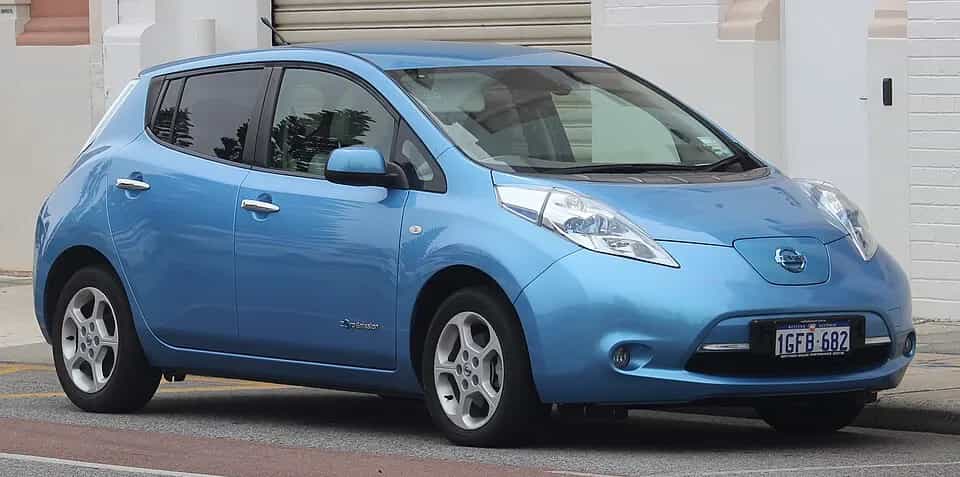
The Nissan LEAF was the car that put mainstream electric driving on the map, and a decade of American sales means there is now a deep pool of used examples in the US.

Price:41,825.00 USD

Price:37,505.00 USD

Price:43,920.00 USD

Price:41,489.00 USD

Price:38,055.00 USD
Model profile
Before you commit, it helps to understand what the LEAF actually is, how the generations differ, and where the practical catches lie for European use.
Nissan launched the first-generation LEAF (chassis code ZE0) in December 2010 as one of the first mass-produced battery-electric cars.
Powertrain and equipment
Every LEAF is front-wheel drive with a single synchronous electric motor. The early 24 and 30 kWh cars produced 80 kW (about 107 hp) and 280 Nm.
The LEAF is a five-door C-segment hatchback throughout its life, with no wagon, sedan or SUV variant. US trims run S, SV and SL, with the longer-range cars badged S Plus, SV Plus and SL Plus.
Vehicle selection
America bought a lot of LEAFs, especially in California and other coastal states, so supply of clean used examples is genuinely strong.
A used LEAF import makes most sense if you want an affordable second car or urban commuter and you can live with CHAdeMO fast charging, which is becoming rarer at new European sites.
Vehicle data
| Body style | Detail (used US-market Nissan LEAF): 5-door hatchback (C-segment) |
|---|---|
| Seating | Detail (used US-market Nissan LEAF): 5 |
| Battery options | Detail (used US-market Nissan LEAF): 24, 30, 40 and 62 kWh |
|---|---|
| Motor | Detail (used US-market Nissan LEAF): Single front-mounted AC synchronous |
| Peak power | Detail (used US-market Nissan LEAF): 80 kW (24/30 kWh) to 160 kW (62 kWh Plus) |
| Peak torque | Detail (used US-market Nissan LEAF): 280-340 Nm |
| Drive | Detail (used US-market Nissan LEAF): Front-wheel drive |
| Transmission | Detail (used US-market Nissan LEAF): Single-speed reduction gear |
| Onboard charger | Detail (used US-market Nissan LEAF): 3.3 kW (early) or 6.6 kW |
| EPA range | Detail (used US-market Nissan LEAF): ~73 mi (24 kWh) to ~226 mi (62 kWh Plus) |
| 0-100 km/h | Detail (used US-market Nissan LEAF): ~7.4 s (62 kWh Plus) |
| Battery cooling | Detail (used US-market Nissan LEAF): Passive (air-cooled) |
| Generations | Detail (used US-market Nissan LEAF): ZE0 (2010-2017), ZE1 (2018-mid-2020s) |
|---|---|
| US assembly | Detail (used US-market Nissan LEAF): Smyrna, Tennessee (US-market cars) |
| DC fast charging | Detail (used US-market Nissan LEAF): CHAdeMO |
| AC charging inlet | Detail (used US-market Nissan LEAF): J1772 (Type 1) |
Values are reproduced verbatim from the existing article table. The documents for the specific vehicle govern.
Pre-purchase review
For the Nissan LEAF, the agreed inspection plan focuses in particular on battery condition, charging interface, warning messages, software status and accessible high-voltage and cooling-system components. USCar Trader can document these points through a separately commissioned on-site inspection; inaccessible areas or unauthorised road tests are explicitly recorded as unchecked.
Germany and Europe
The headline difference is charging: CHAdeMO fast charging and a J1772 AC inlet instead of the CCS and Type 2 standards used across Europe.
US-market headlights use the FMVSS/SAE beam pattern, which differs from the ECE pattern required in the EU, so they may need adjustment or replacement with ECE-compliant units for registration.
USCar Trader services
As a buyer based in Germany, you do not have to inspect the vehicle yourself in the United States or Canada. Within the agreed scope, USCar Trader can coordinate document review, a separately commissioned on-site inspection and purchase processing.
Covered inspection points are agreed in advance. An on-site inspection records condition at the appointment and is not a guarantee.
Next step: Before commissioning, USCar Trader and the customer agree which document, history, inspection and transaction checks suit the vehicle and are included in the service. This records what was actually checked.
Import process
The assessment depends on the specific vehicle and the circumstances of the transaction. Please contact USCar Trader before purchase; we review any possible duty benefit and provide non-binding support. Import VAT and other costs are considered separately.
Questions and answers
US LEAFs use CHAdeMO for DC fast charging and a J1772 (Type 1) inlet for AC.
Look at the dashboard capacity bars and, ideally, a proper state-of-health readout through an OBD tool such as LeafSpy. Because the LEAF battery is air-cooled, health varies with climate and use, so a documented figure is essential.
No, not automatically. A 0% EU import-duty rate may be available for a vehicle covered by Regulation (EU) 2026/1455 that has US origin and is imported directly into the EU. CETA may apply to a vehicle with preferential Canadian origin. Whether the requirements are met is assessed for the individual case. Please contact USCar Trader before purchase; we review the possible duty benefit and provide non-binding support. Import VAT and other costs are assessed separately.
Import VAT and other taxes or costs are assessed separately under the applicable rules and the circumstances of the individual case. A blanket answer for every vehicle would not be reliable.
EPA figures run from roughly 73 miles on early 24 kWh cars to about 226 miles on the 62 kWh Plus. Real-world range depends on battery health, temperature and speed, so treat older cars conservatively.
With the right lighting (including a rear fog lamp and correct headlight aim), a compliant speedometer reading and the usual individual approval steps, yes. We can advise on the specific items for your car.
Yes. Mechanically the LEAF is well supported, though some telematics features (NissanConnect) may be region-limited. Charging adapters solve the plug differences.
Available VIN, title and history information can be reviewed in the vehicle profile. USCar Trader can also arrange a separately booked on-site inspection within a scope agreed in advance.
More vehicles