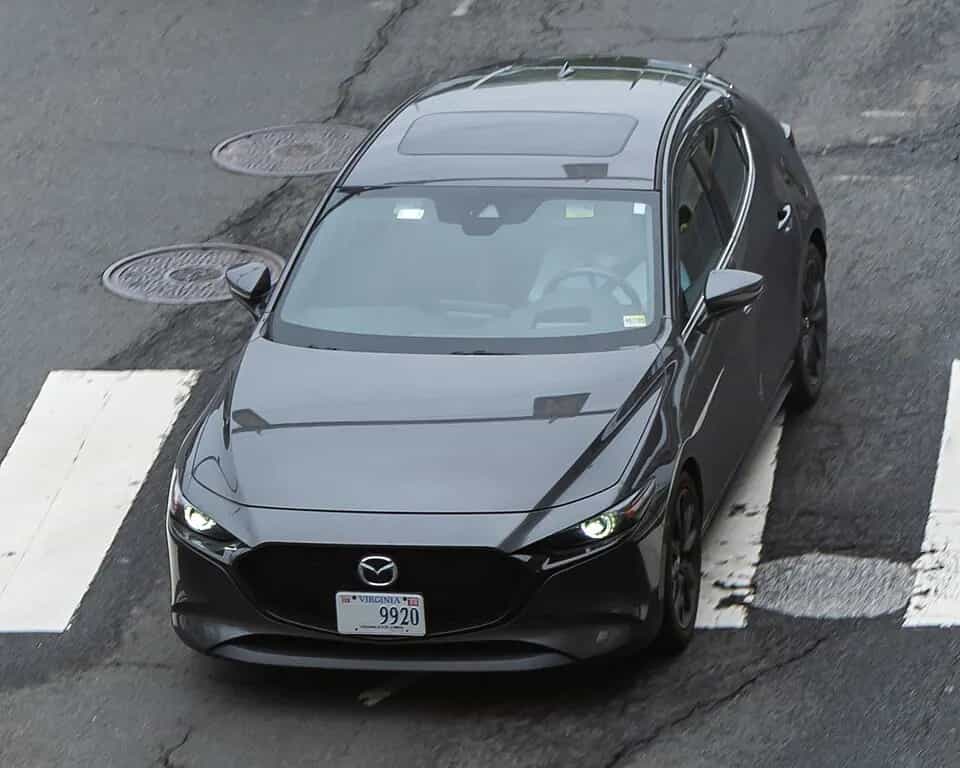
Mazda Mazda3
Importing a used Mazda Mazda3 from the USA
The Mazda3 is one of the most enjoyable compact cars ever built, and the US market offers versions and specifications that give it real appeal as an import. American Mazda3s tend to come well-equipped, and some drivetrains — notably the 2.5-litre turbo of the current generation and the earlier Mazdaspeed3 hot hatch — are exactly the sort of thing enthusiasts seek out. USCar Trader arranges these imports as an independent broker for used US vehicles. It is worth stating the customs position up front: the Mazda3 is origin='neutral' because US-market cars are typically built in Japan (Hiroshima) or Mexico (Salamanca), so the duty rate depends on the actual build plant behind the VIN rather than being automatic. The detail is below.

From launch to today
The Mazda3 replaced the 323/Protegé for the 2004 model year and has run through four generations. The first (BK, 2004–2009) established the sharp-handling formula and included the original Mazdaspeed3. The second (BL, 2010–2013) grew slightly and carried a second Mazdaspeed3. The third generation (BM/BN, 2014–2018) introduced the Kodo design language and the Skyactiv efficiency technology that defines the modern car. The current fourth generation (BP, 2019 on) moved sharply upmarket with a more sophisticated cabin, available all-wheel drive and, from 2021, a 2.5-litre turbo engine. All four are offered as both a four-door sedan and a five-door hatchback in the US.
Engines and drivetrain in detail
Early US Mazda3s used MZR petrol engines: a 2.0-litre and a 2.3-litre (or 2.5-litre on later BK cars), with the Mazdaspeed3 running a 2.3-litre direct-injection turbo (DISI) producing around 263 hp through a six-speed manual and front-wheel drive. From the third generation, the Skyactiv-G line took over — a 2.0-litre (around 155 hp) and a 2.5-litre (around 184–186 hp), with six-speed manual or automatic gearboxes. The current BP generation offers the Skyactiv-G 2.5 naturally aspirated four, an available all-wheel-drive system, and the range-topping Skyactiv-G 2.5 Turbo making roughly 227–250 hp and 310–320 lb-ft depending on fuel grade — a genuinely quick, understated performer. Front-wheel drive is standard; the current-generation AWD is a useful option for German conditions.
Trim levels and variants
US Mazda3s come as sedan or hatchback across all generations. Trim structure has evolved from the old i/s and Touring/Grand Touring naming to today's clearer 2.5 S, Select, Preferred, Carbon Edition, Premium and Premium Plus. Higher trims add leather, a Bose sound system, a head-up display, adaptive cruise and Mazda's full i-Activsense safety suite. The turbocharged Premium Plus is the most sought-after modern import; among older cars, the two Mazdaspeed3 generations are collectible in their own right.
Used availability in the USA
The Mazda3 has been a strong US seller for two decades, so supply is deep and prices reasonable. Typical import candidates are three to ten years old with 30,000 to 110,000 miles. As always, dry-state cars from the Sun Belt offer the cleanest bodies; earlier BK and BL cars in particular can show rust in humid or salted regions, so an underbody check matters more on the older generations. Manual-transmission hatchbacks and the turbo cars move fastest. Every car we consider is vetted through service records and a Carfax or AutoCheck history before purchase.
When importing makes sense
A used Mazda3 suits the driver who wants a compact car that is genuinely fun to drive, well-built and better-equipped than the price suggests. The current turbo is for those who want quiet performance in a subtle package; the Skyactiv 2.0 and 2.5 are for buyers who value efficiency and reliability; the Mazdaspeed3 is for enthusiasts chasing a specific, increasingly rare hot hatch. It is a car imported for character and value rather than practicality alone.
Facts and figures
| Attribute | Typical figures (US-market) |
|---|---|
| Body styles | 4-door sedan and 5-door hatchback |
| Skyactiv-G 2.0 | 2.0 L I4, ~155 hp |
| Skyactiv-G 2.5 | 2.5 L I4, ~184–186 hp |
| 2.5 Turbo (BP, 2021+) | 2.5 L turbo I4, ~227–250 hp / 310–320 lb-ft |
| Mazdaspeed3 (2007–2013) | 2.3 L DISI turbo, ~263 hp |
| Transmission | 6-speed manual or 6-speed automatic |
| Drivetrain | FWD standard; i-Activ AWD optional (BP) |
| Length (BP sedan) | approx. 4,662 mm |
| Length (BP hatchback) | approx. 4,460 mm |
| Width | approx. 1,795 mm |
| Wheelbase | approx. 2,725 mm |
| Kerb weight | approx. 1,300–1,500 kg |
| Fuel | Petrol (E10 compatible; premium for full turbo output) |
| Seating | 5 |
| Origin | Neutral — built in Japan (Hiroshima) or Mexico (Salamanca); confirm via VIN |
Reliability and common problems
The Mazda3 has a strong reliability reputation, especially the Skyactiv generations. The naturally aspirated Skyactiv-G engines are durable, though some owners report carbon build-up on the direct-injection units and occasional cylinder-deactivation harshness on later 2.5s. The turbo 2.5 is robust but, like any turbo four, benefits from strict oil-change discipline. On older BK and BL cars, rust is the headline concern — rear wheel arches, subframes and suspension mounts on cars from salted regions can corrode, so a dry-state example is strongly preferred. The Mazdaspeed3's turbo drivetrain is stout but demands honest history: clutch wear, high-pressure fuel-pump internals and modified examples all need scrutiny. Infotainment quirks, occasional water pump and clutch wear round out the list. Overall, a well-kept Skyactiv Mazda3 is one of the more dependable compact imports you can choose.
How US versions differ
US Mazda3s run amber rear turn signals and lack a rear fog lamp, both handled at the TÜV stage. Headlights are US-specification and typically need ECE units or beam adjustment. The cluster reads mph, tyre pressures are in psi, and the infotainment defaults to US navigation and radio bands. Equipment packaging differs from European Mazda3s, and the US turbo engine has no direct European equivalent, which is part of the attraction. Mechanically the car is the same global platform, so compliance work is modest.
From US purchase to registration
We agree the exact generation, body style, engine and trim you want and locate suitable cars. A VIN and origin check confirms the build plant and specification — relevant here because it drives the customs rate. Payment runs through escrow for security. The car is booked onto ocean freight (container or RoRo) to a port such as Bremerhaven. On arrival we handle customs clearance, then arrange TÜV inspection and individual approval (§21 StVZO) where no valid CoC exists, and finally German registration.
Costs, duty and taxes at a glance
Remember: no origin proof, no 0% duty – and 19% German import VAT is due on every import.
Because the Mazda3 is origin='neutral', we assess customs per VIN and always separate the two charges. Import duty: the 0% preference under Regulations (EU) 2026/1455 and 2026/1461 applies only where US origin is provable (VIN/plant), transport is direct and the shipment falls within the window (in force since 1 July 2026, until 31 December 2029). Since US-market Mazda3s are built in Japan or Mexico rather than the USA, they will usually not meet the US-origin test, and the standard EU import duty for passenger cars then applies. We never promise duty-free status. Separately, the 19% German import VAT (Einfuhrumsatzsteuer) always applies on the customs value plus freight, regardless of origin. As a broker we take no vehicle margin.
TÜV, approval and license plates
Typical Mazda3 changes for approval are ECE-compliant headlights or beam adjustment, adding a rear fog lamp and adapting rear indicators to amber where required. The odometer is documented in miles. If a European CoC can be sourced for the exact type, registration is simpler; otherwise individual approval verifies lighting, brakes, emissions and dimensions before the papers are issued.
Pre-purchase checklist
- Decode the VIN to confirm the engine, trim and build plant (Japan or Mexico).
- Obtain a Carfax or AutoCheck report for accidents, title and odometer history.
- On older BK/BL cars, inspect wheel arches, subframes and mounts for rust — favour dry-state examples.
- Confirm the title is clean (not salvage/rebuilt) and matches the seller.
- On turbo and Mazdaspeed3 cars, check for modifications and demand full service history.
- Test the clutch (manuals) and listen for any drivetrain noise.
- Verify service records — regular oil changes are key on all Skyactiv engines.
Import FAQ
Is the Mazda3 reliable?
Yes. The Skyactiv generations are among the more dependable compacts, and the naturally aspirated engines are long-lived. The main caveats are rust on older cars and carbon build-up on high-mileage direct-injection units.
What are the most common Mazda3 problems?
Rust on early BK/BL cars, direct-injection carbon build-up, occasional infotainment quirks and clutch wear on manuals are the issues we screen for.
Does a used Mazda3 qualify for 0% EU import duty?
Usually not, because US-market cars are built in Japan or Mexico. Duty depends on the actual plant behind the VIN; the 0% preference applies only with provable US origin.
Do I still pay VAT?
Yes. The 19% German import VAT (Einfuhrumsatzsteuer) always applies on the customs value plus freight, whatever the duty outcome.
Is the 2.5 Turbo worth importing?
For enthusiasts, yes — it offers around 227–250 hp in a subtle package and was not sold in Europe in the same form, which is a large part of its appeal.
Can you find a Mazdaspeed3?
Yes, as availability allows. Both generations are collectible; we pay close attention to modifications and service history when sourcing one.
What TÜV changes are needed?
Typically ECE headlights or beam adjustment, a rear fog lamp and amber rear indicators, then registration via CoC or individual approval.
How long does the import take?
From purchase to German plates, usually around eight to twelve weeks depending on sailing and TÜV scheduling.
To begin, browse Mazda in the Carhub, compare the sporty Mazda MX-5 Miata and the larger Mazda MAZDA6, or view current Mazda3 listings.