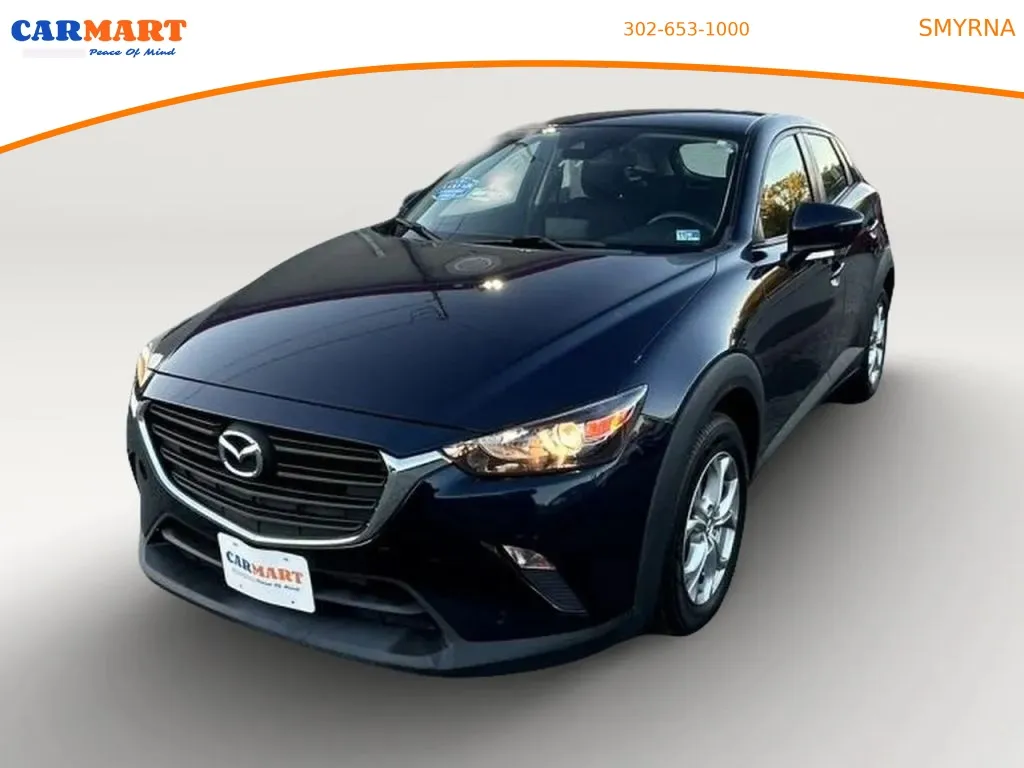
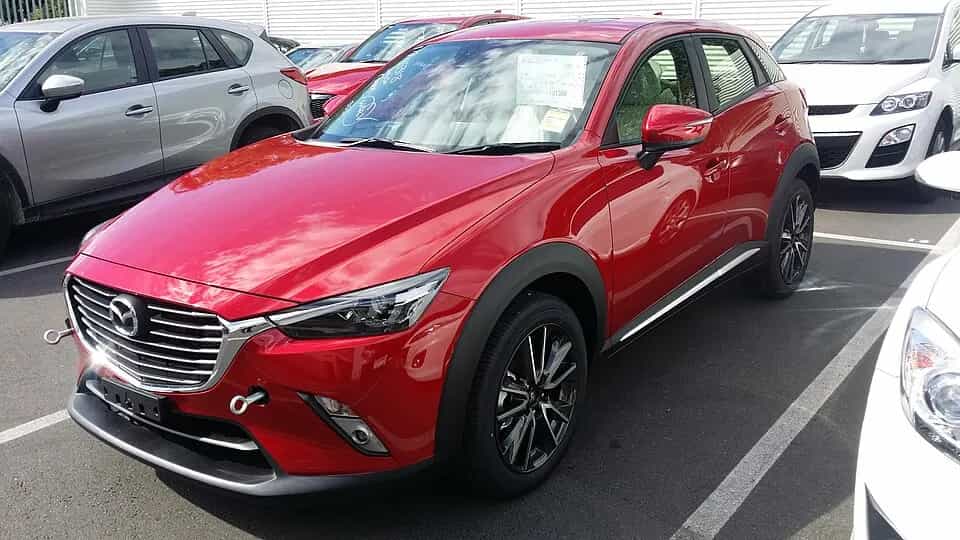
Mazda CX-3
Importing a used Mazda CX-3 from the USA
The Mazda CX-3 is a small, tidy, well-built subcompact crossover that never sold in huge numbers but earned a loyal following for its sharp steering and premium-feeling cabin. In the US it was on sale from the 2016 through 2021 model years, which means the used pool is now mature and priced sensibly. For a German or EU buyer, an imported CX-3 can be a way to find a clean, low-mileage example with a specific colour or the well-equipped Grand Touring trim. USCar Trader works as an independent broker on these cars: we locate and vet the vehicle, manage shipping and customs, and add no dealer margin.

Generations at a glance
The CX-3 was a single-generation model in North America (the DK series), launched for 2016 on a platform shared with the Mazda2 subcompact. Over its run Mazda refined it rather than redesigning it: the 2019 update brought a retuned Skyactiv engine, revised suspension, better sound insulation and a repositioned infotainment screen, plus the addition of G-Vectoring Control. The US dropped the CX-3 after 2021 in favour of the larger CX-30, so every imported example will be a 2016–2021 car. This single-generation simplicity makes parts and service straightforward once the car is in Europe.
Powertrain lineup
US CX-3s used one engine throughout: the naturally aspirated 2.0-litre Skyactiv-G four-cylinder, producing around 146 hp (148 hp on later cars) and roughly 195 Nm of torque. It drives through a six-speed Skyactiv automatic — one of the better conventional autos in the class, with none of the drone of a CVT. Front-wheel drive was standard and Mazda's i-Activ all-wheel drive was optional. There was no diesel or hybrid in the US, so the drivetrain choice is simply engine trim and whether you want AWD, which is handy for German winters.
Trims in the US market
The CX-3 is a five-door subcompact crossover only. US trims were Sport, Touring and Grand Touring. Grand Touring cars are the ones worth hunting: they add leather and suede seats, a head-up display, LED headlights, a Bose sound system, a sunroof and the fuller suite of driver aids. Even base cars feel a cut above their price, with Mazda's clean dashboard design and rotary infotainment controller.
The used market stateside
With production spanning 2016–2021, you can find everything from higher-mileage early cars to well-kept late examples with 30,000–70,000 miles. Because many were bought as commuter and city cars, condition varies; look for garage-kept southern and coastal cars to avoid salt-belt corrosion. Availability is good and the CX-3's modest size keeps ocean freight costs contained relative to a large SUV.
Who should import one
The CX-3 suits a buyer who wants a compact, fun-to-drive crossover with genuine build quality and simple, proven mechanicals. It is a sensible import for someone after a specific well-equipped US example, or who values the AWD option. Because Mazda builds the CX-3 in Japan, the origin question below determines how customs duty is figured.
Key specifications
| Body style | 5-door subcompact crossover |
| Generation | DK (single generation, MY2016–2021) |
| Engine | 2.0 L Skyactiv-G naturally aspirated I4 |
| Output | approx. 146–148 hp (108–110 kW) |
| Torque | approx. 195 Nm |
| Transmission | 6-speed Skyactiv automatic |
| Drivetrain | FWD or i-Activ AWD |
| Length | approx. 4,275 mm |
| Wheelbase | approx. 2,570 mm |
| Kerb weight | approx. 1,300–1,400 kg |
| Cargo (rear seats up) | approx. 260 L (US spec) |
| Fuel economy (US) | approx. 29–34 mpg combined |
| Seating | 5 |
| US trims | Sport, Touring, Grand Touring |
How reliable is it?
The CX-3 is one of the more dependable choices in its class, but a few CX-3 common problems are worth knowing. The Skyactiv 2.0 is a proven, undramatic engine; the main long-term maintenance items are keeping up with oil changes and, on higher-mileage cars, checking the water pump and engine mounts. Some owners report a slightly firm ride and road noise on early cars, which the 2019 update improved. Interior space is tight, especially rear seat and cargo, so verify it fits your needs. Electrically, check the infotainment and the reversing camera, and confirm the AWD system engages cleanly. There are no widespread catastrophic failures reported, which is a large part of the CX-3's appeal.
What US models do differently
US cars typically use red rear turn signals and often lack a rear fog lamp, and the headlight beam pattern is set for right-hand traffic in the US sense — all items the TÜV checks. The speedometer reads in miles per hour, and infotainment units default to US units and map data. Some models came with slightly different bumper and lighting details than European CX-3s. These are minor but must be addressed during approval.
Seven steps to your import
The sequence is: select and vet the car; verify the VIN and build origin; move funds through escrow; book ocean freight (container or RoRo); clear German customs on arrival; complete TÜV and individual approval (Einzelabnahme); then register locally. We manage the hand-offs between each stage so nothing stalls.
Customs, taxes and costs explained
Key point: duty depends on the plant of build; only a VIN check secures the 0% rate. Import VAT of 19% applies regardless.
Two charges apply and we state them separately. The import duty first: the 0% EU rate under Regulations (EU) 2026/1455 and 2026/1461 applies only to vehicles with provable US build origin (by VIN and plant), shipped directly, and only through 31 December 2029. The CX-3 is built in Japan, so it generally does not meet the US-origin condition; its duty is set by its actual country of manufacture, which we confirm from the VIN. Second, the 19% German import VAT (Einfuhrumsatzsteuer) always applies, calculated on the customs value. Both are official pass-through charges with no broker margin added.
German TÜV and registration
Common modifications are adding or enabling a rear fog lamp, adapting the headlights to European requirements, and documenting the odometer reading in miles. The original US title and export paperwork form part of the file. Once the TÜV report is issued, registration at your local authority is routine.
The buyer checklist
Before purchase, confirm: (1) the VIN matches the documents and identifies the plant; (2) a clean Carfax or AutoCheck report with no salvage, rebuilt or flood title; (3) no rust on the subframe or sills, particularly on Midwest cars; (4) full service history for oil and fluid changes; (5) a clear, lien-free title; (6) that the AWD system and infotainment work correctly; and (7) that any open recalls have been completed.
Questions and answers
Does the Mazda CX-3 qualify for 0% EU import duty?
Generally no, because it is built in Japan, not the US. The 0% rate is limited to provable US-origin cars. We check the VIN before quoting.
Is the 19% import VAT unavoidable?
Yes. German import VAT applies to every private import and is calculated on the customs value regardless of origin.
What years of CX-3 can I import?
US cars span the 2016 to 2021 model years. Later cars benefit from the 2019 refresh with better refinement and updated features.
Is the CX-3 reliable?
Yes, it is among the more dependable subcompact crossovers, with a proven Skyactiv engine and conventional automatic. Routine maintenance is the main requirement.
Front-wheel or all-wheel drive — which should I import?
Both were offered. AWD is useful for winter traction; FWD is lighter and slightly more economical. We can target either.
Does the CX-3 need modifications for TÜV?
Usually minor ones: a rear fog lamp and headlight adaptation are the typical items during type approval.
Is the CX-3 cheap to ship?
Its small size keeps ocean-freight volume down compared with larger SUVs, which helps the total landed cost.
Will my US warranty carry over?
Treat the car as out of warranty in Europe; factory coverage does not transfer identically across regions.
Start your search with Mazda in the Carhub, compare the related Mazda CX-30, Mazda CX-5 and Mazda3, or view the current CX-3 listings.