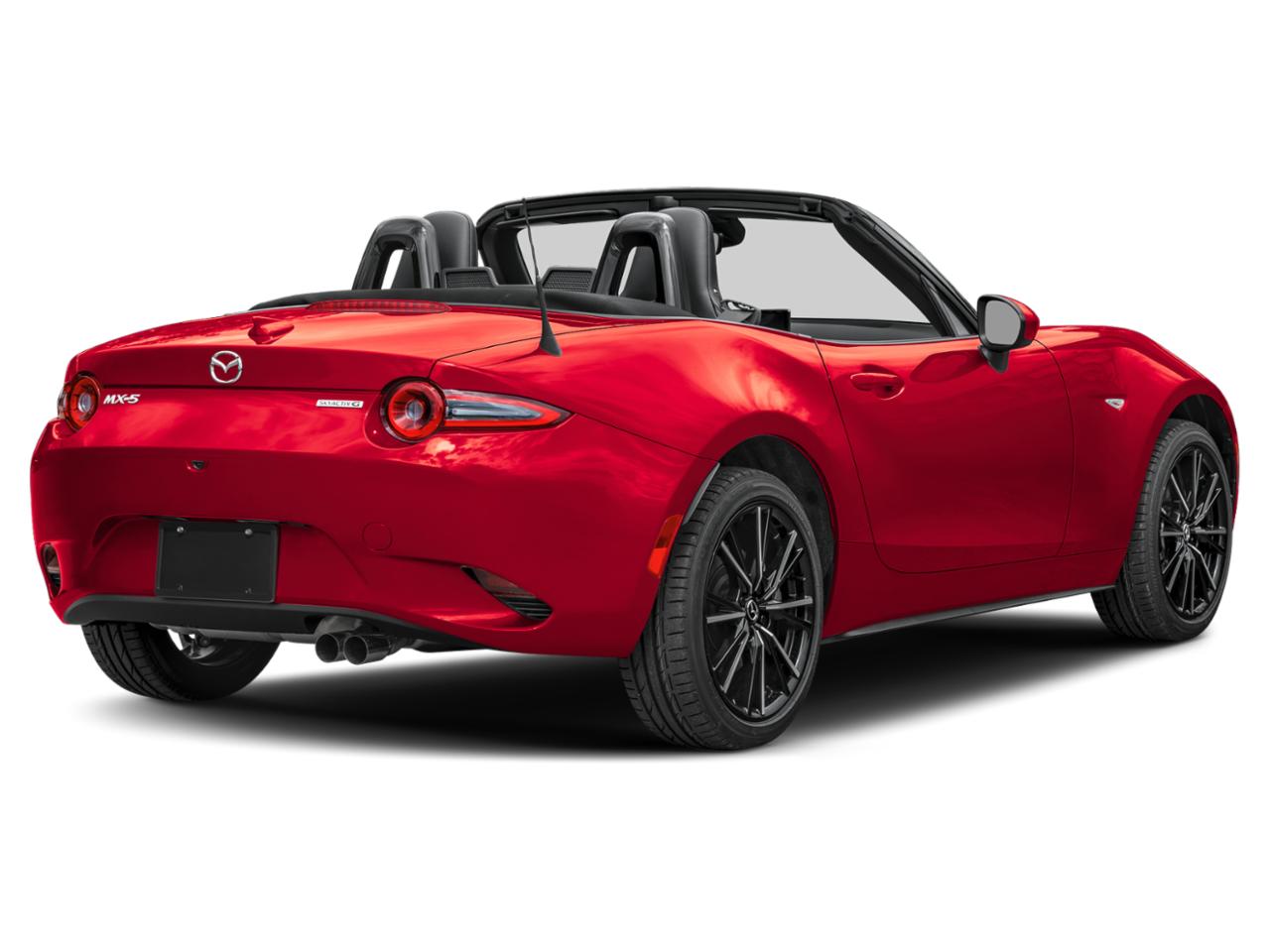
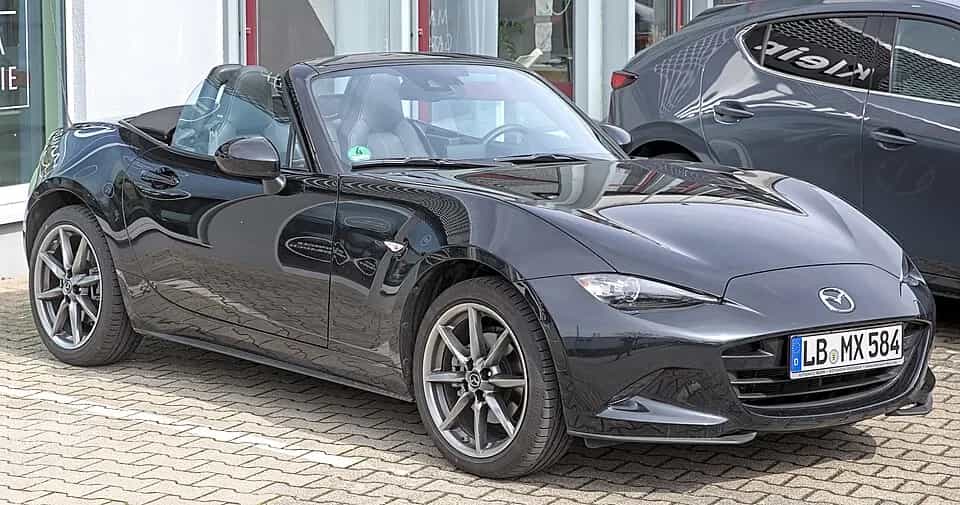
Mazda MX-5 Miata
Importing a used Mazda MX-5 Miata from the USA
The MX-5 Miata is one of the few cars where the American used market can genuinely be more interesting than the European one. Mazda has sold the roadster in the United States since 1989, and the volumes there dwarf anything seen in Germany. That means a deeper pool of clean, sun-belt cars, a wider spread of special editions, and, in many cases, examples that never saw road salt. USCar Trader acts purely as your broker for a used MX-5 Miata: we source, verify and organise the import, and you buy the car directly from the US seller. Below is what actually matters before you decide to import a used MX-5 Miata from the USA.

Generations at a glance
Four generations, each with its own character. The original NA (1989–1997) introduced the pop-up-headlight formula: light, rear-wheel drive, near-perfect balance. The NB (1998–2005) dropped the pop-ups and gained a stiffer shell. The NC (2006–2015) grew slightly, shared parts with the RX-8 platform, and was the first Miata offered with the PRHT retractable hardtop. The current ND (2016–present) returned to obsessive weight reduction and is the one most people import today, either as the soft-top or the RF fastback introduced for 2017. For US-market cars, remember that generation years and the fuel filler on the VIN plate are your quickest sanity check against the seller's description.
Powertrain lineup
US Miatas are rear-wheel drive without exception. The NA used the 1.6-litre B6ZE (around 116 hp) and later the 1.8-litre BP (roughly 128–140 hp). The NB carried the 1.8 forward with 142–146 hp. The NC moved to Mazda's 2.0-litre MZR (LF) with 158–170 hp depending on year and transmission. The ND is the key one for importers: America received only the 2.0-litre Skyactiv-G, rated at 155 hp early on and lifted to 181 hp with the 2019 update that also raised the redline. Transmissions run from the classic 5-speed manual to the sweet 6-speed manual, with a 6-speed automatic offered on most generations. The limited-slip differential fitted to many Club and sportier trims is worth confirming.
Trims in the US market
Body styles are simple: a folding soft-top roadster throughout, plus the NC's PRHT and the ND's RF power hardtop. US trim ladders vary by generation. The NC ran SV, Sport, Touring and Grand Touring. The ND uses Sport, Club and Grand Touring, with the Club aimed at drivers (Bilstein dampers, limited-slip diff, front strut brace on manual cars). Special editions — 25th Anniversary, 30th Anniversary in Racing Orange, various Club variants — command attention and are far more common in the US.
The used market stateside
Supply is the headline. NC and ND cars are plentiful across the United States, and the enthusiast culture means many are well documented on forums and in service records. Cars from California, Arizona, Texas and the wider Sun Belt tend to be rust-free, which matters more on a Miata than almost any other import. Typical mileage spreads widely because these are often second cars and weekend toys; a ten-year-old NC with genuinely low miles is not unusual. Condition is the variable to police, not availability.
Who should import one
If you want a lightweight, naturally aspirated, rear-drive roadster with a manual gearbox and honest steering, the MX-5 is the reference point. Importing makes sense when you are chasing a specific US special edition, a particularly clean rust-free car, or a colour and spec combination that is thin on the ground in Germany. It is less compelling if you simply want the nearest example — but for the enthusiast build, the American market is a genuine advantage.
Key specifications
| Attribute | Typical US-market figures (ND 2.0) |
|---|---|
| Body style | 2-seat roadster / RF retractable fastback |
| Layout | Front engine, rear-wheel drive |
| Engine | 2.0 L Skyactiv-G inline-4, naturally aspirated |
| Power | 155 hp (2016–2018) / 181 hp (2019+) |
| Torque | approx. 200 Nm |
| Transmission | 6-speed manual or 6-speed automatic |
| Drive | RWD, optional limited-slip differential |
| 0–100 km/h | roughly 6.5–7.5 s (181 hp manual quicker) |
| Kerb weight | approx. 1,050–1,100 kg |
| Length | approx. 3,915 mm |
| Width | approx. 1,735 mm |
| Fuel | Petrol, premium recommended |
| Fuel tank | approx. 45 L |
| Seats | 2 |
| Earlier engines | 1.6/1.8 (NA/NB), 2.0 MZR (NC) |
How reliable is it?
The MX-5 has a strong reliability record, but every generation has known weak points. On NA/NB and NC cars, the classic MX-5 Miata common problems are rust on the rear wheel arches, sills and around the soft-top drain channels — check underneath, not just the paint. NC-specific items include the variable valve timing actuator rattle on cold start, occasional secondary air injection faults, and worn soft-top rear windows. The ND is largely trouble-free; early cars had some interior rattles and a few reports of clutch and second-gear synchro wear on hard-driven examples. Across the board, confirm the soft-top mechanism and, on RF/PRHT cars, that the power roof cycles fully. Regular oil changes and a healthy cooling system are the main keys to MX-5 Miata reliability.
What US models do differently
The most important difference for the ND is the engine: US buyers only got the 2.0-litre, while Europe also offered a 1.5. US cars carry amber front turn signals, side marker lights, a speedometer marked in mph, and no rear fog lamp — all relevant at inspection. Infotainment and driver-assist packages differ by market year, and tyre pressure monitoring is calibrated to US standards. None of this is a barrier; it simply defines the conversion work.
Seven steps to your import
Selection of the specific car and generation; VIN and origin check (the MX-5 is built in Japan, so US origin generally cannot be established); secure payment via escrow so funds release only against documents; ocean freight in a container or RoRo to a German port such as Bremerhaven; customs clearance; TÜV and, where needed, individual approval (Einzelabnahme); and finally registration at your local office.
Customs, taxes and costs explained
In short: the 0% duty rate applies only with documented US origin (VIN/plant) – German import VAT of 19% is always due.
Because the MX-5 Miata is manufactured in Hiroshima, Japan, it does not qualify as US-origin goods. The 0% EU preference for US-built vehicles under Regulations (EU) 2026/1455 and 2026/1461 therefore does not apply here — that scheme requires provable US origin by VIN and plant. For a Japanese-built car, the standard EU third-country customs duty for passenger cars (10%) applies, calculated on the customs value. Separately and always, the 19% German import VAT (Einfuhrumsatzsteuer) is due on the landed value. We never describe any import as duty-free, and USCar Trader takes no margin on the vehicle price.
German TÜV and registration
Typical work to pass TÜV includes retrofitting a rear fog lamp, converting or adapting the headlights to the correct beam pattern, addressing amber side markers where required, and confirming the speedometer reads km/h (or fitting a compliant solution). The odometer and documentation are checked for consistency. Once the technical inspection and any individual approval are complete, the car can be registered.
The buyer checklist
1) Decode the VIN and confirm generation, engine and build year. 2) Pull a Carfax or AutoCheck history for accidents, title and odometer records. 3) Inspect rust points — arches, sills, subframe (critical on NA/NB/NC). 4) Verify a clean title, not salvage or rebuilt, unless priced accordingly. 5) Check service history and clutch/soft-top condition. 6) Confirm limited-slip differential if the trim should have one. 7) Photograph the underside on a lift before purchase.
Questions and answers
Can I get 0% import duty on an MX-5 Miata?
Generally no. The Miata is built in Japan, so US origin cannot be proven and the 0% US-origin preference does not apply. Expect the standard 10% passenger-car duty plus 19% import VAT.
Which generation is best to import?
The ND (2016+) for a modern car, especially the 181 hp 2019+ version; the NC if you want the folding hardtop and lower cost of entry.
How much does the import VAT add?
The 19% German import VAT is charged on the landed customs value and always applies, regardless of origin.
Are US Miatas rustier than European ones?
It depends entirely on region. Sun-belt cars are often cleaner than northern-European examples, but rust-belt cars can be worse. Always inspect the underside.
Is the driving experience different from an EU Miata?
Mechanically the ND drives the same; US cars simply lack the 1.5 option and carry US lighting and instrumentation.
Do I need individual approval (Einzelabnahme)?
Often yes for a US-spec car, unless a matching EU type approval and CoC can be used. We assess this per VIN.
How long does the import take?
Typically several weeks from purchase to registration, driven mainly by ocean freight and clearance scheduling.
Can you handle payment safely?
Yes. We use escrow so funds are released only against the correct documents.
Explore more in the Mazda in the Carhub, compare related models such as the Mazda MX-5 Miata RF, the Mazda3 and the Mazda CX-5, or browse current MX-5 Miata listings.