Model history and generations
Based on Mazda's C1 platform — shared with the Mazda3 and the Ford Focus/C-Max family — the Mazda5 reached the US market as a 2006 model. The first generation (CR) ran from 2006 to 2010.
 0049 (0)89 2000 791 00
 Mo - Fr 8:00am - 8:00pm
USCar Trader import service
Choose a specific vehicle. Where data is available, its detail page shows the import cost calculation. We assess any possible duty benefit with you before purchase.
Important: A 0% EU import-duty rate may be available for a vehicle covered by Regulation (EU) 2026/1455 that has US origin and is imported directly into the EU. CETA may apply to a vehicle with preferential Canadian origin. Whether the requirements are met is assessed for the individual case. Please contact us before purchase; we review the possible duty benefit and provide non-binding support through the process. Import VAT and other costs are assessed separately.
CarHub · Mazda
The Mazda5 is a rare thing: a compact, car-sized minivan with genuine sliding rear doors and three rows of seating for six, wrapped in a body barely longer than a family hatchback.
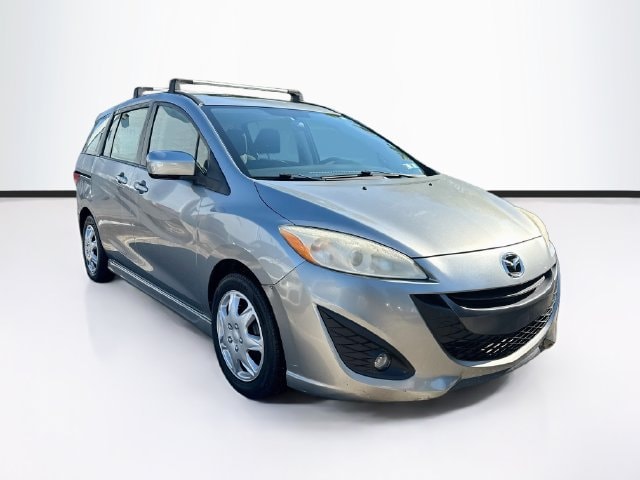
Price:8,498.00 USD

Price:7,299.00 USD

Price:8,249.00 USD

Price:11,990.00 USD
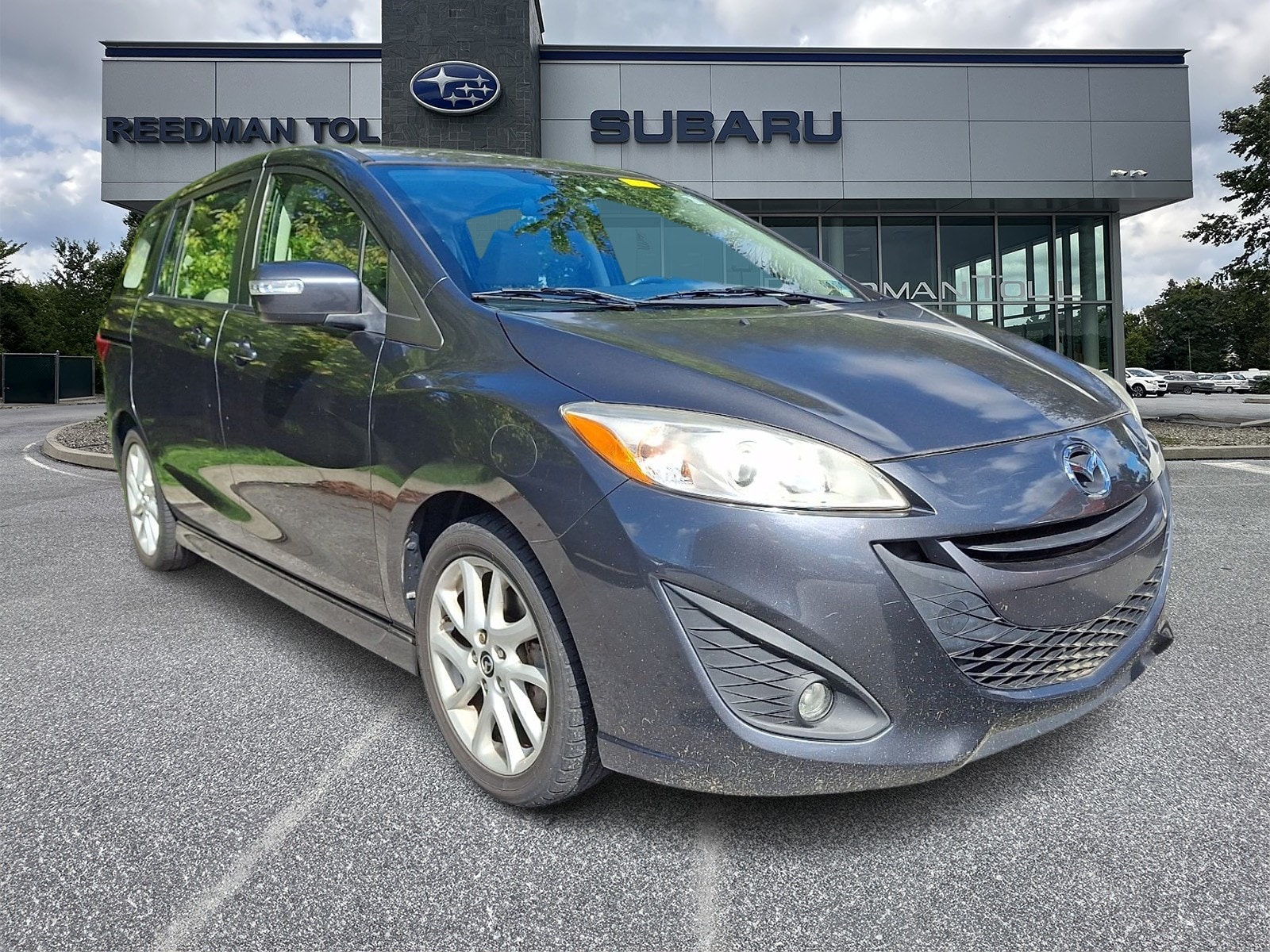
Price:10,988.00 USD
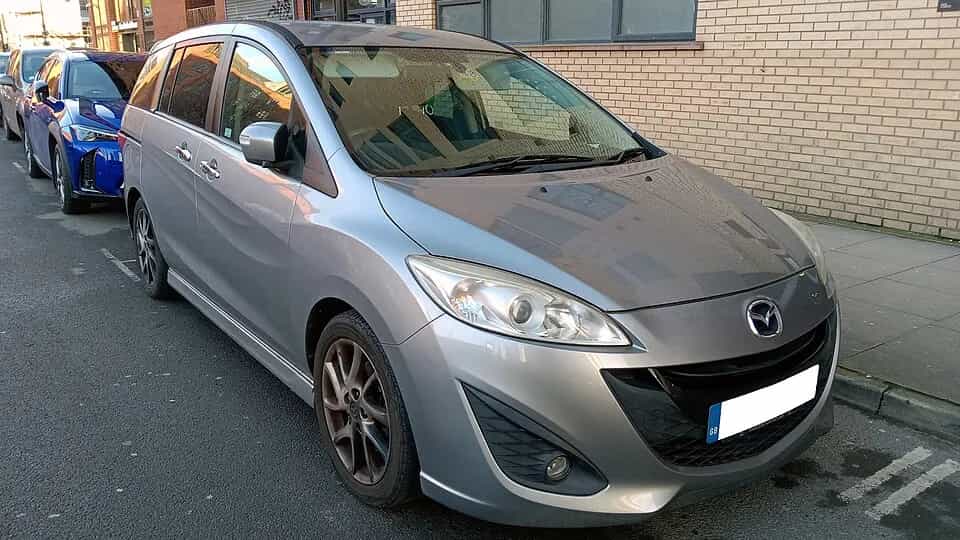
Model profile
Based on Mazda's C1 platform — shared with the Mazda3 and the Ford Focus/C-Max family — the Mazda5 reached the US market as a 2006 model. The first generation (CR) ran from 2006 to 2010.
Powertrain and equipment
US Mazda5s were powered by Mazda's MZR four-cylinder petrol engines driving the front wheels. The first generation used a 2.3-litre unit producing around 153 hp; the second generation moved to a 2.5-litre MZR making roughly 157 hp.
The Mazda5 was sold only as a five-door compact MPV with twin sliding rear doors. US trim levels were Sport, Touring and Grand Touring. Higher grades added alloy wheels, automatic climate control, a moonroof, leather and upgraded audio.
Vehicle selection
The Mazda5 was a niche seller in America, so it is not as common as a Camry, but well-kept family-owned examples do appear, and sun-belt cars are especially worth targeting because of the model's rust reputation.
This car is for a family that needs occasional six-seat, three-row capability and sliding-door convenience but wants something far smaller and cheaper to run than a full minivan.
Vehicle data
| Body style | Detail (US-market, typical): 5-door compact MPV, sliding rear doors |
|---|---|
| Seating | Detail (US-market, typical): 3 rows, 6 seats |
| Length | Detail (US-market, typical): approx. 4,585 mm |
| Wheelbase | Detail (US-market, typical): approx. 2,750 mm |
| Kerb weight | Detail (US-market, typical): approx. 1,540–1,600 kg |
| Cargo (3rd row up) | Detail (US-market, typical): approx. 210 litres |
| Engine (gen1) | Detail (US-market, typical): 2.3 L MZR I4, approx. 153 hp |
|---|---|
| Engine (gen2) | Detail (US-market, typical): 2.5 L MZR I4, approx. 157 hp |
| Torque | Detail (US-market, typical): approx. 205–220 Nm |
| Transmission | Detail (US-market, typical): 5-speed automatic (manual rare) |
| Drive | Detail (US-market, typical): Front-wheel drive |
| Fuel tank | Detail (US-market, typical): approx. 60 litres |
| Fuel | Detail (US-market, typical): Petrol |
| Platform | Detail (US-market, typical): Mazda C1 (shared with Mazda3) |
|---|---|
| Assembly | Detail (US-market, typical): Hiroshima, Japan |
| US model years | Detail (US-market, typical): 2006–2010 (gen1), 2012–2015 (gen2) |
Values are reproduced verbatim from the existing article table. The documents for the specific vehicle govern.
Pre-purchase review
Mechanically the Mazda5 is dependable — the MZR engine and five-speed automatic are proven — but there is one issue impossible to ignore: rust. The rear wheel arches in particular are notorious for corroding, sometimes early, and any inspection must focus there, along with the sills, subframe and door bottoms; this is the single most important reason to prefer a dry-climate US car.
Germany and Europe
US cars use mph instruments, US-spec lighting without a rear fog lamp, and side-marker lamps. Radio bands and infotainment differ, and emissions are US federal or California spec.
Typical work: adding or activating a rear fog lamp, adapting the rear turn-signal function, confirming headlamp compliance and converting the speedometer display.
USCar Trader services
As a buyer based in Germany, you do not have to inspect the vehicle yourself in the United States or Canada. Within the agreed scope, USCar Trader can coordinate document review, a separately commissioned on-site inspection and purchase processing.
Covered inspection points are agreed in advance. An on-site inspection records condition at the appointment and is not a guarantee.
Next step: Before commissioning, USCar Trader and the customer agree which document, history, inspection and transaction checks suit the vehicle and are included in the service. This records what was actually checked.
Import process
The assessment depends on the specific vehicle and the circumstances of the transaction. Please contact USCar Trader before purchase; we review any possible duty benefit and provide non-binding support. Import VAT and other costs are considered separately.
Questions and answers
Mechanically yes; the engine and automatic are dependable. The main caveat is corrosion, so a rust-free body is the most important thing to verify.
Six, arranged in three rows, with sliding rear doors making access easy in tight spaces.
No, not automatically. A 0% EU import-duty rate may be available for a vehicle covered by Regulation (EU) 2026/1455 that has US origin and is imported directly into the EU. CETA may apply to a vehicle with preferential Canadian origin. Whether the requirements are met is assessed for the individual case. Please contact USCar Trader before purchase; we review the possible duty benefit and provide non-binding support. Import VAT and other costs are assessed separately.
A 2.3-litre MZR (2006–2010) or a 2.5-litre MZR (2012–2015) four-cylinder petrol engine driving the front wheels.
Focus on the rear wheel arches first, then the sills, door bottoms and subframe; sun-belt cars are much safer buys.
No. It is adequate for family use but feels strained when fully loaded, so it rewards a relaxed driving style.
Yes, it shares Mazda's C1 platform with the Mazda3, which helps with parts availability in Europe.
Available VIN, title and history information can be reviewed in the vehicle profile. USCar Trader can also arrange a separately booked on-site inspection within a scope agreed in advance.
More vehicles