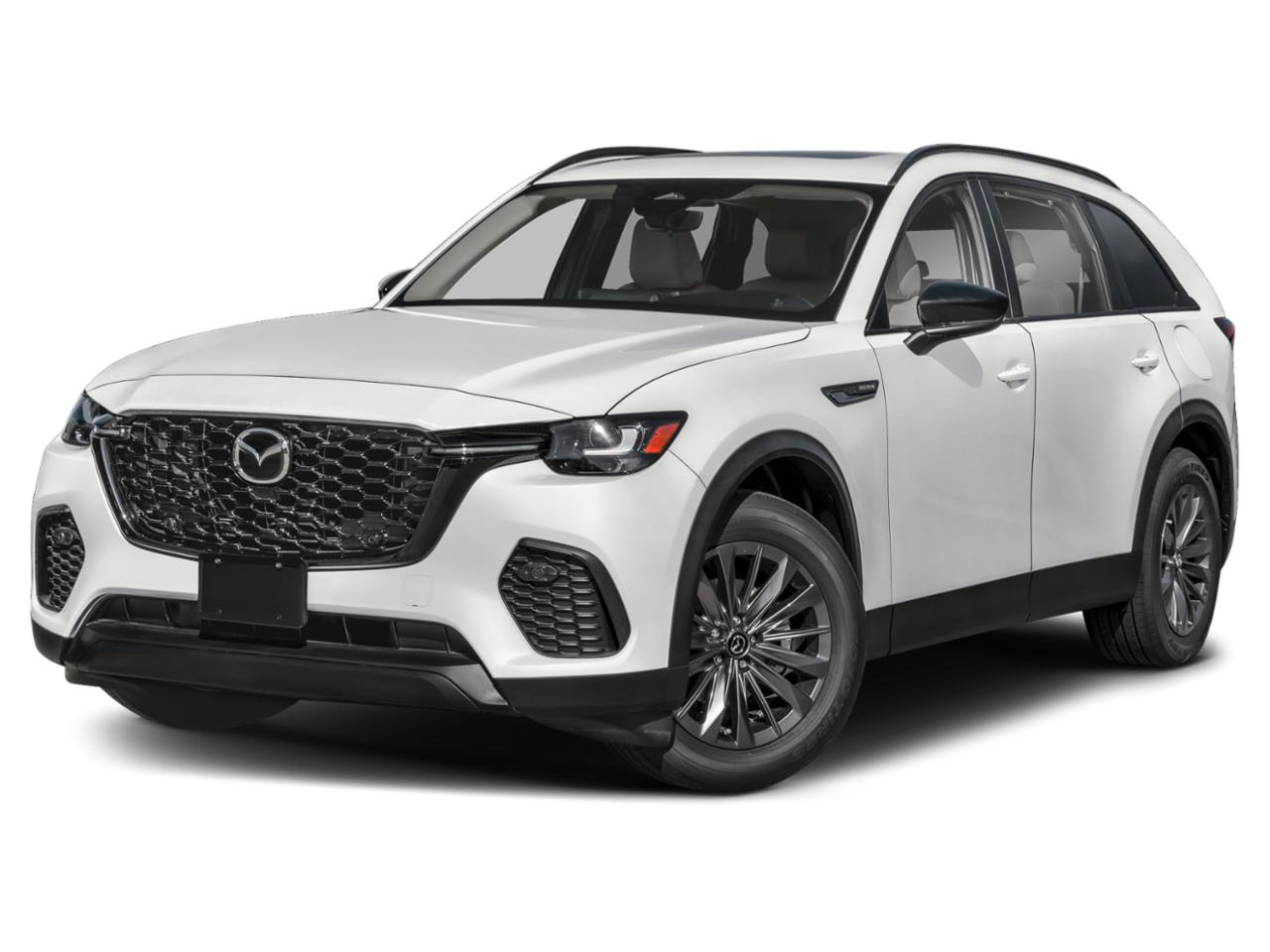
Mazda CX-70

Importing a used Mazda CX-70 from the USA

The Mazda CX-70 is the newest, most upmarket entry in Mazda's large-SUV family — essentially a two-row, five-seat version of the three-row CX-90, sharing its rear-biased platform, longitudinal inline-six turbo engines and premium interior. It is aimed squarely at buyers who want the space and presence of a big SUV without the third row, and its mild-hybrid straight-six is a genuinely distinctive choice in a class dominated by four-cylinders. As an independent broker, USCar Trader sources, inspects and ships used CX-70 examples from the United States. Being a 2025-launch model, it is built in Japan, so its origin is neutral for customs — the VIN and plant determine the duty. Because it is so new, this page stays close to confirmed facts.

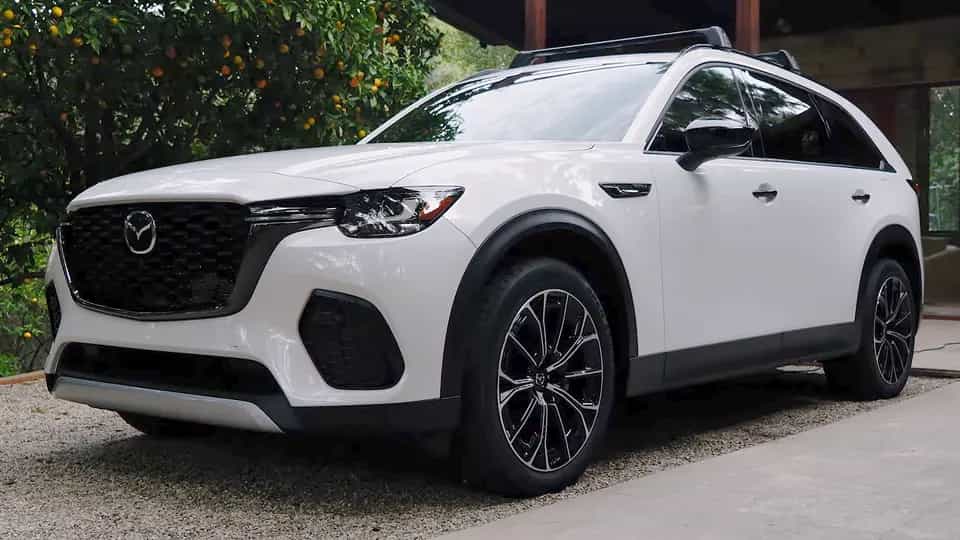
Mazda cx-70 – used car imported from the USA
Photo: Motor1 · CC BY 3.0 · Wikimedia Commons

From launch to today

The CX-70 arrived as a 2025 model, launched in North America in 2024, and sits on Mazda's Large Product platform introduced with the CX-90. There is only one generation so far. Conceptually it is the CX-90 minus the third row: the same body length and wheelbase, but reconfigured as a roomier two-row, five-seat SUV with a larger cargo area behind the second row. It slots above the CX-50 and alongside the CX-90 as Mazda's flagship-tier SUV for the US market. As a used import, the earliest examples are only lightly used, so expect low-mileage, near-new cars.

Engines and drivetrain in detail

The CX-70 uses Mazda's 3.3-litre e-Skyactiv-G turbocharged inline-six with a 48-volt mild-hybrid system, offered in two tunes: roughly 280 hp on regular fuel and around 340 hp in the higher-output Turbo S tune on premium fuel, the latter with peak torque near 500 Nm. There is also a plug-in hybrid variant pairing a 2.5-litre four with an electric motor for a combined output around 323 hp and a useful stretch of electric-only range. All versions drive through an eight-speed automatic — notably a clutch-based unit rather than a conventional torque converter — and Mazda's i-Activ all-wheel drive is standard. The longitudinal, rear-biased layout gives the CX-70 a more rear-drive character than most rivals, which shows in its composed handling.

Trim levels and variants

The CX-70 is a five-seat, two-row SUV only. US trims are organised around the two inline-six outputs and the PHEV: broadly a 3.3 Turbo tier (Preferred, Premium) and a range-topping 3.3 Turbo S (Premium, Premium Plus) with the higher-output engine, plus PHEV Premium and Premium Plus trims. Higher grades add Nappa leather, a larger 12.3-inch display, a premium sound system, ventilated seats and a full driver-assistance suite. The interior quality is a genuine step up and is one of the main reasons to choose a CX-70 over mainstream competitors.

Used availability in the USA

As a very recent model, the US used pool is still forming, made up largely of early lease returns, demonstrators and low-mileage owner cars. Typical import candidates will therefore be near-new, often under 40,000 km. That newness is an advantage: full histories, remaining US warranty coverage and pristine condition are common. Southern and western examples avoid any salt exposure, though with such young cars corrosion is rarely an issue yet. Choose the engine — standard Turbo, Turbo S or PHEV — according to how you will use the car rather than chasing the absolute lowest mileage.

When importing makes sense

A used CX-70 suits the buyer who wants a large, premium-feeling SUV with a characterful six-cylinder engine and rear-biased AWD, but does not need seven seats. It is ideal for couples and small families who value cargo space, refinement and driving engagement. The PHEV appeals to those wanting lower local emissions and electric commuting. It is less suited to buyers needing a third row (choose the CX-90) or minimum running costs (the six-cylinder likes fuel). For a distinctive, upscale two-row SUV, importing a used CX-70 from the USA is an appealing route.

Facts and figures

AttributeTypical figure (Mazda CX-70)
Body style2-row, 5-seat large SUV
Base engine3.3 L e-Skyactiv-G turbo inline-6, ~280 hp
Turbo S engine3.3 L turbo inline-6, ~340 hp / ~500 Nm (premium fuel)
PHEV2.5 L 4-cyl + e-motor, ~323 hp combined
Electrical system48V mild-hybrid (inline-6 versions)
Transmission8-speed automatic (clutch-type)
Drivetraini-Activ all-wheel drive (standard)
0–100 km/happrox. 6.5–7.0 s (Turbo S)
Lengthapprox. 5,120 mm
Wheelbaseapprox. 3,120 mm
Kerb weightapprox. 2,000–2,200 kg
Cargo (behind 2nd row)approx. 1,100 L
FuelPetrol / plug-in hybrid
Seats5
Build locationHiroshima, Japan

Reliability and common problems

The CX-70 is too new for a long-term reliability record, but it shares its platform, engines and transmission with the CX-90, so early CX-90 feedback is the best guide. The main talking point is the eight-speed clutch-based automatic: some early CX-90 owners reported low-speed shift hesitancy or a slight jerkiness when creeping, which Mazda addressed with software refinement — check that any transmission-related software updates have been applied and drive the car at parking speeds during inspection. The 3.3 inline-six itself is mechanically conventional and promising, but follow the maintenance schedule and use the correct fuel grade for the tune (the Turbo S needs premium for full output). On the PHEV, confirm the high-voltage battery and charging system function and ask for a state-of-health check. Because these are near-new cars, the priority is confirming warranty status and that all software campaigns are complete via VIN.

How US versions differ

US CX-70s use mph-primary clusters, US lighting logic (side markers, DRL, often amber rear indicators), North American radio bands and US-calibrated assistance systems. Connected-services features may be region-locked to the US. The CX-70 was not sold new in Europe, so there is no European equivalent to compare against — every one on German roads will be an import. Lighting and instrument conformity must be handled during approval.

From US purchase to registration

1) Selection — we shortlist suitable used CX-70 listings from US dealers and auctions. 2) VIN and origin check — we read the VIN and plant code; the CX-70 is Japanese-built, which sets the customs treatment. 3) Escrow — funds held until the car is verified and released. 4) Ocean freight — container or RoRo to a North European port such as Bremerhaven. 5) Customs clearance — declaration with origin-correct duty plus 19% import VAT. 6) TUEV / individual approval — inspection and modifications for §21. 7) Registration — at your local Zulassungsstelle.

Costs, duty and taxes at a glance

Remember: no origin proof, no 0% duty – and 19% German import VAT is due on every import.

Two separate charges, never merged into a margin. First the customs duty: the 0% preferential rate under EU Regulations 2026/1455 and 2026/1461 (in force since 1 July 2026, direct transport, valid to 31 December 2029) applies only to vehicles of provable US origin. The CX-70 is built in Hiroshima, Japan, so a US-origin claim will generally not succeed, and the standard EU third-country rate for passenger cars (10%) will typically apply. We never call this duty-free or guaranteed; the VIN and plant code decide. Second, and always: the German import VAT (Einfuhrumsatzsteuer) of 19%, calculated on the customs value plus duty and freight. Both appear as clear, separate line items.

TÜV, approval and license plates

Typical approval work includes fitting or activating a rear fog lamp, confirming headlight beam compliance, ensuring the speedometer reads km/h, and preparing documentation for §21 individual approval. On the PHEV, high-voltage safety documentation is checked. The odometer is recorded and matched against the US history. After the TUEV report, registration proceeds normally.

Pre-purchase checklist

  • Decode the VIN to confirm engine tune (Turbo/Turbo S/PHEV) and build.
  • Pull a full Carfax or AutoCheck history for accidents and title.
  • Confirm a clean title, not salvage or rebuilt unless deliberate.
  • Drive at low speed to check the clutch-type transmission behaviour.
  • Verify all software campaigns and recalls are completed via VIN.
  • On the PHEV, request a battery state-of-health check.
  • Confirm remaining US warranty status on these near-new cars.

Import FAQ

Does a US-bought CX-70 qualify for 0% import duty?

Usually no. The CX-70 is built in Japan, so US origin generally cannot be proven and the standard 10% passenger-car rate typically applies. It is never duty-free or guaranteed. The 19% VAT always applies.

What is the difference between the CX-70 and CX-90?

The CX-70 is the two-row, five-seat version; the CX-90 has a third row. They share platform, engines and much of the interior.

Is the CX-70 reliable?

It is too new for a long record, but it shares the CX-90's proven components. Check that transmission software updates are applied and drive it slowly during inspection.

What engines does it offer?

A 3.3-litre turbo inline-six in ~280 hp and ~340 hp (Turbo S) tunes, plus a 2.5-litre plug-in hybrid with around 323 hp combined.

Does the CX-70 have all-wheel drive?

Yes. Mazda's i-Activ AWD is standard across the range.

Should I worry about the transmission?

The clutch-based eight-speed drew some early low-speed criticism on the CX-90; confirm software updates and test parking-speed manoeuvres.

Can a US CX-70 be registered in Germany?

Yes, after TUEV individual approval and the usual lighting and speedometer conformity work.

Do I pay VAT even if duty were 0%?

Yes. The 19% import VAT is separate from duty and always applies.

Take the next step: browse Mazda in the Carhub, compare the three-row Mazda CX-90, the mid-size Mazda CX-50 and the popular Mazda CX-5, or view current CX-70 listings and let USCar Trader manage the import.