Lincoln Town Car

Importing a used Lincoln Town Car from the USA

Few cars say "American luxury" as plainly as the Lincoln Town Car. Body-on-frame, rear-wheel drive, powered by a lazy 4.6-litre V8 and riding on a soft long-travel suspension, it is the archetype of the full-size US sedan — the car behind millions of airport transfers, wedding hires and executive livery jobs. It was never a European catalogue model, so importing a used Town Car from the USA is the normal way to put one on German plates. USCar Trader works as an independent broker for used US vehicles, sourcing the right car, verifying its history and origin, and managing transport and customs so you do not have to navigate the American market alone.

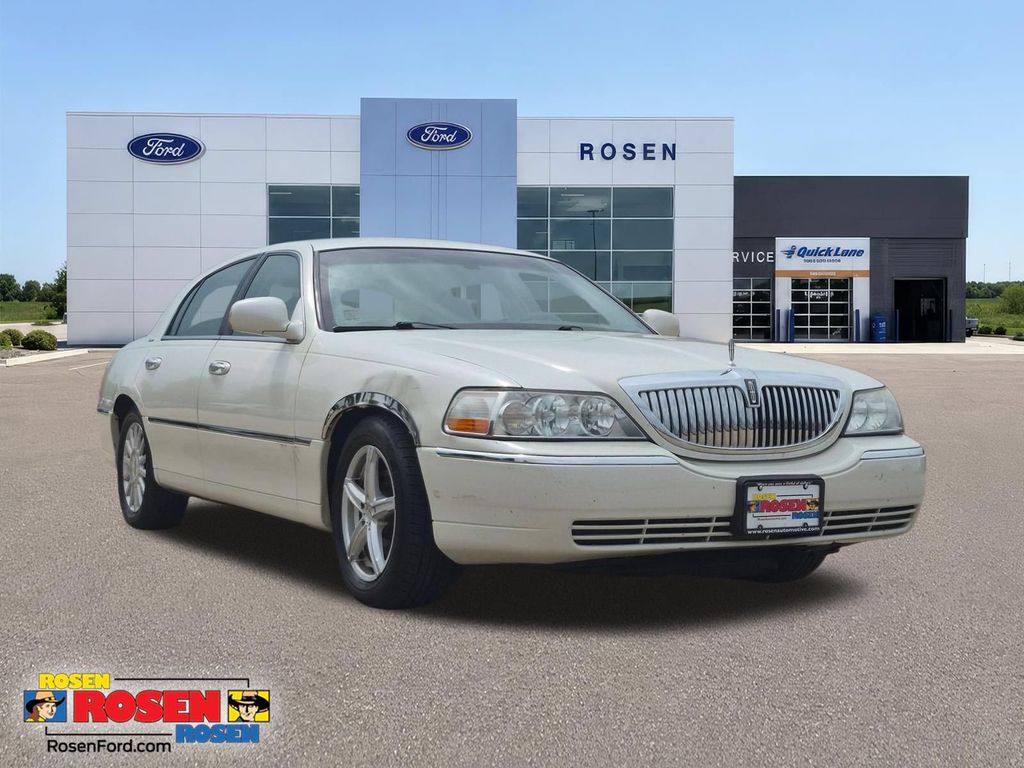
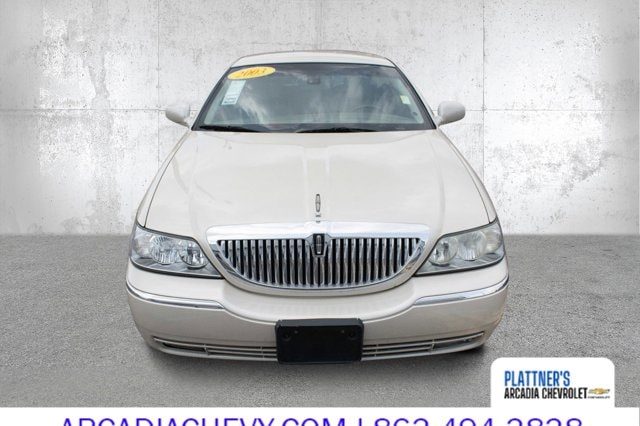
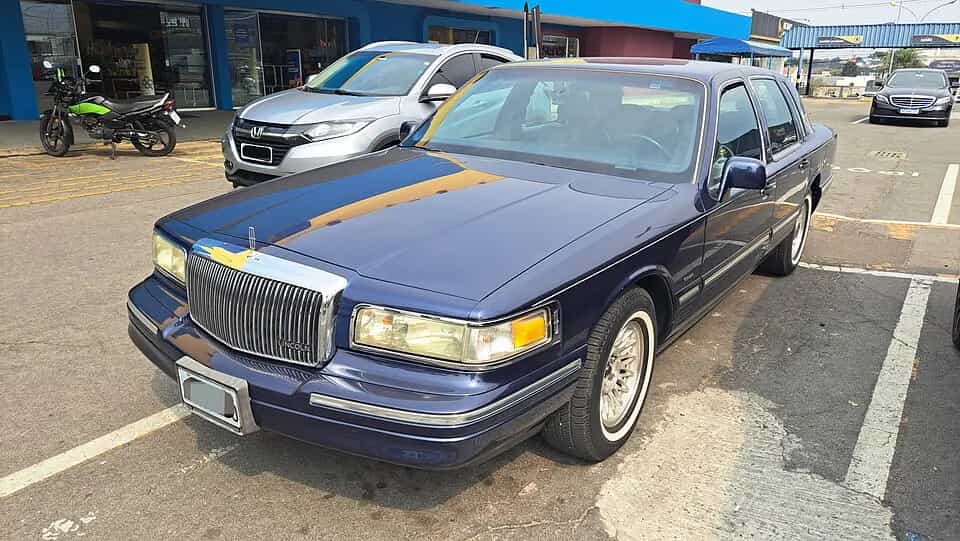
Lincoln town-car – used car imported from the USA
Photo: Mateusmatsuda · CC BY 4.0 · Wikimedia Commons

From launch to today

The Town Car name became a standalone model in 1981 on Ford's Panther platform, and it stayed there for its entire life. The first generation (1981–1989) was formal and square-edged. The second generation (1990–1997) brought a rounded, aerodynamic restyle and, from 1991, the modern 4.6-litre Modular V8. The third and final generation (1998–2011) modernised the body again while keeping the classic ladder frame and V8. Late cars split into the standard model and the stretched Signature L with an extra 150 mm of rear legroom — the version limousine converters loved. Production ran at Wixom, Michigan until 2007, then moved to St. Thomas, Ontario, Canada for the final years.

Engines and drivetrain in detail

From 1991 onward the Town Car used Ford's 4.6-litre SOHC "Modular" V8. Output evolved from around 190–210 hp in the 1990s to roughly 239 hp in the later dual-exhaust cars, with a torque-rich delivery ideal for effortless cruising. Drive went through a 4-speed automatic (4R70W, later 4R75E) to the rear wheels via a solid axle. It is not a fast car, but the powertrain is famously durable and easy to service — a big reason the Town Car became the default American limousine base.

Trim levels and variants

Only one body existed: the full-size four-door sedan. US trims typically ran Executive, Signature and the top Cartier grade, with the long-wheelbase Signature L above them in the final generation. Standard equipment was generous by the standards of its day — leather, power everything, dual-zone climate and, on many cars, air-sprung rear suspension for a floating ride.

Used availability in the USA

Town Cars are plentiful in the States, precisely because so many were built and so many served as fleet and livery vehicles. That means two very different pools: pampered, low-mileage private cars — often owned by older drivers — and high-mileage ex-limo and airport cars. Both have their place, but for import we generally target well-kept private examples, usually final-generation cars from roughly 2003–2011. We pull the full Carfax or AutoCheck history and inspect for the tell-tale signs of hard fleet use before you commit. No European prices are quoted; you receive a transparent import calculation.

When importing makes sense

The Town Car suits buyers who want genuine old-school American comfort: a quiet, waft-along cruiser with a huge cabin and boot, simple durable mechanicals, and unmistakable presence. It is also a natural choice for wedding-car and chauffeur operators seeking an authentic US limousine. If you want a modern, sharp-handling sedan, look elsewhere; if you want a rolling lounge, the Town Car delivers.

Facts and figures

SpecificationDetail (typical, final generation)
Body styleFull-size 4-door sedan
PlatformFord Panther (body-on-frame)
Production years1981–2011
Engine4.6 L SOHC Modular V8
Powerapprox. 210–239 hp
Torqueapprox. 380 Nm
Transmission4-speed automatic (4R70W/4R75E)
DrivetrainRear-wheel drive
FuelPetrol
Length (standard)approx. 5,470 mm
Length (Signature L)approx. 5,620 mm
Wheelbaseapprox. 2,990 mm (L: 3,140 mm)
Seating5–6
Rear suspensionSolid axle, air springs (many cars)
AssemblyWixom, MI; later St. Thomas, ON (Canada)

Reliability and common problems

Mechanically the Town Car is one of the toughest American sedans of its era; 4.6 V8s routinely run past 300,000 km with basic care. The known weak points are largely peripheral. The rear air suspension is the classic one: the rubber air springs perish with age and leak, dropping the back of the car, and the compressor then overworks — many owners retrofit conventional coil springs. Blend-door actuators behind the dash fail and cause climate-control faults. Earlier Modular engines could weep coolant at the intake manifold crossover. Front suspension ball joints and bushings wear on high-mileage ex-fleet cars. None of these are deal-breakers, but on a car this old, condition and history matter far more than the badge — an ex-airport limo with 400,000 km is a very different proposition from a two-owner Cartier.

How US versions differ

As a US-market car, the Town Car runs FMVSS lighting with red rear turn signals on many years, a speedometer in mph, and no rear fog lamp. Sealed-beam-era styling headlights and US bumper/marker requirements differ from ECE norms. These are all standard items on the German individual-approval checklist and are readily sorted.

From US purchase to registration

We agree the specification and find a suitable used Town Car; verify VIN, title status and full Carfax/AutoCheck history; hold your funds in escrow until the car is confirmed; move the vehicle to a US port and ship it by ocean freight to a German or North Sea port; clear it through customs on arrival; present it for TÜV inspection and individual approval (§21 StVZO); and finally register it at your local authority.

Costs, duty and taxes at a glance

Key point: duty depends on the plant of build; only a VIN check secures the 0% rate. Import VAT of 19% applies regardless.

Two charges apply separately on import. The first is the import duty, which depends on the car's provable origin. The Town Car was assembled in the USA (Michigan) and, for the final years, in Canada (Ontario) — so origin must be checked per VIN. Where genuine US origin is documented, the 0% EU import duty under Regulations (EU) 2026/1455 and 2026/1461 can apply to directly transported used cars until 31 December 2029; a Canadian-built car falls under different origin rules and may carry the standard passenger-car rate. It is never automatically "duty-free" — the VIN decides. Separately, the 19% German import VAT (Einfuhrumsatzsteuer) always applies to every import, and we list it as its own transparent line with no added margin.

TÜV, approval and license plates

Typical work includes fitting a rear fog lamp, converting the rear indicators and headlights to ECE specification, and confirming the odometer and speedometer are acceptable to German authorities. On air-suspension cars, TÜV will want the system working correctly. After a successful individual inspection, registration follows at the Zulassungsstelle.

Pre-purchase checklist

Before buying any US Town Car: 1) match the VIN to car and documents; 2) obtain the full Carfax/AutoCheck and screen for fleet/livery and accident history; 3) check the rear air suspension for leaks and sag; 4) inspect the frame and floors for rust, particularly on salt-belt cars; 5) confirm the title is clean rather than salvage; 6) look for service records on the transmission and cooling system; 7) test the climate control for blend-door faults.

Import FAQ

Can I still import a Lincoln Town Car to Germany?

Yes. It was never officially sold here, so a used US import is the normal route, and it can be registered after individual approval.

Is the 4.6 V8 Town Car reliable?

The engine and transmission are very durable. Age-related items like air springs and blend-door actuators are the usual concerns.

Does the 0% EU import duty apply?

Only with provable US origin. US-built cars can qualify; late Canadian-built cars follow different origin rules. The VIN determines it.

Do I always pay German import VAT?

Yes. The 19% Einfuhrumsatzsteuer applies to every import regardless of origin.

Should I avoid ex-limousine cars?

Not always, but they are typically high-mileage and hard-worked. A well-kept private car is usually the better import.

What is the Signature L?

A factory long-wheelbase version with extra rear legroom, popular as a limousine base.

Is USCar Trader a dealer?

No. We are an independent broker for used US vehicles, working on your behalf without a manufacturer tie.

What TÜV changes are typical?

Mainly lighting — rear fog lamp and ECE headlights and indicators — plus confirming the air suspension functions.

To get started, explore Lincoln in the Carhub, look at related models such as the Lincoln Continental, the Lincoln MKS and the Lincoln MKZ, or view current Town Car listings.