Model history: years and generations
The Continental nameplate runs back to 1939, but the version you will realistically import today is the tenth generation, revealed as a concept in 2015 and sold from the 2017 model year through 2020.
 0049 (0)89 2000 791 00
 Mo - Fr 8:00am - 8:00pm
USCar Trader import service
Choose a specific vehicle. Where data is available, its detail page shows the import cost calculation. We assess any possible duty benefit with you before purchase.
Important: A 0% EU import-duty rate may be available for a vehicle covered by Regulation (EU) 2026/1455 that has US origin and is imported directly into the EU. CETA may apply to a vehicle with preferential Canadian origin. Whether the requirements are met is assessed for the individual case. Please contact us before purchase; we review the possible duty benefit and provide non-binding support through the process. Import VAT and other costs are assessed separately.
CarHub · Lincoln
The Lincoln Continental is one of those cars that never sold in meaningful numbers on this side of the Atlantic, which is exactly why importing a used example from the United States makes sense.

Price:15,998.00 USD

Price:17,900.00 USD
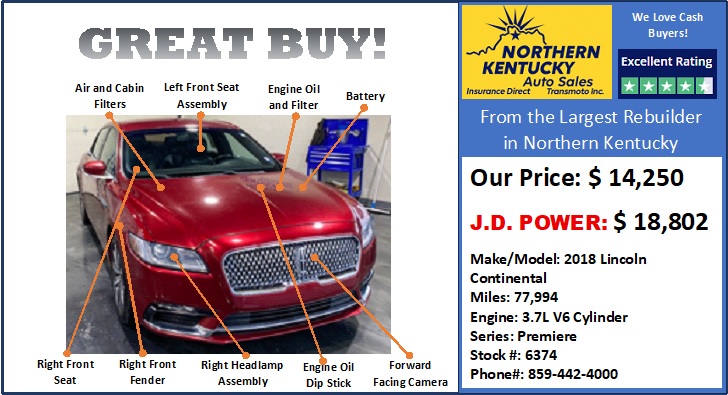
Price:11,495.00 USD

Price:22,495.00 USD
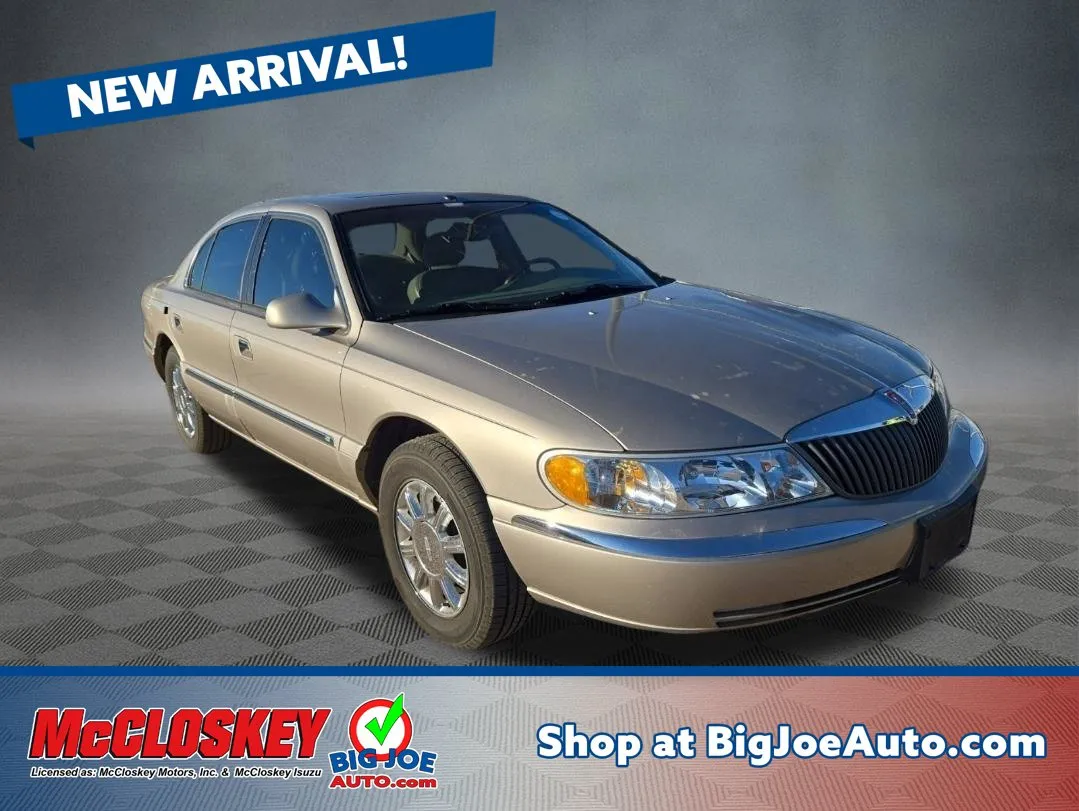
Price:11,995.00 USD
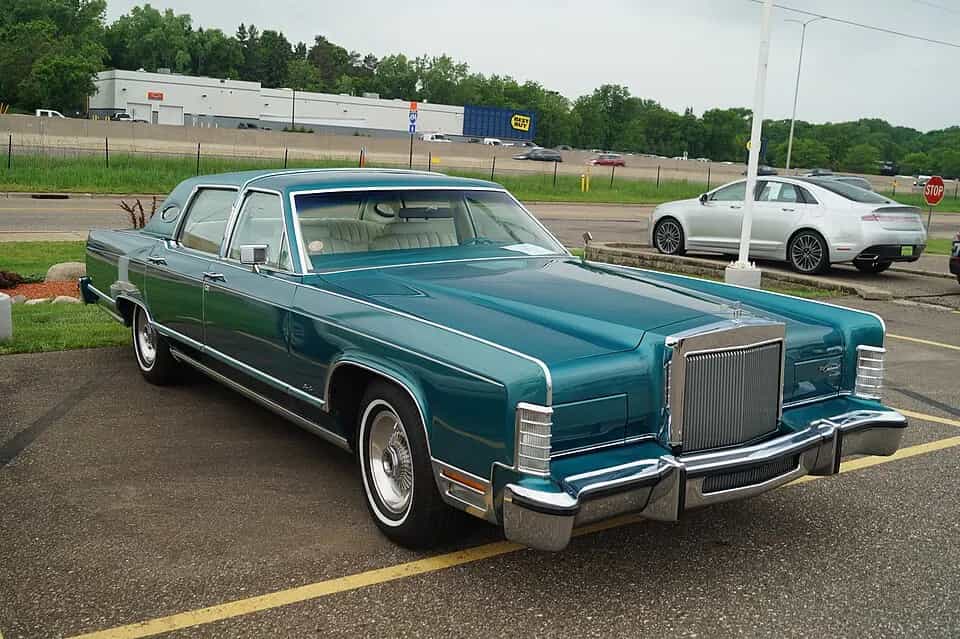
Model profile
The Continental nameplate runs back to 1939, but the version you will realistically import today is the tenth generation, revealed as a concept in 2015 and sold from the 2017 model year through 2020.
Powertrain and equipment
Three engines were offered across the run. The base unit is the 3.7-litre Ti-VCT V6 with roughly 305 hp, naturally aspirated and unstressed.
Only one body style was built: the four-door sedan. Trims climb from Premiere and Select to Reserve, then the flagship Black Label with its curated interior themes such as Thoroughbred and Chalet.
Vehicle selection
Because the Continental sold in modest numbers even in America, you are shopping a limited but healthy pool. Typical import candidates are 2017 to 2019 cars with 60,000 to 130,000 km, many of them one- or two-owner vehicles from southern states where road salt is not a concern.
Vehicle data
| Body style | Detail (10th gen, 2017-2020): Full-size luxury sedan |
|---|---|
| Length | Detail (10th gen, 2017-2020): approx. 5,116 mm |
| Wheelbase | Detail (10th gen, 2017-2020): 2,994 mm |
| Curb weight | Detail (10th gen, 2017-2020): approx. 1,850-1,990 kg |
| Seating | Detail (10th gen, 2017-2020): 5 |
| Base engine | Detail (10th gen, 2017-2020): 3.7 L Ti-VCT V6, approx. 305 hp |
|---|---|
| Mid engine | Detail (10th gen, 2017-2020): 2.7 L EcoBoost twin-turbo V6, approx. 335 hp |
| Top engine | Detail (10th gen, 2017-2020): 3.0 L EcoBoost twin-turbo V6, approx. 400 hp / 542 Nm |
| Transmission | Detail (10th gen, 2017-2020): 6-speed automatic (6F-family) |
| Drivetrain | Detail (10th gen, 2017-2020): FWD standard, AWD optional |
| Fuel | Detail (10th gen, 2017-2020): Petrol |
| Platform | Detail (10th gen, 2017-2020): Ford CD4 |
|---|---|
| Assembly | Detail (10th gen, 2017-2020): Flat Rock, Michigan, USA |
| Production years | Detail (10th gen, 2017-2020): 2017-2020 |
Values are reproduced verbatim from the existing article table. The documents for the specific vehicle govern.
Pre-purchase review
Continental reliability is broadly solid for a low-volume luxury car, but the turbocharged EcoBoost engines carry known watch points. The 2.7 and 3.0 units can suffer cam phaser wear that produces a cold-start rattle, and coolant intrusion has been reported on some 2.7 blocks. AWD cars use a power transfer unit that should be checked for leaks and correct fluid service.
Germany and Europe
US-market Continentals run amber or red rear turn signals and lack a rear fog lamp, both of which matter for German approval.
Typical work includes fitting a rear fog lamp, adapting or replacing headlights to ECE specification, adjusting side markers, and documenting the odometer conversion to kilometres.
USCar Trader services
As a buyer based in Germany, you do not have to inspect the vehicle yourself in the United States or Canada. Within the agreed scope, USCar Trader can coordinate document review, a separately commissioned on-site inspection and purchase processing.
Covered inspection points are agreed in advance. An on-site inspection records condition at the appointment and is not a guarantee.
Next step: Before commissioning, USCar Trader and the customer agree which document, history, inspection and transaction checks suit the vehicle and are included in the service. This records what was actually checked.
Import process
The assessment depends on the specific vehicle and the circumstances of the transaction. Please contact USCar Trader before purchase; we review any possible duty benefit and provide non-binding support. Import VAT and other costs are considered separately.
Questions and answers
The naturally aspirated 3.7 is the low-stress choice; the EcoBoost turbo engines are strong but demand disciplined servicing and a cam-phaser and coolant check before purchase.
For outright pace the 3.0 EcoBoost AWD in Reserve or Black Label; for lower running costs the 3.7 V6.
No, not automatically. A 0% EU import-duty rate may be available for a vehicle covered by Regulation (EU) 2026/1455 that has US origin and is imported directly into the EU. CETA may apply to a vehicle with preferential Canadian origin. Whether the requirements are met is assessed for the individual case. Please contact USCar Trader before purchase; we review the possible duty benefit and provide non-binding support. Import VAT and other costs are assessed separately.
Many mechanical parts are shared with Ford and readily sourced; some trim and electronic items ship from the US.
They can. Test every door and keep the 12V battery healthy, as a flat battery complicates entry.
Import candidates typically show 60,000 to 130,000 km, often from dry southern states.
Yes. As an independent broker we manage sourcing, escrow, freight, customs, TUV and registration end to end.
Yes, all US Continentals are left-hand drive, which suits driving in Germany and the EU.
More vehicles