Importing a used Lincoln Nautilus from the USA
USCar Trader is an independent intermediary for used vehicles only. No margin, no manufacturer relationship, no new-car sales. Here is what you need to know.
 0049 (0)89 2000 791 00
 Mo - Fr 8:00am - 8:00pm
USCar Trader import service
Choose a specific vehicle. Where data is available, its detail page shows the import cost calculation. We assess any possible duty benefit with you before purchase.
Important: A 0% EU import-duty rate may be available for a vehicle covered by Regulation (EU) 2026/1455 that has US origin and is imported directly into the EU. CETA may apply to a vehicle with preferential Canadian origin. Whether the requirements are met is assessed for the individual case. Please contact us before purchase; we review the possible duty benefit and provide non-binding support through the process. Import VAT and other costs are assessed separately.
CarHub · Lincoln
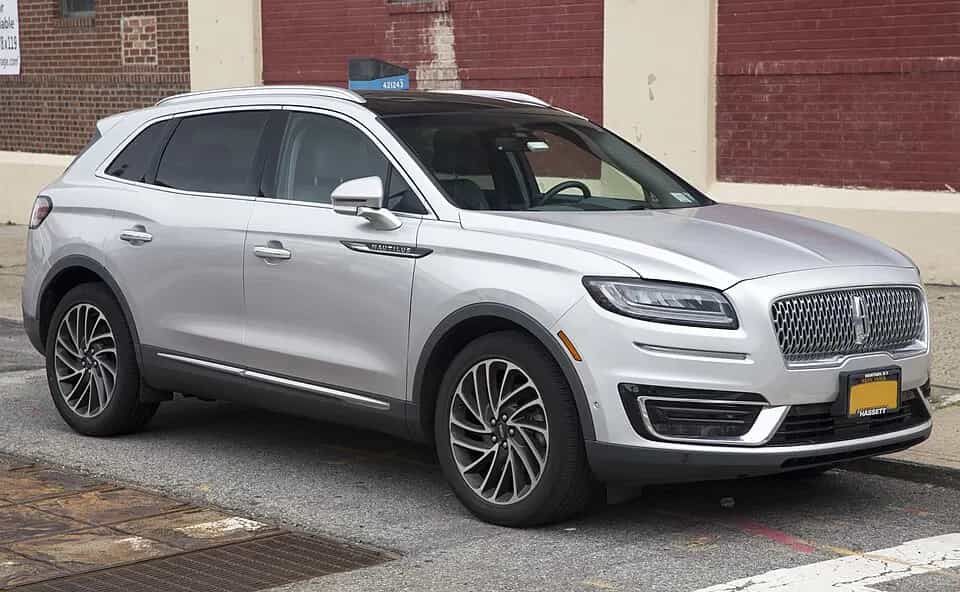
Lincoln left the German market long ago, so the Nautilus — Ford's American luxury brand's mid-size SUV — is a pure import proposition.

Price:63,539.00 USD

Price:21,838.00 USD

Price:21,558.00 USD

Price:59,168.00 USD

Price:43,290.00 USD
Model profile
USCar Trader is an independent intermediary for used vehicles only. No margin, no manufacturer relationship, no new-car sales. Here is what you need to know.
The Nautilus name arrived in 2019 as a rebrand and heavy facelift of the Lincoln MKX.
Powertrain and equipment
The first-generation Nautilus offers two turbocharged petrol engines: a 2.0-litre EcoBoost four-cylinder with 250 hp, and a stronger 2.7-litre EcoBoost V6 producing 335 hp and a muscular 380 lb-ft of torque. Both use an eight-speed automatic, with front-wheel drive standard and all-wheel drive optional.
The Nautilus is a five-door, five-seat mid-size SUV. First-generation US trims run Standard, Select, Reserve and the top Black Label, the last adding premium leather themes, Revel audio and concierge-style features. The 2024 car uses Premiere, Reserve and Black Label.
Vehicle selection
First-generation Nautilus cars are readily available across the States, typically as lease returns and one-owner luxury trades with 30,000–70,000 miles.
The Nautilus is for the buyer who wants a supremely comfortable, quiet luxury SUV with a distinctly American flavour that Europe never sold.
Vehicle data
| Length (1st gen) | 190.0 in / 4,826 mm |
|---|---|
| Width | 78.7 in / 1,999 mm |
| Height | 66.2 in / 1,681 mm |
| Wheelbase | 112.2 in / 2,850 mm |
| Curb weight | approx. 4,100–4,470 lb / 1,860–2,027 kg |
| Cargo (rear up / down) | 37.2 / 68.8 cu ft |
| Engine (1st gen, base) | 2.0 L EcoBoost turbo inline-4 |
|---|---|
| Engine (1st gen, top) | 2.7 L EcoBoost twin-turbo V6 |
| Power output | 250 hp (2.0T) / 335 hp (2.7T) |
| Torque (2.7T) | 380 lb-ft (approx. 515 Nm) |
| Transmission | 8-speed automatic (1st gen) |
| Drivetrain | FWD or AWD |
| 0–60 mph (2.7T AWD) | approx. 6.0 s |
| Fuel type | Premium recommended (petrol) |
| Build (1st gen / 2nd gen) | Oakville, Canada / Hangzhou, China |
|---|
Values are reproduced verbatim from the existing article table. The documents for the specific vehicle govern.
Pre-purchase review
The first-generation Nautilus is a mature design and generally dependable, but the 2.7-litre EcoBoost V6 has some known items worth checking. It uses a wet timing belt (belt-in-oil) that demands strict oil-change discipline; neglected oil can accelerate belt wear, so insist on full service history.
Germany and Europe
US Nautilus cars use MPH instruments, US lighting with side markers and no rear fog lamp, and US-band audio and navigation. Adaptive cruise and lane systems function normally.
Typical work covers a rear fog lamp, ECE lighting adaptation, a km/h speedometer, and a full technical and emissions file for the individual approval.
USCar Trader services
As a buyer based in Germany, you do not have to inspect the vehicle yourself in the United States or Canada. Within the agreed scope, USCar Trader can coordinate document review, a separately commissioned on-site inspection and purchase processing.
Covered inspection points are agreed in advance. An on-site inspection records condition at the appointment and is not a guarantee.
Next step: Before commissioning, USCar Trader and the customer agree which document, history, inspection and transaction checks suit the vehicle and are included in the service. This records what was actually checked.
Import process
The assessment depends on the specific vehicle and the circumstances of the transaction. Please contact USCar Trader before purchase; we review any possible duty benefit and provide non-binding support. Import VAT and other costs are considered separately.
Questions and answers
The 2019–2023 first generation is built in Oakville, Canada; the 2024 second generation is built in Hangzhou, China. Neither is a US build.
No, not automatically. A 0% EU import-duty rate may be available for a vehicle covered by Regulation (EU) 2026/1455 that has US origin and is imported directly into the EU. CETA may apply to a vehicle with preferential Canadian origin. Whether the requirements are met is assessed for the individual case. Please contact USCar Trader before purchase; we review the possible duty benefit and provide non-binding support. Import VAT and other costs are assessed separately.
No. Lincoln has no German network, so every Nautilus here is imported.
The 2.7 EcoBoost V6 offers effortless performance; the 2.0T is simpler and very reliable.
Yes with disciplined oil changes, given its wet timing belt. Demand full service history.
It is the full-width panoramic screen introduced on the 2024 second-generation car.
First-generation cars with 30,000-70,000 miles are the value sweet spot.
Usually several weeks from purchase to registration, driven by freight and customs.
More vehicles