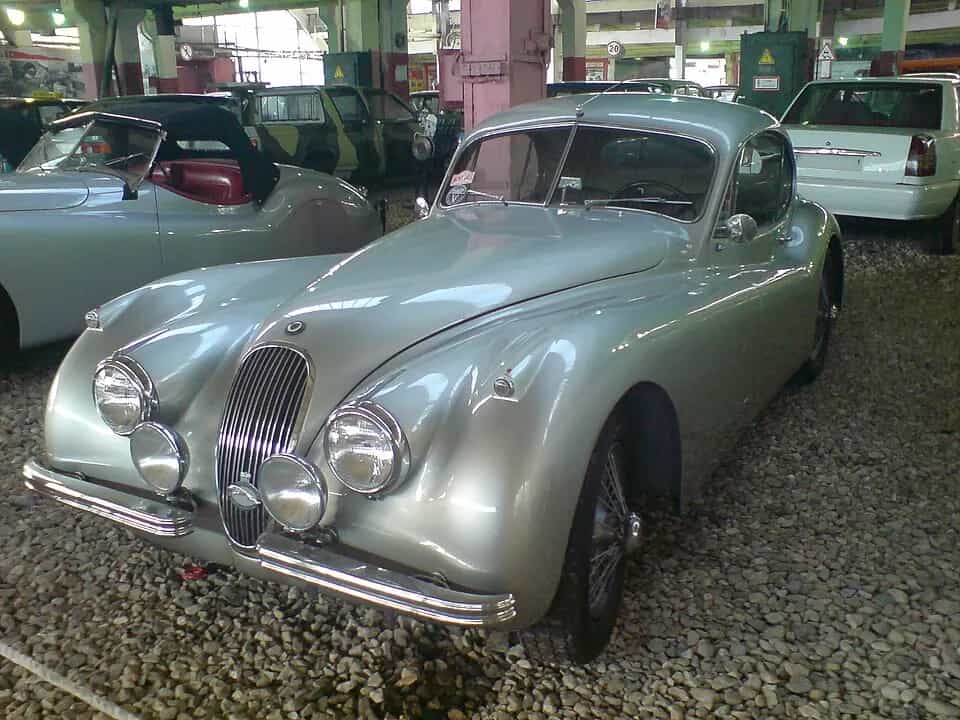
Jaguar XK Series

Importing a used Jaguar XK Series from the USA

The Jaguar XK is one of the great transatlantic grand tourers, and the American used market is where it lives in numbers. The USA was the XK's single largest sales region for its entire life, so left-hand-drive cars in good order are far more plentiful there than in most of continental Europe. For a German buyer chasing a supercharged XKR coupe or a soft-top XK8 in a colour combination that never officially reached the local market, sourcing from the States is a logical route. This page walks through what actually matters when you import a used Jaguar XK from the USA: the two distinct generations, the engines you will meet, the honest weak points, and how the customs and VAT arithmetic works.

Jaguar XK Series – used car imported from the USA
Photo: Barbariandeagle · CC0 · Wikimedia Commons

Generations at a glance

There are two clearly separated generations under the XK name. The X100 (1996–2006) replaced the ageing XJS and reintroduced the XK badge as the XK8, with the supercharged XKR arriving in 1998. Built on a steel platform derived from the XJ saloon, it defined the modern Jaguar coupe look. The second generation, the X150 (2006–2014), was a clean-sheet car with a bonded and riveted aluminium monocoque, roughly 90 kg lighter and far stiffer. It received a significant facelift for the 2010 model year with fresh front-end styling and the new 5.0-litre V8. Both generations were sold as a fixed-head coupe and a fabric-roof convertible, always as a 2+2.

Powertrain lineup

Every XK is a front-engine, rear-wheel-drive V8. The X100 launched with the 4.0-litre AJ26/AJ27 V8 (around 290 hp), supercharged in the XKR to roughly 370 hp. From 2003 the engine grew to 4.2 litres (AJ34), giving about 300 hp naturally aspirated and 390–400 hp in supercharged trim, paired with a six-speed ZF automatic. The X150 opened with the same 4.2 and its 420 hp XKR, then switched in 2009 to the AJ133 5.0-litre V8: 385 hp naturally aspirated, 510 hp in the supercharged XKR and 550 hp in the limited XKR-S. All X150 cars use the six-speed ZF 6HP automatic with paddle shift; there was no manual.

Trims in the US market

Trim structure is straightforward: base XK (or XK8 on the earlier car) and the supercharged XKR sit above it, with the track-focused XKR-S capping the range on late X150s. US cars were generally well equipped, with heated leather, navigation and premium audio common even on base coupes. The convertible carries a fully lined, insulated fabric roof rather than a folding hardtop, which keeps weight down and preserves the boot.

The used market stateside

Supply in the USA is deep and varied. X100 cars from the late 1990s and early 2000s turn up with a wide mileage spread, while the aluminium X150 is the more sensible long-term proposition and is well represented from 2007 through 2014. Sun-belt states such as California, Arizona and Florida yield rust-free examples with soft, undamaged interiors, though convertibles from those regions can show sun-tired tops and trim. Typical import candidates are cared-for weekend cars with documented service rather than high-mileage daily drivers.

Who should import one

The XK suits a buyer who wants a genuine V8 grand tourer with real presence and is prepared to maintain it properly. If you are after a specific X150 5.0 XKR, a particular exterior-over-interior colour split, or simply better value than a thin domestic market offers, importing a used Jaguar XK from the USA makes sense. It is less suited to anyone wanting a cheap, worry-free runabout: these are mechanically serious cars that reward good history and punish neglect.

Key specifications

GenerationsX100 (1996–2006), X150 (2006–2014)
Body styles2+2 coupe, 2+2 convertible
LayoutFront engine, rear-wheel drive
Petrol engines4.0 V8, 4.2 V8, 5.0 V8 (naturally aspirated and supercharged)
Output rangeapprox. 290–550 hp
XKR (X150 5.0 SC)510 hp
XKR-S550 hp
Transmission5- then 6-speed ZF automatic
DriveRWD
0–100 km/h (XKR 5.0)approx. 4.6 s
Top speedelectronically limited 250 km/h
Construction (X150)Bonded aluminium monocoque
Length (X150)approx. 4794 mm
Kerb weightapprox. 1660–1753 kg
FuelPremium unleaded
Seats4 (2+2)

How reliable is it?

Jaguar XK reliability comes down largely to the timing chain system. The AJ V8 (4.0 and 4.2) uses plastic secondary timing-chain tensioners that become brittle and can fail, and a broken tensioner can allow the chain to skip and destroy the engine. On any 4.0/4.2 car, upgraded metal-bodied tensioners and fresh guides are close to mandatory, so ask whether this has been done. The very early 4.0 (pre-2000) also had Nikasil bore-liner concerns in some markets, though most US survivors are past that. Water pumps and coolant crossover pipes are consumables. The 5.0 AJ133 is stronger but still benefits from documented chain and supercharger-coolant maintenance. Across all cars, watch the electronics, the convertible roof mechanism and the parking-brake module on the X150.

What US models do differently

US-market XKs run amber side markers, headlights aimed for right-hand traffic, and mph-dominant instruments. Emissions calibration and OBD are US-spec. None of this is exotic for the type approval process, but it does mean lighting and speedometer changes are part of registering the car in Germany. Equipment naming and option bundles also differ, so verify features from the VIN build sheet rather than the advert.

Seven steps to your import

The process is orderly. First, select the specific car and agree terms. Next comes the VIN and origin check to establish the build plant and confirm the specification. Payment is handled through escrow for security, after which the car is booked onto ocean freight to a North European port. On arrival, German customs clearance takes place, followed by a TÜV inspection and, where needed, an individual approval (Einzelabnahme). Finally the vehicle is registered for road use. As an independent broker, USCar Trader coordinates these stages without taking a vehicle margin.

Customs, taxes and costs explained

In short: the 0% duty rate applies only with documented US origin (VIN/plant) – German import VAT of 19% is always due.

Two separate charges apply on import. The customs duty depends on the car's actual origin: the 0% preferential EU rate under Regulations (EU) 2026/1455 and 2026/1461 applies only to vehicles with provable US origin (verified via VIN and plant) shipped directly, in force from 1 July 2026 until 31 December 2029. Many XKs are UK-built, so origin must be checked case by case and no duty-free outcome can be assumed. Separately, the 19% German import VAT (Einfuhrumsatzsteuer) always applies, regardless of origin. These are official levies, not broker charges.

German TÜV and registration

For German approval the usual changes are lighting-related: European-spec headlamps or corrected beam pattern, a rear fog lamp, and side markers addressed. The mph speedometer is typically converted or documented. The odometer reading is verified and recorded during import, and the car's history is cross-checked so the registration paperwork is clean.

The buyer checklist

Before committing, confirm the following: the full VIN and build plant; a clean Carfax or AutoCheck history with no title branding; documented timing-chain tensioner work on 4.0/4.2 cars; underbody and sill condition even on sun-belt cars; convertible roof and mechanism function; complete service records; and clear title status with no liens.

Questions and answers

Is a used Jaguar XK expensive to import from the USA?

Costs are transparent: the vehicle price, shipping, the origin-dependent customs duty and the 19% import VAT. We charge no margin on the car, so you see each figure separately.

Which XK generation is more reliable?

The aluminium X150, especially the post-2009 5.0, is generally the sounder long-term choice, provided its timing chain and supercharger servicing are documented.

Does the 0% customs rate apply to every XK?

No. It applies only with provable US origin by VIN and plant. Many XKs are UK-built, so origin is checked individually and never guaranteed in advance.

What is the most common XK engine problem?

Failing plastic timing-chain tensioners on the 4.0 and 4.2 V8. Confirm upgraded metal tensioners have been fitted.

Can you import an XKR or XKR-S?

Yes. Any used XK variant available in the US market can be sourced, including supercharged XKR and XKR-S cars.

Does the 19% import VAT always apply?

Yes. German Einfuhrumsatzsteuer of 19% is due on every import regardless of the customs origin outcome.

How long does the whole import take?

Ocean freight and clearance typically span several weeks; TÜV and registration follow once the car lands and is inspected.

Are US convertibles a concern?

Sun-belt convertibles can have tired tops and trim. We inspect the roof, seals and mechanism before purchase.

Ready to look? Browse Jaguar in the Carhub, compare the closely related Jaguar F-TYPE or the rival BMW 6 Series and Mercedes-Benz SL-Class, or jump straight to current XK Series listings.