Hyundai Veloster
Importing a used Hyundai Veloster from the USA
The Hyundai Veloster is one of the few genuinely unconventional compacts of the last decade, and the US used-car market is where most of them ended up. Its trademark 2+1 door layout — one door on the driver's side, two on the passenger side — was aimed squarely at North American buyers, and that is exactly why sourcing a clean example from a US dealer or private seller often makes more sense than hunting for the thin European supply. As an independent broker, USCar Trader helps you find, verify and bring a used Veloster to Germany without acting as a dealer or adding a vehicle margin. Because the Veloster was assembled in Ulsan, South Korea, its customs treatment depends on the actual build origin rather than on where you buy it — more on that below.

Generations at a glance
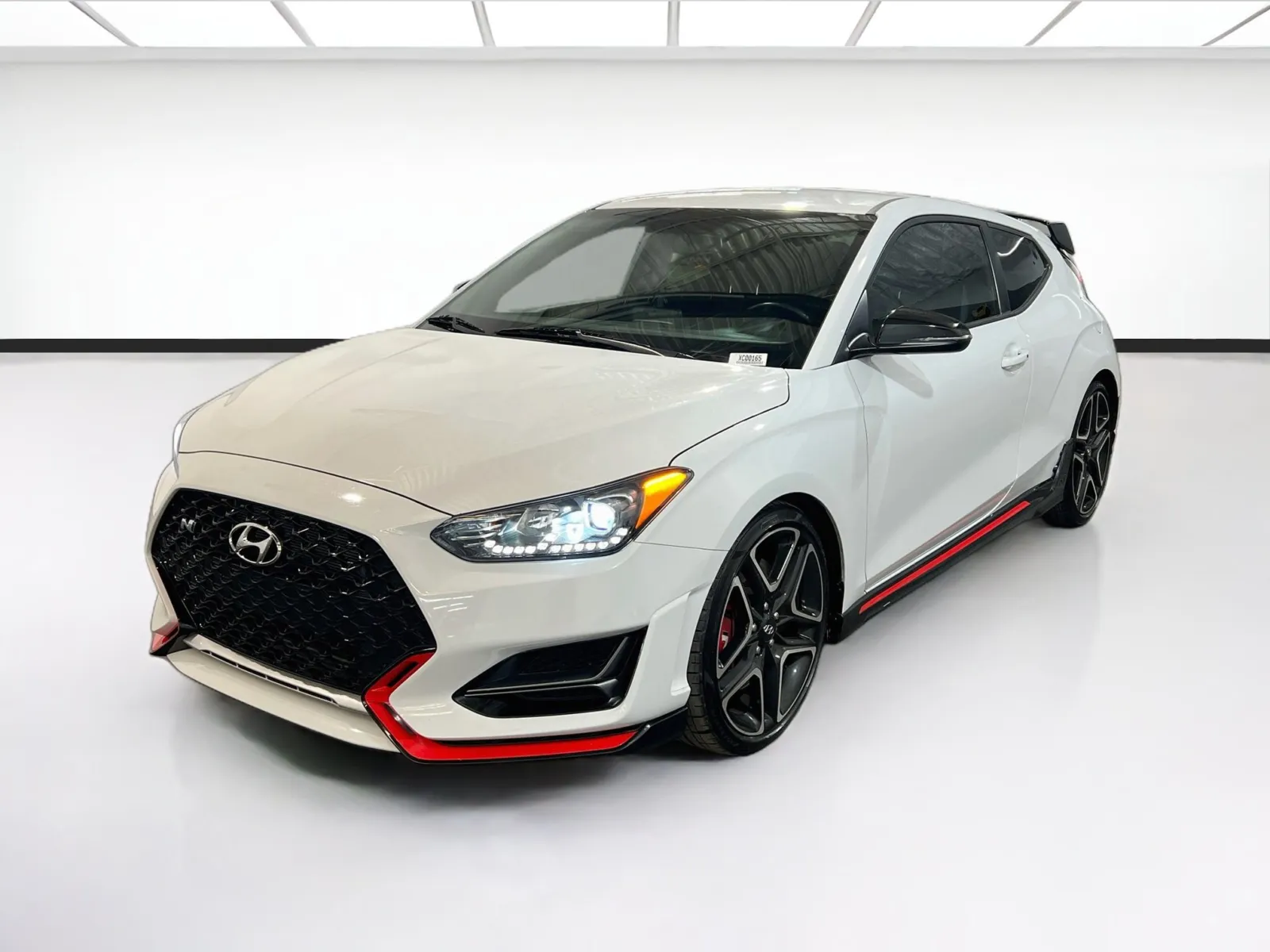
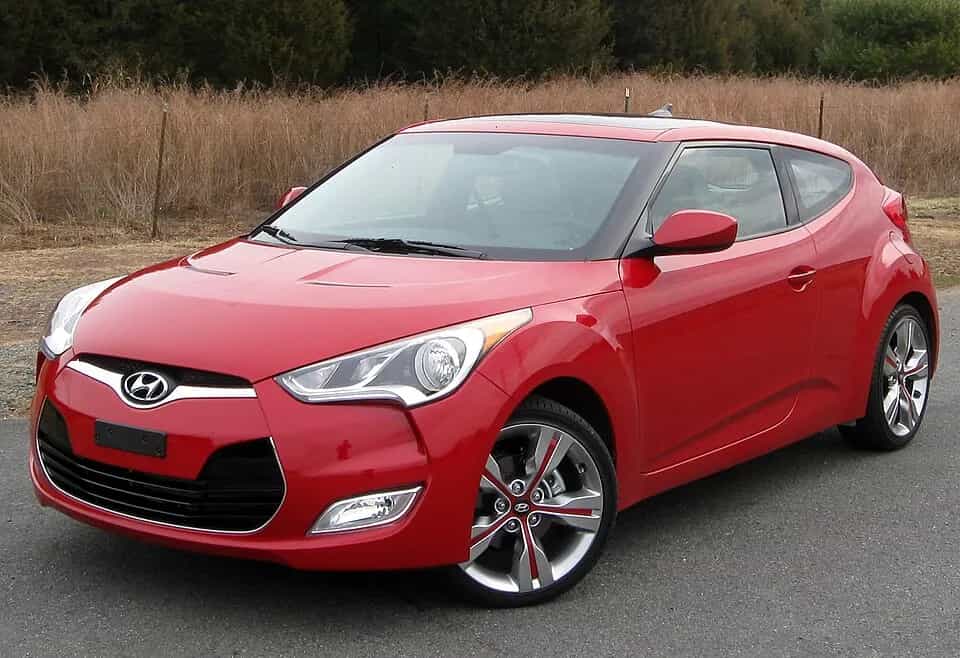
The first-generation Veloster (FS) launched for the 2012 model year and ran through 2017. It arrived with a naturally aspirated 1.6-litre Gamma four and, from 2013, a turbocharged Veloster Turbo that lifted the car from a styling exercise into something that could actually keep pace with a warm hatch. The second generation (JS) appeared for 2019 on a stiffer platform, with sharper steering, a proper multi-link rear on the Turbo, and — most importantly for enthusiasts — the halo Veloster N. Hyundai quietly ended Veloster production after 2022, which means every example on the US market today is used, and the desirable N models are already becoming collectible.
Powertrain lineup
Three powertrains dominate US listings. The base 2.0-litre Nu MPI four (Gen 2) produces roughly 147 hp and is the fuel-economy choice. The 1.6-litre Gamma turbo (both generations) delivers around 201 hp and pairs with either a six-speed manual or a seven-speed dual-clutch automatic. The Veloster N is the standout: a 2.0-litre turbo good for 250 hp, or 275 hp in the Performance Package, with an electronically controlled limited-slip differential, launch control and rev-matching. All Velosters are front-wheel drive — Hyundai never offered AWD — so buyers looking for a compact enthusiast car should focus their US import search on the N or the 1.6 Turbo.
Trims in the US market
The Veloster only ever existed as a three-door coupe-hatch, so body-style choice is simple; the decision is really about trim and engine. US trims spanned the base 2.0, the Turbo, Turbo R-Spec (manual-only, minimal weight), Turbo Ultimate (leather, larger infotainment), and the N. Look for the R-Spec and N variants if you want the manual gearbox, which is far more common in the US than in Europe. Options worth checking include the panoramic sunroof, heated seats, the Infinity premium audio, and — on the N — the Performance Package with 19-inch wheels and the larger brakes.
The used market stateside
Veloster supply in the United States is healthy, with a long tail of 2012–2017 first-gen cars at higher mileage and a tighter pool of 2019–2022 second-gen examples. Typical mileage ranges from around 40,000 miles on later N cars to well over 120,000 on early base models. Rust is rarely a structural issue on cars from the Sun Belt (Arizona, Texas, Florida, California), which is where an experienced broker will concentrate the search, whereas Midwestern and Northeastern cars can show corrosion from road salt. Condition varies widely, so a documented service history and an accident-free Carfax matter more than a low sticker.
Who should import one
Importing a used Veloster from the USA makes the most sense for two kinds of buyer: the enthusiast chasing a manual Veloster N that is genuinely scarce in Germany, and the pragmatist who wants a distinctive, well-equipped compact that has already depreciated. It is less compelling if you simply need cheap A-to-B transport, since a comparable European hatch is easier to service locally. If you value the layout, the N's chassis, or the sheer rarity on German roads, the US market is the right hunting ground.
Key specifications
| Specification | Detail (varies by trim/year) |
|---|---|
| Body style | 3-door coupe-hatch (2+1 doors) |
| Generations | FS (2012–2017), JS (2019–2022) |
| Base engine | 2.0 L Nu MPI I4, ~147 hp |
| Turbo engine | 1.6 L Gamma T-GDI I4, ~201 hp |
| Veloster N engine | 2.0 L Theta II turbo, 250–275 hp |
| Transmissions | 6-speed manual, 6-speed auto, 7-speed DCT, 8-speed DCT (N) |
| Drivetrain | Front-wheel drive |
| 0–100 km/h (N) | ~5.6–5.9 s |
| Length | ~4,240 mm (Gen 2) |
| Width | ~1,800 mm |
| Wheelbase | ~2,650 mm |
| Kerb weight | ~1,300–1,430 kg |
| Fuel | Petrol (premium recommended on turbo/N) |
| Seating | 4 |
| Build plant | Ulsan, South Korea |
How reliable is it?
The Veloster is generally dependable, but there are specific weak points that any pre-purchase inspection should cover. The Gen 1 1.6 Gamma turbo can suffer from carbon build-up on the intake valves (direct injection) and occasional turbocharger and wastegate issues at higher mileage. Early Theta II engines were the subject of well-documented recalls and extended warranties in the US over connecting-rod bearing wear; confirm that any relevant service campaign was completed and check for oil consumption. The seven-speed dual-clutch transmission can feel jerky at low speed and, in neglected cars, may need clutch-pack attention. On the N, watch brake and tyre wear, and confirm the electronic LSD and adaptive dampers behave correctly. Interior rattles and infotainment glitches are common but minor. Overall, Veloster reliability is solid for the class when the maintenance record is clean.
What US models do differently
US-market Velosters run amber rear turn signals in many years, imperial instrument clusters (mph primary), and daytime running light configurations set for North America. Infotainment is tuned for US navigation and radio bands. None of this is a barrier to registration in Germany, but the lighting and a rear fog lamp are the items your workshop will address for TUEV. US cars also frequently carry the manual gearbox and options bundles that were never sold in Europe, which is part of the appeal.
Seven steps to your import
The process follows a clear sequence: shortlist suitable cars from US listings; run a VIN and origin check (the Veloster's VIN and plant code confirm Korean assembly); place funds in escrow rather than wiring a stranger directly; arrange inland transport to the departure port and ocean freight to Bremerhaven, Hamburg or Rotterdam; clear German customs; complete a TUEV individual approval (Einzelabnahme) with any required modifications; then register the car and receive your plates. USCar Trader coordinates these stages as your broker so you are not managing five vendors alone.
Customs, taxes and costs explained
In short: the 0% duty rate applies only with documented US origin (VIN/plant) – German import VAT of 19% is always due.
Two charges apply on import and they must be understood separately. First, the import duty: the EU's 0% preferential rate for US-origin passenger cars under Regulations (EU) 2026/1455 and 2026/1461 applies only where genuine US origin can be proven by VIN and plant and the vehicle is shipped directly. Because the Veloster is built in South Korea, US origin generally cannot be established, so the standard passenger-car duty rate applies rather than 0%. Second, and always, the 19% German import VAT (Einfuhrumsatzsteuer) is levied on the customs value regardless of origin. USCar Trader charges no vehicle margin — you pay the seller, the freight, the statutory duty and the VAT.
German TÜV and registration
Typical work for German approval includes fitting a rear fog lamp, adjusting or replacing headlights to meet EU photometric requirements, confirming the speedometer reads in km/h (or fitting a compliant cluster), and verifying tyre and emissions compliance. The individual approval documents the car for the registration office (Zulassungsstelle), after which you obtain a COC-equivalent data package and your German registration.
The buyer checklist
Before committing, verify these points: the VIN matches the title and the car (and confirms build origin); a Carfax or AutoCheck history shows no salvage, flood or odometer discrepancy; the underbody is free of structural rust, especially on salt-belt cars; the service record confirms oil changes and any recall/campaign work on the engine; the title is clean (not salvage or rebuilt) unless you knowingly accept it; the transmission shifts cleanly (especially the DCT); and on N models the LSD, dampers and brakes are healthy.
Questions and answers
Can I get the 0% import duty on a Veloster?
Not normally. The Veloster is built in South Korea, so provable US origin usually does not exist, and the 0% preferential rate is tied strictly to US origin. The standard passenger-car duty applies in that case.
Does the 19% import VAT always apply?
Yes. The German Einfuhrumsatzsteuer of 19% is charged on the customs value of every used import regardless of origin.
Is the Veloster N worth importing?
For enthusiasts, often yes. The manual N is genuinely rare in Germany, and the US market has the deepest supply of clean, well-optioned cars.
Are US Velosters left-hand drive?
Yes, all US Velosters are left-hand drive, which suits German roads.
What mileage should I expect?
Anywhere from around 40,000 miles on late N cars to over 120,000 on early base models. Documentation matters more than the number.
Is the DCT reliable?
It is generally durable but can feel jerky at low speeds; a clean service history and a test of low-speed behaviour are advisable.
How long does the whole import take?
Typically several weeks from purchase to registration, depending on ocean freight schedules and TUEV appointment availability.
Do you buy the car for me?
No. USCar Trader is an independent broker. You buy the vehicle; we help you find, verify, ship and register it.
Ready to start? Browse Hyundai in the Carhub, compare it against the Hyundai Elantra GT, the Hyundai Kona or the Hyundai Genesis Coupe, and view current Veloster listings.