Hyundai Azera

Importing a used Hyundai Azera from the USA

The Hyundai Azera is a full-size, front-wheel-drive V6 sedan that Hyundai sold in North America as its flagship comfort car below the Genesis luxury line — and it was never a common sight in Germany. That is precisely what makes importing a used Azera from the USA interesting: the American market bought these cars in real numbers as smooth, well-equipped highway cruisers, so the used pool there is far deeper than anything available domestically. USCar Trader works only as an independent broker for used vehicles, sourcing and verifying the car and handling the import for you, without acting as a dealer and without any margin.

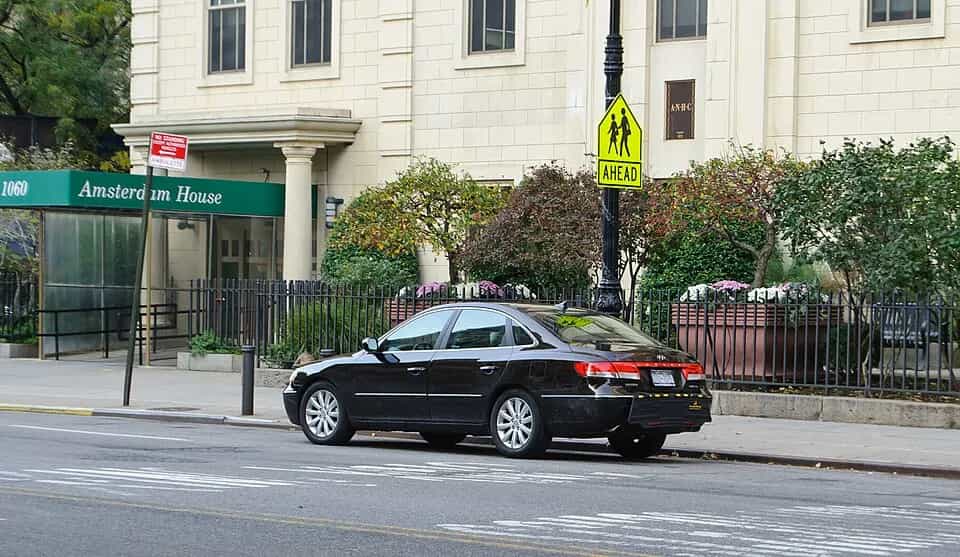
Hyundai azera – used car imported from the USA
Photo: InSapphoWeTrust · CC BY-SA 2.0 · Wikimedia Commons

Model history and generations

Two generations reached the US. The first (project TG, roughly 2006–2011) established the Azera as a roomy, value-focused full-sizer with a strong V6 and generous standard equipment. The second generation (HG, roughly 2012–2017) brought Hyundai's "Fluidic Sculpture" design language, a more modern cabin, direct-injected power and a longer features list including panoramic roof, ventilated seats and upgraded infotainment. Hyundai withdrew the Azera from the US after the 2017 model year as buyers moved to SUVs, so the model is a clearly defined pair of generations to shop for, with the later HG cars being the more sophisticated choice.

Engines and drivetrain

The Azera is a V6 car throughout. First-generation cars used the 3.8-litre Lambda V6, producing roughly 263 hp early on and around 292 hp after a mid-cycle update, paired with a five or six-speed automatic. Second-generation HG cars adopted the 3.3-litre Lambda GDI V6 with direct injection, making about 293 hp through a six-speed automatic. Both generations are front-wheel drive with a transverse layout tuned firmly for smoothness and quiet cruising rather than sport. The naturally aspirated V6 gives effortless, linear performance and a refined soundtrack that suits the car's grand-touring character.

Which trim makes sense

The Azera is a four-door sedan only. The US trim structure was deliberately simple: a well-equipped base car and a Limited (or Technology-package) model adding leather, a panoramic sunroof, upgraded audio, navigation, ventilated front seats and more driver assistance. Because even the base Azera came loaded compared with mainstream rivals, most US cars carry a high standard of equipment, which is part of the model's appeal to an import buyer looking for comfort features per euro.

Supply on the US market

Availability is good, especially for the second-generation HG cars, which are now affordable, comfortable used sedans. Many were owned by buyers who wanted a quiet, spacious highway car, so higher-mileage but well-maintained examples are common, alongside lower-mileage cars from milder climates. Sun-belt cars again help underbody condition for an import. As with any older mainstream sedan, service history and interior condition tell you more about the car than the odometer alone.

Who benefits from importing

A used Azera suits a buyer who wants a large, comfortable, well-equipped V6 sedan with a relaxed character and a rarity factor in Germany, without the running costs of a German luxury flagship. It is a comfort-first car rather than a driver's car, so it makes sense for cruising, family transport and buyers who value smoothness and space. If you want all-wheel drive or a diesel's fuel economy, the Azera is not the answer.

Technical data

AttributeDetail (typical US Hyundai Azera)
GenerationsTG (2006–2011), HG (2012–2017)
Body style4-door full-size sedan
Engine (TG)3.8 L Lambda V6
Power (TG)~263–292 hp
Engine (HG)3.3 L Lambda GDI V6
Power (HG)~293 hp
Transmission5- or 6-speed automatic
DrivetrainFront-wheel drive
FuelPetrol
Seating5
Length (HG)~4,915 mm
Wheelbase (HG)~2,845 mm
Boot~450 L class
Key equipmentPanoramic roof, ventilated seats, navigation (Limited)
Country of buildSouth Korea (neutral origin — verify by VIN)

Known weak points and maintenance

The Lambda V6 is one of Hyundai's more dependable engines, and the Azera has a generally solid reliability reputation, but sensible checks apply. On GDI HG cars, watch for intake-valve carbon build-up at higher mileage, showing as rough idle or reduced smoothness and cured by cleaning. Confirm regular oil changes and check for any oil weeping around the engine. The six-speed automatic is durable when serviced, so look for evidence of fluid changes. Interior electronics — the panoramic roof drains, infotainment and seat modules — are the usual minor concerns on a feature-rich car of this age. Suspension bushings and front tyres wear normally given the car's weight. Documented maintenance is, as ever, the best guarantee.

US and EU spec compared

US Azeras carry amber side-marker lights, right-hand-traffic headlamp aim, mph-first instruments and no rear fog lamp, all handled at German approval. Infotainment uses US navigation maps and radio bands, which may need attention for full functionality in Europe. Because the Azera was not a mainstream European model, some trim and parts references are US-specific, though the Lambda V6 and core mechanicals are widely shared across Hyundai's range, keeping servicing manageable.

The import process in detail

The process is: (1) selection — you choose a listing or we source a car; (2) VIN and origin check — history, title and the plant of manufacture confirmed; (3) escrow — your funds protected until the car is secured; (4) ocean freight — container or RoRo to a German port; (5) customs clearance — duty assessed on true origin and the 19% import VAT calculated; (6) TÜV / individual approval — lighting and any required changes certified; (7) registration at your local Zulassungsstelle.

What customs clearance really costs

In short: the 0% duty rate applies only with documented US origin (VIN/plant) – German import VAT of 19% is always due.

The Azera is built in South Korea, making this an origin="neutral" case: the applicable import duty depends on the vehicle's actual proven origin per the VIN, not on the fact that it ships from the USA. The preferential 0% EU rate under Regulations (EU) 2026/1455 and 2026/1461 applies only where genuine US origin can be proven for a directly transported vehicle; a Korean-built Azera will normally fall under the standard passenger-car duty. The 19% German import VAT (Einfuhrumsatzsteuer) is always due and is stated as a separate line. We never describe an import as "duty-free" and we never add a margin — duty and VAT are shown transparently on their own.

TÜV, modifications and registration

Typical German approval work includes converting the headlights for right-hand traffic, fitting a rear fog lamp, confirming the speedometer reads in km/h, and verifying the odometer. Any aftermarket equipment is documented for entry or removed. A stock Azera clears individual approval without difficulty, and its mainstream mechanicals make the process routine.

Check before you buy

Before buying, confirm: the full VIN and plant code; a clean Carfax or AutoCheck free of salvage, flood or major accident branding; the title status; complete service history including transmission fluid changes and, on GDI cars, any intake cleaning; underbody condition on any snow-state example; and the state of the panoramic roof, seats and electronics. A US pre-purchase inspection is recommended given the model's age and feature count.

Common questions

Why import a Hyundai Azera from the USA?

Because the Azera was a North-American flagship sedan rarely sold in Germany, so the US used market is the practical place to find a comfortable, well-equipped V6 example.

Does the 0% EU import duty apply to an Azera?

Only with provable US origin. The Azera is Korean-built, so it is usually assessed at the standard duty rate; the 19% import VAT always applies.

Which Azera generation is better?

The second-generation HG (2012–2017) offers more modern styling, a GDI V6 and a longer features list, making it the more sophisticated choice.

What are the common Azera problems?

GDI intake carbon build-up on higher-mileage HG cars, panoramic roof drain maintenance and normal automatic transmission servicing are the main items to check.

Will a US Azera pass German TÜV?

Yes, after lighting conversion, a rear fog lamp and a km/h speedometer are addressed during individual approval.

Is the Azera reliable?

The Lambda V6 has a strong reputation and the car is generally dependable when serviced; a documented history is the best assurance.

How is the Azera shipped to Germany?

By container or RoRo ocean freight to a German port, followed by customs clearance and inland transport.

To get started, explore Hyundai in the Carhub, compare the Hyundai Sonata and the Hyundai Genesis, or the rival Toyota Avalon, and view current Azera listings.