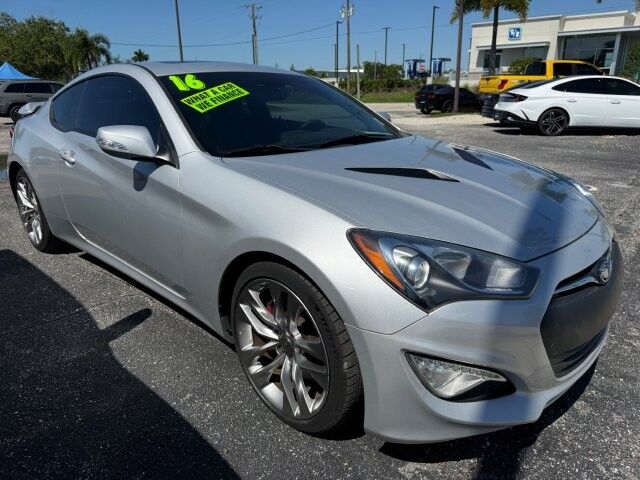
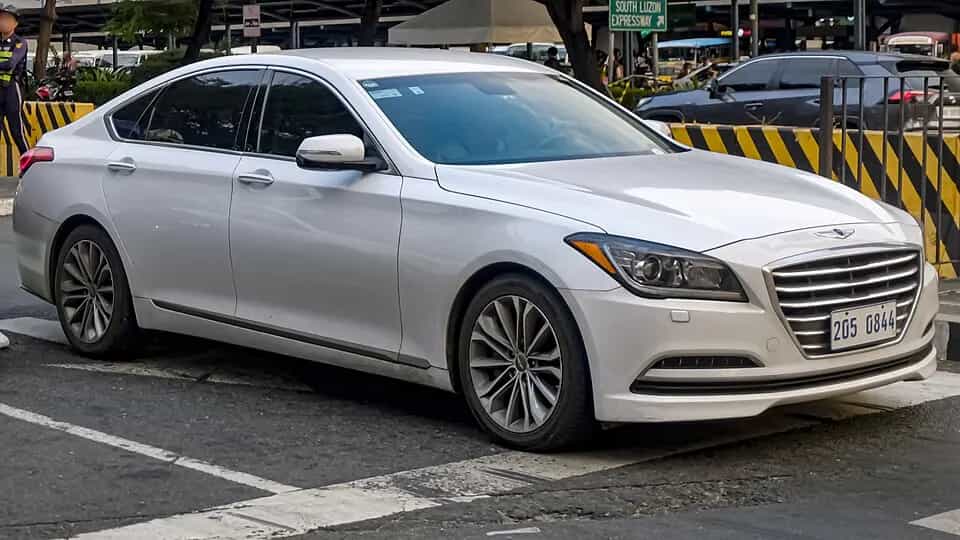
Hyundai Genesis

USCar Trader import service

Import this model from the USA or Canada

Choose a specific vehicle. Where data is available, its detail page shows the import cost calculation. We assess any possible duty benefit with you before purchase.

Important: A 0% EU import-duty rate may be available for a vehicle covered by Regulation (EU) 2026/1455 that has US origin and is imported directly into the EU. CETA may apply to a vehicle with preferential Canadian origin. Whether the requirements are met is assessed for the individual case. Please contact us before purchase; we review the possible duty benefit and provide non-binding support through the process. Import VAT and other costs are assessed separately.

CarHub · Hyundai

Hyundai Genesis

The Hyundai Genesis sedan is one of the more interesting cars to import from the American used market.

Body style
Typical figures (US-market Genesis sedan): Four-door luxury sedan
Generations
Typical figures (US-market Genesis sedan): BH (2009–2014), DH (2015–2016)
Layout
Typical figures (US-market Genesis sedan): Front engine, RWD; AWD (HTRAC) optional on DH
Base engine
Typical figures (US-market Genesis sedan): 3.8 L Lambda V6
Hyundai Genesis

Model profile

Model history and generations

Production years and key changes

Two distinct generations wear the Hyundai Genesis sedan name. The first, internal code BH, launched for the 2009 model year and ran through 2014. It marked Hyundai's move upmarket: a proper longitudinal RWD platform, a hushed cabin and V6 or V8 power. A facelift around 2012 brought direct injection and an eight-speed automatic. The second generation, code DH, arrived for 2015.

Powertrain and equipment

Engines, drivetrain and trims

What is under the hood

The volume engine across both generations is the 3.8-litre Lambda V6. Early port-injected BH cars made around 290 hp; the later GDI version climbed above 330 hp.

Trims and body styles

The Genesis was sold only as a four-door sedan; the Genesis Coupe is a separate car on a different platform.

Vehicle selection

North American market and suitability

What the US market offers

Supply in the United States is healthy.

Who this import is for

The Genesis sedan suits a buyer who wants a large, quiet, rear-drive luxury car with a V6 or V8 that is genuinely uncommon on European roads.

Vehicle data

Technical data by generation and specification

Body and dimensions

Body styleTypical figures (US-market Genesis sedan): Four-door luxury sedan
LengthTypical figures (US-market Genesis sedan): approx. 4,990 mm (varies by generation)
WheelbaseTypical figures (US-market Genesis sedan): approx. 2,935–3,010 mm
SeatingTypical figures (US-market Genesis sedan): 5

Engine and drivetrain

LayoutTypical figures (US-market Genesis sedan): Front engine, RWD; AWD (HTRAC) optional on DH
Base engineTypical figures (US-market Genesis sedan): 3.8 L Lambda V6
V6 outputTypical figures (US-market Genesis sedan): approx. 290–333 hp depending on year
V8 optionsTypical figures (US-market Genesis sedan): 4.6 L Tau (approx. 375–385 hp), 5.0 L Tau (approx. 420–429 hp)
TransmissionTypical figures (US-market Genesis sedan): 6-speed auto (early BH), 8-speed auto (later BH / all DH)
FuelTypical figures (US-market Genesis sedan): Petrol (premium recommended)
Drive wheelsTypical figures (US-market Genesis sedan): Rear (BH), rear or all-wheel (DH)
Typical US mileageTypical figures (US-market Genesis sedan): Wide range; many well-kept mid-mileage cars

Model and other data

GenerationsTypical figures (US-market Genesis sedan): BH (2009–2014), DH (2015–2016)
AssemblyTypical figures (US-market Genesis sedan): Ulsan, South Korea

Values are reproduced verbatim from the existing article table. The documents for the specific vehicle govern.

Pre-purchase review

Model-specific inspection points

Reliability: trouble spots to check

The Genesis has a solid reliability reputation, but a used import still deserves scrutiny. The Tau V8 is durable; the timing chain is generally trouble-free when oil changes were kept up, so demand records. On higher-mileage cars watch for suspension bushings and control-arm wear, which shows as clunks over bumps. Early infotainment and navigation units feel dated and occasional software glitches occur.

Germany and Europe

Differences, adaptation and registration

US vs. Europe differences

US-market cars use miles-per-hour instrumentation, US federal lighting (often amber-free rear turn signals in a combined lamp) and typically lack a rear fog lamp, which German registration requires.

From modifications to registration

Typical work for approval includes adding or converting a rear fog lamp, confirming the headlights meet EU requirements (often achievable via coding or lamp replacement), and documenting the odometer in kilometres.

USCar Trader services

Inspection, purchase processing and escrow

As a buyer based in Germany, you do not have to inspect the vehicle yourself in the United States or Canada. Within the agreed scope, USCar Trader can coordinate document review, a separately commissioned on-site inspection and purchase processing.

  • Vehicle profile and history: The profile can show the VIN, US title status and available history records. No data source guarantees that every earlier event was reported.
  • Optional CARFAX report: Additional reported maintenance or service entries can be included. The report is not a complete service book or proof of every interval.
  • On-site inspection / USCT AutoCheck: USCar Trader can arrange a separately booked vehicle inspection. Agreed visible and accessible areas are documented. Road or functional tests require suitable access and seller approval; the visual review is not a lift inspection or workshop diagnosis.
  • Purchase processing and escrow: After approval, USCar Trader can coordinate seller contact, negotiation, contract and the escrow and import service. Fees, payment route and responsibilities are recorded in advance.
  • Recalls: Open safety recalls can be checked by VIN through the NHTSA recall search; they do not describe overall condition.

Covered inspection points are agreed in advance. An on-site inspection records condition at the appointment and is not a guarantee.

Next step: Before commissioning, USCar Trader and the customer agree which document, history, inspection and transaction checks suit the vehicle and are included in the service. This records what was actually checked.

Import process

Import, customs, costs and delivery

How the import works

The assessment depends on the specific vehicle and the circumstances of the transaction. Please contact USCar Trader before purchase; we review any possible duty benefit and provide non-binding support. Import VAT and other costs are considered separately.

Questions and answers

Common questions about importing this model

Is the Hyundai Genesis the same as the Genesis G80?

The 2015–2016 DH Genesis sedan became the Genesis G80 for 2017 when Genesis launched as a standalone brand. Mechanically they are close relatives; the earlier BH is a separate, older generation.

Which engine should I import?

The 3.8 V6 is the sensible, economical choice; the 5.0 V8 R-Spec is the enthusiast pick for its power and sound. Both are proven.

Does this vehicle automatically qualify for a 0% import-duty rate?

No, not automatically. A 0% EU import-duty rate may be available for a vehicle covered by Regulation (EU) 2026/1455 that has US origin and is imported directly into the EU. CETA may apply to a vehicle with preferential Canadian origin. Whether the requirements are met is assessed for the individual case. Please contact USCar Trader before purchase; we review the possible duty benefit and provide non-binding support. Import VAT and other costs are assessed separately.

Will it pass German TÜV?

Yes, with typical adaptations such as a rear fog lamp and lighting checks. We prepare the car for individual approval.

How reliable is a used Genesis?

Generally strong, with durable engines. Maintenance history and suspension condition matter most on higher-mileage cars.

Can I get parts in Germany?

Many components are shared with other Hyundai and Genesis models and are available; some trim and electronics parts may need ordering.

How long does the import take?

Typically several weeks from purchase to registration, driven mainly by ocean freight and scheduling the approval inspection.

How can a specific Hyundai Genesis be checked from Germany?

Available VIN, title and history information can be reviewed in the vehicle profile. USCar Trader can also arrange a separately booked on-site inspection within a scope agreed in advance.

More vehicles