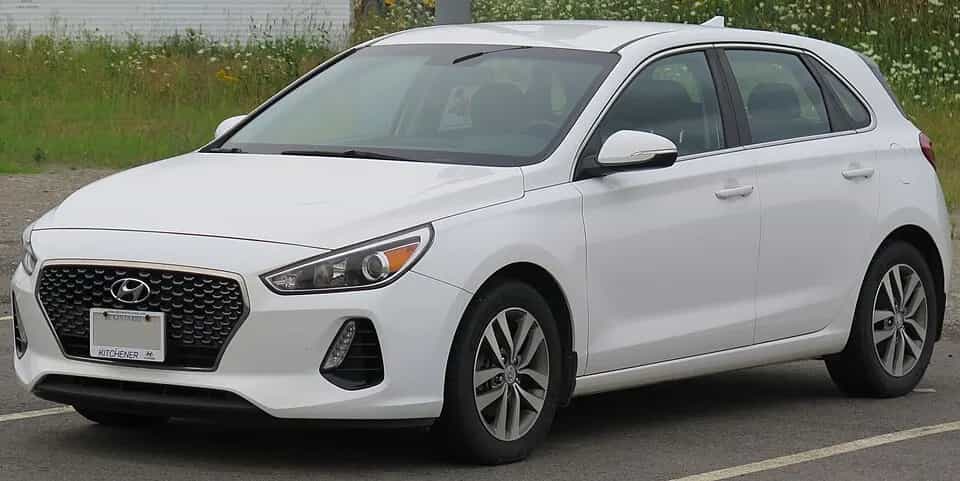
Hyundai Elantra GT

Importing a used Hyundai Elantra GT from the USA

The Hyundai Elantra GT is the five-door hatchback member of the Elantra family, sold in North America as a practical, well-equipped compact — and closely related to the European i30. For a buyer who likes the idea of a US-market car with American specification and colours, importing a used Elantra GT can be an interesting route to a familiar underlying vehicle. As an independent broker, USCar Trader sources used examples in the States, verifies the history and the vehicle's actual origin, and manages ocean freight and German customs. This guide sets out the generations, the engines, and how the import runs from selection to registration.

Model history and generations

North America received the Elantra GT badge on two hatchback generations. The 2013–2017 car (GD) was essentially the second-generation i30 adapted for the US market, offered as a roomy five-door with a focus on value and equipment. The 2018–2020 car (PD) moved to the third-generation i30 architecture, sharpening the styling and adding a genuinely sporty GT Sport variant. Hyundai withdrew the Elantra GT from the US line-up after 2020. So when you import a used Elantra GT from the USA, you are choosing between the 2013–2017 and 2018–2020 hatchbacks, with the later GT Sport being the enthusiast's version.

Engines and drivetrain

Powertrains were four-cylinder throughout and front-wheel drive. Early GD cars used a 1.8-litre Nu engine before moving to a 2.0-litre Nu direct-injection unit of around 173 hp. The 2018–2020 PD car offered a 2.0-litre Nu with roughly 161 hp in the base GT, while the GT Sport stepped up to a 1.6-litre turbocharged Gamma engine producing about 201 hp. Transmissions included a six-speed manual and a six-speed automatic on the naturally aspirated cars, with the GT Sport pairing its turbo engine with either a six-speed manual or a seven-speed dual-clutch transmission (DCT). It is a conventional, easy-to-live-with front-drive layout.

Which trim makes sense

The Elantra GT is a five-door hatchback only — there is no sedan or estate under this specific name. US trims centred on a well-equipped base GT and the sportier GT Sport, with options such as a panoramic sunroof, larger touchscreen infotationment with Apple CarPlay and Android Auto, heated seats and a premium audio upgrade. American cars were often generously specified for the money, so imported examples frequently carry desirable equipment.

Supply on the US market

Availability is steady rather than vast, with the 2018–2020 cars being the more sought-after for their styling and the GT Sport option. Typical examples show the sort of mileage you would expect of a mainstream compact hatchback a few years old, so a clean maintenance record is the thing that sets a good car apart. GT Sport cars — especially manuals — attract more interest. No European retail prices appear here; we quote origin-correct duty and the separate import VAT before you decide.

Who benefits from importing

The Elantra GT suits a buyer who wants a practical, economical five-door with US specification, or who is drawn to the GT Sport as a warm-hatch alternative to more obvious choices. Because it is mechanically close to the i30, it is a familiar and undramatic car to run once on the road. If you are comparing it with the Elantra sedan or the Veloster, importing a used Elantra GT from America simply widens the field.

Technical data

SpecificationDetail
Body style5-door hatchback
Related modelHyundai i30 (Europe)
Generations (US)2013–2017 (GD); 2018–2020 (PD)
Base engine2.0L Nu I4, approx. 161–173 hp
GT Sport engine1.6L turbo I4 (Gamma), approx. 201 hp
Transmissions6-speed manual; 6-speed auto; 7-speed DCT (Sport)
DrivetrainFront-wheel drive
0–100 km/happrox. 7.5 s (GT Sport)
Lengthapprox. 4,340 mm (PD)
Wheelbaseapprox. 2,650 mm
Kerb weightapprox. 1,340–1,430 kg
FuelPetrol (regular; premium recommended for 1.6T)
Seating5
Production years (US)2013–2020
Build plantUlsan, South Korea

Known weak points and maintenance

The naturally aspirated 2.0-litre Nu engines are generally dependable, though some owners report gradual oil consumption on higher-mileage cars, so it is worth checking oil level and service history. The GT Sport's 1.6 turbo paired with the seven-speed DCT is the area that most rewards a careful test drive: dual-clutch gearboxes of this type can show low-speed shudder or hesitant creep when worn, and heat management matters, so feel for smooth take-up in traffic. Elsewhere, keep an eye on infotainment software behaviour and the usual compact-car wear items — suspension bushes, brakes and tyres. Overall Elantra GT reliability is solid for a mainstream hatchback, with the DCT being the single component that most benefits from a maintained example.

US and EU spec compared

US Elantra GT cars run amber turn signals, DOT headlights, no rear fog lamp and mph-first instruments, all of which the TÜV will expect corrected or documented. Infotainment is provisioned for the US market with US map data, though CarPlay and Android Auto work as normal. Mechanically the car is very close to the European i30, which makes parts familiarity good and individual approval straightforward once the lighting is sorted. Radio tuning steps differ from European bands.

The import process in detail

First comes selection from US inventory, then a VIN and origin check to confirm where the car was actually built. A secure escrow payment protects your money until agreed terms are met. The car travels by ocean freight to a German port, clears customs on arrival, then goes through a TÜV inspection and individual approval (Einzelabnahme) with any needed modifications before being registered in Germany. We coordinate and track each stage.

What customs clearance really costs

Bottom line: what matters is the factory shown by the VIN – proven US origin unlocks 0% duty. The 19% import VAT always applies.

Origin decides the duty. The Elantra GT sold in the US is built in Ulsan, South Korea, so it is not a US-origin vehicle. That means the 0% preferential EU import duty under Regulations (EU) 2026/1455 and 2026/1461 — which is reserved for demonstrably US-built cars on direct transport — will generally not apply, and the duty rate is determined by the car's actual origin instead. Separately and in every case, German import VAT (Einfuhrumsatzsteuer) of 19% is charged on the customs value. We list duty and the 19% import VAT as distinct items with no hidden margin, so you can see exactly what each element costs.

TÜV, modifications and registration

Typical approval work covers converting the headlights to ECE specification, fitting a rear fog lamp, and documenting the speedometer and odometer. Once individual approval is issued, registration proceeds normally at your local authority.

Check before you buy

Confirm the VIN on the car matches the title and paperwork. Pull a Carfax or AutoCheck history for accident and title records. On GT Sport cars, test the DCT for shudder or hesitation at low speed. Check oil level and service records on 2.0-litre cars. Inspect for accident repair and uneven panels. Confirm a clean, transferable title. Verify that infotainment, cameras and driver aids all function.

Common questions

Can I import a used Hyundai Elantra GT from the USA to Germany?

Yes. It is a straightforward used-car import; we handle sourcing, freight, customs and TÜV approval.

Does the Elantra GT qualify for 0% import duty?

Usually not, because the US Elantra GT is built in South Korea. The 0% rate applies only to provably US-built cars; otherwise duty follows the actual origin.

Is the 19% import VAT always charged?

Yes. German import VAT of 19% applies to every import and is billed separately from any duty.

Is the Elantra GT the same as the i30?

They are closely related — the US Elantra GT is essentially the North American version of the i30 hatchback.

Which Elantra GT should I look for?

The 2018–2020 cars are the more desirable, and the GT Sport with the 1.6 turbo is the enthusiast's choice.

What is the main thing to check?

On GT Sport models, the seven-speed DCT — feel for smooth low-speed engagement and check service history.

What has to change for TÜV?

Mainly lighting: ECE headlights and a rear fog lamp, plus speedometer and odometer documentation.

Browse the full range in the Hyundai in the Carhub, compare it with the Elantra sedan and the Veloster, or view current Hyundai Elantra GT listings.