Honda Passport

Importing a used Honda Passport from the USA

The Honda Passport is a genuinely American SUV: designed for the US market, built in Lincoln, Alabama, and never sold new in Germany. That makes it one of the more interesting used imports, because there is no domestic equivalent to compare against — if you want one here, importing is effectively the only route. USCar Trader acts as an independent broker for used US vehicles, so we locate a specific Passport to your brief rather than selling from stock. Its US build origin also has practical relevance for customs, which we explain in detail below.

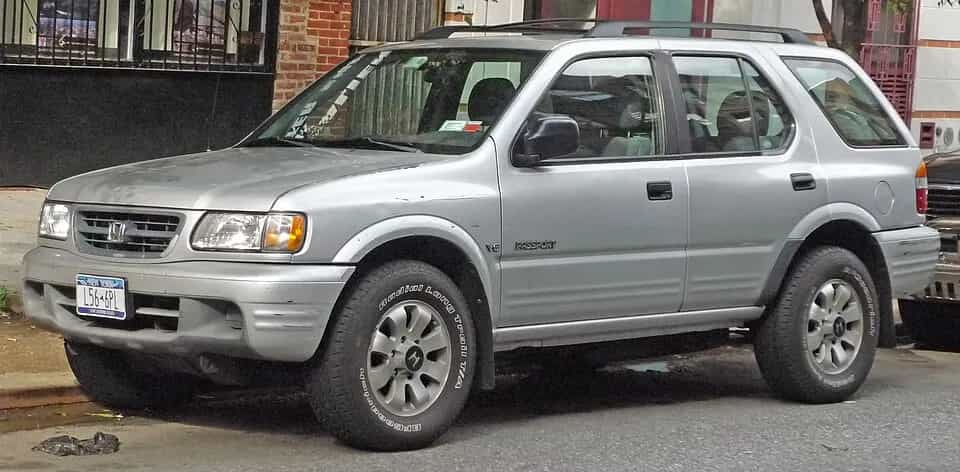
Honda passport – used car imported from the USA
Photo: Jason Lawrence · CC BY 2.0 · Wikimedia Commons

Generations at a glance

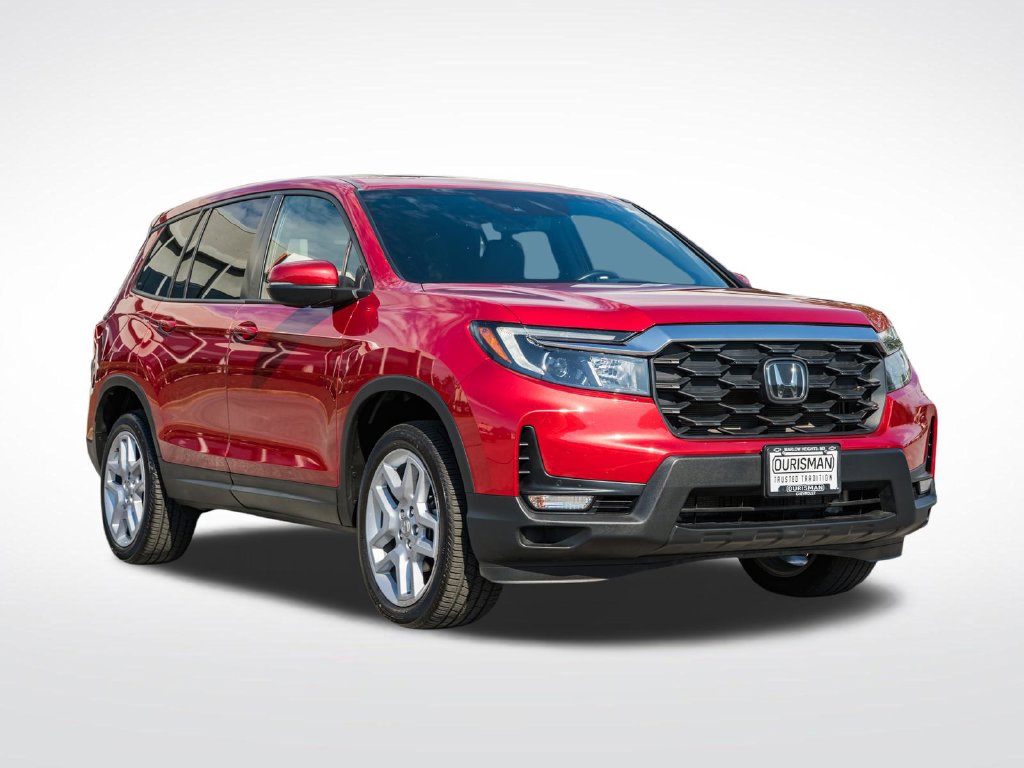
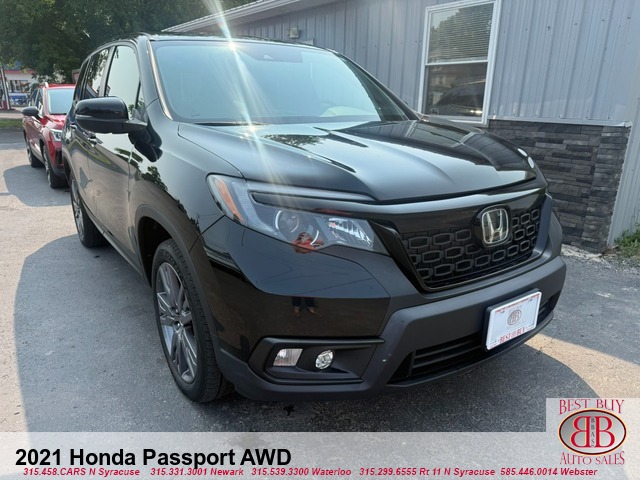
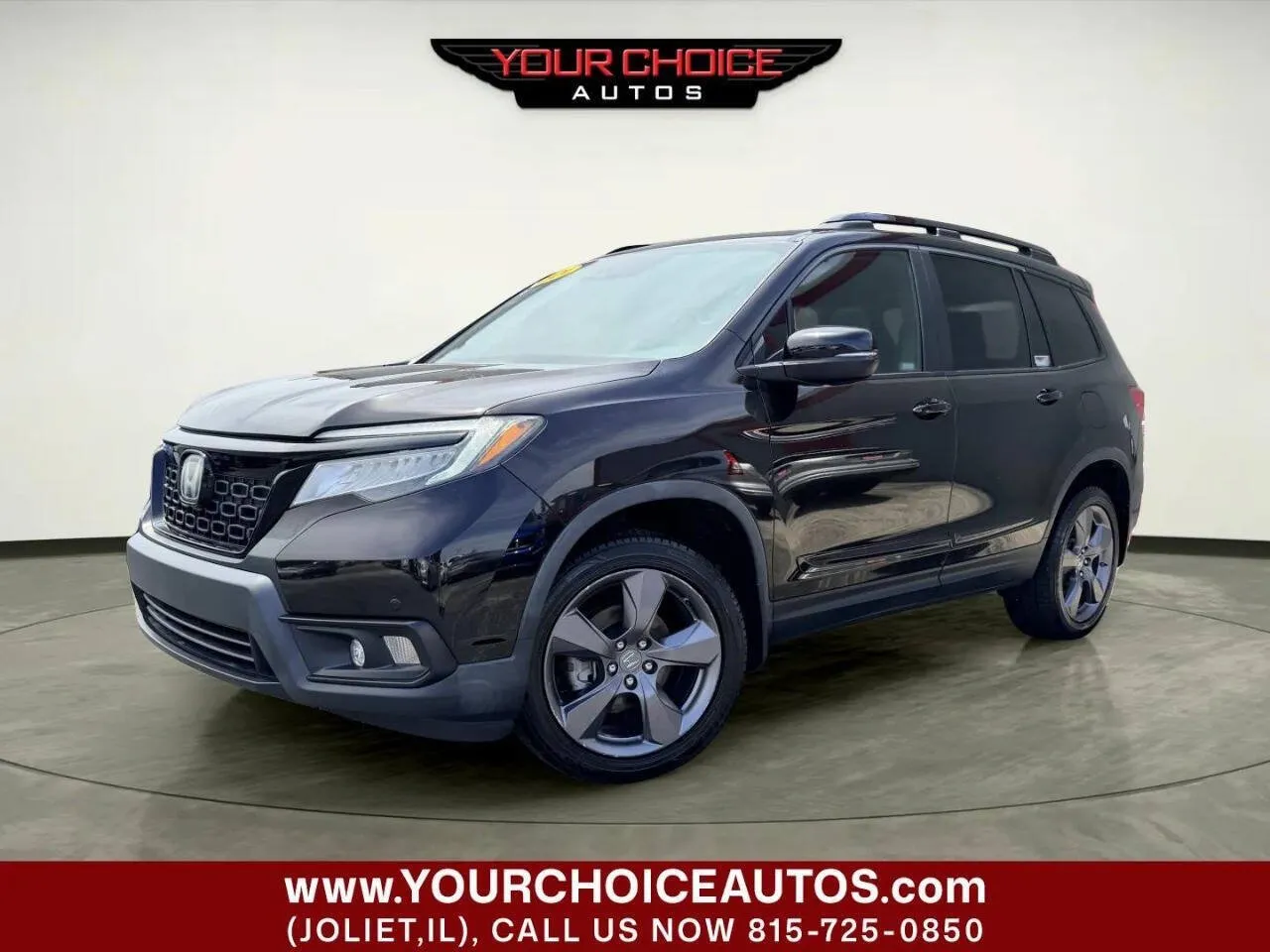
Honda revived the Passport name in 2019 as a two-row, five-seat SUV positioned between the CR-V and the three-row Pilot. It rides on Honda's Global Light Truck platform, shared with the Pilot and the Ridgeline pickup, giving it a rugged unibody structure with real ground clearance. A styling refresh arrived for 2022, bringing a bolder front end and, importantly, the off-road-flavoured TrailSport trim. For used import purposes the 2019–2025 cars are the focus; a fully redesigned generation arrived afterwards, but the first modern Passport is the mature, well-understood choice.

Powertrain lineup

Every US Passport of this generation uses Honda's 3.5-litre J35Y6 V6, producing around 280 hp and 262 lb-ft of torque. Power goes through a nine-speed ZF automatic, with front-wheel drive standard on early base cars and Honda's torque-vectoring i-VTM4 all-wheel-drive system optional or standard depending on year and trim. The i-VTM4 setup can send torque across the rear axle for genuinely capable handling on loose surfaces. There is no four-cylinder and no diesel — the naturally aspirated V6 defines the car's smooth, torquey character.

Trims in the US market

The Passport is offered only as a five-seat SUV. US trims ran Sport, EX-L, Touring and Elite at launch, with the TrailSport added from 2022 bringing all-terrain tyres, a slightly retuned setup and rugged styling. EX-L and above add leather, a power tailgate, heated seats and Honda Sensing driver assistance. Because it drops the Pilot's third row, the Passport offers notably more cargo space behind the second row — a key reason buyers choose it.

The used market stateside

Supply is healthy. The Passport sold steadily across the US, and off-lease and one-owner examples from 2019 onward appear regularly, many with the desirable AWD system and higher trims. TrailSport cars from 2022 command their own following. Mileage spreads from very low on recent Touring and Elite trims to higher-use family cars; because the V6 is durable, a well-documented higher-mileage example can be a sound choice. We do not quote Euro prices here — the takeaway is that you can be specific about trim, drivetrain and colour.

Who should import one

Import a used Passport if you want a rugged, five-seat V6 SUV with real cargo room and proven Honda mechanicals, and you like the idea of a model Europe never officially received. It suits buyers who prefer a smooth naturally aspirated engine over a small turbo, want capable all-wheel drive, and value the Alabama build origin for its customs implications. If you need seven seats, the Pilot is the better import; if you want maximum efficiency, a smaller crossover fits better.

Key specifications

AttributeDetail
Body style5-door, 5-seat mid-size SUV (2-row)
Generation (import-relevant)2019–2025
Engine3.5L J35Y6 V6
Powerapprox. 280 hp
Torqueapprox. 262 lb-ft (355 Nm)
Transmission9-speed ZF automatic
DrivetrainFWD or i-VTM4 AWD
FuelPetrol (regular)
Lengthapprox. 4,880 mm
Towing (AWD)approx. 2,268 kg (5,000 lb)
Fuel tankapprox. 73 litres
Assembly plantLincoln, Alabama, USA
Origin markingUS — US build often enables 0% duty (VIN proof)

How reliable is it?

The Passport is one of the stronger bets on reliability among mid-size SUVs, largely because the J35 V6 is a long-proven, chain-driven engine used across the Honda range. The most common owner complaints centre on the nine-speed ZF automatic: early examples could show hesitant or abrupt low-speed shifts, and the electronic shifter's push-button layout takes acclimatisation. Honda issued software updates that improved shift quality, so confirm these were applied. Some owners debate Variable Cylinder Management (VCM) and its effect on oil consumption over high mileage; keeping to Honda's oil-life monitor and checking consumption on the test drive addresses it. Otherwise, expect routine maintenance — brakes, tyres, fluids — with few structural surprises. Check the AWD system engages smoothly and look for any driveline vibration.

What US models do differently

As a US-only model, the Passport comes configured for American roads: US headlight beam patterns, no rear fog lamp, miles-based instruments and US navigation mapping. Honda Sensing is calibrated for US conditions but functions normally. Emissions and lighting are the main items that must be verified and adjusted for German approval, none of which is unusual for a US import.

Seven steps to your import

Expect this sequence: select the exact car and VIN; run a VIN and origin check to confirm the Alabama build and the correct customs treatment; pay via secure escrow so funds release only on agreed terms; book ocean freight (container or RoRo) to a port such as Bremerhaven; clear customs on arrival; complete a TÜV inspection with individual approval (Einzelabnahme under §21 StVZO) since there is no matching EU type approval; and register the car in Germany. We manage the chain end to end.

Customs, taxes and costs explained

Key point: duty depends on the plant of build; only a VIN check secures the 0% rate. Import VAT of 19% applies regardless.

Because the Passport is built in Lincoln, Alabama, it typically carries provable US origin — exactly the case the current preferential rules address. Where US origin is proven via the VIN and plant code and the conditions of Regulations (EU) 2026/1455 and 2026/1461 are met (in force since 1 July 2026, direct transport, valid until 31 December 2029), a 0% EU import duty can apply. This is never automatic or guaranteed — the origin evidence must hold up. Separately and in all cases, the 19% German import VAT (Einfuhrumsatzsteuer) is due on import. We add no margin; freight, any duty and VAT appear as distinct figures.

German TÜV and registration

Typical approval work includes fitting a rear fog lamp, verifying or adjusting the headlights to European specification, confirming the speedometer reading, and documenting the odometer. These are standard conversions for a US SUV and are handled before the individual approval is issued, after which registration proceeds normally.

The buyer checklist

  • Confirm the VIN and Alabama build plant to support the customs treatment.
  • Pull a Carfax or AutoCheck report and review accident and ownership history.
  • Verify a clean title — avoid salvage/rebuilt unless fully understood.
  • Check for software updates to the nine-speed transmission and test low-speed shifts.
  • Look for rust underneath on cars from snow-belt states.
  • Confirm i-VTM4 AWD engages and there is no driveline vibration.
  • Match mileage to service records and check oil-consumption behaviour.

Questions and answers

Can I import a used Honda Passport to Germany?

Yes. It was never sold new here, but it can be imported as a used vehicle and approved for registration via individual approval.

Does the Passport qualify for 0% EU import duty?

It is built in Alabama, so it often has provable US origin. With valid VIN evidence and all conditions met, 0% duty can apply — but it is never guaranteed.

Is the 19% import VAT still due if duty is 0%?

Yes. The 19% German import VAT always applies, independently of the duty rate.

Is the Honda Passport reliable?

Very. The J35 V6 is proven; the main watch item is early nine-speed transmission shift quality, largely improved by software.

How many seats does the Passport have?

Five. It trades the Pilot's third row for extra cargo space.

Does it have all-wheel drive?

Many do, via Honda's i-VTM4 torque-vectoring system; front-wheel drive was offered on some cars.

Will it pass TÜV?

Yes, after standard conversions such as a rear fog lamp and headlight adjustment during individual approval.

Can you find a TrailSport specifically?

Yes. As a broker we search the US market for the exact trim, drivetrain and colour you want.

See more Honda in the Carhub, compare the related Honda Ridgeline and Honda CR-V, or view current Passport listings.