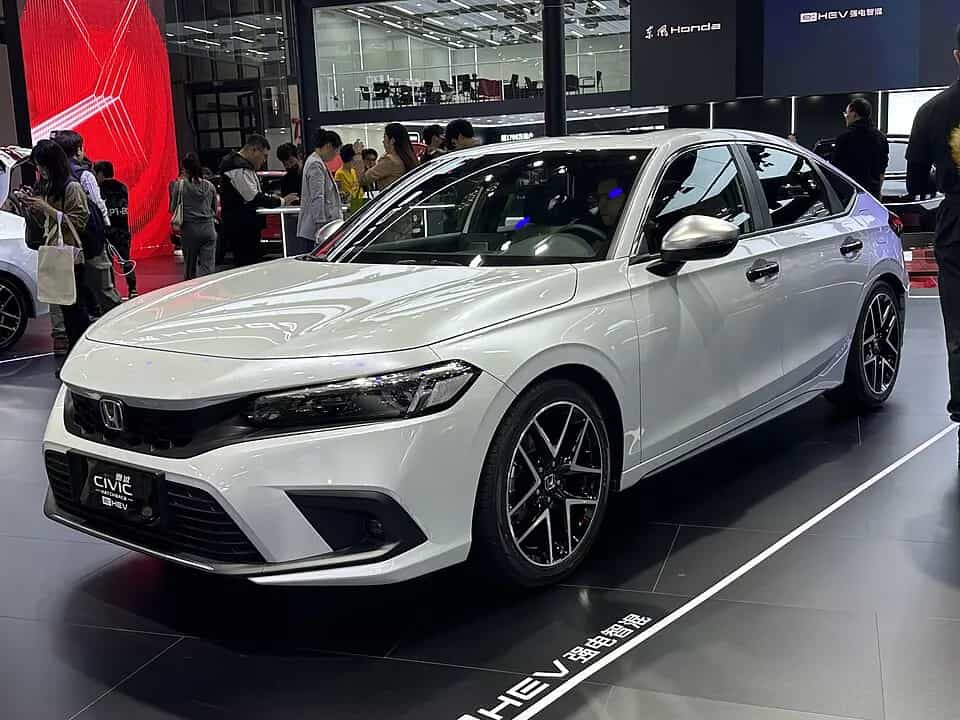
Honda Civic

Importing a used Honda Civic from the USA

The Honda Civic is a global icon, but the US-market versions have their own flavor — different trims, the turbocharged Si, and the cult Type R, plus body styles and equipment that differ from European cars. For enthusiasts and value-seekers alike, importing a used Honda Civic from the USA opens up specifications that are hard or impossible to find here. USCar Trader operates purely as an independent broker: we source the specific used Civic you want, inspect it, and manage shipping and clearance — no stock, no margin on the car.

Honda civic – used car imported from the USA
Photo: JustAnotherCarDesigner · CC BY-SA 4.0 · Wikimedia Commons

From launch to today

The two generations most relevant to importers are the tenth (2016–2021) and the eleventh (2022–present). The tenth generation was a leap forward: a stiffer chassis, turbocharged engines, and sharp styling that revived the Civic's reputation. It came as a sedan, a coupe (through 2020), and a hatchback, plus the hot Si and Type R. The eleventh generation refined the formula with a cleaner design, a better interior and improved tech, and later added a full hybrid. Most imports target clean tenth-generation cars or newer eleventh-generation examples.

Engines and drivetrain in detail

The tenth-generation Civic offered a 2.0-liter naturally aspirated four (158 hp) and a 1.5-liter turbo (174–180 hp) in higher trims. The Si used a tuned 1.5 turbo (205 hp) with a six-speed manual, while the Type R deployed the 2.0-liter K20C1 turbo (306 hp) driving the front wheels through a manual gearbox. The eleventh generation carried over the 2.0 and 1.5 turbo, added a 200 hp Si and a 315 hp Type R, and introduced a two-motor hybrid. Regular Civics use a CVT; the Si and Type R are manual only. All Civics are front-wheel drive.

Trim levels and variants

US Civics came as a four-door sedan, a two-door coupe (tenth generation only), and a five-door hatchback, with trims spanning LX, Sport, EX, EX-L and Touring, plus the performance Si and Type R. Touring adds leather, a sunroof, a premium audio system, adaptive cruise and full Honda Sensing driver aids. The Si brings a limited-slip differential, adaptive dampers and sport seats; the Type R is a track-focused halo car.

Used availability in the USA

Few compacts are as widely available as the Civic. It sold in enormous volume to private buyers who tend to maintain them well, so clean, low-mileage examples are common. A typical three-to-six-year-old car shows roughly 25,000 to 80,000 miles. Enthusiast cars like the Si and Type R hold value strongly and sell quickly, so a fast decision and verified history are essential. Sun-belt cars are rust-free and inspect well for the German TÜV.

When importing makes sense

An imported Civic suits buyers who want a genuinely reliable, efficient compact with a US twist — whether that is a specific trim, the manual Si, or the Type R. Enthusiasts value the manual gearbox availability that has thinned out in Europe. Families and commuters appreciate the space, economy and strong resale. Anyone needing all-wheel drive or a larger cabin should look at the CR-V or Accord instead.

Facts and figures

SpecificationHonda Civic (2016–2021, 1.5 Turbo)
Body styleCompact sedan / coupe / hatchback
Seats5
Engine1.5 L L15 turbo I4
Power174–180 hp (128–134 kW)
Torque162 lb-ft (220 Nm)
TransmissionCVT (Si/Type R: 6-speed manual)
DrivetrainFront-wheel drive
Length (sedan)approx. 4,631 mm
Widthapprox. 1,799 mm
Wheelbaseapprox. 2,700 mm
FuelGasoline (regular; premium for Si/Type R)
Base engine2.0 L R20 NA, 158 hp
Type R engine2.0 L K20C1 turbo, 306 hp
Trunk (sedan)approx. 428 L

Reliability and common problems

The Civic is among the most dependable compacts on the market, but there are specific Honda Civic common problems to know. The 1.5-liter turbo is prone to fuel dilution — gasoline seeping into the engine oil, most noticeable in cold climates and on short trips; check the oil level and smell, and confirm software updates were applied. A/C condensers on tenth-generation cars can fail and are a known weak point. Some early cars had infotainment glitches, later improved by updates. Type R and Si engines are robust but should be checked for signs of hard track use or modification. Overall, a maintained Civic with a clean history is a low-risk import.

How US versions differ

US Civics differ from European cars in trim mix, some equipment, and the availability of the coupe and the US-spec Si. They run MPH-primary instruments, usually lack a rear fog lamp, and may use red combined rear turn signals. Infotainment carries North American maps; CarPlay and Android Auto cover navigation for German owners. Lighting coding, headlight aim and tire ratings must be adapted to EU rules before approval.

From US purchase to registration

The process runs in order: select a specific Civic; we verify the VIN and confirm the build plant and origin; funds are held safely in escrow; the car ships by container or RoRo ocean freight to a German port; we clear customs on arrival; the vehicle passes TÜV individual approval (Einzelabnahme) with any needed modifications; you register it at your local Zulassungsstelle. USCar Trader coordinates each stage as your intermediary.

Costs, duty and taxes at a glance

Remember: no origin proof, no 0% duty – and 19% German import VAT is due on every import.

Two separate charges apply, always itemized. Import duty first: under Regulations (EU) 2026/1455 and 2026/1461, a 0% EU import duty applies to used US vehicles only when US origin is proven via VIN and plant, with direct transport, valid 1 July 2026 to 31 December 2029. US Civic sedans are largely built in Greensburg, Indiana, but some Civics — particularly certain hatchbacks — were produced in Canada or elsewhere, so origin genuinely depends on the individual VIN and must be confirmed, never assumed or guaranteed. Second, the 19% German import VAT (Einfuhrumsatzsteuer) always applies, regardless of the duty result. We add no margin to either.

TÜV, approval and license plates

Typical Civic changes include fitting a rear fog lamp, coding or adapting the lighting so turn signals and daytime running lights comply, and documenting the odometer in kilometers. Headlamp aim and the emissions setup are verified against EU papers. On modified enthusiast cars, any aftermarket parts must be documented for approval. Once the TÜV report is issued, registration is quick.

Pre-purchase checklist

Before buying a used Civic from the USA, check: (1) decode the VIN and confirm the plant for the customs origin question; (2) pull a full Carfax or AutoCheck history for accidents, title and mileage; (3) on 1.5 turbo cars, inspect the oil for fuel dilution and confirm software updates; (4) inspect for rust and, on Si/Type R cars, for signs of track abuse or modification; (5) verify a documented service history; (6) ensure the title is clean rather than salvage or rebuilt unless knowingly accepted; (7) test the A/C and infotainment on the road.

Import FAQ

Is the Honda Civic reliable enough to import?

Yes. The Civic is one of the most dependable compacts available. The main watch point is fuel dilution on the 1.5 turbo, which is manageable with software updates and normal driving.

Does a used Civic qualify for 0% EU import duty?

Only with proven US origin via VIN and plant under Regulations (EU) 2026/1455 and 2026/1461. Because some Civics were built outside the US, origin must be confirmed per car and is never guaranteed.

Does the 19% import VAT always apply?

Yes. The German Einfuhrumsatzsteuer of 19% is charged on every import regardless of the duty result.

Can I import a Civic Type R or Si?

Yes. Both are popular imports; the Si and Type R are manual-only and hold value strongly, so verify history and check for track use or modification.

What is fuel dilution on the 1.5 turbo?

It is gasoline mixing into the engine oil, most noticeable in cold climates and short trips. Honda issued updates to reduce it; confirm they were applied and check the oil.

How is the Civic shipped from the USA?

By container or RoRo ocean freight from a US port to a German port, then customs clearance and TÜV approval.

What does the TÜV usually require?

Commonly a rear fog lamp, compliant lighting and turn signals, and kilometer documentation, plus headlight and emissions checks.

See more with Honda in the Carhub, compare the larger Honda Accord and rivals Toyota Corolla and Mazda Mazda3, or view current Civic listings.