Importing a used Honda Accord from the USA
As an independent broker, USCar Trader sources used Accords on your behalf. We do not hold stock and we take no margin on the car itself.
 0049 (0)89 2000 791 00
 Mo - Fr 8:00am - 8:00pm
USCar Trader import service
Choose a specific vehicle. Where data is available, its detail page shows the import cost calculation. We assess any possible duty benefit with you before purchase.
Important: A 0% EU import-duty rate may be available for a vehicle covered by Regulation (EU) 2026/1455 that has US origin and is imported directly into the EU. CETA may apply to a vehicle with preferential Canadian origin. Whether the requirements are met is assessed for the individual case. Please contact us before purchase; we review the possible duty benefit and provide non-binding support through the process. Import VAT and other costs are assessed separately.
CarHub · Honda
The Honda Accord is one of the vehicles that makes a genuinely strong case for a private US import.
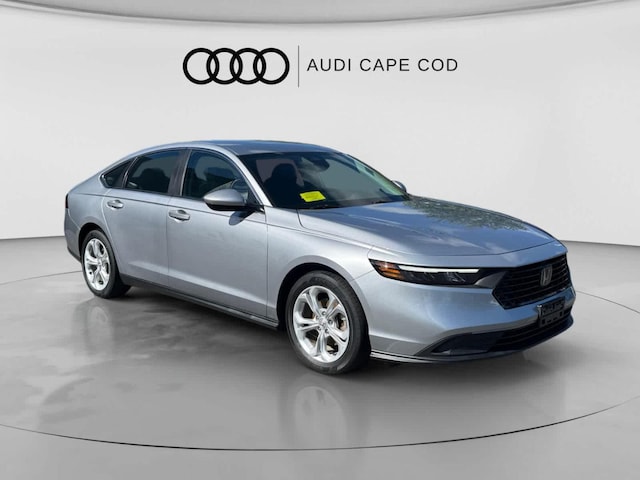
Price:23,589.00 USD

Price:32,989.00 USD

Price:22,798.00 USD

Price:33,434.00 USD

Price:36,079.00 USD
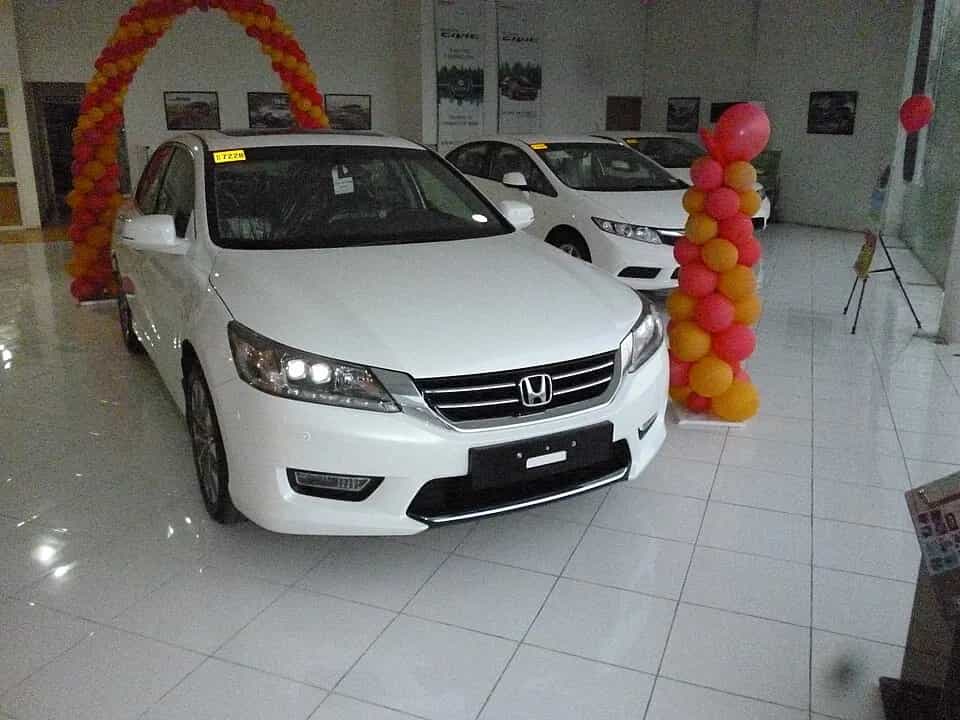
Model profile
As an independent broker, USCar Trader sources used Accords on your behalf. We do not hold stock and we take no margin on the car itself.
The Accord has run through ten full generations since 1976, but the ones that reach the European used-import market are the more recent, larger sedans.
Powertrain and equipment
US Accords are front-wheel drive across the board. The ninth generation offered the K24W 2.4-litre i-VTEC four (around 185 hp) and the J35Y 3.5 V6 (around 278 hp), the four mated to a CVT and the V6 to a conventional six-speed automatic.
For the generations that matter to importers, the Accord is a four-door sedan.
Vehicle selection
Supply is the Accord's biggest advantage.
An Accord import suits the buyer who wants a spacious, refined and famously dependable sedan without paying European-market scarcity premiums, and who values the paperwork advantage of a US-built car.
Vehicle data
| Body style | Typical figure (10th gen sedan): 4-door mid-size sedan |
|---|---|
| Length | Typical figure (10th gen sedan): approx. 4,890 mm |
| Wheelbase | Typical figure (10th gen sedan): approx. 2,830 mm |
| Kerb weight | Typical figure (10th gen sedan): approx. 1,450-1,600 kg |
| Seating | Typical figure (10th gen sedan): 5 |
| Drivetrain | Typical figure (10th gen sedan): Front-wheel drive |
|---|---|
| Base engine | Typical figure (10th gen sedan): 1.5 L turbo I4 (L15), ~192 hp |
| Uprated engine | Typical figure (10th gen sedan): 2.0 L turbo I4 (K20C), ~252 hp |
| Hybrid | Typical figure (10th gen sedan): 2.0 L Atkinson + two-motor i-MMD |
| Transmission | Typical figure (10th gen sedan): CVT / 10-speed auto / 6-speed manual |
| Fuel tank | Typical figure (10th gen sedan): approx. 56 litres |
| Fuel type | Typical figure (10th gen sedan): Petrol / petrol-hybrid |
| Boot capacity | Typical figure (10th gen sedan): approx. 473 litres |
|---|---|
| Assembly | Typical figure (10th gen sedan): Marysville, Ohio (US) |
Values are reproduced verbatim from the existing article table. The documents for the specific vehicle govern.
Pre-purchase review
For the Honda Accord, the agreed inspection plan focuses in particular on fault memory, the visible condition of the hybrid and cooling systems, maintenance records and interaction between combustion and electric drive. USCar Trader can document these points through a separately commissioned on-site inspection; inaccessible areas or unauthorised road tests are explicitly recorded as unchecked.
Germany and Europe
US-market headlights use the FMVSS/SAE beam pattern, which differs from the ECE pattern required in the EU, so they may need adjustment or replacement with ECE-compliant units for registration.
Expect a short list of typical changes: fitting or activating a rear fog lamp, adjusting or replacing headlights for European beam pattern, and confirming the odometer reads correctly (conversion or documentation to km).
USCar Trader services
As a buyer based in Germany, you do not have to inspect the vehicle yourself in the United States or Canada. Within the agreed scope, USCar Trader can coordinate document review, a separately commissioned on-site inspection and purchase processing.
Covered inspection points are agreed in advance. An on-site inspection records condition at the appointment and is not a guarantee.
Next step: Before commissioning, USCar Trader and the customer agree which document, history, inspection and transaction checks suit the vehicle and are included in the service. This records what was actually checked.
Import process
The assessment depends on the specific vehicle and the circumstances of the transaction. Please contact USCar Trader before purchase; we review any possible duty benefit and provide non-binding support. Import VAT and other costs are considered separately.
Questions and answers
The assessment depends on the specific vehicle and the circumstances of the transaction. Please contact USCar Trader before purchase; we review any possible duty benefit and provide non-binding support. Import VAT and other costs are considered separately.
No, not automatically. A 0% EU import-duty rate may be available for a vehicle covered by Regulation (EU) 2026/1455 that has US origin and is imported directly into the EU. CETA may apply to a vehicle with preferential Canadian origin. Whether the requirements are met is assessed for the individual case. Please contact USCar Trader before purchase; we review the possible duty benefit and provide non-binding support. Import VAT and other costs are assessed separately.
Import VAT and other taxes or costs are assessed separately under the applicable rules and the circumstances of the specific transaction. Please contact USCar Trader before purchase so the calculation reflects the selected vehicle.
The 1.5 turbo suits economy-focused buyers, the 2.0 turbo delivers strong performance, and the hybrid offers the best fuel figures. Match the engine to how you drive.
Very, with the caveats above around 1.5 turbo oil dilution and CVT fluid maintenance. A serviced car with clean history is a dependable long-term proposition.
No. Every US Accord is front-wheel drive; if you need AWD, this is not the model for you.
Typically several weeks once a car is chosen, driven by ocean freight schedules and customs and approval timing.
Available VIN, title and history information can be reviewed in the vehicle profile. USCar Trader can also arrange a separately booked on-site inspection within a scope agreed in advance.
More vehicles