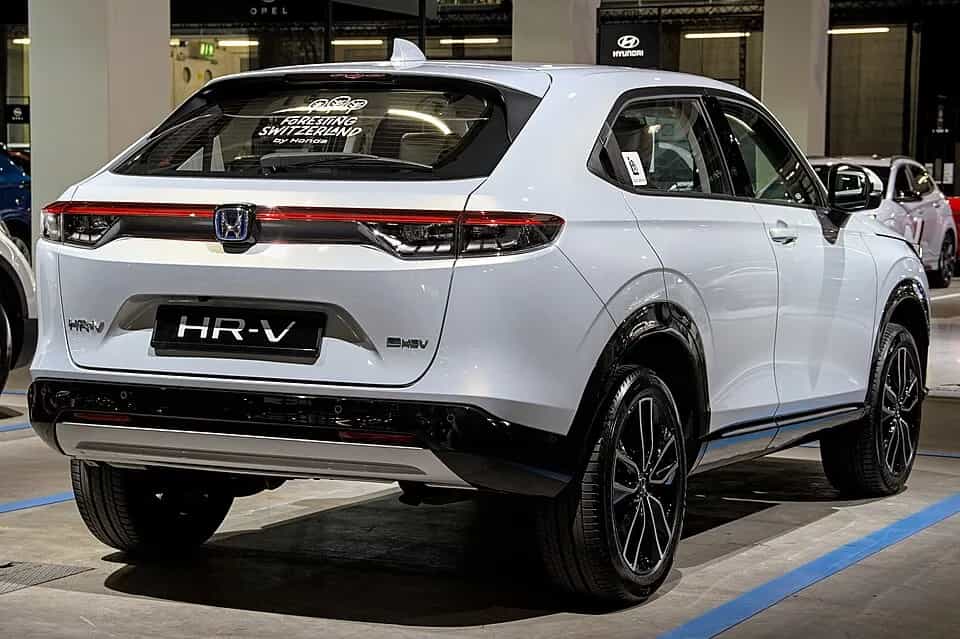
Honda HR-V
Importing a used Honda HR-V from the USA
The Honda HR-V occupies a slightly different place in the American range than it does in Europe. Sold as a practical subcompact and later compact crossover, the US-market HR-V has always leaned on Honda's reputation for durable engines and clever packaging rather than outright power. For buyers in Germany and the EU who want a clean, well-kept example with the specification and colour combinations common in North America, importing a used HR-V from the USA can make sense — provided you go in with clear eyes about the drivetrain and the paperwork. As an independent broker, USCar Trader sources and handles the logistics; we do not sell the car ourselves and we take no margin on the vehicle.

Model history and generations
Honda launched the HR-V nameplate in North America comparatively late. The first US generation arrived for the 2016 model year and ran through 2022. It was built on the Honda Fit platform and inherited the Fit's party trick: the second-row "Magic Seat" with cushions that flip up. A mild facelift in 2019 refreshed the front fascia and, importantly, brought back a physical volume knob and Apple CarPlay / Android Auto after early cars used a fiddly touch slider. The second US generation appeared for 2023, moving onto the eleventh-generation Civic architecture. It is longer, wider and more grown-up to drive, though it lost the folding Magic Seat in the process. Note that the US second-generation car is a different vehicle from the smaller HR-V sold in Europe and Asia, so specification and dimensions do not overlap.
Engines and drivetrain
The 2016–2022 US HR-V used Honda's 1.8-litre R18 four-cylinder producing roughly 141 hp and 172 Nm, paired with a CVT (a six-speed manual was offered only in the earliest front-drive cars). The 2023-onward car switched to the 2.0-litre naturally aspirated K20 unit rated at about 158 hp and 187 Nm, again driving through a CVT. Neither engine is turbocharged, so performance is modest and best judged against comparable naturally aspirated crossovers rather than downsized-turbo rivals. Front-wheel drive is standard; Honda's "Real Time AWD" system is optional and reactive rather than a permanent all-wheel-drive setup — useful for wet roads and light snow but not built for serious off-roading.
Which trim makes sense
The HR-V is a five-door crossover only; there is no coupe or pickup variant. First-generation US trims ran LX, Sport, EX and EX-L, with EX-L adding leather and a sunroof. Second-generation cars are offered as LX, Sport and EX-L, the Sport adding cosmetic touches and a larger touchscreen. Look out for the panoramic sunroof, heated seats and the fuller driver-assistance suite (Honda Sensing) on higher trims, as these features vary by model year and package.
Supply on the US market
The HR-V sells in large volumes across the United States, so the used pool is deep, particularly for 2017–2020 first-generation cars now well into the second-hand market. Typical imports fall in the 40,000–120,000 km bracket depending on age. Southern and western states tend to yield rust-free bodies and intact underbodies, which matters for a straightforward TÜV inspection. Because the HR-V is a mainstream family vehicle, service histories are often complete and the mechanicals are well understood by independent workshops. We do not quote Euro prices here — condition, mileage and origin drive the figure.
Who benefits from importing
A used HR-V import suits a buyer who values Honda reliability, easy running costs and genuine everyday practicality over performance or badge prestige. It is a sensible choice for someone who has found a specific clean US example, wants a colour or trim not common in Europe, or simply prefers the North American configuration. If you need brisk acceleration or long-distance autobahn muscle, look elsewhere; if you want a dependable, no-drama compact crossover, the HR-V earns its keep.
Technical data
| Attribute | Detail (US-market HR-V) |
|---|---|
| Body style | 5-door subcompact / compact crossover |
| Generations (US) | 1st 2016–2022, 2nd 2023–present |
| Engine (1st gen) | 1.8 L R18 I4, ~141 hp / 172 Nm |
| Engine (2nd gen) | 2.0 L K20 I4, ~158 hp / 187 Nm |
| Transmission | CVT (early FWD 6-speed manual) |
| Drivetrain | FWD or Real Time AWD |
| Fuel | Petrol |
| Seating | 5 |
| Length (2nd gen) | ~4,568 mm |
| Wheelbase (2nd gen) | ~2,655 mm |
| 0–100 km/h | ~9–10 s (approx.) |
| Fuel economy | ~7–8 l/100 km combined (approx.) |
| Cargo (2nd gen) | ~691 l behind rear seats |
| Typical import mileage | 40,000–120,000 km |
Known weak points and maintenance
The HR-V is one of the more dependable vehicles in its class, but it is not flawless. The most discussed issue is the CVT: while durable when serviced, it benefits from Honda's specific CVT fluid at sensible intervals, and neglected examples can develop juddering or shudder. The 2016–2018 touchscreen without a volume knob is an ergonomic annoyance rather than a fault. Some Hondas of this era experienced air-conditioning condenser failures, so check that the AC cools hard on a test. The 1.8-litre engine is generally trouble-free; the main real-world complaint is that both engines feel underpowered when loaded, which is a characteristic, not a defect. Front-strut and suspension bushing wear is normal at higher mileage. Overall, HR-V common problems are minor compared with turbocharged rivals.
US and EU spec compared
US HR-Vs run amber rear turn signals or combined red units depending on year, headlights aimed for right-hand traffic, and typically miles-per-hour instrument clusters. The second-generation US car is physically larger than the European HR-V and is not the hybrid e:HEV sold in Europe — the US car is petrol only. Infotainment is set to US navigation and units. These are exactly the points a German TÜV inspection and registration will scrutinise, so they are worth understanding before you commit.
The import process in detail
The process runs in a clear sequence: select a specific car and agree terms; verify the VIN and the build plant to establish customs origin; place funds in escrow for security; arrange ocean freight (usually container or RoRo) to a European port such as Bremerhaven; complete customs clearance on arrival; present the car for TÜV / individual approval (Einzelabnahme) with any required modifications; then register it with your local authority. We coordinate each stage so nothing stalls at the port.
What customs clearance really costs
In short: the 0% duty rate applies only with documented US origin (VIN/plant) – German import VAT of 19% is always due.
The HR-V's tariff treatment depends entirely on where the specific car was built. The current US HR-V is assembled in Celaya, Mexico for the North American market, which means it generally does not qualify as US-origin goods — so the standard EU third-country import duty for passenger cars (in the region of 10%) would normally apply. The preferential 0% rate under Regulations (EU) 2026/1455 and 2026/1461 (in force since 1 July 2026, direct transport, valid through 31 December 2029) applies only where US origin is provable via VIN and plant. We never promise duty-free clearance. Separately, the 19% German import VAT (Einfuhrumsatzsteuer) always applies, regardless of origin. We charge no margin on the vehicle.
TÜV, modifications and registration
Typical changes for a US HR-V include adapting the rear lighting to add a rear fog lamp, confirming headlight compliance for right-hand traffic, and converting or documenting the odometer and speedometer to metric. The car must also pass the standard technical inspection. Most of these are routine on a mainstream Honda and add no drama to the approval.
Check before you buy
Before committing, confirm these points: decode the VIN and verify the build plant for origin; pull a Carfax or AutoCheck history for accidents and title status; inspect the underbody and wheel arches for rust, favouring southern/western cars; check for a documented service record including CVT fluid changes; confirm the title is clean (not salvage or rebuilt unless intended); test the air conditioning under load; and verify the mileage against service and inspection records.
Common questions
Is the US Honda HR-V the same as the European one?
No. The current US HR-V is larger, built on the Civic platform and sold only with a petrol engine, whereas Europe gets a smaller e:HEV hybrid. They share a name, not a chassis.
Does a used HR-V import qualify for 0% duty?
Only if the specific car is provably US-built. Many US HR-Vs are assembled in Mexico, in which case the standard passenger-car duty applies. We check the VIN and plant before making any statement.
Is the CVT reliable?
Yes, when maintained with Honda's specified fluid at proper intervals. Ask for evidence of CVT fluid service and avoid cars that judder on a test drive.
How much power does it have?
Roughly 141 hp in the first US generation and 158 hp in the second. It is adequate rather than quick.
Does it always cost 19% VAT?
Yes. The German import VAT of 19% applies to every import regardless of the customs origin outcome.
What mileage should I look for?
Most sensible imports sit between 40,000 and 120,000 km with a documented history. Lower is better if condition matches.
Is AWD worth having?
Honda's Real Time AWD helps in wet and light-snow conditions but is not a proper off-road system. For German winters it is a reasonable choice.
How long does the whole import take?
Allow several weeks from purchase to registration, driven mainly by ocean freight and inspection scheduling.
Explore more options in the Honda in the Carhub, or compare closely related models such as the Honda CR-V and the roomier Honda Passport. When you are ready, browse the current HR-V listings.