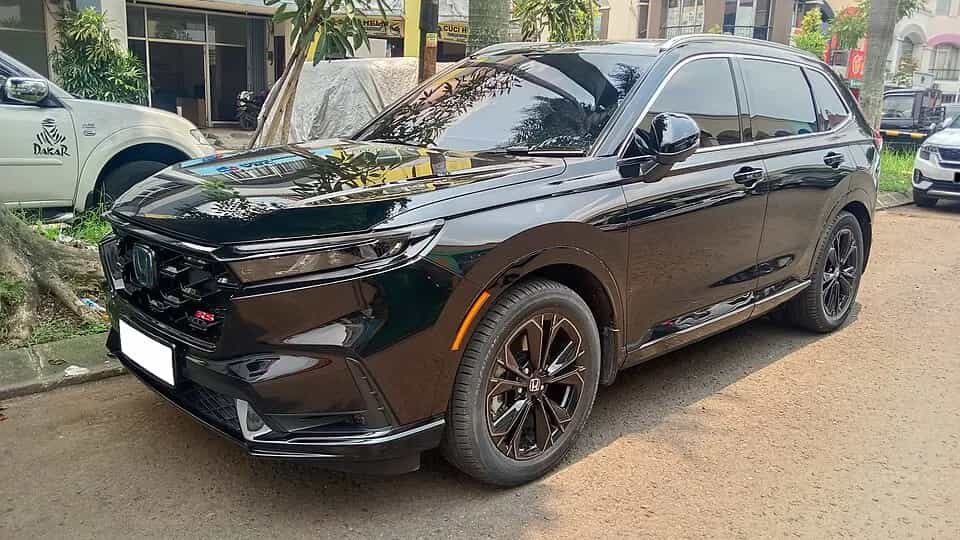
Honda CR-V

Importing a used Honda CR-V from the USA

The CR-V is Honda's compact-SUV cornerstone and a perennial top seller in the United States, which makes it a straightforward, well-supported import. Many US CR-Vs are built in Ohio or Indiana, so the used market is large and the service culture around them is mature. As an independent broker, USCar Trader sources a specific used CR-V from the American market and handles everything through to German registration. This is never a new-car sale and there is no manufacturer partnership behind it — you buy a defined used vehicle and we manage the logistics, customs and approvals.

Honda cr-v – used car imported from the USA
Photo: MoCars · CC0 · Wikimedia Commons

Model history and generations

The two generations most relevant to importers are the fifth-generation CR-V (2017–2022) and the sixth generation (2023 onward). The fifth-gen moved to a turbocharged engine and a roomier cabin and, from 2020 in the US, added a hybrid. The sixth-gen grew again, sharpened the styling and expanded the hybrid's role, positioning it as the volume electrified choice. Origin here is neutral, so the VIN identifies the actual plant — CR-Vs have come from the US, Canada and elsewhere — and that classification determines the customs treatment.

Engines and drivetrain

The signature engine of the fifth generation is the 1.5-litre L15 turbocharged four-cylinder, around 190 hp, paired with a CVT. Earlier fifth-gen base cars used a 2.4-litre naturally aspirated K24 (around 184 hp). The hybrid combines a 2.0-litre Atkinson-cycle engine with Honda's two-motor system for a combined output near 212 hp in the sixth generation. Front-wheel drive is standard; Honda's Real Time AWD is widely optioned and worth confirming on the window sticker.

Which trim makes sense

The CR-V is a five-door compact SUV. US trim ladders run LX, EX, EX-L and Touring, with Sport and Sport Touring designations on sixth-generation hybrids. Higher trims add leather, a power tailgate, upgraded audio and fuller driver-assist suites. The hybrid is generally offered only in the upper trims, which is worth knowing when you set your target specification.

Supply on the US market

Supply is deep and consistent. Typical import candidates run two-to-seven years old with 30,000 to 100,000 miles, and because so many were family and commuter vehicles, maintenance records tend to be regular. Southern and western cars show minimal corrosion; salt-belt examples deserve an underbody inspection. We verify accident history, title status and, on hybrids, battery condition before anything moves.

Who benefits from importing

Import a used Honda CR-V from the USA if you want a spacious, sensible and durable compact SUV with excellent visibility and a huge parts network. The turbocharged 1.5 offers brisk everyday performance, while the hybrid appeals to buyers focused on efficiency. Families, commuters and anyone who values low running costs over badge prestige are the natural audience.

Technical data

Body styleFive-door compact SUV
Generations (typical imports)5th gen, 6th gen
Model years2017–present
Turbo engine1.5 L I4 turbo (L15)
Turbo outputapprox. 190 hp
Base NA engine (early 5th gen)2.4 L I4 (K24), approx. 184 hp
Hybrid system2.0 L + two-motor
Hybrid outputapprox. 212 hp (combined, 6th gen)
TransmissionCVT / e-CVT (hybrid)
DriveFWD; Real Time AWD optional
Length (6th gen)approx. 4,700 mm
Wheelbaseapprox. 2,700 mm
FuelPetrol / hybrid
Seating5
Build plant (VIN-dependent)USA / Canada (typical)

Known weak points and maintenance

The CR-V is broadly dependable, but the 1.5-litre turbo has a known trait worth understanding: in cold climates and short-trip use, some engines experienced fuel dilution of the oil, where unburned fuel raised the oil level and could thin it. Honda issued software and, in some markets, hardware updates; a car with those updates and clean oil is the one to buy. Beyond that, watch for occasional CVT judder at high mileage and check the AC system on older cars. Honda CR-V reliability is strong overall, and confirming the fuel-dilution service history is the single most useful check.

US and EU spec compared

US CR-Vs commonly run amber rear indicators, omit the rear fog lamp, and use headlights not homologated for Europe. The instrument display reads miles, and infotainment and DAB provisioning differ from European cars. Some US trims and colours were never offered here. All of this is normal import work resolved during type approval.

The import process in detail

You select a specific CR-V and we vet it. We then run a VIN and origin check to establish the plant and correct the customs classification. Payment moves through secure escrow, never a direct wire to a seller. The car is booked onto ocean freight to a North Sea port; at arrival we handle customs clearance, arrange the individual technical approval (Einzelabnahme) at TUEV or DEKRA, and complete German registration.

What customs clearance really costs

Bottom line: what matters is the factory shown by the VIN – proven US origin unlocks 0% duty. The 19% import VAT always applies.

Two charges stay separate. The customs import duty for passenger cars is normally 10 percent, but under Regulations (EU) 2026/1455 and 2026/1461 a 0 percent rate can apply to vehicles of provable US origin, in direct transport, for imports from 1 July 2026 to 31 December 2029. The CR-V's origin is neutral and some were built in Canada, so 0 percent is never automatic — it depends on the plant the VIN confirms and the required paperwork. Separately and always, the 19 percent German import VAT (Einfuhrumsatzsteuer) applies to the landed value. We never advertise duty-free import and add no hidden margin.

TUEV, modifications and registration

For approval a US CR-V typically needs European-spec or converted headlights, a fitted and wired rear fog lamp, and odometer documentation in kilometres. Speedometer marking and tyre ratings are checked. Once the inspector issues the individual approval, registration at the local authority proceeds as normal.

Check before you buy

Before buying any CR-V: match the VIN to the title and the vehicle; pull a full Carfax or AutoCheck history for accidents and title brands; inspect the underbody, especially on salt-belt cars; confirm service records and that any fuel-dilution software update was applied to 1.5 turbo cars; verify a clean, non-salvage title; on hybrids, ask about battery health; and confirm the exact engine, drivetrain and trim you are paying for.

Common questions

Why import a used Honda CR-V from the USA?

The US market offers deep supply, strong parts availability and configurations, including hybrids in upper trims, that suit buyers wanting a durable compact SUV.

Does the 0 percent EU customs duty apply to every CR-V?

No. It applies only with provable US origin under the 2026 regulations; some CR-Vs are Canadian-built, so the rate depends on the VIN-confirmed plant.

Is the 19 percent import VAT always due?

Yes. The German Einfuhrumsatzsteuer of 19 percent is always charged on import, independent of the duty rate.

What is the oil dilution issue on the 1.5 turbo?

In cold, short-trip use some engines saw fuel diluting the oil; Honda released updates, so buy a car with the fix applied and clean oil.

How reliable is the CR-V overall?

Honda CR-V reliability is strong; the main variables are the fuel-dilution history on turbo cars and normal high-mileage maintenance.

What has to change for TUEV?

Usually headlights, a rear fog lamp and kilometre-based odometer documentation, depending on model year.

Can you find a hybrid CR-V?

Yes, we can target hybrid trims specifically and confirm battery condition before purchase.

How is my money protected during purchase?

All funds pass through secure escrow, never a direct transfer to an unknown seller.

To dig deeper, browse Honda in the Carhub, compare alternatives such as the Toyota RAV4, the smaller Honda HR-V and the larger Honda Passport, or view current CR-V listings.