From launch to today
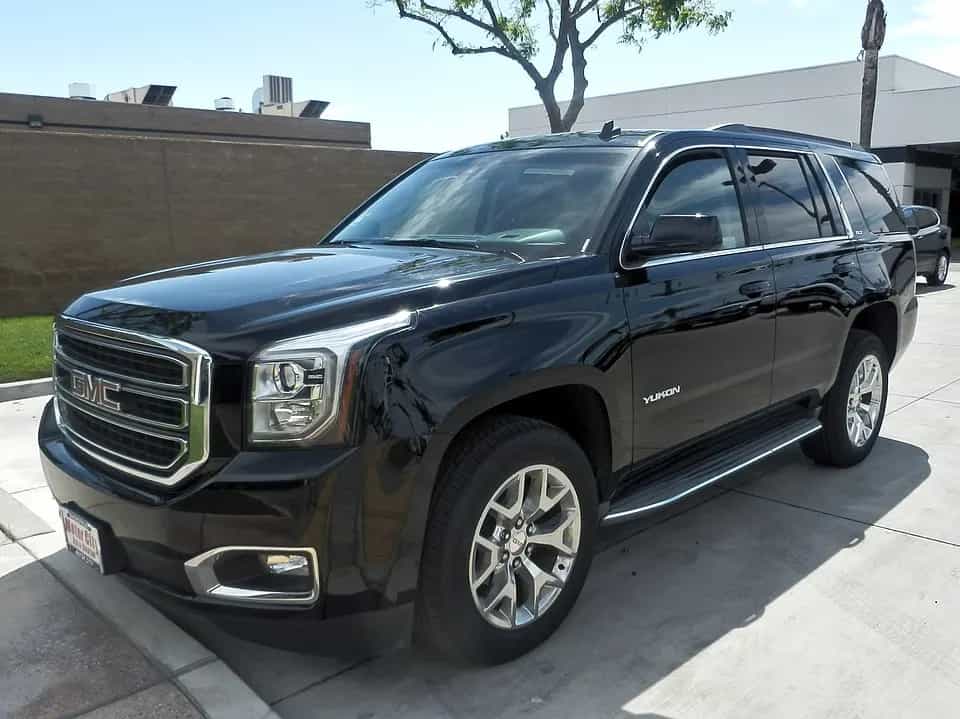
Two recent generations feed the import pool. The 2015–2020 Yukon (GMT K2XX) modernised the model with the EcoTec3 engines, magnetic dampers on Denali and a refined cabin, though it retained a live rear axle.
 0049 (0)89 2000 791 00
 Mo - Fr 8:00am - 8:00pm
USCar Trader import service
Choose a specific vehicle. Where data is available, its detail page shows the import cost calculation. We assess any possible duty benefit with you before purchase.
Important: A 0% EU import-duty rate may be available for a vehicle covered by Regulation (EU) 2026/1455 that has US origin and is imported directly into the EU. CETA may apply to a vehicle with preferential Canadian origin. Whether the requirements are met is assessed for the individual case. Please contact us before purchase; we review the possible duty benefit and provide non-binding support through the process. Import VAT and other costs are assessed separately.
CarHub · GMC
The GMC Yukon is a full-size, body-on-frame SUV that offers three genuine rows of seating, serious towing capacity and a level of road presence that European makers rarely match.

Price:23,908.00 USD

Price:63,732.00 USD

Price:65,860.00 USD

Price:41,198.00 USD

Price:44,389.00 USD
Model profile
Two recent generations feed the import pool. The 2015–2020 Yukon (GMT K2XX) modernised the model with the EcoTec3 engines, magnetic dampers on Denali and a refined cabin, though it retained a live rear axle.
Powertrain and equipment
The staple engine is the 5.3-litre EcoTec3 V8 (around 355 hp), which suits most buyers. The 6.2-litre V8 (about 420 hp and 623 Nm) is the Denali's signature powerplant and the one enthusiasts import for.
The range runs SLE, SLT, the rugged AT4, and the luxury Denali (later Denali Ultimate). The choice between Yukon and Yukon XL comes down to how much cargo room behind the third row you need versus overall length.
Vehicle selection
Fleet, family and lease returns keep three-to-six-year-old Yukons readily available, frequently loaded with options that were expensive when new: rear entertainment, adaptive cruise, heated and cooled seats, premium audio.
A used Yukon fits large families, people who tow, and anyone who wants a comfortable, commanding long-distance vehicle with three real rows.
Vehicle data
| Vehicle class | Full-size SUV (body-on-frame) |
|---|---|
| Seating | 7 to 9 depending on config |
| Length (standard Yukon) | approx. 5,330 mm |
| Length (Yukon XL) | approx. 5,730 mm |
| Petrol engines | 5.3L V8, 6.2L V8 |
|---|---|
| Diesel engine | 3.0L Duramax turbo I6 (2021–) |
| Power | 355 hp (5.3) / 420 hp (6.2) / 277 hp (diesel) |
| Torque (6.2 V8) | approx. 623 Nm |
| Transmissions | 6-, 8- and 10-speed automatic |
| Drive | RWD or 4WD, 2-speed transfer case |
| Fuel | Petrol (95 RON) or diesel |
| Platform | GMT K2XX (2015–2020) / T1XX (2021–) |
|---|---|
| Rear suspension | Live axle (K2XX) / Independent (T1XX) |
| Max towing (equipped) | up to ~3,900 kg depending on spec |
| Origin (verify) | Arlington, Texas (US) |
Values are reproduced verbatim from the existing article table. The documents for the specific vehicle govern.
Pre-purchase review
The Yukon shares its powertrains with the Sierra and Silverado, so the most discussed Yukon common problems are the same: Active Fuel Management lifter failures on the 5.3 and 6.2 V8s, and some oil consumption on high-mileage examples. A shift shudder on the 8-speed (8L90) affected some 2015–2018 cars.
Germany and Europe
US-market Yukons use US headlight beam patterns, lack a rear fog lamp, and often run amber or red rear indicators that may need adaptation.
The assessment depends on the specific vehicle and the circumstances of the transaction. Please contact USCar Trader before purchase; we review any possible duty benefit and provide non-binding support. Import VAT and other costs are considered separately.
Expect to add or convert a rear fog lamp, adapt rear indicators where needed, and possibly adjust headlights for the European beam pattern.
USCar Trader services
As a buyer based in Germany, you do not have to inspect the vehicle yourself in the United States or Canada. Within the agreed scope, USCar Trader can coordinate document review, a separately commissioned on-site inspection and purchase processing.
Covered inspection points are agreed in advance. An on-site inspection records condition at the appointment and is not a guarantee.
Next step: Before commissioning, USCar Trader and the customer agree which document, history, inspection and transaction checks suit the vehicle and are included in the service. This records what was actually checked.
Import process
The import process for a GMC Yukon is planned around the specific listing, location, documents and commissioned service scope.
Questions and answers
No, not automatically. A 0% EU import-duty rate may be available for a vehicle covered by Regulation (EU) 2026/1455 that has US origin and is imported directly into the EU. CETA may apply to a vehicle with preferential Canadian origin. Whether the requirements are met is assessed for the individual case. Please contact USCar Trader before purchase; we review the possible duty benefit and provide non-binding support. Import VAT and other costs are assessed separately.
The standard Yukon is already very large and easier to place on European roads; the XL only makes sense if you need maximum cargo behind the third row.
Generally durable, with the AFM lifter issue on the V8s being the main known weak point. A documented service history is the best safeguard.
The 3.0 Duramax offers strong range and relaxed torque and is well liked, but it only exists on 2021-onward cars and is less common on the used market.
Yes, after TÜV individual approval and typical lighting and odometer adjustments.
Container or RoRo ocean freight from a US port to Bremerhaven or Rotterdam, then EU customs clearance.
Neither. We are an independent broker for used US vehicles and take no vehicle margin.
Available VIN, title and history information can be reviewed in the vehicle profile. USCar Trader can also arrange a separately booked on-site inspection within a scope agreed in advance.
More vehicles