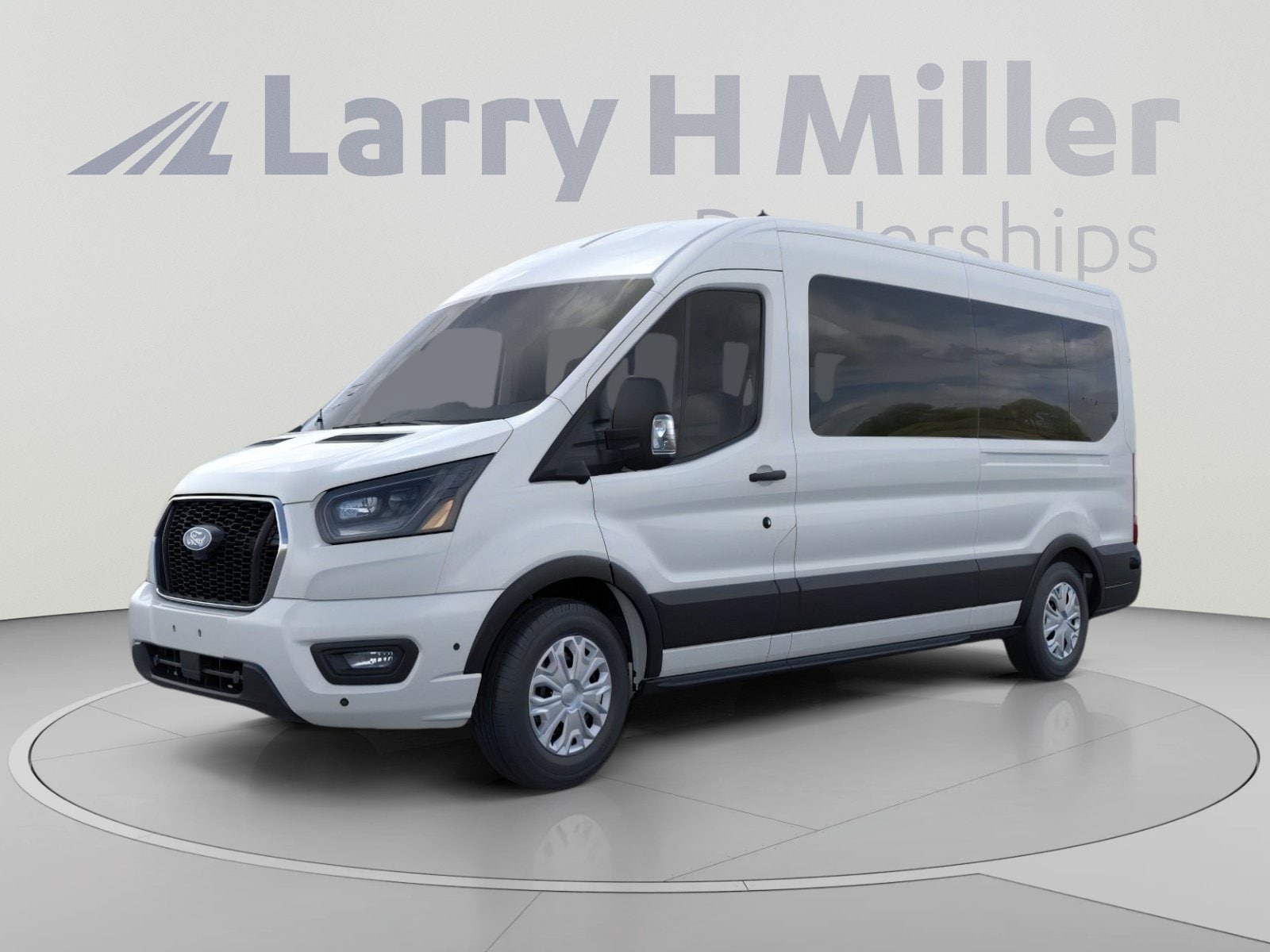
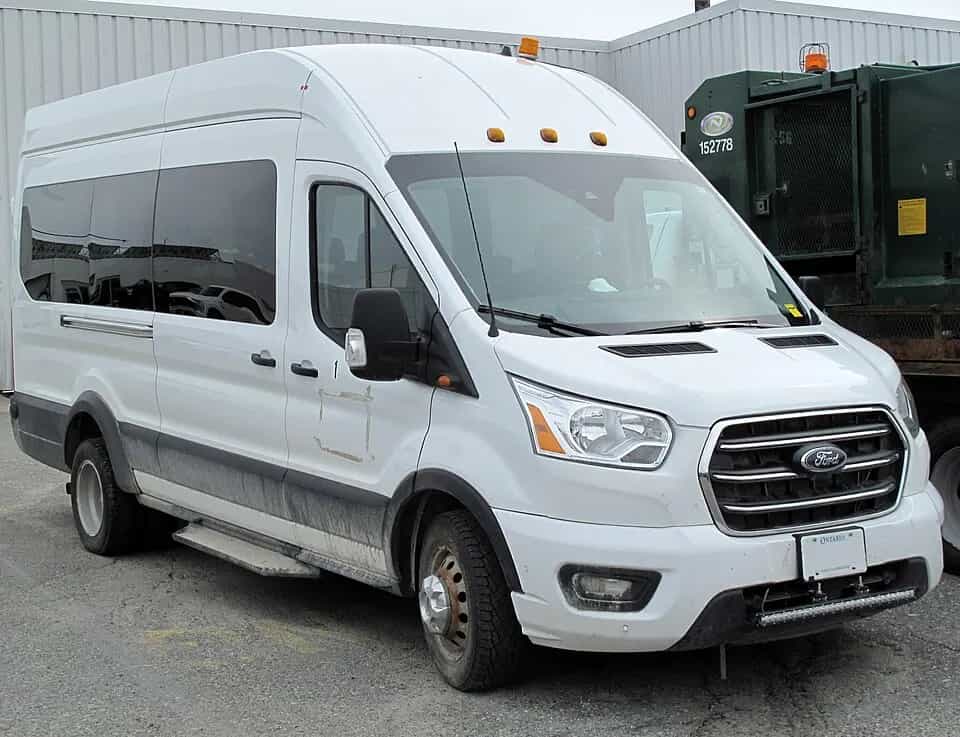
Ford Transit Passenger Van
Importing a used Ford Transit Passenger Van from the USA
The US-market Ford Transit Passenger Van is a different beast from the European Transit most people picture: a full-size, body-on-frame-adjacent people mover with big petrol V6 engines, seating for up to fifteen, and three roof heights. It is the default American shuttle, church, hotel and large-family van — and because it is built in Missouri and sold in enormous numbers, the used supply is deep. USCar Trader arranges these imports as an independent broker, sourcing, verifying and clearing the vehicle with no dealer margin or manufacturer tie. Here is the practical guide to importing a used Ford Transit Passenger Van from the USA.
Model history and generations
Ford brought the global Transit to North America for the 2015 model year, replacing the ancient E-Series (Econoline) wagon. This generation has run continuously since, with a significant 2020 update that added a new 3.5-litre PFDi V6, the option of all-wheel drive, and a switch to a ten-speed automatic. A further refresh brought a larger touchscreen and the SYNC 4 system. The passenger version — badged Transit 150, 350 and 350 HD in ascending capacity — is the wagon body with windows and up to five rows of seating, distinct from the cargo van and the cutaway chassis.
Engines and drivetrain
The mainstay engine on 2020-and-later US Transits is the naturally aspirated 3.5-litre PFDi V6 producing around 275 hp, with the twin-turbocharged 3.5-litre EcoBoost V6 as the muscular option at roughly 310 hp and a strong torque figure that makes a fully loaded fifteen-seater feel unstressed. Earlier 2015–2019 vans offered a 3.7-litre V6, the 3.5 EcoBoost, and a 3.2-litre five-cylinder Power Stroke diesel. Later vans use a ten-speed automatic (earlier ones a six-speed), and rear-wheel drive is standard with intelligent all-wheel drive optional from 2020 — a genuinely useful feature for a heavy van in a northern-European winter.
Which trim makes sense
The Transit Passenger Van comes in a matrix of configurations: three roof heights (low, medium and high — the high roof lets an adult stand inside), and multiple body lengths (regular, long and long-extended). Trim runs XL and XLT, the XLT adding cruise control, alloy wheels, upgraded cloth and more safety kit. Seating configurations range from 8 up to 15 passengers depending on the model. This breadth is exactly why buyers import rather than shop locally — you can find the precise roof, length and seat count you need.
Supply on the US market
Fleet, shuttle and rental duty means a large, steady flow of used Transit passenger vans, often with complete maintenance records because they were commercially operated. Mileage varies widely: a three-year-old fleet van may show 60,000 to 120,000 miles, while a private family van can be far lower. Commercially maintained vans are frequently the better buy because the service history is documented. Southern and western vans avoid the road-salt corrosion common on northern examples.
Who benefits from importing
The Transit Passenger Van suits large families, shuttle operators, sports clubs, hotels and anyone needing eight-to-fifteen-seat capacity with the durability of a proven American workhorse and the option of a standing-height cabin. Its US origin also tends to help on the customs side, which strengthens the case against a comparable European van.
Technical data
| Attribute | Typical figure (2015–present US Transit) |
|---|---|
| Body style | Full-size passenger van (wagon) |
| Seating | 8 to 15 passengers |
| Base engine (2020+) | 3.5L PFDi V6, approx. 275 hp |
| Optional engine | 3.5L EcoBoost twin-turbo V6, approx. 310 hp |
| Earlier engines | 3.7L V6; 3.2L Power Stroke diesel (2015–2019) |
| Transmission | 10-speed automatic (6-speed on earlier vans) |
| Drivetrain | RWD standard; AWD optional from 2020 |
| Roof heights | Low, medium, high (standing height) |
| Body lengths | Regular, long, long-extended |
| Model designations | Transit 150 / 350 / 350 HD |
| Length (long, high roof) | up to approx. 6,700 mm |
| GVWR (350 HD) | up to approx. 4,536 kg |
| Fuel type | Petrol (diesel on early vans) |
| Origin | Assembled in Kansas City (Claycomo), Missouri, USA — confirm by VIN |
Known weak points and maintenance
Ford Transit reliability is generally strong for a hard-working van, but there are known weak points. On the 3.5 EcoBoost, the timing components and the cam-phaser and turbo systems reward strict oil-change intervals; a rattle on cold start can signal phaser wear. Earlier vans occasionally suffered driveline vibration and a shudder addressed by a Ford service action, and the six-speed automatic could feel busy under load. Rear differential and driveshaft wear appears on high-mileage commercial vans, and the 3.2 diesel on 2015–2019 vans needs its emissions hardware maintained. These are the recurring Ford Transit common problems; because many vans were fleet-run, a documented maintenance file is the most valuable thing you can find.
US and EU spec compared
The US Transit Passenger Van is petrol-dominated where Europe's is diesel, and it is generally larger in the fifteen-seat configurations. US vans use headlamps aimed for right-hand traffic, often omit a rear fog lamp, show speed in miles per hour, and run US navigation and radio bands. Seat mountings and the number of rows must be documented for approval. A fifteen-seat van also crosses into a passenger-transport category that affects registration and, potentially, the driving licence class required — plan for this before you buy.
The import process in detail
The route: selection of a suitable Transit at a US auction or dealer; a VIN and origin check confirming the Missouri plant, the configuration and a clean history; escrow payment releasing funds only against the title; ocean freight to a German port such as Bremerhaven (a high-roof van may need a specific container or RoRo booking); EU customs clearance on arrival; TÜV or DEKRA individual approval (Einzelabnahme), including verification of the seating; and registration at the local Zulassungsstelle. We coordinate each stage.
What customs clearance really costs
Remember: no origin proof, no 0% duty – and 19% German import VAT is due on every import.
Two separate charges apply. First, import duty, which depends on the vehicle's actual origin. The US Transit is assembled in Kansas City, Missouri, so a VIN check will typically confirm US origin — and provable US origin can enable the 0% import duty rate under Regulations (EU) 2026/1455 and 2026/1461, in force since 1 July 2026 for directly transported vehicles until 31 December 2029. We never guarantee the rate up front; it is confirmed only after the VIN and plant are verified, and note that commercial-vehicle classification can affect the applicable rate. Second, in every case, the German import VAT (Einfuhrumsatzsteuer) of 19% is charged on the customs value. We add no margin — you pay the authorities directly.
TUEV, modifications and registration
Typical TÜV work on a Transit import includes fitting or coding a compliant rear fog lamp, adjusting or replacing the headlamps for left-hand traffic, converting the odometer to kilometres, verifying and documenting the seat rows and belt anchorages, and confirming the tyre and rim approval for the van's weight rating. The high seat count is the area an inspector scrutinises most, so complete seating documentation speeds approval.
Check before you buy
Before committing to a used Transit passenger van, verify: the 17-digit VIN matches the title, dashboard and door label and shows the US plant; the Carfax or AutoCheck report is clean with no salvage, flood or total-loss branding; the maintenance history is documented, especially for a fleet van; the EcoBoost timing and turbo service intervals were kept; the underbody, sills and rear frame are free of road-salt corrosion; the seat mountings and belts are complete and undamaged; and the title is a clean US title, not rebuilt or bonded.
Common questions
Is the US Ford Transit different from the European one?
Yes. The US Passenger Van is petrol-led, offered in larger fifteen-seat configurations, and built in Missouri rather than Turkey.
Is the Transit Passenger Van built in the USA?
Yes. It is assembled in Kansas City (Claycomo), Missouri. A VIN check confirms the plant for customs.
Can it qualify for 0% EU import duty?
It often can, because provable US origin enables the 0% rate under the 2026 regulations. Commercial-vehicle classification can affect this, so we confirm only after verifying the VIN.
Does the 19% import VAT always apply?
Yes. The German Einfuhrumsatzsteuer of 19% is charged on every import, whatever the duty outcome.
What engines are common?
The 3.5-litre V6 and the 3.5 EcoBoost twin-turbo V6 on 2020-and-later vans; earlier vans offered a 3.7 V6 and a 3.2 diesel.
Do I need a special licence for a 15-seat van?
Possibly. Vans configured for more than eight passenger seats can fall into a higher licence category in Germany, so check before you import.
How long does the import take?
Plan for roughly eight to twelve weeks from purchase to German registration, allowing for the shipping of a large-bodied van.
Is USCar Trader a Ford dealer?
No. We are an independent broker for used US vehicles, with no manufacturer partnership and no dealer margin.
To begin, browse Ford in the Carhub, compare related people carriers such as the Ford E-Series Econoline Wagon and the Chevrolet Express Passenger, or view current Transit Passenger Van listings.