Ford Thunderbird
Importing a used Ford Thunderbird from the USA
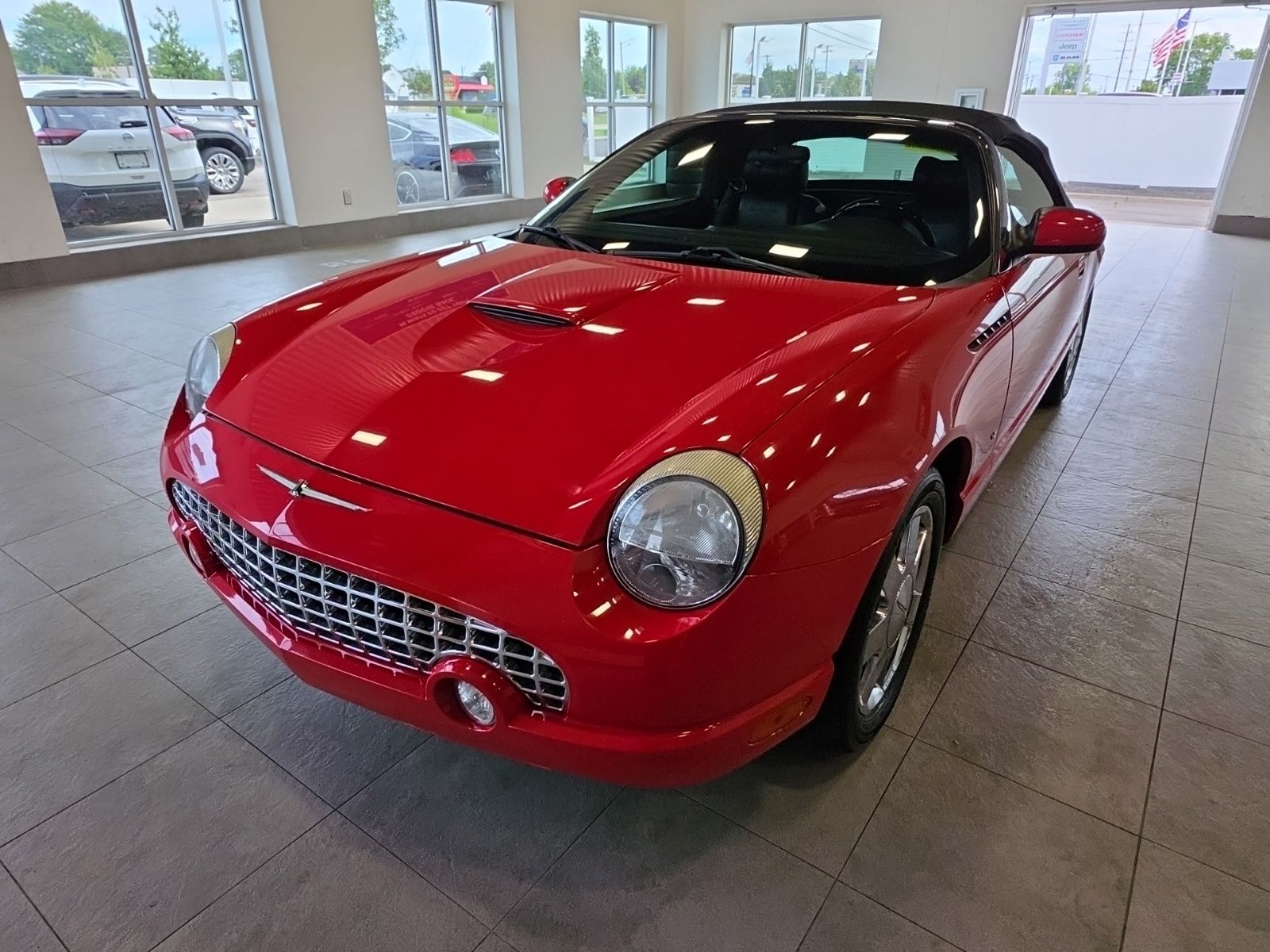
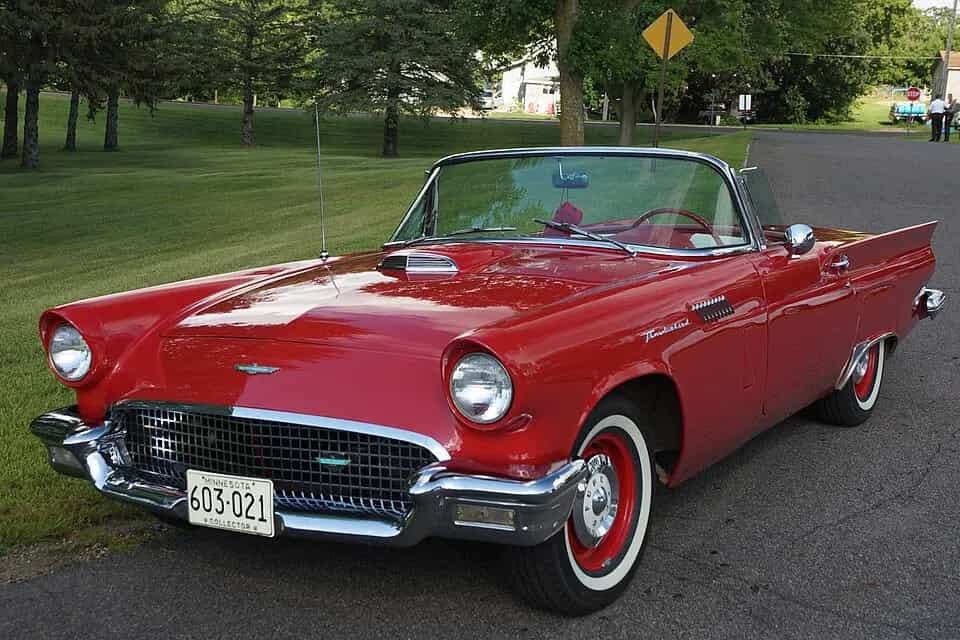
Few nameplates carry as much American showroom history as the Thunderbird. Built across eleven generations between 1955 and 2005, it swung from two-seat roadster to four-seat personal-luxury coupe and back again, which means a used Ford Thunderbird from the USA can be almost anything: a chrome-heavy 1950s classic, a downsized 1980s coupe, or the retro 2002–2005 roadster that most European buyers are chasing today. As an independent broker for used US vehicles, USCar Trader sources the exact car and condition you want and handles the process end to end. We do not hold stock, take no dealer margin, and are not tied to any manufacturer.

Production years and key changes
The original 1955–1957 "Little Bird" was a two-seat convertible aimed at the Corvette. Ford then pivoted to the four-seat 1958–1960 "Square Bird", followed by the "Bullet Bird" (1961–1963) and the crisp 1964–1966 cars. The 1967–1971 generation even offered a four-door with suicide rear doors. Through the 1970s the Thunderbird grew into a large personal-luxury coupe, then shrank onto the Fox platform for 1980–1982. The aero 1983–1988 cars and the MN12-platform 1989–1997 range (including the supercharged Super Coupe) brought independent rear suspension. The car most imported now is the eleventh generation, the 2002–2005 retro roadster built on Ford's DEW98 platform shared with the Lincoln LS and Jaguar S-Type.
What is under the hood
Classic Thunderbirds ran the full Ford engine catalogue: Y-block V8s (292/312), FE big-blocks (390, 428), and 429/460 units in the heavier 1970s cars. Later rear-drive coupes used the 302 (5.0) and 351 Windsor V8s. The 1989–1997 MN12 offered a 3.8-litre V6, a supercharged 3.8 in the Super Coupe, and the 4.6 modular V8. The 2002–2005 roadster is powered by the 3.9-litre AJ35 DOHC V8 (shared with the Lincoln LS), rated at roughly 252 hp and later 280 hp, driving the rear wheels through a five-speed 5R55N automatic. Transmissions across the range are almost entirely automatic, from the early Ford-O-Matic to the C6 and AOD.
Trims and body styles
Depending on the year you will find convertibles, hardtop coupes, and pillared coupes. The 2002–2005 car is a two-seat convertible with a folding soft top and an optional lift-off hardtop featuring the signature porthole window. Premium and Deluxe packages added chrome wheels, colour-keyed interiors, and the neo-classic "turbine" trim details that define the retro look.
What the US market offers
The American market is where Thunderbirds survive in volume. Retro 2002–2005 roadsters are frequently offered as low-mileage second cars, many kept in dry Sun Belt states with clean bodywork. Classic 1955–1966 cars appear in every condition from restored show cars to project drivers. The 1980s and 1990s coupes are the most affordable entry point. Because so many were garaged, rust-free examples are far easier to find in the USA than in Europe.
Who this import is for
An imported Thunderbird suits the enthusiast who wants a genuine American icon that is rare on European roads. The retro roadster is the pragmatic choice: modern enough to drive daily, simple enough to maintain, and old enough to qualify for classic status as the years pass. Classic buyers get access to a deep US supply of solid, dry-climate cars. If you value distinctiveness over outright practicality, the Thunderbird delivers.
Technical data and figures
| Item | Detail (2002–2005 retro roadster, representative) |
|---|---|
| Body style | Two-seat convertible (soft top, optional hardtop) |
| Platform | Ford DEW98 (shared with Lincoln LS) |
| Engine | 3.9 L AJ35 DOHC V8, naturally aspirated |
| Power | approx. 252–280 hp |
| Torque | approx. 339–390 Nm |
| Transmission | 5-speed automatic (5R55N) |
| Drive | Rear-wheel drive |
| 0–100 km/h | approx. 7 seconds |
| Length | approx. 4.73 m |
| Wheelbase | approx. 2.72 m |
| Kerb weight | approx. 1,700 kg |
| Fuel | Petrol |
| Seating | 2 |
| Production years | 1955–2005 (eleven generations) |
| Classic status | Older generations typically eligible for H-plate in Germany |
Reliability: trouble spots to check
On the 2002–2005 roadster, watch the coil-on-plug ignition, which can misfire as it ages, and the cooling system, where degraded thermostats and water pumps cause overheating on the aluminium V8. The 5R55N automatic benefits from fresh fluid; harsh shifts often point to a tired valve body. Convertible tops and the associated hydraulics should be cycled during inspection. On classic Thunderbirds the priorities are structural: check floors, trunk pans, quarter panels, and frame rails for rust, and budget for brake and fuel-system refreshing on cars that have sat. Overall the retro car is mechanically straightforward, and Thunderbird reliability is reasonable when service history exists.
US vs. Europe differences
US cars are left-hand drive with mph instrument clusters and US-specification lighting. Classic Thunderbirds usually run sealed-beam headlamps and amber side markers that must be adapted for German road approval, and none have a rear fog lamp. Bumper and emissions details differ by era. These are normal, well-understood conversions for a US import and are addressed during the TÜV process.
How the import works
The route runs from vehicle selection, to a VIN and origin check, to a secure escrow payment, to ocean freight across the Atlantic, to customs clearance on arrival, then a TÜV individual approval (Einzelabnahme) and finally registration at your local authority. USCar Trader coordinates each stage and keeps you informed throughout.
Import duty, VAT and fees
In short: the 0% duty rate applies only with documented US origin (VIN/plant) – German import VAT of 19% is always due.
Two charges apply on import and are always shown separately, with no broker margin added. First, the EU import duty: the standard rate for passenger cars is 10%, but 0% can apply where US origin is provable via the VIN and plant under Regulations (EU) 2026/1455 and 2026/1461, in force since 1 July 2026 for directly transported vehicles until 31 December 2029. Because the Thunderbird's origin is not automatic here, the VIN determines the rate. Second, the German import VAT (Einfuhrumsatzsteuer) of 19% always applies on top, regardless of origin. We never advertise "duty-free" and never guarantee 0%.
From modifications to registration
Typical work includes headlight adaptation to European beam pattern, fitting a rear fog lamp, adjusting side-marker requirements, and confirming the speedometer. Odometer readings are converted and documented. Once the Einzelabnahme is passed you receive the paperwork for registration.
Pre-buy inspection points
Verify the VIN against the title and the car. Pull a Carfax or AutoCheck history for accidents, title brands, and odometer consistency. Inspect for rust in floors, quarters, and the top mechanism. Confirm service records, especially cooling and transmission work on the retro V8. Check the title is clean (not salvage or flood) unless you knowingly want a project. Cycle the convertible top fully. Photograph underbody and engine bay before committing.
What buyers ask most
Can I import any Thunderbird generation?
Yes. From 1955 classics to the 2002–2005 roadster, all can be imported as used vehicles; older cars simply follow the classic-vehicle inspection route.
Does the Thunderbird qualify for 0% EU import duty?
Only if US origin is proven by the VIN and plant code. Where that cannot be shown, the standard 10% passenger-car rate applies. The 19% import VAT applies either way.
Is the retro Thunderbird reliable enough to drive regularly?
With sound cooling, ignition, and transmission service it is a dependable weekend car. It shares much of its engineering with the Lincoln LS.
What about parts availability in Germany?
Mechanical parts for the retro and Windsor-era cars are well supported through US suppliers; classic trim can take longer to source.
Will it get an H-Zulassung (classic plate)?
Generations older than 30 years are generally eligible if in appropriate original condition.
How long does the import take?
Typically several weeks once purchased, driven mainly by ocean freight scheduling and customs.
Do I pay VAT even on an old classic?
Yes. The 19% import VAT is due on import regardless of the car's age.
Explore the full Ford in the Carhub, compare related US coupes like the Chevrolet Monte Carlo, the Pontiac Firebird, and the Pontiac GTO, or browse current Thunderbird listings.