Ford Focus

Importing a used Ford Focus from the USA

The Ford Focus is one of those rare cars sold on both sides of the Atlantic, yet the American versions differ enough to make a US import genuinely interesting. Enthusiasts chase the US-market Focus ST and the limited Focus RS, while budget-minded buyers look at clean American sedans and hatchbacks that spent their lives in dry southern states. Whatever the motivation, importing a used Ford Focus from the USA is a well-trodden path, and USCar Trader acts as an independent broker to source the car, verify its history and manage customs and German approval.

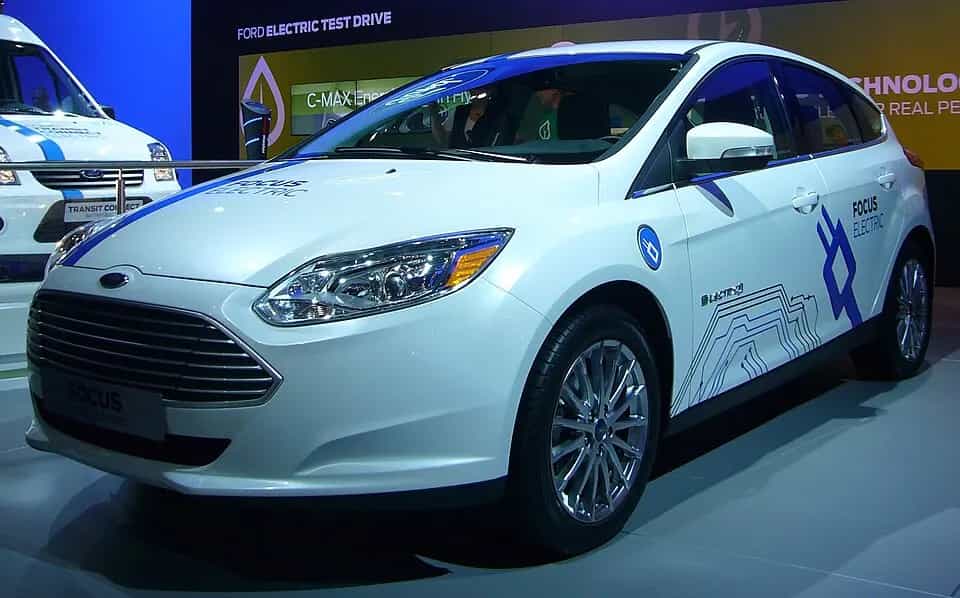
Ford Focus – used car imported from the USA
Photo: Overlaet · CC BY-SA 3.0 · Wikimedia Commons

Generations at a glance

Ford sold the Focus in North America across three main generations. The first, launched for 2000, brought sedan, wagon and hatch bodies and the sporty SVT Focus (2002–2004) with a 170-hp 2.0-litre Zetec. The second US generation (roughly 2008–2011) was a North-America-specific facelift, offered as sedan and coupe. The third generation (2012–2018) finally put the US car on Ford's global C346 platform, closely related to the European Focus, and it is the version most buyers import today. American Focus production ended after 2018, when Ford exited the compact-sedan segment in the US, which is part of why used examples remain plentiful.

Powertrain lineup

The bread-and-butter US Focus used the 2.0-litre Ti-VCT four-cylinder, producing around 160 hp, driving the front wheels. Ford also offered the 1.0-litre EcoBoost three-cylinder in some later cars for economy. The performance versions are the draw for enthusiasts: the Focus ST used a 2.0-litre EcoBoost turbo rated at 252 hp with a six-speed manual, while the Focus RS (2016–2018) fielded a 2.3-litre EcoBoost turbo at 350 hp with all-wheel drive, a rear drive unit with torque vectoring and a Drift mode. There was also a battery-electric Focus Electric. Transmissions ranged from a five-speed manual and the ST/RS six-speed manual to the dual-clutch PowerShift automatic on ordinary cars.

Trims in the US market

US buyers had a wide choice: S, SE, SEL and Titanium on mainstream cars, plus the ST and RS performance flagships. Bodies were the four-door sedan and the five-door hatchback; the wagon was largely a first-generation and European affair. The sedan is the classic "Limousine" body that many German buyers register, while the hatch and the ST/RS hot versions attract the enthusiast crowd.

The used market stateside

The American used pool is deep and varied. You will find plenty of 2012–2018 sedans and hatches with a broad mileage spread, from low-use one-owner cars to high-mileage commuters. ST and RS models are more specialised and hold their value better, so expect to search harder and pay a premium at auction. Southern and western cars tend to be rust-free, which matters for a compact that will face German road salt. Always weigh condition and history over headline mileage.

Who should import one

A US Focus makes sense for two very different buyers. The first is the enthusiast who wants a Focus ST or the rare, AWD Focus RS in US specification. The second is the pragmatic buyer who finds a clean, well-kept American sedan at the right price and values the car's practicality. If you want an automatic with a bulletproof reputation, read the reliability notes carefully first — the transmission choice matters a great deal on this model.

Key specifications

SpecificationDetail (typical third-gen US car)
Body styles4-door sedan / 5-door hatch
US generations2000–2004, 2008–2011, 2012–2018
Base engine2.0 L Ti-VCT I4
Base outputapprox. 160 hp
Economy engine1.0 L EcoBoost I3
Focus ST engine2.0 L EcoBoost turbo, approx. 252 hp
Focus RS engine2.3 L EcoBoost turbo, approx. 350 hp
Transmissions5-MT, 6-MT (ST/RS), 6-speed PowerShift DCT
DrivetrainFWD (RS: AWD)
Length (sedan)approx. 4,534 mm
Wheelbaseapprox. 2,648 mm
FuelPetrol (Focus Electric: BEV)
Seating5
Typical assemblyMichigan Assembly, Wayne, MI (USA)
Condition offeredUsed only

How reliable is it?

The single most important reliability issue on the third-generation Focus is the DPS6 PowerShift dual-clutch automatic. It became notorious for shuddering, hesitation and premature clutch failure, and was the subject of a major class-action settlement in the US. If you want an automatic Focus, budget for the possibility of clutch or control-module work and demand full evidence of any repairs already carried out. Manual cars sidestep the problem entirely. The 2.0-litre Ti-VCT engine itself is durable. On the ST and RS, check for the well-known head-gasket concern on early RS cars, and inspect the turbo and intercooler plumbing. Across the range, look at the door-latch recall history, interior electronics and, on older cars, rust around the wheel arches.

What US models do differently

Because the Focus was sold in Europe too, parts availability is excellent and TÜV staff know the car well. That said, the US version differs: engine options skew towards the 2.0 Ti-VCT rather than European diesels and small EcoBoost petrols, the speedometer reads in mph, and lighting follows US rules. The Focus RS is closely aligned across markets, which is part of its appeal. For German registration the car will need European lighting compliance and a km/h display.

Seven steps to your import

Expect a clear sequence: choose the specific car and study its history; verify the VIN and confirm the build plant to settle the customs origin question; buy through escrow so your money is held safely; ship by ocean freight to a European port; clear EU customs on arrival; take the car through TÜV for individual approval under §21 StVZO; and register it locally. USCar Trader manages each step as your intermediary.

Customs, taxes and costs explained

Key point: duty depends on the plant of build; only a VIN check secures the 0% rate. Import VAT of 19% applies regardless.

Two charges apply and stay separate. The EU import duty is origin-dependent: under Regulations (EU) 2026/1455 and 2026/1461, effective since 1 July 2026, a car of provable US origin can qualify for a 0% rate on direct import until 31 December 2029. US-market Focus cars were largely built at Michigan Assembly in Wayne, Michigan, so a US-built example may qualify — but this must be proven from the VIN and plant code, since some Focus cars over the years came from other plants. Where US origin cannot be proven, the standard passenger-car duty applies. Separately, the 19% German import VAT (Einfuhrumsatzsteuer) is always charged on the customs value, regardless of origin. USCar Trader adds no margin to these official charges.

German TÜV and registration

Common modifications are the familiar ones: European headlights or a corrected beam pattern, a working rear fog lamp, indicator compliance and a speedometer that shows km/h. The odometer is documented in kilometres. After the individual approval, you get the paperwork to register the car and receive German plates.

The buyer checklist

Confirm the following before buying: pull a Carfax or AutoCheck report for accident and title history; verify a clean, non-salvage, non-flood title; identify whether the car has the PowerShift automatic or a manual and factor that into your decision; inspect the underbody for rust on northern cars; check for documented transmission and clutch repairs; and photograph the odometer and VIN plant code. A pre-purchase inspection is strongly recommended.

Questions and answers

Which used Ford Focus should I import from the USA?

Enthusiasts favour the Focus ST and the AWD Focus RS. For everyday use, a manual-gearbox sedan or hatch avoids the known PowerShift automatic issues.

Is the PowerShift automatic a problem?

It can be. The DPS6 dual-clutch is known for shudder and clutch wear. Prefer a manual, or insist on proof of transmission repairs on an automatic car.

Does a US Ford Focus qualify for 0% EU duty?

It may, if the car is of provable US origin from the VIN and plant code. Otherwise the standard duty applies. The 19% import VAT is charged either way.

Are parts easy to find in Germany?

Yes. The Focus was sold in Europe, so mechanical and service parts are widely available.

How reliable is the US Ford Focus?

The 2.0 Ti-VCT engine is solid. The main weak point is the PowerShift automatic; manual cars are generally trouble-free by comparison.

Can I import a Focus RS to Germany?

Yes. The RS is a popular import; USCar Trader can source one and manage the customs and TÜV process.

Do I always pay import VAT?

Yes. The 19% German import VAT applies to every import, independent of the vehicle's origin.

Start your search with Ford in the Carhub, compare against the Ford Fusion or the Chevrolet Cruze, and view current Focus listings.